Action
Adventure
Animation
Comedy
Crime
Documentary
Drama
Family
Fantasy
History
Horror
Music
Mystery
Romance
Science Fiction
Thriller
War
Western

Short film about Hitler's rise to power in 1933
Director: Wolfgang Kiepenheuer
Writers: Wolfgang Kiepenheuer, Friedrich Terveen
No Provider Available
Check back later for streaming options
No screenshots available
No Reviews Available
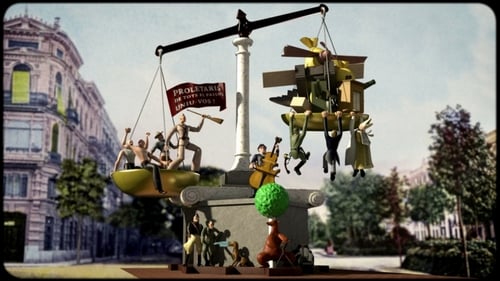
In November 1936, a few months since the beginning of the Spanish Civil War, the government of the Second Republic moves to Valencia. In this situation, several Valencian artists and intellectuals decide to build four fallas — satirical plasterboard sculptures created to be burnt — to mock fascism.
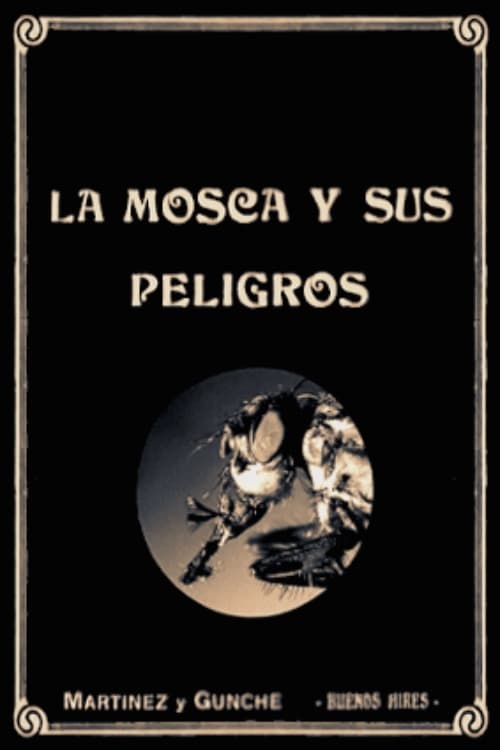
The Dangers of the Fly is an educational film made by Ernesto Gunche and Eduardo Martínez de la Pera, also responsible for Gaucho Nobility (1915), the biggest blockbuster of Argentinean silent cinema. De la Pera was a talented photographer, always willing to try new gadgets and techniques. This film experiments with microphotography in the style of Jean Comandon's films for Pathé and it is part of a series which included a film about mosquitoes and paludism and another one about cancer, which are considered lost. Flies were a popular subject of silent films and there are more than a dozen titles featuring them in the teens and early twenties.

Documentary about Giger's work for the movie Alien (1979).
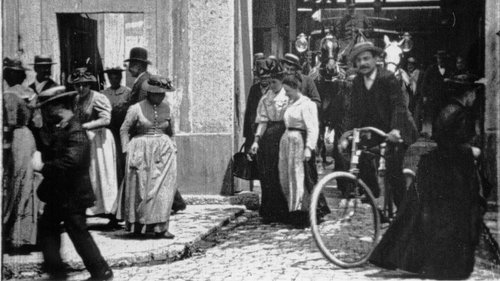
Working men and women leave through the main gate of the Lumière factory in Lyon, France. Filmed on 22 March 1895, it is often referred to as the first real motion picture ever made, although Louis Le Prince's 1888 Roundhay Garden Scene pre-dated it by seven years. Three separate versions of this film exist, which differ from one another in numerous ways. The first version features a carriage drawn by one horse, while in the second version the carriage is drawn by two horses, and there is no carriage at all in the third version. The clothing style is also different between the three versions, demonstrating the different seasons in which each was filmed. This film was made in the 35 mm format with an aspect ratio of 1.33:1, and at a speed of 16 frames per second. At that rate, the 17 meters of film length provided a duration of 46 seconds, holding a total of 800 frames.
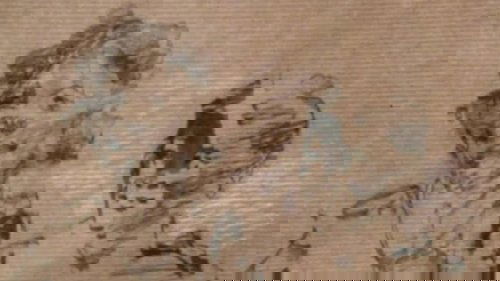
"The Role of Chance" ("La part du hasard") focuses exclusively on drawing and painting techniques used by the painter Henri Dimier. Shot over several weeks in the same artist's studio, the film shows works in their different phases, processes rarely explained or little known. It also addresses many practical issues (choice of paper, pigment grinding, reports drawings, put the tiles, cliches, etc) as well as broader questions of method and inspiration (use of space, the role of contours, power of suggestion perspectives, use of random processes). Patrick Bokanowski sought with this film to restore the spirit of this teaching, showing how to bend a note or sometimes revealing an essential mystery of creation.
Subscribe for exclusive insights on movies, TV shows, and games! Get top picks, fascinating facts, in-depth analysis, and more delivered straight to your inbox.