Action
Adventure
Animation
Comedy
Crime
Documentary
Drama
Family
Fantasy
History
Horror
Music
Mystery
Romance
Science Fiction
Thriller
War
Western

No Reviews Available
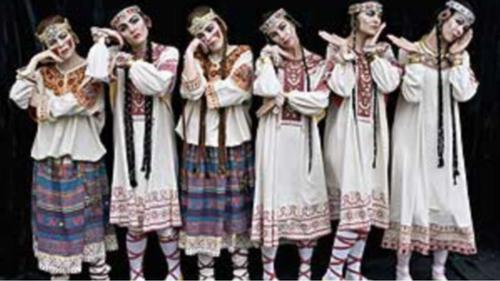
In the spring of 1913, Parisian businessman Gabriel Astruc opens a new theater on the Champs Elysées. The first performance is the premiere of Igor Stravinsky's 'The Rite of Spring', danced by the Ballet Russes. The rehearsal process is extremely fraught: the orchestra dislike Stravinsky's harsh, atonal music; the dancers dislike the 'ugly' choreography of Vaslav Nijinsky. The volatile, bisexual Nijinsky is in a strained relationship with the much older Sergei Diaghilev, the Ballet Russes' charismatic but manipulative impresario. Public expectation is extremely high after Nijinsky's success in 'L'apres-midi d'un faune'. Finally, 'The Rite of Spring' premieres to a gossip-loving, febrile, fashion-conscious Parisian audience sharply divided as to its merits.

Delphine and Solange are two sisters living in Rochefort. Delphine is a dancing teacher and Solange composes and teaches the piano. Maxence is a poet and a painter. He is doing his military service. Simon owns a music shop, he left Paris one month ago to come back where he fell in love 10 years ago. They are looking for love, looking for each other, without being aware that their ideal partner is very close...

Going to see Nutcracker with the whole family has been a tradition in other countries for many years. Now it is a tradition in the Netherlands as well. It became apparent that the Netherlands had also adopted this tradition in 1996, when the Dutch National Ballet presented its own version of the famous fairytale ballet. It is a magical production that has won the hearts of more than 250,000 people to date. Choreographers Toer van Schayk and Wayne Eagling created a Nutcracker for the children and adults of today. It is more dynamic and exciting, and less sweet than usual. They also chose to give a Dutch twist to their interpretation of the story, with skaters on the canals and a living room that transforms into a snowy forest. Unlike the original story, the production by Eagling and Van Schayk (who also designed the delightful sets and costumes) does not take place on Christmas Eve in a German town, but during St. Nicholas celebrations in Amsterdam, around 1810.
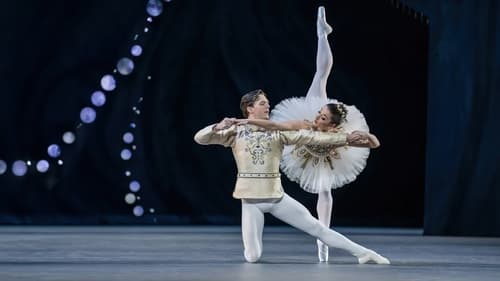
Jewels, ballet in three parts choreographed by George Balanchine for the New York City Ballet, recorded in October / November 2005 at the Opéra National de Paris.
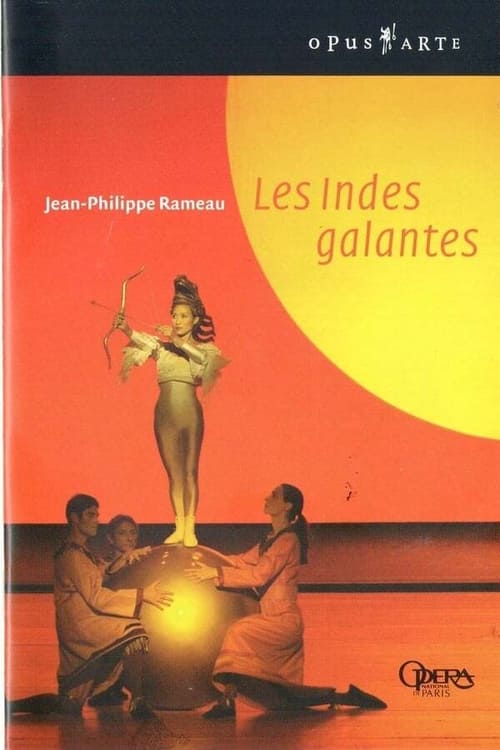
"William Christie and Les Arts Florissants propel this exuberant production of Jean-Philippe Rameau's second opera to great heights. Andrei Serban's extravagant, highly baroque staging presents the four exotic love stories vibrantly. In 'Le Turc généreux' Osman sets free his captive, Emilie, whom he loves, so that she may be reunited with her former lover, Valère; 'Les Incas de Pérou' is all about the rivalry of the Inca Huascar and the Spaniard Don Carlos, both in pursuit of Princess Phani; 'Les Fleurs' offers a Persian love intrigue, as the Sultana Fatime tries to detect whether her husband Tacmas has his eye on the lovely Atalide; and 'Les Sauvages' takes us to North America, where a Spaniard and a Frenchman compete for the love of Zima, daughter of a native chief, who prefers one of her own people." — from the DVD cover
Subscribe for exclusive insights on movies, TV shows, and games! Get top picks, fascinating facts, in-depth analysis, and more delivered straight to your inbox.