Action
Adventure
Animation
Comedy
Crime
Documentary
Drama
Family
Fantasy
History
Horror
Music
Mystery
Romance
Science Fiction
Thriller
War
Western
Explore all movies appearances
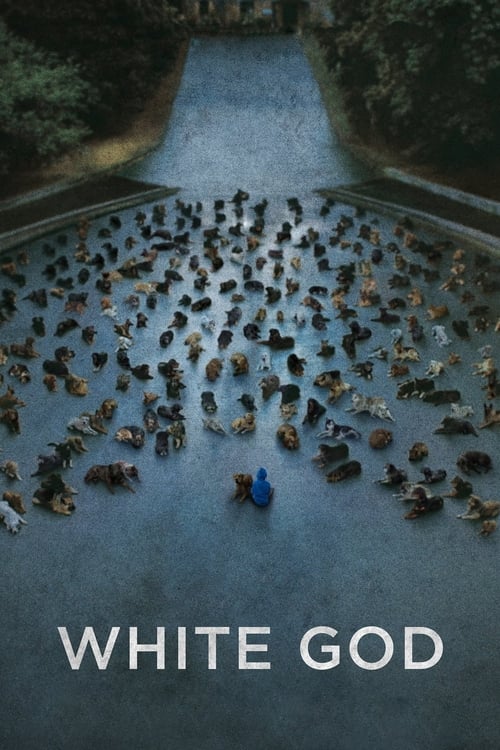
13 year old Lili fights to protect her dog Hagen, and is devastated when her father sets Hagen free on the streets. Still innocently believing love can conquer any difficulty, Lili sets out to save her dog. Failing in his desperate efforts to find his beloved owner, Hagen joins a canine revolt leading a revolution against their human abusers.
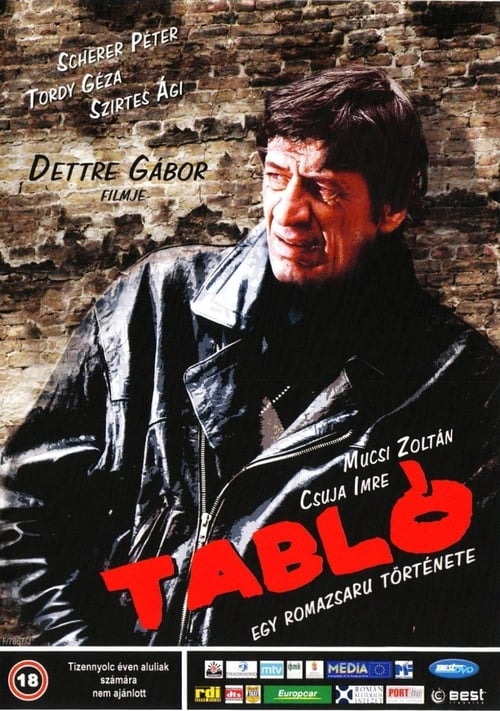
Karcsi, a Roma policeman, lives with Eva, a Swede. One day he is called to the scene of the murder of a wealthy trafficker named Schulter. He begins to investigate the crime, interrogate neighbours and suspects, and untangle a complex situation - one that he, himself, complicates even further. For he is a gypsy, who despite being adopted and raised by "regular" Hungarians, has his nose rubbed in his minority status every day. The film, which is based on the novel by Ákos Kertész, is a shrewd genre work full of dusky humour and surreal situations. Tabló follows a vivid succession of strange images that eventually lead to the emergence of the central story about a charismatic police officer on a tireless quest for the truth, though he must fight against virtually everyone and is just as fallible as the next person. Tabló makes a statement on the issue of race and racism - or, indeed, relations between any minority and majority.
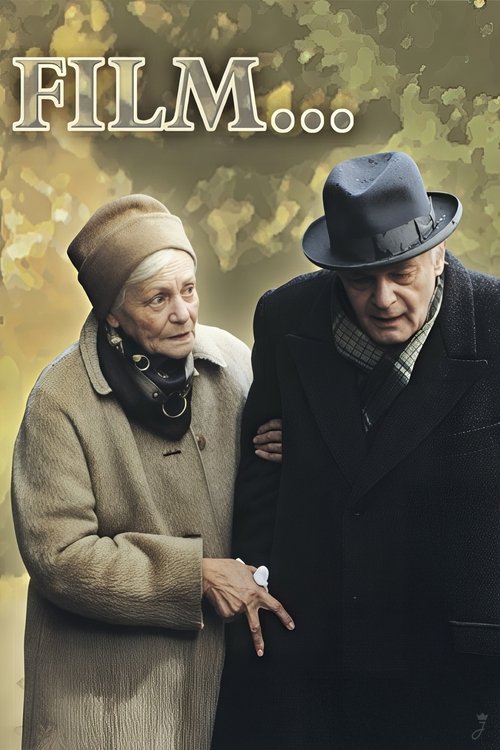
Miklós Mészöly's short novel Film aims to show the last few hours of an elderly couple's life. The last moments of two people who, in the midst of historical storms, inhumanity and loss of values, remained together in the strange grip of love and dependence. The most moving is the formulation of the fundamental question: can we and can we say goodbye with dignity, how much we are lost and vulnerable when we set off into the unknown.
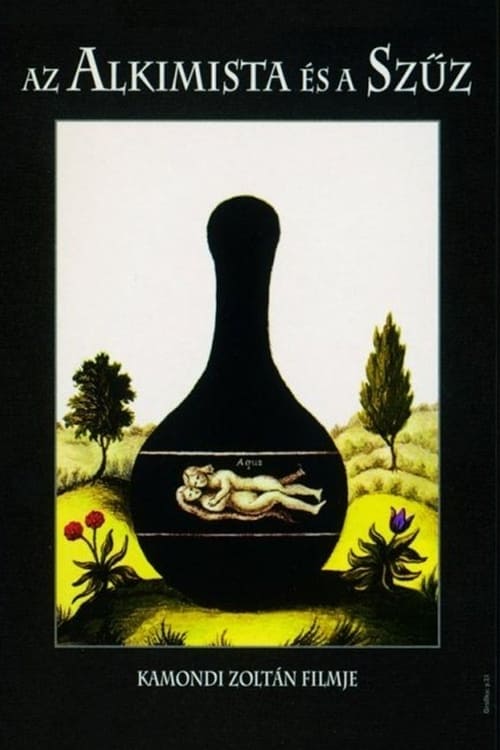
The story is set in the present day. László Sziráki, a womanizer and chemistry professor, is searching for the secret of making gold, but one component is missing. He wants fame and a solution to his financial problems. When he meets Esthena, an eccentric philosopher who wants to lose her virginity, he succeeds in turning plastic into gold. But he, a shrewish and shrewd man, does not recognise the exceptional nature of this encounter and pushes her away. Sophika, the wise grandmother of Syracuse, also meets Esthena: she sees her as a kindred spirit and assigns her to her grandson. But in the meantime, Mr. Maci, Esthéna's bumfordian and buffalo-loving gladiator knight, who will do anything for the girl, begins to pursue the alchemist out of jealousy. Will Syracuse find the answer to the alchemist's question? And is making gold even important?
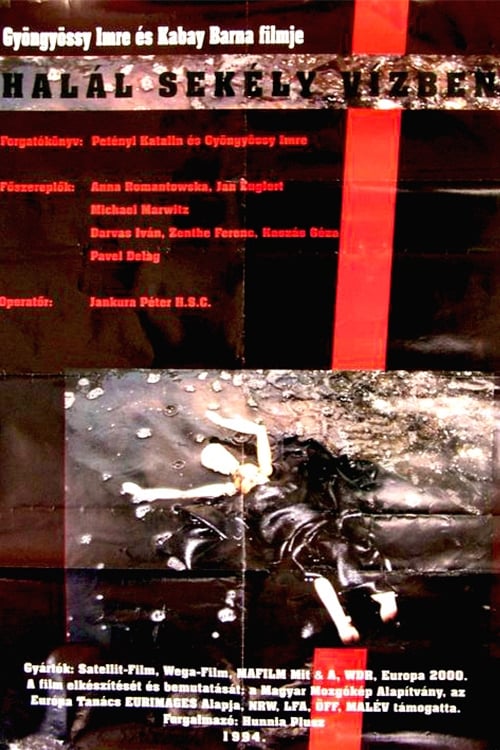
1991, farewell in Budapest. Mária remembers the past in tears. Her husband, Tibor, a chemist and a target of the KGB, left their apartment one evening to fetch some cigarettes only to be found drowned in the shallow Lake Balaton the following day. Their son, Peter, a student in Western-Europe, was found dead on the Danube embankment.

An atmospheric, sub-hallucinogenic venture into the world of the unknown. The enigma facing a young woman is the identity of her father. Unfortunately for her, she becomes drawn into a small Romanian underworld of brooding menace, darkness, torture chambers, and vampires.
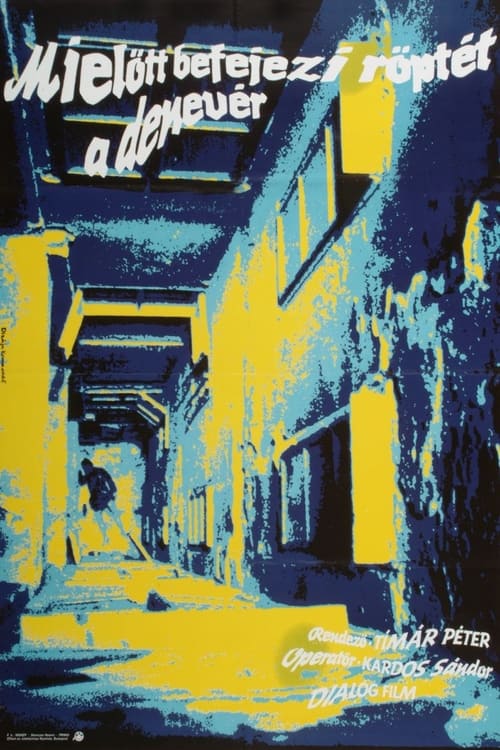
A divorced middle-aged woman takes home an ardent suitor, only to discover that he prefers her teenage son. The mother is an overworked coffee-shop attendant, the suitor turns out to be a plain-clothes policeman and the boy is a frustrated flautist.

Frigyes, shortly after immigrating to New York City from Hungary, leaves his family for the pleasures and gratifications of being a street bum. But as time goes by, the appeal of this lifestyle wanes. A series of adventures with other drifters reaches a dramatic conclusion when some thugs murder one of them. This startling event forces Frigyes to come to terms with his current situation and decide whether to return to the family he abandoned.
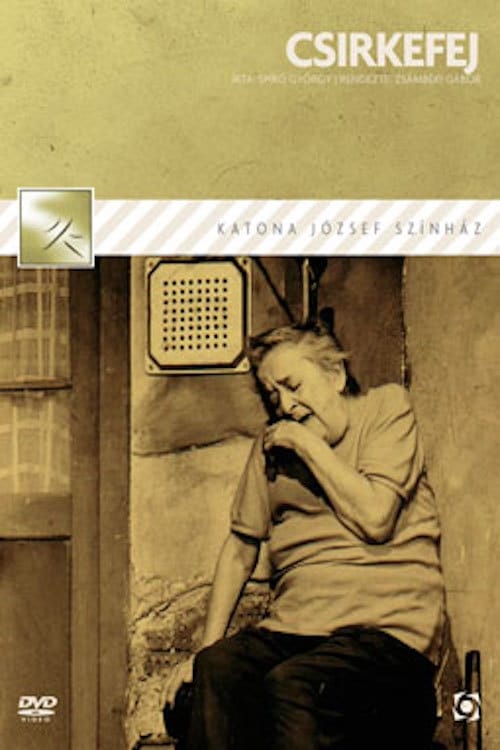
It is a tragedy, set among low-lifes on the outskirts of Budapest. Dramatic Exchange describes it as "Widely considered to be the most important Hungarian play of the last 20 years". The odd title of the play refers in the first instance to the chicken heads that an old woman feeds to her cat. However, it can also be taken to refer more broadly to the obtuse behaviour of the main characters in the play. The play is an odd mixture of pathos and nihilism, written against the bleak background of Stalinist totalitarianism from which Hungary was emerging. As with much modern drama, there is no hero in the play. The only noble behaviour that one can find belongs to one of the characters in the past, when he was a child, but he is no longer as he was. The hint that what once existed might be achieved again is the only faint ray of hope in a very bleak view of the human condition.
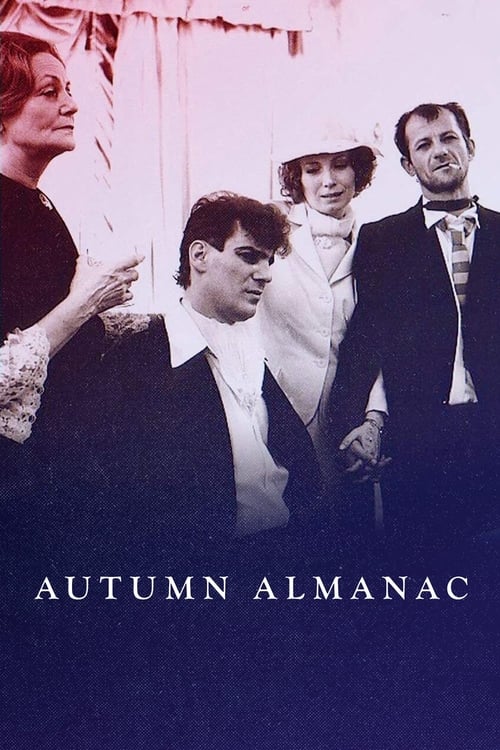
In this dense setting, the inhabitants of a large, claustrophobic apartment reveal their darkest secrets, fears, obsessions and hostilities.
Subscribe for exclusive insights on movies, TV shows, and games! Get top picks, fascinating facts, in-depth analysis, and more delivered straight to your inbox.