
Action
Adventure
Animation
Comedy
Crime
Documentary
Drama
Family
Fantasy
History
Horror
Music
Mystery
Romance
Science Fiction
Thriller
War
Western
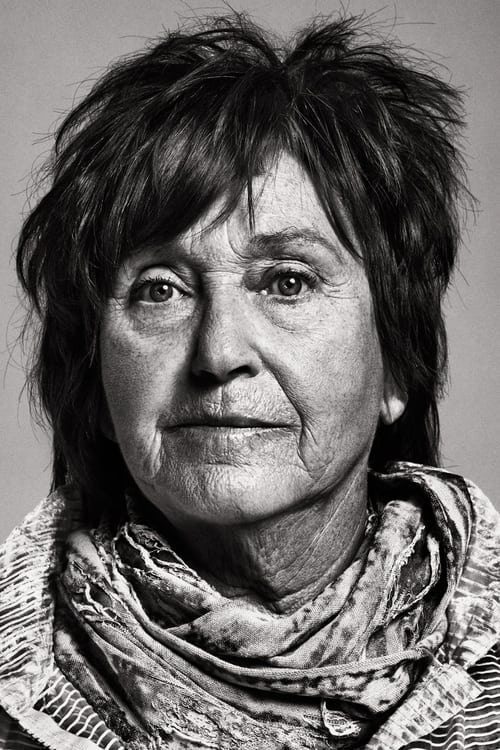
Valie Export, born Waltraud Lehner, is an Austrian artist. Her artistic work includes video installations, body performances, expanded cinema, computer animations, photography, sculptures and publications covering contemporary arts.
Explore all movies appearances
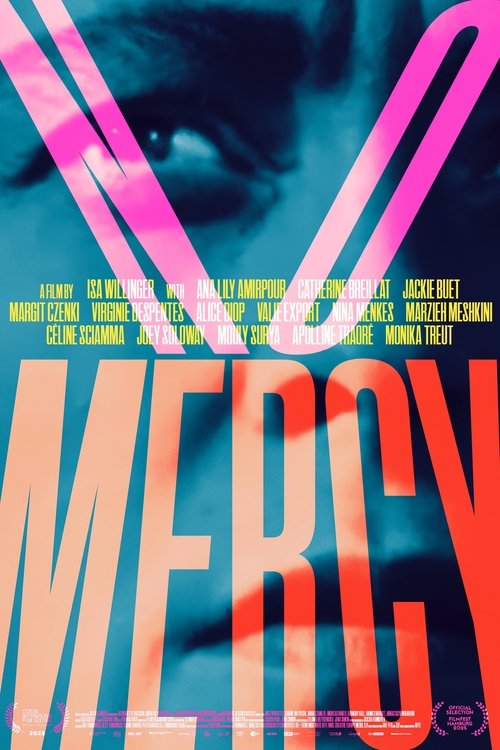
From the starting point of her admiration for the pioneering Ukrainian filmmaker Kira Muratova (1934-2018), the director poses a question: is cinema made by women really tougher, more violent? Seeking answers, she talks to great contemporary filmmakers like Catherine Breillat, Virginie Despentes, Alice Diop, Céline Sciamma, Ana Lily Amirpour, and Monika Treut, among others. It becomes obvious that the cinema screen is a space for the projection of real social problems and power relations.

She is the godmother of performance art. With her shocking public actions she created in the late 60s images that have burned into the general visual memory until today. The life and work of the Austrian artist Valie Export exemplify a development in art history in which women sought and found new ways and means of expression. Her work provides a feminist counterpart to the Viennese actionism of her time, which has influenced numerous artists of subsequent generations. The innovative diversity of her artistic approaches makes Valie Export an icon of 20th century art history.
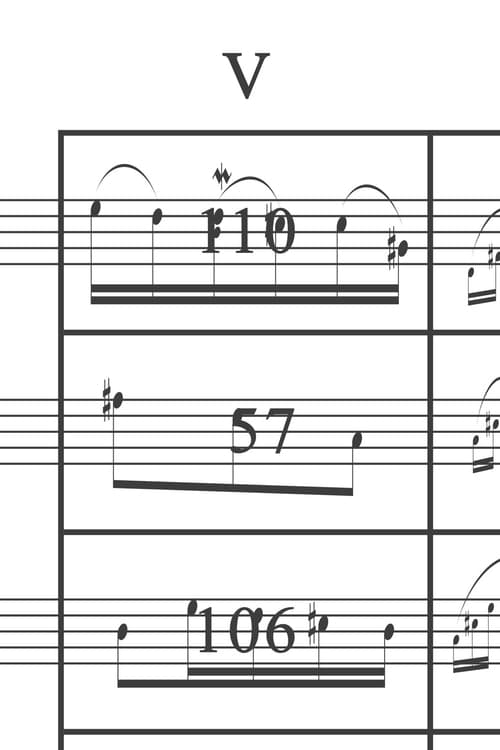
The starting point for this film is an eighteenth-century musical dice game attributed to Wolfgang Amadeus Mozart. A sequence of short, precomposed musical options are randomly selected through rolling dice and following a table of rules; these sequences are then patched together to create a new composition. Here we see one possible result of this chance procedure.
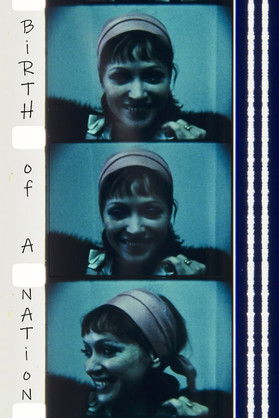
Jonas Mekas assembles 160 portraits, appearances, and fleeting sketches of underground and independent filmmakers captured between 1955 and 1996. Fast-paced and archival in spirit, the film celebrates the avant-garde as its own “nation of cinema,” a vital community existing outside the dominance of commercial film.

A comprehensive documentation of new art movements from 1945 to the present day. Beginning with the "Internationale Situationniste," "Cobra," "Spur," and "Wiener Gruppe" groups in Europe, and moving on to the international Happening and Fluxus movements, including the Viennese Actionists, and from 1970 onward to international Body and Performance Art, which also encompassed media art—film and video—the documentary presents film and photographic material from these art movements.
Home movies shot on Super 8mm by W+B Hein over 10 years.
In her three-part series VALIE EXPORT takes a look at the themes of "staged space - staged time", "real movement - movable reality", and "structural film", a genre which no longer exists on public-service television. Using numerous examples from films prepared for the specific media, for example by Wojciek Bruszewski, Malcolm LeGrice, Sergey Eisenstein, Maya Deren, Kurt Kren, Yvonne Rainer, Anne Severson, Alfred Hitchcock, Linda Christanell, Gary Beydler and Marc Adrian, narrative and non-narrative forms of story-telling are examined and compared. Adrian appears in a live interview, and he attempts to explain the conditions of production, methods and Zeitgeist through his own work, including his first computer film, Random (1963). The advanced level of this film is also indicated by the high density of theoretical quotes from Christian Metz, Charles S. Peirce, Vsevolod I. Pudovkin and Ferdinand de Saussure.
Baron Childerich III of Bartenbruch considers himself to be a descendant of the Merovingian dynasty and he has drawn up a chart of marriages and adoptions which show that he is his own father, grandfather, father-in-law, and son-in-law. He aims at achieving the "total family" based on one man. He persuades his french relative, Pippin, to help him. But the latter lets him down and breaks up the family... Among those who belong to the (surrounding) world of the Baron are Dr. Döblinger, a writer, who has formed a band of muggers and Professor Horn, a psychiatrist, who quiets his patients by leading them on nose rings and beating them up... Family satire with numerous personal and literary allusions based on the novel of the Austrian writer, Heimito von Doderer.
Katja Raganelli’s sole excursion into the realm of avant-garde cinema was this focus on Austrian experimental film axiom Valie Export. This portrayal of the filmmaker is quite special as it presents Export at a very particular moment in her career, during the shooting of a fiction feature, Menschenfrauen (1980), with which she was able to break into the avant-garde mainstream, shedding the skin of her path-breaking, often performance-based early works.
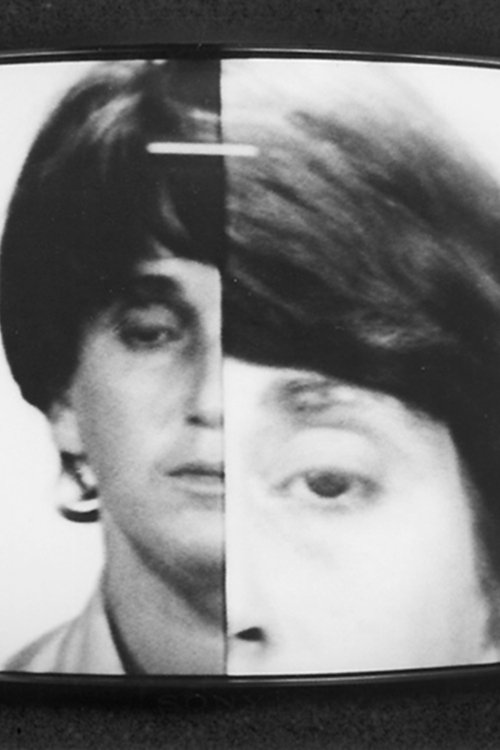
A work on the perception of space, where a video of a motionless figure in a room correlates four different camera positions with four different synthesized tones. We see the inert artist and how she calmly faces the cameras head-on. Six minute version.
Subscribe for exclusive insights on movies, TV shows, and games! Get top picks, fascinating facts, in-depth analysis, and more delivered straight to your inbox.