Action
Adventure
Animation
Comedy
Crime
Documentary
Drama
Family
Fantasy
History
Horror
Music
Mystery
Romance
Science Fiction
Thriller
War
Western
Explore all movies appearances

A London art broker goes to Copenhagen where he requires the services of a secretary fluent in Danish, English, and German. He falls deeply in love with the woman, despite the fact that he knows virtually nothing about her. She insists on not being married in a church, and after they are married, some bad things from her past begin surfacing in subtly supernatural ways, and he must find the best way to deal with them without destroying their relationship.

The evil lawyer wants to take over the estate, and the evil farmer Esben helps him. But if the good farmer Svend Åge gets the red cow Rosa to bellow while Niels Peder yodels, then the horse that the stable boy Morten is riding on the trotting track will run faster and win the race. Then the lawyer will no longer be able to take over the estate, but it could all go down the drain if he steals Rosa.

The painter Else Kant is in crisis – both artistically and personally. She is dissatisfied with her work and suffers from severe hallucinations and suicidal thoughts. She therefore voluntarily admits herself to a psychiatric ward, where the renowned Professor Cornelius reigns with great authority.

In her husband's opinion, Nora spends too much money. When Nora receives a visit from Mrs. Linde, she confides a secret to her. Nora has borrowed money so that the family can go on vacation. However, her husband must not find out. Helmer has become the director of the bank where Krogstad works. Krogstad now threatens Nora to reveal her secret. Nora goes through a lot of anguish.
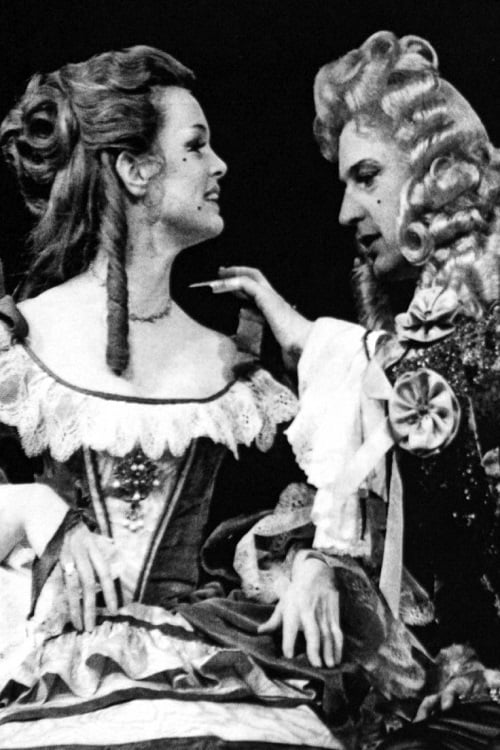
Bergman took one of his favourite plays to Copenhagen for a guest performance, which was even broadcast on Danish TV. In his Copenhagen The Misanthrope, Bergman maintained a dual approach. On the one hand, a production of Molière's play as a theatrical game performed in style and intellectually conceived; on the other hand, an exposure, through physical and psychological intensity, of the emotional tragedy in which Alceste and Celemine are both victims. Expectations were high prior to Bergman's production of The Misanthrope. A reviewer wrote, 'For the first time Molière's connection to the Danish stage is intercepted by a director whose forte is physiological tragedy, Strindberg over Holberg'. Many reviews had expected Bergman to put his very personal stamp on the production. Instead they experienced 'a clean Molière' and were struck by Bergman's faithfulness to the original mise-en-scene and to the classical rhythm of Molière's text.

The story of the life of a political prisoner in a Russian gulag. Based on the book by Aleksandr Solzhenitsyn

Under the leadership of the authoritative Mrs. Emma, a mediocre theater troupe tours the remote corners of the province. Despite miserable conditions and internal squabbles, the actors keep their spirits up, but for how long?
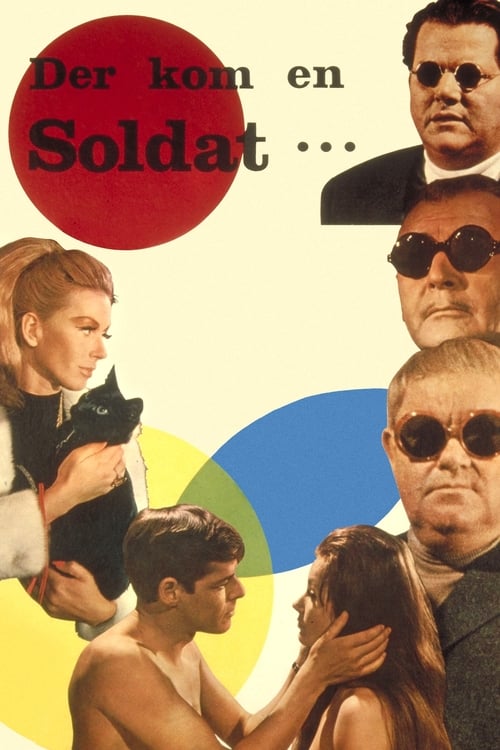
A soldier seeks justice against a group of men who murdered a prostitute.
After twelve years in the US, Kirsten returns home to her father with her American husband and their eleven-year-old son. Her father is a tough and cold businessman with whom she has never been on good terms. The couple soon separate, and Kirsten meets a former friend. Her father dies just as he is beginning to develop a good relationship with his grandson.

Police constable Møller'og psychiatrist Dr. Mogensen will have something to watch as the Pusle to everyone's surprise finds out that she can do magic. On her birthday she gets sent an ancient, magical figure from her uncle in South America. On the same day Pusle's parents has to travel to London, and the large family is now left to strict aunt Alma.
Subscribe for exclusive insights on movies, TV shows, and games! Get top picks, fascinating facts, in-depth analysis, and more delivered straight to your inbox.