Action
Adventure
Animation
Comedy
Crime
Documentary
Drama
Family
Fantasy
History
Horror
Music
Mystery
Romance
Science Fiction
Thriller
War
Western
Explore all movies appearances

In the vision of Philippe Grandrieux, the director of Tristan und Isolde, the latter is the driving force behind the passionate drama of Tristan and herself. She is an erotomaniac who wants to possess and swallow him whole. Philippe Grandrieux's direction focuses on Isolde's desire and not the desire of both of them (as classical literature usually reads Wagner's opera).
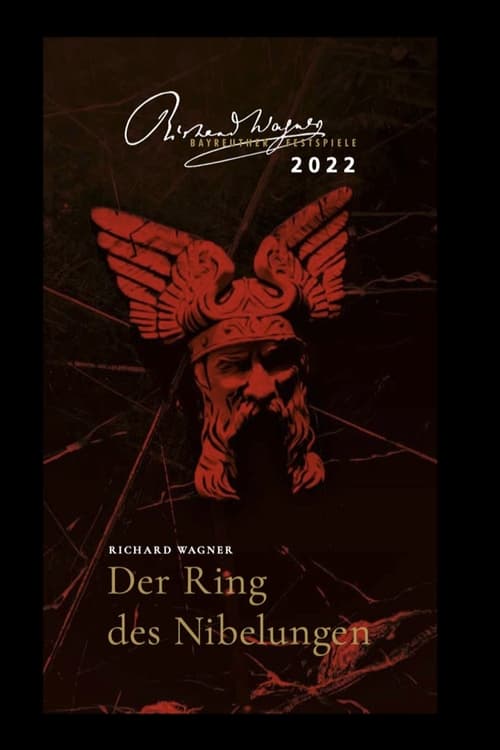
No plot available for this movie.
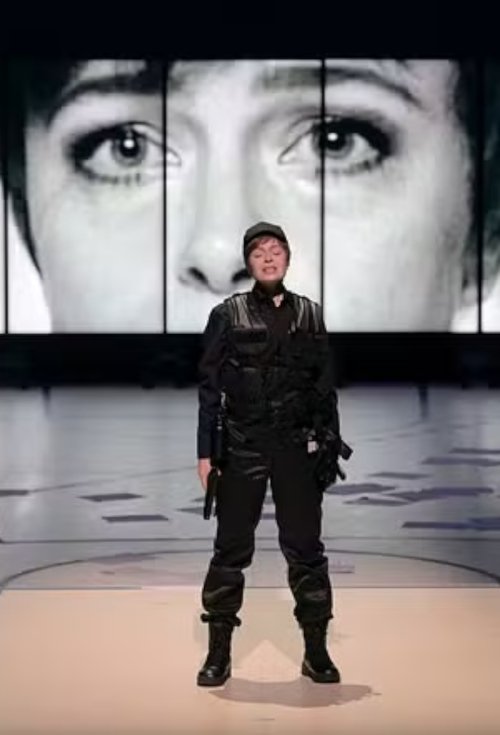
Beethoven's only opera came to the stage of the Opéra Comique in Paris in 2021 in a sensational production. The work of conductor Raphaël Pichon and director Cyril Teste reveals their appreciation for a work that is rarely performed in France. At the center of the plot is Leonore, who, disguised as a man, searches for her husband Florestan.

The young composer Max is due to marry Agathe, but before his wedding he must finish his opera on which he has been working for quite some time. Despite all his efforts, Max is plagued by worries that he will fail to complete the piece and so makes almost no progress. Visions and hallucinations haunt him, the boundaries between dream and reality seem to blur and overlap. Caspar tries to persuade him finally to give in to the hidden and dark creative powers within him and so overcome his inability to write; Caspar’s efforts are finally rewarded.

Frank Castorf revolutionised German-language theatre in the post-Berlin Wall era, bringing to the stage intellectual and political acuteness, brash references and a not infrequent use of crude humour. He brought these qualities to the Bayreuth Festival where his production of the Ring ran from 2013 to 2017. This 2016 recording of Das Rheingold captures Marek Janowski's festival debut as conductor of this unique production, in which Castorf replaces the Rheingold with oil as the central commodity in a pre-capitalist society. The first night of the Ring cycle begins at a gas station off of Route 66, the main road connecting the East and West coasts of the USA, that played an important role in commerce in the 1920s.
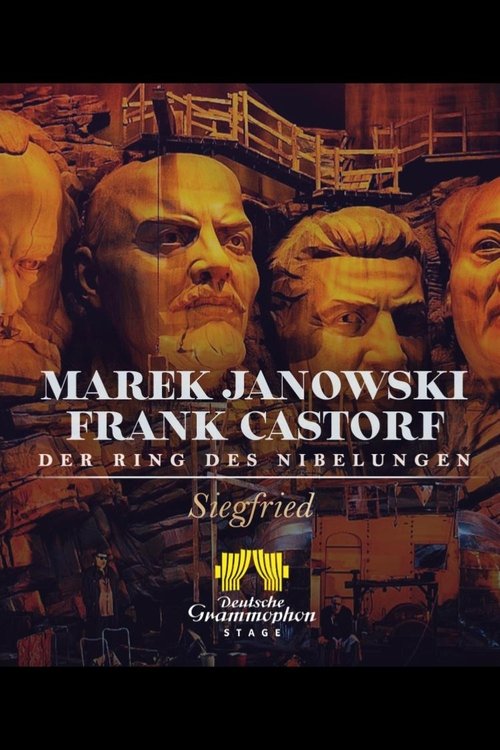
Frank Castorf's Ring makes a feature of unexpected settings and striking images, and here in Siegfried he shows the discussions between the young hero and his foster father Mime in Act I against a background featuring giant heads of Marx, Lenin, Stalin and Mao on a replica of Mount Rushmore. The typical mythical nature and forest world of the second act is replaced in this production by Berlin's Alexanderplatz. The Nothung sword is also replaced, in this production becoming a machine gun. While the direction elicited both approval and disapproval, the vocal performances received wide acclaim.
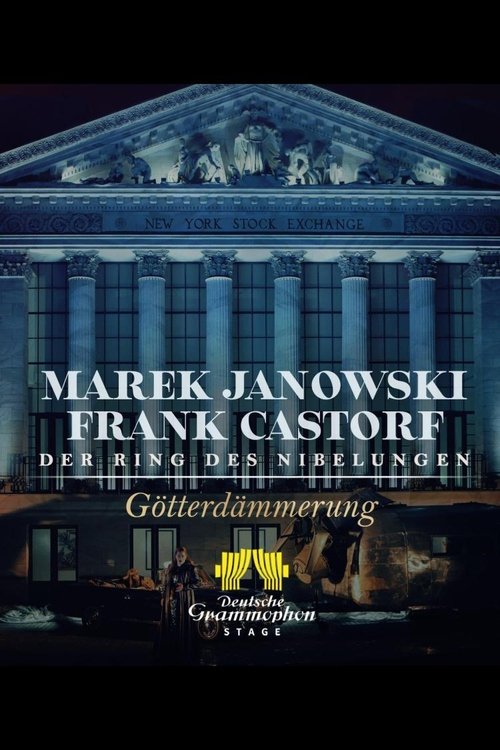
"Oil is the equivalent of what used to be gold. A luxury that we cannot eat," explained director Frank Castorf in an interview, outlining one of the key ideas behind his production of the Ring at Bayreuth. In the final part of the tetralogy, the wild journey ventures to the Buna chemical plants in Schkopau and to New York's Wall Street, among other places. Inspired by the aesthetic of Hollywood B movies, the production was first met with disapproval but grew to gain many supporters over the years.
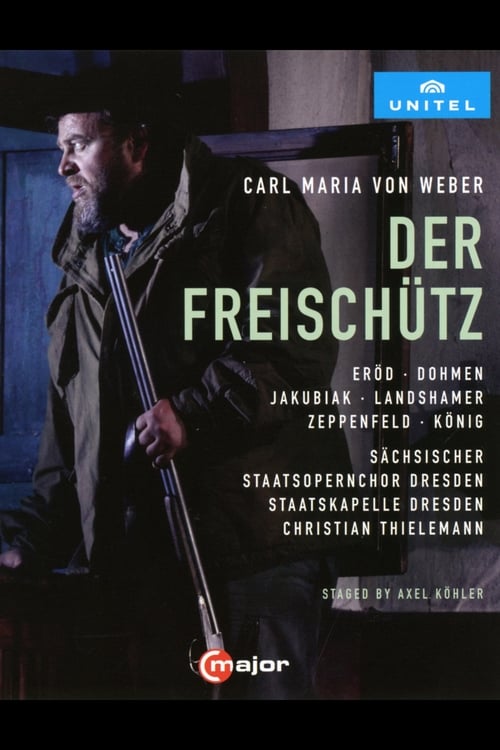
Axel Köhler’s production of Der Freischütz at the Dresden State Opera was described by Die Presse as “a minor miracle in Dresden”. In the words of the Salzburger Nachrichten, Köhler “scored a bulleye” with his sombre and satanic interpretation of Weber’s Romantic opera about love, temptation, souls sold to the Devil, obsession andfaith. According to the Financial Times, Christian Thielemann and the Dresden Staatskapelle conjured up a sense of “mortal terror from the orchestra pit. […] Thielemann is in command of every detail. That makes for utterly gripping listening.”
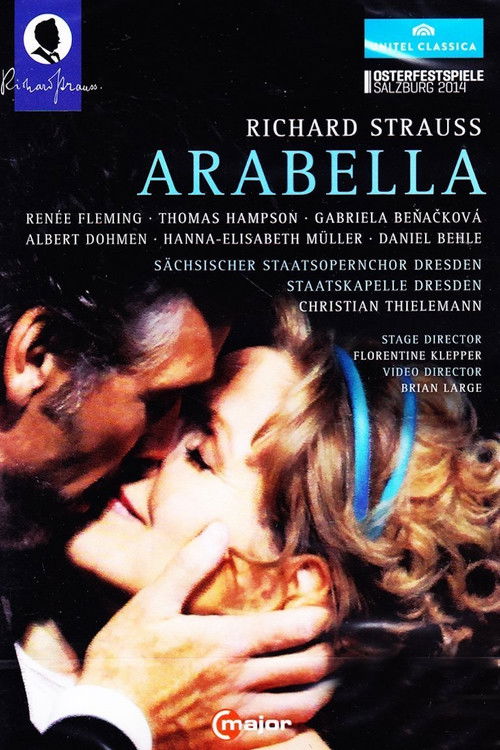
2014 marks a year of celebration recognizing the 150th birthday year of the German late-Romantic orchestral, operatic and lied master composer, Richard Strauss (1864-1949). Arabella (premiered 1933, Dresden) was the last of the half dozen Strauss works to feature a libretto by the great Austrian writer Hugo von Hofmannsthal. This production, from the most recent Salzburg Easter Festival is, after Capriccio, the second of three Richard Strauss operas C Major is releasing in honor of the composers birth, life and work. The star-laden cast includes soprano Renèe Fleming, baritone Thomas Hampson, Albert Dohmen (Covent Garden, Wiener Staatsoper, MET) and Gabriela Beaková (Wiener Staatsoper, Covent Garden). With Christian Thielemann and the Staatskapelle Dresden, the music of Richard Strauss is in the best of hands. (ORF) Thielemann gets the best out of the cast...especially Renée Fleming with her luxurious soprano FAZ
No plot available for this movie.
Subscribe for exclusive insights on movies, TV shows, and games! Get top picks, fascinating facts, in-depth analysis, and more delivered straight to your inbox.