
Action
Adventure
Animation
Comedy
Crime
Documentary
Drama
Family
Fantasy
History
Horror
Music
Mystery
Romance
Science Fiction
Thriller
War
Western

Idi Amin Dada (30 May 1928 – 16 August 2003) was a military leader and President of Uganda from 1971 to 1979. Amin joined the British colonial regiment, the King's African Rifles, in 1946, and eventually held the rank of Major General and Commander of the Ugandan Army before taking power in the military coup of January 1971, deposing Milton Obote. He later promoted himself to Field Marshal while h...
Explore all movies appearances

A film about the gold panning adventures of Hans Söderström, an indigenous Swede. The story stretches from Scandinavia to Africa, via Asia and the Americas, but ultimately boils down to the simple boyish dream of finding gold. Lots of it.

60 years ago, almost nothing was known of elephants in the wild. But then one young Scottish biologist changed that forever. In 1965 Iain Douglas-Hamilton arrived in Tanzania to live alongside African elephants. Later joined by his wife Oria and daughters Saba and Dudu, elephants became central to their lives with matriarch Boadicea and gentle young mother Virgo cherished like human relatives. But this garden Eden was short-lived as an ivory poaching epidemic swept across Africa forcing Iain to switch from pioneering scientist to maverick conservationist. He became a lone crusader against the international Ivory trade which was finally banned in 1989. Now back in the field and revealing even more about the fascinating world of elephants, Iain’s work continues alongside a new generation of Kenyan conservationists. This inspiring documentary combines stunning wildlife imagery with the story of a remarkable life showing how sometimes you have to stand alone to protect what you love.

This documentary explores the history of Canada’s first major migration of non-European and non-white refugees who arrived in 1972 when Ugandan President Idi Amin expelled all South Asians from the country. Their story of struggle and hope became part of Canada’s conversations about refugees and cultural pluralism, and informed the Canadian response to future refugee movements.

In 1972 the green wave sweeps over Sweden, guiding people back to nature away from the cities. Events range from escalated food prices in Skärholmen, the escape of fifteen prisoners from Kumlaanstalten, Sweden's first hijacking, and an Olympic year in Munich, marked by both Swedish success and tragedy with the attack on 11 Israeli athletes. The year also sees emigration to Australia, refugee intake from Idi Amin's Uganda, sports achievements, music releases, and daily life routines throughout various Swedish towns.
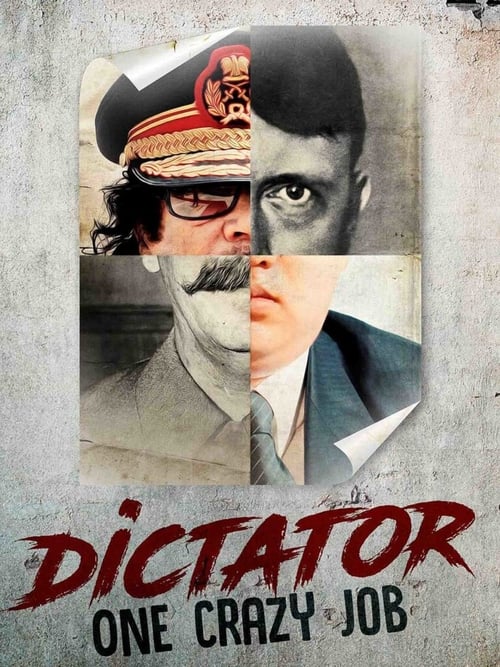
They’ve become the human face of inhuman barbarity. Leaders like Hitler, Idi Amin Dada, Stalin, Kim Jong Il, Saddam Hussein, Nicolae Ceausescu, Bokassa, Muammar Kadhafi, Khomeini, Mussolini and Franco governed their countries completely cut off from reality. These paranoid leaders were driven to abuse their power by the pathology of power itself. Dictators are driven by a relentless, thought-out determination to impose themselves as infallible, all-knowing and all-powerful beings. But they are also men ruled by their caprices, uncontrollable impulses, and reckless fits of frenzy, which paradoxically render them as human as anyone else. The abuses they committed were clearly atrocious, yet some of them were as outlandish as the characters portrayed in the film The Dictator. They sunk to depths worthy of Kafka: so incredibly absurd, they are outrageously funny.

Michael Cockerell talks to all of the surviving people to hold the post of Secretary of State for Foreign and Commonwealth Affairs including the current incumbent, and invites the viewer to imagine their life in the position.
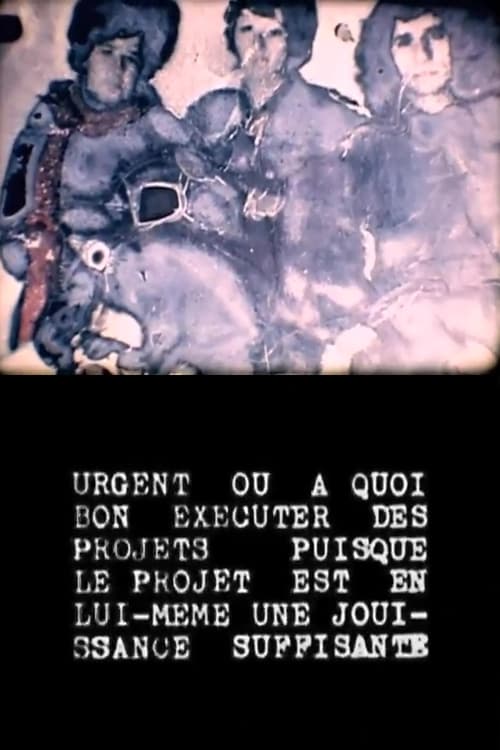
Gérard Courant applies the Lettrist editing techniques of Isidore Isou to footage of late 70's pop culture. Courant posits that his cinema offers an aggressive détournement to the French mainstream, reifying a Duchampian view of film: "I believe in impossible movies and works without meaning... I believe in the anti-movie. I believe in the non-movie. I believe in Urgent... My first full length movie that is so anti-everything that I sometimes wonder if it really does exist!"
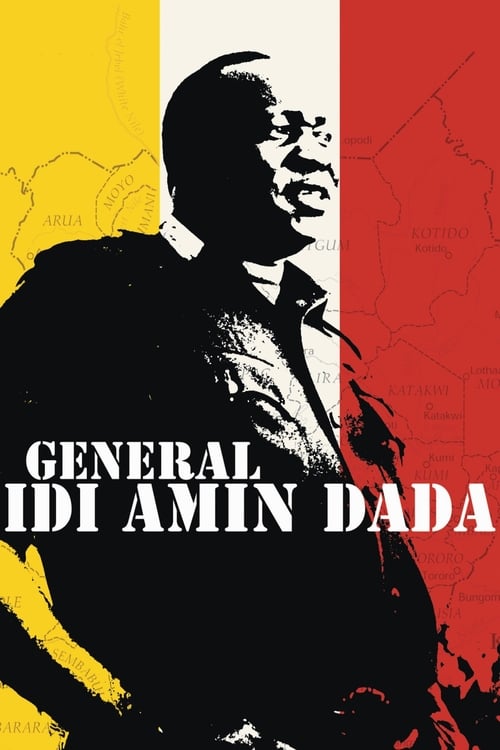
Filmmaker Barbet Schroeder shows the Ugandan dictator meeting his Cabinet, reviewing his troops, explaining his ideology.

The program Aikamme uskomuksia - ei ainoastaan leivästä (1973) looked into spirit beings, horoscopes, predictions and everything else from the rest of the world of the future appeal of the paranormal. Natural explanation for all of the world and the everyday reality is not enough. Astrologer Lyyli Mikkonen says the preparation of a horoscope, lecturer Liisa Tuovinen and Pastor Juho Tenhiälä show the relationship between the Christian faith and the miracle of UFOs. Chairman of the Helsinki UFO Society Timo Pyhälä familiar with the detection of light phenomena. (http://yle.fi/aihe/artikkeli/2014/06/21/1612-teeman-elava-arkisto-hamaran-rajamailla)
Subscribe for exclusive insights on movies, TV shows, and games! Get top picks, fascinating facts, in-depth analysis, and more delivered straight to your inbox.