
Action
Adventure
Animation
Comedy
Crime
Documentary
Drama
Family
Fantasy
History
Horror
Music
Mystery
Romance
Science Fiction
Thriller
War
Western

Biography not available at this time.
Explore all movies appearances
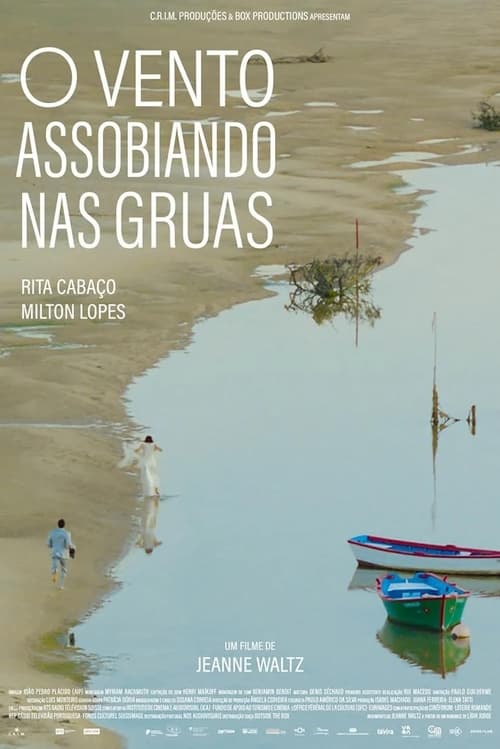
Algarve, late 90s. Following the death of her grandmother, Milene - a strong young woman full of life despite a slight mental handicap - divides her life between her family of notables and a Cape Verdean family that keeps her going, whom she met when her grandmother died. The wind that whistles in the cranes plunges us into the world of two families against the backdrop of Portugal's recent past.
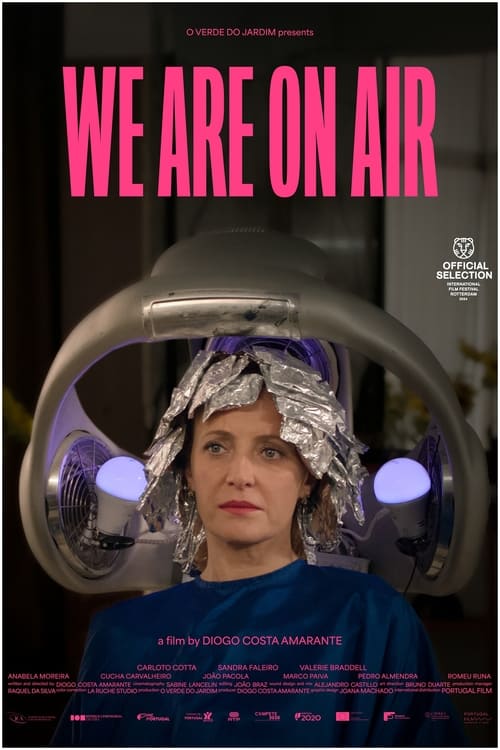
Thirty-something Vítor still lives with his mother, Fátima, in his grandmother Júlia’s apartment. Fátima is a hairdresser with a quiet disposition who, at night, fantasises about the policeman who has just moved in next door. By day, Vítor is a lowly employee on a TV show. But at night, he dons his neighbour’s uniform to win the favour and satisfy the desires of a boy he’s met online. In her retirement home, Júlia is unable to sleep at night and has long forgotten what drugs she is meant to be taking. She misses her dead husband, who manifests himself in the body of a living friend, and gets involved in her daily activities. Through these characters, Diogo Costa Amarante constructs a fascinating portrait of lives lived while desires remain unrealised.

It is 1979. Four young ladies are hired to form a girl band. They can sing, they shine with their dancing, and they shock the country. They become a big hit. They are DOCE.

A Widow who records her dreams is unable to sleep until her husband returns home.

The hypochondriac Sebastião and his not so normal family must save the country from the prime minister's plan of selling the country to China, Germany, France and Angola, and show that Portugal is not for sale.

Ulisses and Ermelinda Melo are surprised when they receive the news that an old friend of his mother is going to visit them. After an embarrassing first encounter, the nervousness of Ermelinda is exacerbated with the cold behavior of the guest.

We stare at mirrors as if 'image' was a weapon of self-defense. At night, I hide in actors' dressing rooms for a working class experience. By day, I face an old theatre being razed to the ground, making way for a parking lot. Graffitis have curtains, the nose cap of an umbrella arises from a mount of sand. Oh, Happy Days! No need to stage anything! The bulldozer is a dinosaur whose teeth and gracious neck swings by a EU flag. In the boxes, we await the audience. Sometimes, nobody comes. Lost in a symbolic show of reality, I can only watch the world's end because all the endangered species perform and a reflecting labyrinth of life stories breaks through the glass of the Economic Eating Machine. Even when the sky is falling, theatre will always happen. So, choose the right place.

Alfredo Loureiro, a carpenter by trade, never knew any other passion in life besides his craft. Women intimidated him, so he spent more time avoiding them than courting them. But all it took was one glance at Emília's smile for everything to change. At 78, Alfredo discovers true love and will do anything to experience this feeling, which had been unknown to him his entire life.

Luís hates Christmas. In the hospital where she is a doctor, she always offers herself to work for 24 hours in the emergency room on the 24th and 25th of December. When everything gets ready to be another bitter and solitary Christmas, a homeless is taken to the emergency room apparently with a pneumonia, despite refusing treatment. When Luís intervenes, she ends up recognising his father in the homeless man, with whom she cut relations circa 10 years ago.

Ana Catarina returns from Brazil with her father and her nanny to marry a man she doesn't know and doesn't like. A terrible coincidence happens when, on the same day, the young woman becomes a widow and an orphan, a fact that leaves her heir to an incalculable fortune and coveted by all the aristocrats in the region.
Subscribe for exclusive insights on movies, TV shows, and games! Get top picks, fascinating facts, in-depth analysis, and more delivered straight to your inbox.