Action
Adventure
Animation
Comedy
Crime
Documentary
Drama
Family
Fantasy
History
Horror
Music
Mystery
Romance
Science Fiction
Thriller
War
Western
Explore all movies appearances
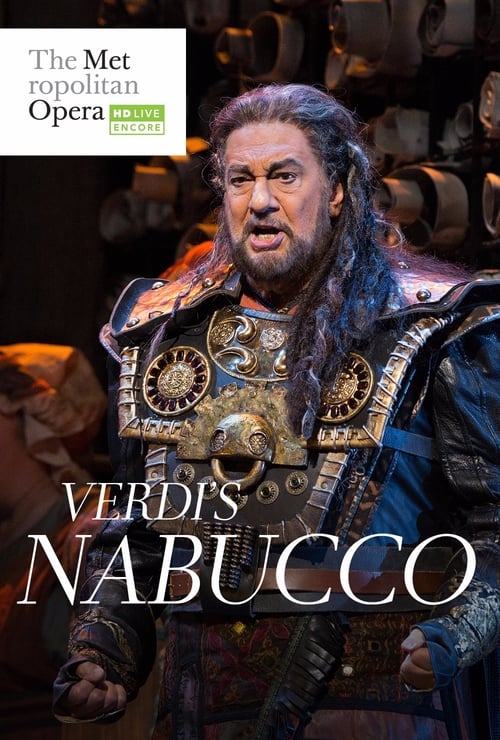
The legendary Plácido Domingo brings another new baritone role to the Met under the baton of his longtime collaborator James Levine. Liudmyla Monastyrska is Abigaille, the warrior woman determined to rule empires, and Jamie Barton is the heroic Fenena. Dmitri Belosselskiy is the stentorian voice of the oppressed Hebrew people.
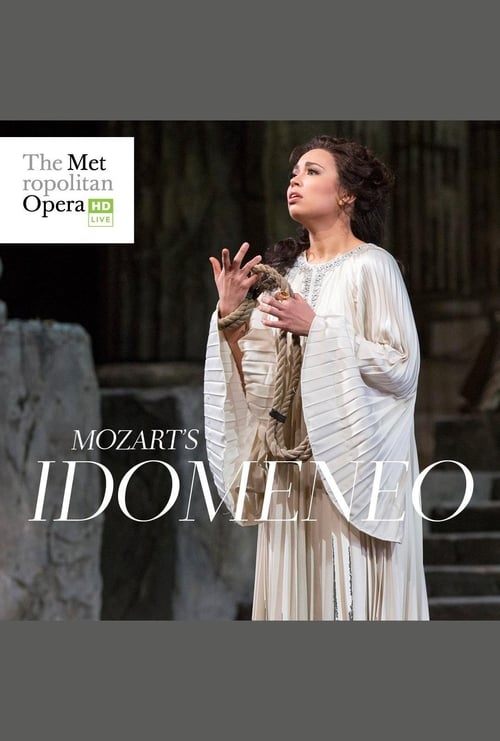
Mozart’s early masterpiece returned to the Met for the first time in more than a decade with Music Director Emeritus James Levine, who led the work’s company premiere in 1982, again on the podium. Tenor Matthew Polenzani brings both steely resolve and compassionate warmth to the title king of Crete, who is faced with an impossible decision. With her rich mezzo-soprano, Alice Coote sings the trouser role of Idomeneo’s son Idamante, who loves the Trojan princess Ilia, sung with delicate lyricism by Nadine Sierra. Elza van den Heever gives a thrillingly unhinged portrayal of the jealous Elettra. Jean Pierre-Ponnelle’s timeless production blends the grandeur of ancient myth with the elegance of Enlightenment ideals.
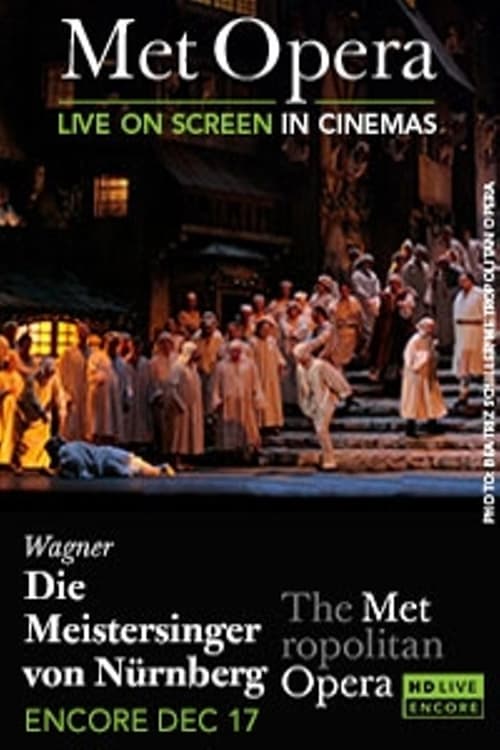
James Levine leads a stirring performance of Wagner’s epic comedy, seen in Otto Schenk’s classic production. Baritone Michael Volle stars as Hans Sachs, the cobbler-poet at the heart of this story of love, art, and youth vs. age. Leading Wagnerian tenor Johan Botha is Walther von Stolzing, the young knight whose new ideas upset the traditional ways of the mastersingers, and Annette Dasch sings Eva, the girl he loves, whose hand has been promised to the winner of a singing contest. Johannes Martin Kränzle as the pedantic town clerk Beckmesser, Hans-Peter König as Pogner, Eva’s father, and Paul Appleby as David, Sachs’s apprentice complete the stellar cast.
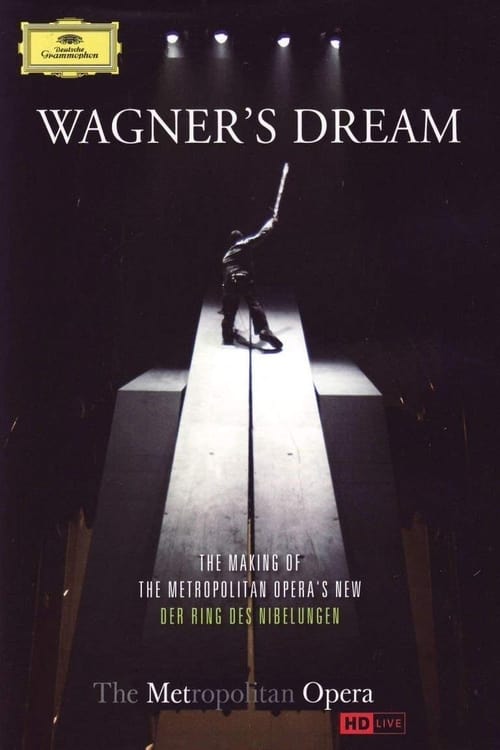
Wagner's Dream-the documentary highlighting the creative process and technical aspects involved in realizing Robert LePage’s production of the MET's newest staging of Wagner's ring cycle is highly enjoyable and provides the viewer with much fascinating information about how this production evolved from nascent ideas to brilliant performances. Most opera lovers had to be intrigued by the amazing hybridization of animation and the technologically complex use of "The Machine" to make these operas come alive with astonishing sets that are true to Wagner's intentions for his monumental ring cycle. I thoroughly enjoyed every minute of this video and wished there was another hour or two (like a Wagnerian opera!).
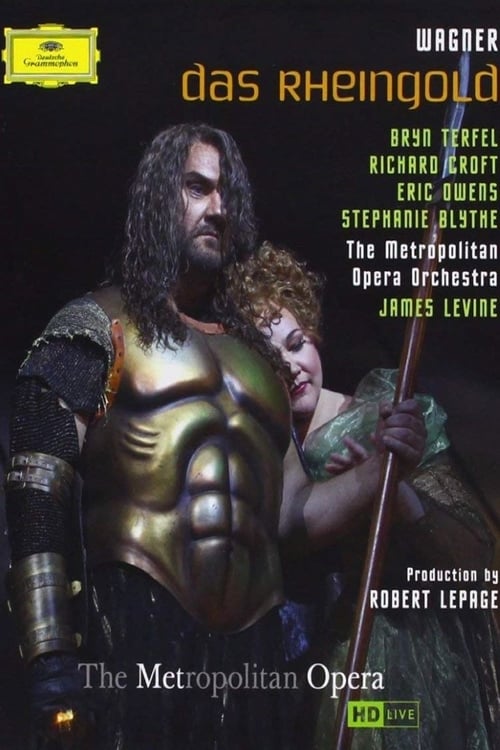
In the depths of the Rhine, the three Rhinemaidens guard the Rhinegold, a treasure of immeasurable value. The Nibelung dwarf Alberich is dazzled by the sight of it. The girls explain that whoever wins the gold and forges it into a ring will gain power over the world, but must first renounce love. Frustrated by his unsuccessful attempts to catch one of the girls, Alberich curses love and steals the gold. Wotan, lord of the gods, is reproached by his wife Fricka: he has promised to give Freia, goddess of youth, to the giants Fasolt and Fafner in return for their building a fortress for the gods. When the giants demand their reward, Loge, the god of fire, suggests an alternative payment: the ring Alberich has forged from the Rhinegold, and his other treasures. The giants agree, and Wotan and Loge leave for the Nibelungs’ underground home.
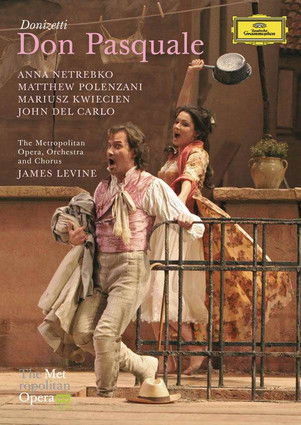
Donizetti’s timeless comedy shines in Otto Schenk’s enchanting production, conducted by James Levine and featuring a remarkable cast. The incomparable Anna Netrebko is Norina, the young widow beloved by Ernesto (a suave Matthew Polenzani), who is about to be disinherited by his miserly uncle, Don Pasquale (John Del Carlo). It takes the clever scheming of Dr. Malatesta (Mariusz Kwiecien) to set things right and to teach the old curmudgeon a lesson—fits of temper, mistaken identities, and all kinds of comic confusion included.
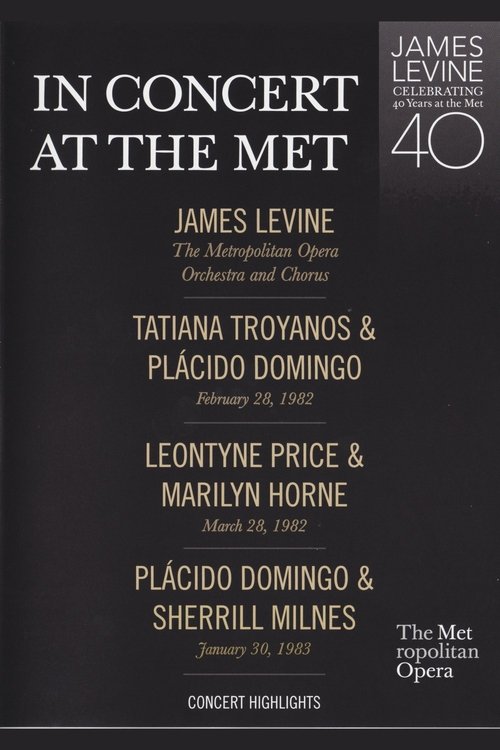
In Concert at the Met (DVD) - Highlights Five of the Met's greatest stars - Price, Horne, Troyanos, Domingo, and Milnes - joined James Levine for a series of irresistible concert programs, originally telecast in the 1980s. Featuring works by composers ranging from Handel to Meyerbeer to Puccini and Verdi, these performances include some of opera's favorite moments, delivered by a stunning group of legendary artists. Plàcido Domingo, Tatiana Troyanos (February 28, 1982) Leontyne Price, Marilyn Horne (March 28, 1982) Plàcido Domingo, Sherrill Milnes (January 30, 1983)
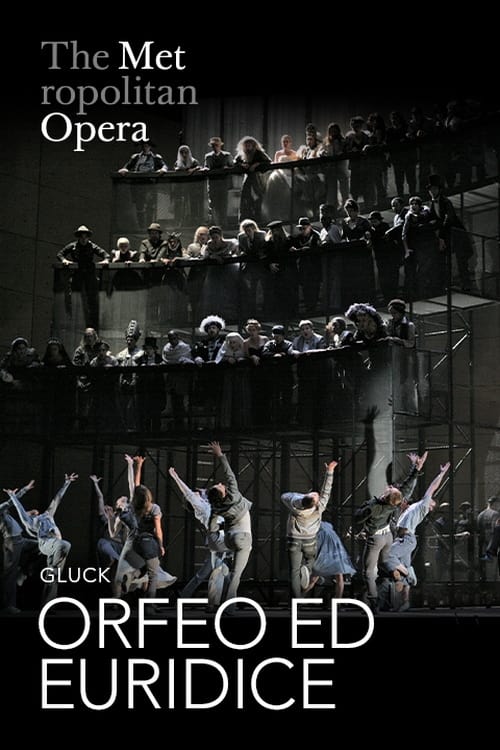
Director and choreographer Mark Morris’s production of Gluck’s masterpiece updates the immortal story from its ancient Greek roots to the timeless present, where, he says, “the union of chorus and dancers feels inevitable and inseparable.” With costumes by Isaac Mizrahi and a set designed by Allen Moyer, this production surrounds the action with the superb Met chorus dressed as a crowd of historic characters who bear witness to the transformative power of love. Orfeo (Stephanie Blythe) is so consumed with grief at the death of his beloved Euridice (Danielle de Niese) that the gods (Heidi Grant Murphy as Amor) allow him to lead her back from the underworld—if he will not look at her on the way. Of course he can’t resist looking, but the gods are truly merciful.
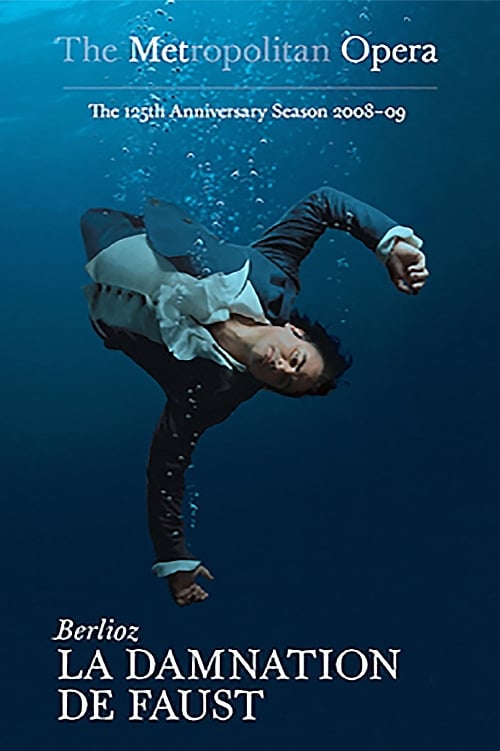
Radiant mezzo-soprano Susan Graham and dashing Italian tenor Marcello Giordani are unlucky lovers in La Damnation de Faust, Hector Berlioz’s classic take on dancing with the devil.

Late Academy Award–winning director Anthony Minghella made his Met debut on Opening Night of the 2006–07 season, with a now-classic staging of Puccini’s perennial heartbreaker Madama Butterfly. This documentary follows the production’s creation—from the Met’s subterranean rehearsal rooms to the main stage and on to the premiere—as Minghella worked with the opera’s stars, soprano Cristina Gallardo-Domâs as Cio-Cio-San and tenor Marcello Giordani as Pinkerton.
Subscribe for exclusive insights on movies, TV shows, and games! Get top picks, fascinating facts, in-depth analysis, and more delivered straight to your inbox.