
Action
Adventure
Animation
Comedy
Crime
Documentary
Drama
Family
Fantasy
History
Horror
Music
Mystery
Romance
Science Fiction
Thriller
War
Western
Explore all movies appearances

Revived after 171 years in oblivion, the staging of Rosmonda d’Inghilterra at Bergamo’s Teatro Donizetti proved fascinating for the Italian public. From the excellent cast of singers, Jessica Pratt and Eva Mei gave stand-out performances. The opera revolves around a tale of love and intrigue surrounding the main protagonists – the famous Queen Eleanor of Aquitaine, her husband Henry II of England, and the fair Rosamund de Clifford. Rosmonda is the quintessential innocent, unaware that the man she loves is the King of England and that she has unwittingly become a rival to the much-feared Queen Eleanor of Aquitaine. Eleanor, having already had her first marriage annulled for reasons of consanguinity, is unwilling to see her second marriage also fail. Only the faithful page Arturo, secretly in love with Rosmonda, knows that the Queen is aware of her husband’s betrayal; but he too is embroiled in this game of deceit, hoping that he will end up winning the girl.

Never seen before: an opera in Zurich station, amidst the throngs of passengers. When lyrical art comes down from its pedestal to meet the public.
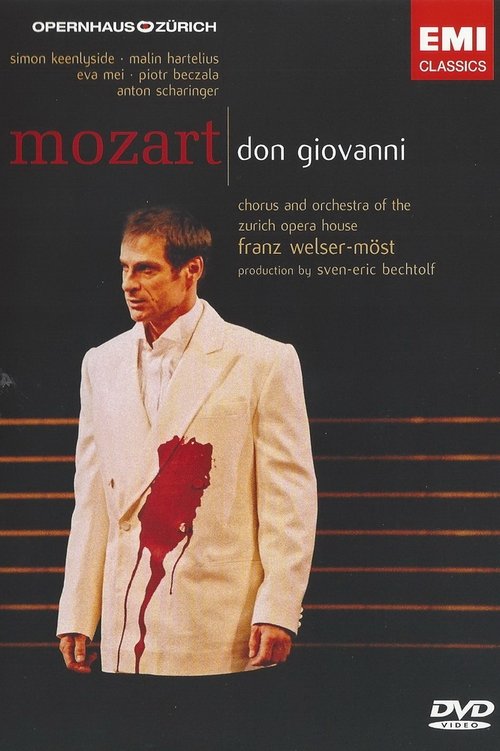
No plot available for this movie.

Live performance Zürich, May and July 2006. Modern dress performance which generated mixed reactions.
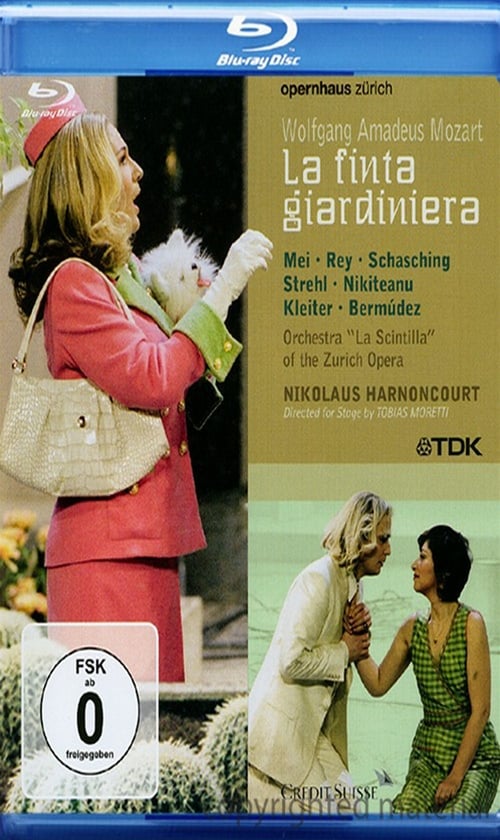
The Zurich Opera gathered a superb cast for this production: Italian soprano Eva Mei sings the Countess Violante, known as Sandrina, the feigned gardener of the title. Spanish soprano Isabel Rey is her opponent Arminda, and Arminda's former lover, the melancholy Cavaliere Ramiro, is sung by Romanian mezzo Liliana Nikiteanu. Moretti's staging presents the action in a modern villa in a hierarchical world of the rich and famous.

This DVD of a live 2005 performance from the Zürich Opera under the musical direction of Franz Welser-Möst has many things to recommend it -- the young tenor Piotr Beczala as Alfredo, the marvelous Thomas Hampson as Giorgio Germont, the playing of the Zurich Opera orchestra, the simple but effective sets by by Erich Wonder, the uncluttered stage direction by Jürgen Flimm. It also has some flaws: strangely variable volume level of the recorded sound sometimes coming on so loud as to make one reach for the volume control, and the uneven performance of the Violetta, Eva Mei who, for all her merits, gives a dramatically effective performance marred by occasional difficulties with vocal production. Still, overall I felt this was a moving production, one that I would recommend, although perhaps not as an only DVD of one of Verdi's most popular operas.
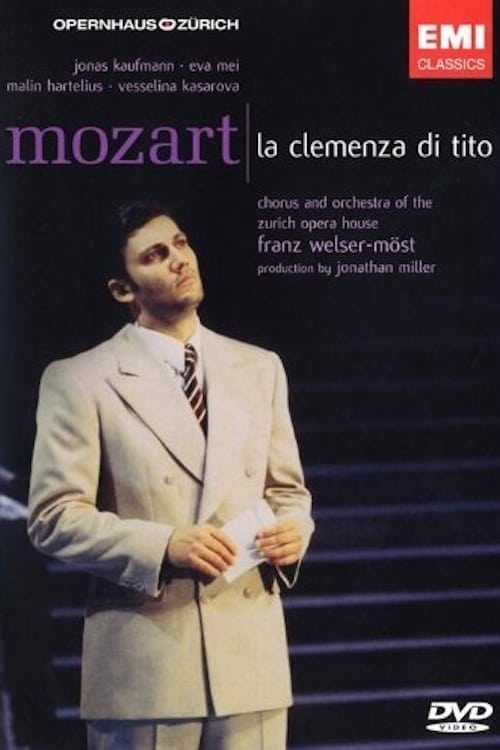
This is an effective staging, though the set looks medieval and the costumes are modern. It’s well paced, well played, well sung. Jonas Kaufmann is an ideal Tito. His voice is not only beautiful and flexible, it’s also ample, retaining warmth and sweetness when he sings out. The character of Tito is too good to be true, but Kaufmann makes him intense, noble, and beliveable. Vesselina Kasarova is riviting as Sesto. Her voice is gorgeous and multi-colored, her technique exquisite, her immersion in the role complete.
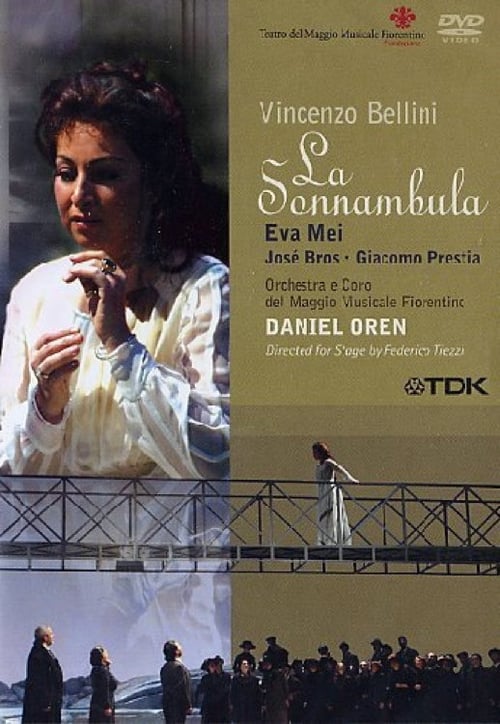
Bellini opera with Daniel Oren conducting the Orchestra and Chorus of thel Maggio Musicale Fiorentiono.
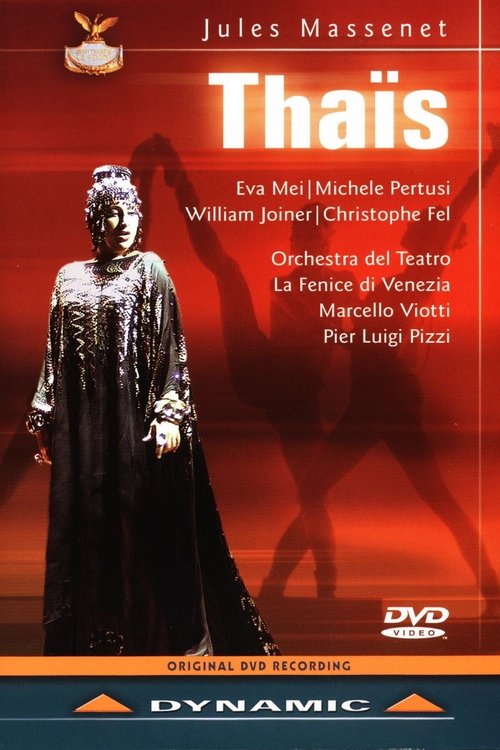
The title role, in this excellent production, is sung by an Eva Mei in great vocal form, who gives an interpretation of extraordinary depth. Beside her, the famous bass-baritone Michele Pertusi, as Athanaël, shows once again his unquestionable style. On the podium is Marcello Viotti, music director of the Venetian theatre. The story of the conversion of the beautiful courtesan, and the clash between spirituality and sensuality have been portrayed brilliantly by Pier Luigi Pizzi, one of today’s most talented opera directors. The visual quality of this production is indeed one of its strong points, and the DVD recording will not fail to fascinate the viewer.
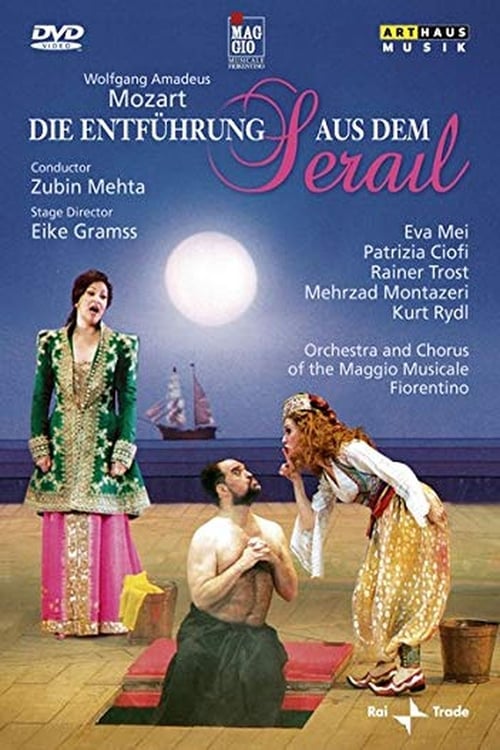
Singspiel in three acts by Wolfgang Amadeus Mozart. The German libretto is by Gottlieb Stephanie, based on Christoph Friedrich Bretzner's Belmont und Constanze, oder Die Entführung aus dem Serail. The plot concerns the attempt of the hero Belmonte, assisted by his servant Pedrillo, to rescue his beloved Konstanze from the seraglio of Pasha Selim. The work premiered on 16 July 1782 at the Vienna Burgtheater, with the composer conducting.
Subscribe for exclusive insights on movies, TV shows, and games! Get top picks, fascinating facts, in-depth analysis, and more delivered straight to your inbox.