Action
Adventure
Animation
Comedy
Crime
Documentary
Drama
Family
Fantasy
History
Horror
Music
Mystery
Romance
Science Fiction
Thriller
War
Western
Explore all movies appearances

No plot available for this movie.
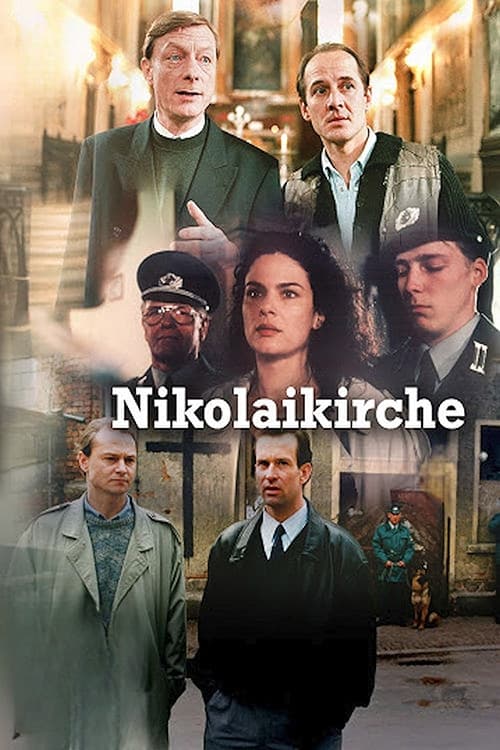
The story of a Leipzig family from 1987 to the Monday demonstrations in 1989. After the death of her father, a high-ranking officer in the People's Police, the daughter joins the resistance movement around St. Nicholas Church. Phenomena such as obedience, followership, spying and resistance are illustrated in this haunting film based on individual people. A film that provides food for thought for the discussion about the fall of the Berlin Wall and recapitulates contemporary history.

No plot available for this movie.

This elaborate two-part television film features a section from the life of communist worker leader Ernst Thälmann. It begins with the bloody riots on May 1, 1929 in Berlin, in which police officers shot at demonstrating workers, and ends with February 7, 1933, when Thälmann appeared as a speaker at the illegal meeting of the Central Committee of the Communist Party of Germany in goat neck. This period was marked by the struggle of the Communists against the ever stronger National Socialists and the rise of Adolf Hitler.

The girl Jorinde and the foundling Joringel grow up sheltered in a farmer's cottage behind the moor, but the dense forest around them harbors deep secrets. One day, a sorceress, omnipresent as an owl, juniper tree or in fairy form, takes the beautiful Jorinde away. Her mother, father and Joringel are left behind in sorrow. However, determined Joringel sets off in search of Jorinde. Although the enchantress tries to convince him that his search is in vain, he succeeds in finding his beloved in an enchanted castle. There she lives, enchanted, alongside many other beauties, unattainable for reality. But it is the special power of the love between the two that enables Joringel to recognize Jorinde, who has been transformed into a nightingale, among many other nightingales. The spell expires. But peace only returns when Joringel saves his family from marauders and defeats them in battle.
The young Walter Retzlow, drafted into the guard team of a foreign labor factory in the last year of the war, receives the papers of a murdered anti-fascist by chance. He adopts the new identity, which promises him security.
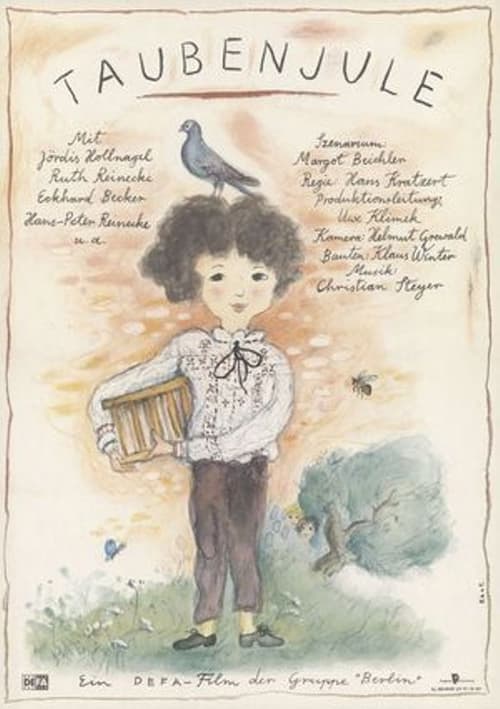
Eleven-year-old Jella lives with her mother in a rural idyll in which both feel at home and comfortable. Then, however, they move to the city where her father works. On parting, her friend Freitag presents Jella with a pair of pigeons. Although Jella is looking forward to life in the city, she is unable to accustom herself to her new surroundings. She is being picked on by the other children, and a neighbor′s son even releases her pigeons. They fly back to Freitag who returns them to Jella. When Jella visits the village one day, she is disappointed to learn that she has become a stranger there, as well.

19-year old Benjamin, called Ben, works as a cashier on the fairground und is impressing girls with his youthful self-confidence. After an argument with his uncle, who had caught the boy with a 16-year old girl, Ben leaves his familiar surroundings und ventures into the world beyond the fairground. At Berlin′s Ostbahnhof, he meets the much older cookmaid Hanna, who puts homeless Benjamin up in her flat. Ben finds work as a welder in a factory where he at first has to cope with the prejudice of his sceptical co-workers.

Ralph grows up in pre-war Dresden as the eldest son of a principled and orderly streetcar conductor. With the rise to power of the Nazis, the war, the collapse and the hesitant new beginning, his firmly established middle-class world is also thrown off course. His father is one of the first to be called up to the front. His mother is left alone with the responsibility for Ralph and his younger brother Achim. In the air-raid shelter, during the nights of bombing and later in the daily struggle against misery and hunger, the mother quickly abandons all moral baggage and develops a pragmatic will to survive, for which she admires Ralph. At the same time, the boy is frightened by his mother's desperate claim to happiness because he perceives her affairs as a betrayal of his father, who has gradually faded into a symbol of a happy, carefree childhood.
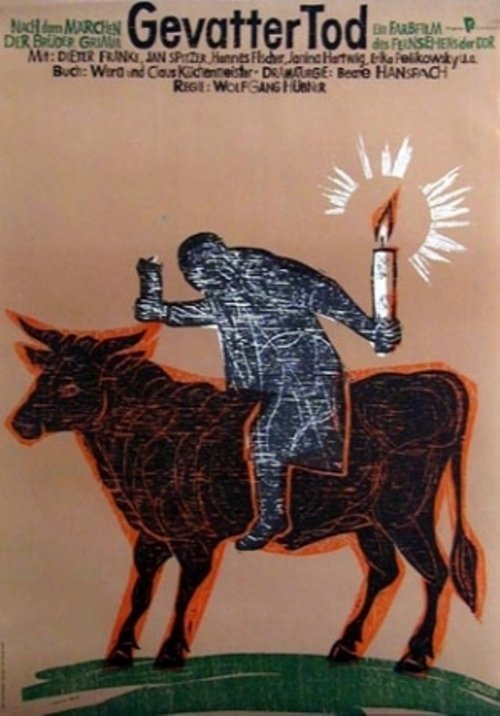
Once upon a time, there was a poor farmer who had thirteen children. Since the farmer was so poor, there was never anything left for the youngest of the family. Therefore, the farmer chose Death as the godfather of his son, Jörg, because all people are equal in the eyes of Death. The Grim Reaper is happy to look after the boy and turns Jörg into a skilled doctor who earns wealth and fame.
Subscribe for exclusive insights on movies, TV shows, and games! Get top picks, fascinating facts, in-depth analysis, and more delivered straight to your inbox.