Action
Adventure
Animation
Comedy
Crime
Documentary
Drama
Family
Fantasy
History
Horror
Music
Mystery
Romance
Science Fiction
Thriller
War
Western
Explore all movies appearances

Der Ring des Nibelungen in a production of the Zürich opera house, recorded 2024. "Dramatic music-making at its finest". In the hands of General Music Director Gianandrea Noseda and Stage Director Andreas Homoki, Wagner's myth is represented as "a dysfunctional family of gods" (The Independent) in a polished yet unpretentious production that underscores the humanity of the characters, who are performed by the same exceptional cast of singers across all four operas.
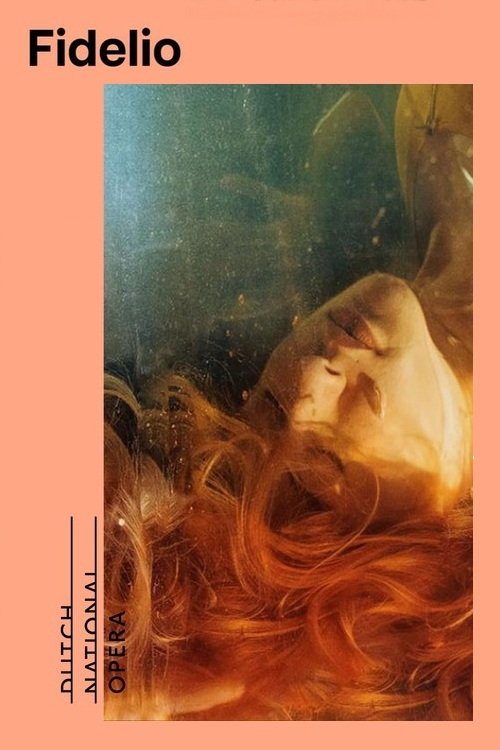
Liberation opera, revolutionary artwork, an ode to fidelity in love and utopian drama – Fidelio, Beethoven’s only opera, is all of these things. The numerous characterisations and interpretations add an aura of mystery to the opera but demonstrate above all that it is a unique work of musical theatre that expresses the hope for a humane future with justice and liberty for all. The stage direction is in the hands of the Ukrainian director Andriy Zholdak. His visual imagery, replete with symbols, is reminiscent of great film directors such as Andrei Tarkovsky and Ingmar Bergman. Using a distinctive style, Zholdak explores the deeper layers of the universal human drama of Fidelio. These layers can sometimes be difficult to follow.
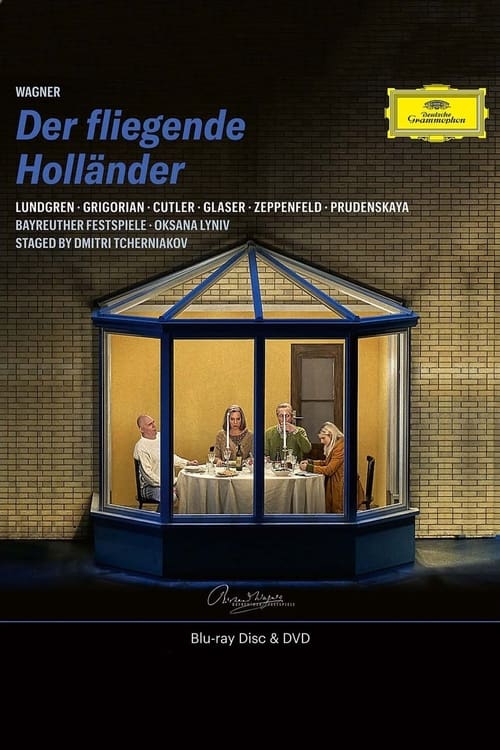
This is a performance of Wagner's three-act opera Der fliegende Holländer ("The flying Dutchman"), performed by Bayreuther Festpiele, directed by Dmitri Tcherniakov. The staging was notable for two other milestones, as Oksana Lyniv became the first woman to conduct at Richard Wagner’s legendary Festspielhaus since its opening in 1876, and the sensational Lithuanian soprano Asmik Grigorian made her house debut with a standout performance as the opera’s heroine, Senta. The exceptional cast also included John Lundgren (The Dutchman), Georg Zeppenfeld (Daland), Eric Cutler (Erik) and Marina Prudenskaya (Mary).
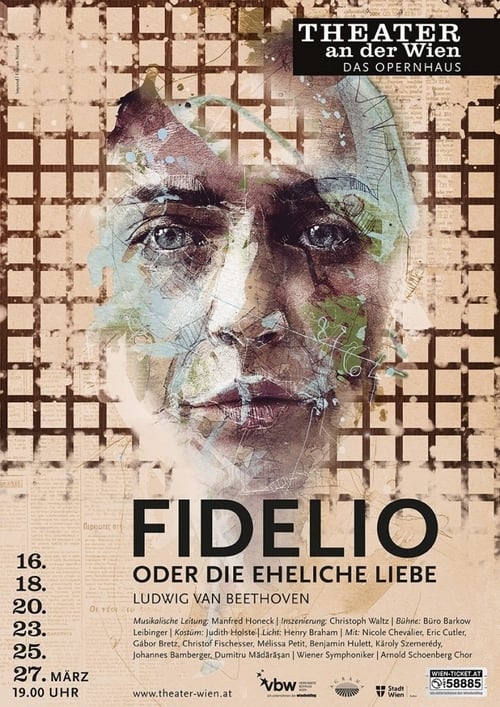
Don Florestan is a personal enemy of the governor Don Pizarro and also a confidant of the minister Don Fernando. As Pizarro sees Florestan as a threat, he wants to eliminate him. He cannot bring himself to commit open murder, so he has him secretly imprisoned and hopes that he will soon die of his own accord. Florestan's wife Leonore suspects that Pizarro is behind her husband's disappearance. Disguised as a man, she sets off in search of Florestan and, under the name "Fidelio", takes up service as an assistant to the jailer Rocco - she suspects Florestan is in the prison he administers and hopes to free him.
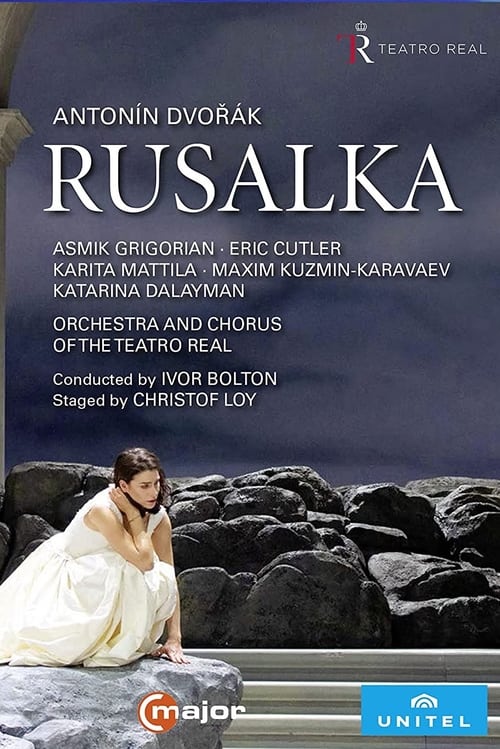
The libretto of the most well known opera by Dvořak, which premiered in Prague in 1901, is inspired by the Czech version of the Central European folktale, one we also know as Undine (1811) by Friedrich de la Motte Fouqué or The Little Mermaid (1837) by Hans Christian Andersen.
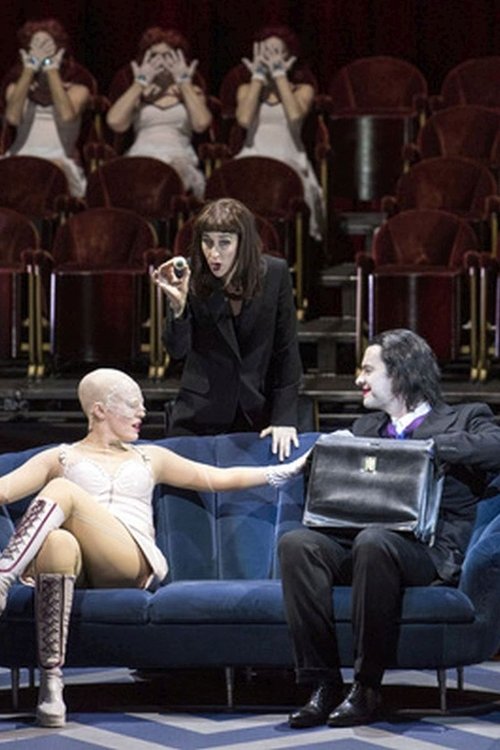
No plot available for this movie.
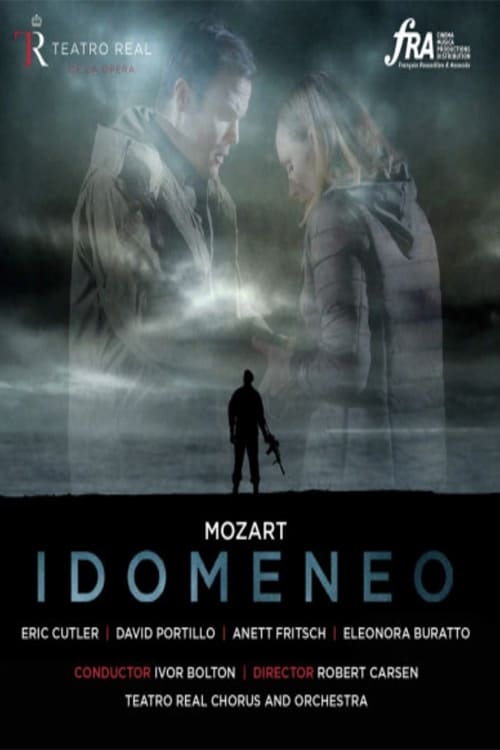
Mozart's "Idomeneo" is a work about love, hate, jealousy, war and destruction. It shows in a disturbing way the musical genius of the Salzburg composer. Each figure is characterized individually without losing sight of the musical whole. In a way, "Idomeneo" anticipates Wagnerian techniques in composition. The direction of this production at Madrid's Teatro Real was in the proven hands of Robert Carsen, who brings the work to the stage in a contemporary, modern and very disturbing way. Under the sovereign direction of Ivor Bolton, Eric Cutler, David Portillo, Anett Fritsch and Eleonora Buratto are among the singers.
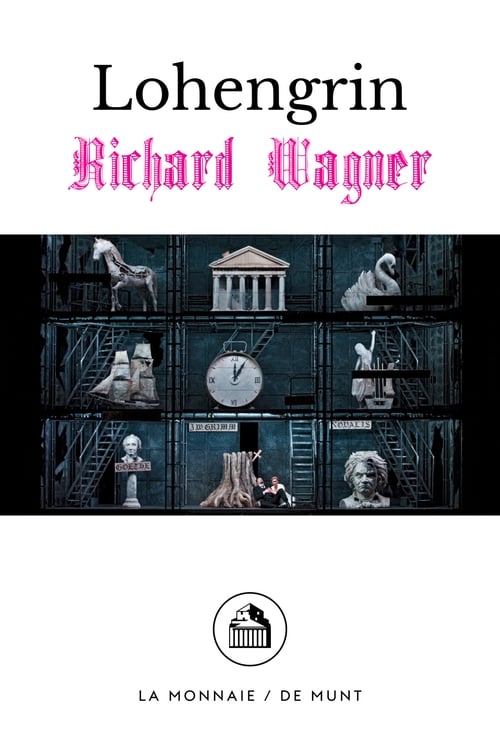
‘In reality, this Lohengrin is an entirely new phenomenon for the modern consciousness!’ Richard Wagner himself understood the innovative character of his sixth piece of music theatre, completed in 1848, the year of revolutions. Although it is reckoned among his ‘romantic operas’, his new vision of musical drama is already clearly heralded in this work. In his hands, the mediaeval saga of the Knight of the Swan becomes a meditation on the true love that asks no questions. Alain Altinoglu, our Music Director, who has already conducted this work in Bayreuth, guarantees the quality of the music, while the director Olivier Py, known at La Monnaie for his brilliant productions of Les Huguenots and Hamlet, can be relied on not to downplay Wagner’s revolutionary political side. Wagner’s own opinion was that ‘one can only understand Lohengrin if one can liberate oneself from any modern-looking, generalising form of representation so as to see the phenomena of real life’. A challenge to us all?
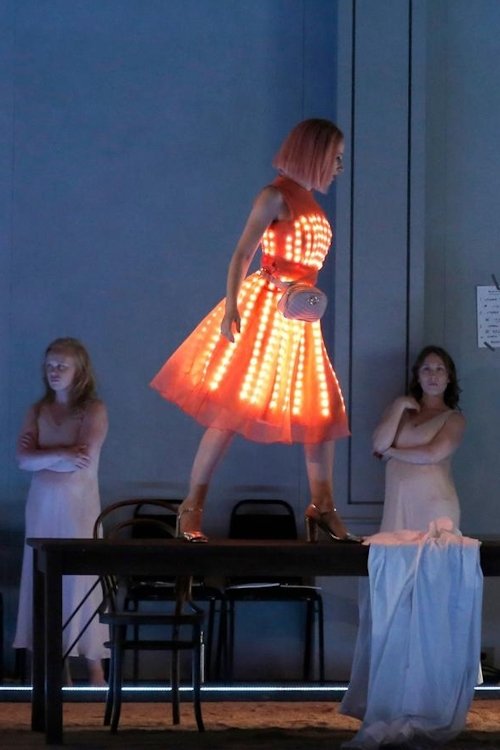
A staging of Richard Strauss' opera "Ariadne auf Naxos" by Katie Mitchell. Recorded at the Festival d'Aix-en-Provence.
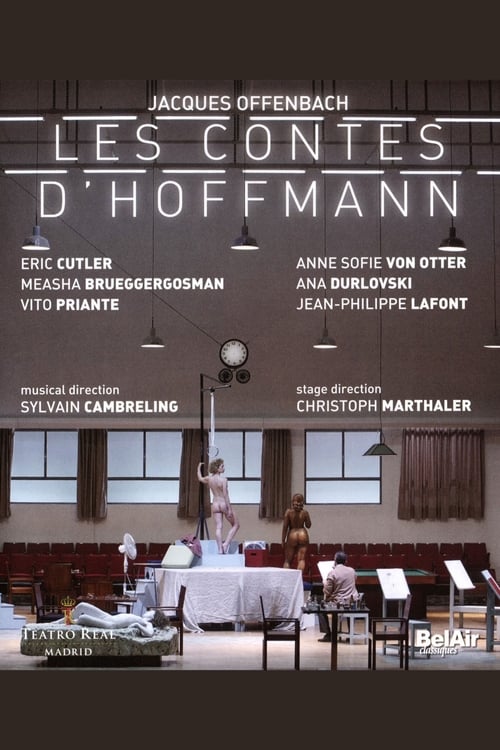
Opera fantastique in five acts (1881), new version by Sylvain Cambreling & Christoph Marthaler. With Eric Cutler and Anne Sofie Von Otter. Teatro Real, filmed on 05/2014
Subscribe for exclusive insights on movies, TV shows, and games! Get top picks, fascinating facts, in-depth analysis, and more delivered straight to your inbox.