
Action
Adventure
Animation
Comedy
Crime
Documentary
Drama
Family
Fantasy
History
Horror
Music
Mystery
Romance
Science Fiction
Thriller
War
Western
Explore all movies appearances

When Rosina falls in love with mysterious young suitor Lindoro, she must use all her cunning – and a little help from her local barber – to outwit her calculating guardian Dr Bartolo. Expect heart-melting serenades, ridiculous disguises and a fairytale ending waiting just out of reach. From the barber’s opening number ‘Largo al factotum,’ with its cry of ‘Figaro!,’ to Rosina’s feisty aria ‘Una voce poco fa,’ Gioachino Rossini’s comic opera is a riotously entertaining affair. Rafael Payare makes his House debut, and joins Christopher Willis in conducting a cast that includes Andrzej Filończyk, Aigul Akhmetshina, Laurence Brownlee, Konu Kim and Bryn Terfel.
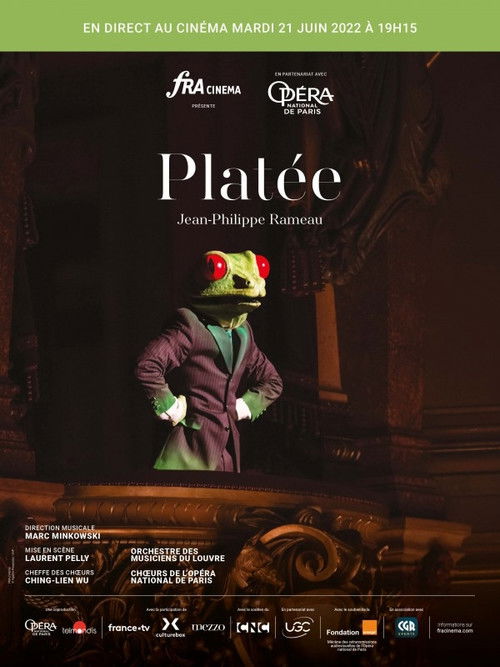
Jean-Philippe Rameau’s Platée is a masterpiece of the French operatic repertoire and was highly regarded by critics during the composer’s lifetime. Composed for the marriage of the Dauphin Louis, son of Louis XV, to the Infanta Maria Teresa of Spain, it was first performed at Versailles in 1745 and became an instant hit. The plot revolves around the ugly and conceited frog Platée, the victim of a machination of the gods who make her believe that she is loved by Jupiter. Is this Rameau mocking Princess Maria Teresa of Spain – reputedly a woman of little beauty? Or the French court, which saw itself as a new Olympus? This classic production from the Opéra national de Paris by Marc Minkowski and Laurent Pelly returns to the stage with an entirely new cast, featuring Julie Fuchs, Mathias Vidal, Jean Teitgen and Lawrence Brownlee in the title-role.
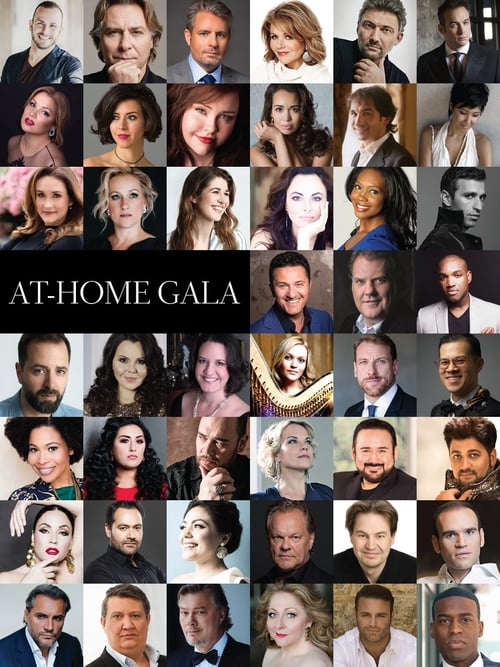
In its most ambitious effort yet to bring the joy and artistry of opera to audiences everywhere during the Met’s closure, the company presented an unprecedented virtual At-Home Gala, featuring more than 40 leading artists performing in a live stream from their homes all around the world.

No plot available for this movie.
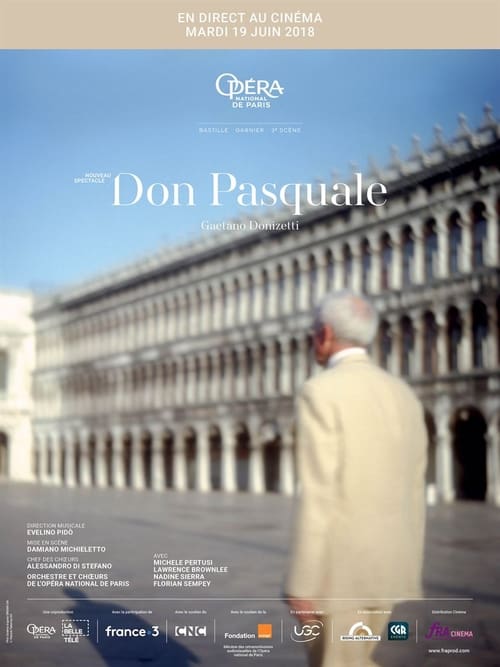
First performed in Paris in 1843, at the turning point of several eras, Don Pasquale, a composite and varied work, is the apotheosis of opera buffa. Performed for the first time at the Paris Opera, the production has been entrusted to the Italian director, Damiano Michieletto, who transports us directly to the sincerity and dramatic splendour at the heart of an apparently light‑hearted work.

Divested of its traditional attributes – glass slipper and pumpkin carriage – and dominated by a tyrannical stepfather instead of a cruel stepmother, Rossini’s la Cenerentola plays with these most conventional of fairy‑tale characters. Nonetheless Cinderella lives in a closed world devoid of tenderness and under the yoke of the tormentor whom she protects. Deep beneath her goodness smoulders a fire that her encounter with the prince will set free… Guillaume Gallienne subtly highlights the halftones of this dramma giocoso, somewhere between opera buffa and opera seria, and ranging from sombre melancholy to the burlesque.
“Foolish indeed is he who marries in old age.” Thus ends Don Pasquale: with a wise dictum not lacking in irony that sums up the disappointments of its hero, a rich bachelor keen to marry who is deceived by his nephew Ernesto and his young bride-to-be Norina. First performed in Paris in 1843, at the turning point of several eras, Don Pasquale, a composite and varied work, is the apotheosis of opera buffa. Performed for the first time at the Paris Opera, the production has been entrusted to the Italian director, Damiano Michieletto, who transports us directly to the sincerity and dramatic splendour at the heart of an apparently light‑hearted work.
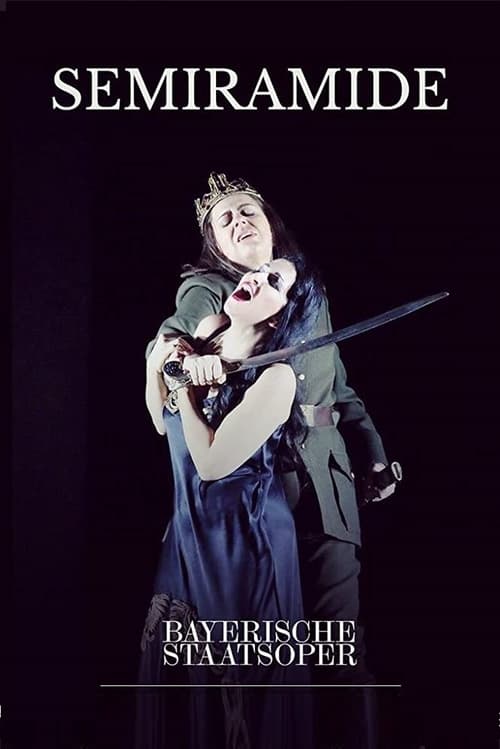
Queen Semiramide is haunted by the ghosts of her past. Together with her lover Assur, she once murdered her husband King Nino; a deed which ever since has weighed heavily upon her. With her marriage to Arsace, she hopes her soul will at last find solace. Her love, however, is misplaced. Arsace not only loves another, he is also, as is later revealed, the son Semiramide and Nino believed to be dead. He is faced with a decision: should he avenge the death of his father – and thus become his mother's killer?
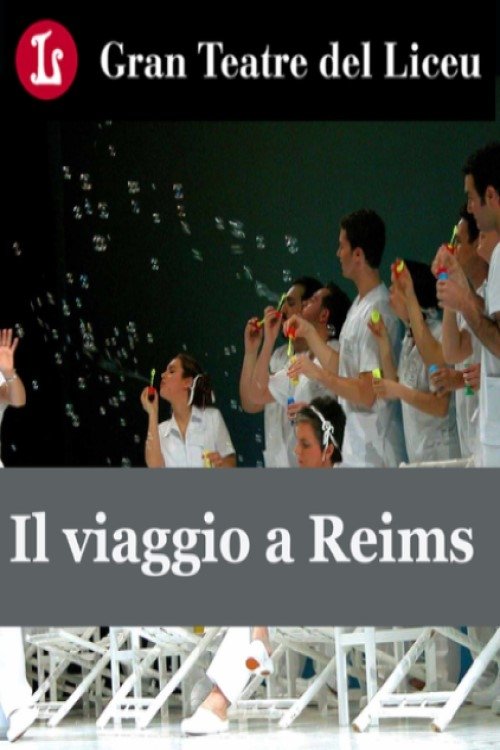
The Gran Teatre del Liceu’s 2017/2018 season opened with Rossini’s dramma giocoso Il viaggio a Reims, the “event piece” written exclusively for the coronation of France’s Charles X in Reims in 1825. Apart from the Rossini Opera Festival in Pesaro (one of the co-producers), this otherwise infrequently performed work has received a bright yet perhaps over-minimalist staging by Emilio Sagi. A fixed set portraying the sun deck and furnishings of a spa hotel (using only the stage front) provides the opera’s eclectic group of European aristocrats an unexpectedly informal aspect from the outset, replete with bathrobes, towels and slippers. This is novel, but confuses the audience as to who is who in the story. Not until the end of the second act, an hour and a half into the performance, does the cast change to more formal dining attire and the audience has a minimally clearer idea of the different nationalities (and idiosyncracies) portrayed.
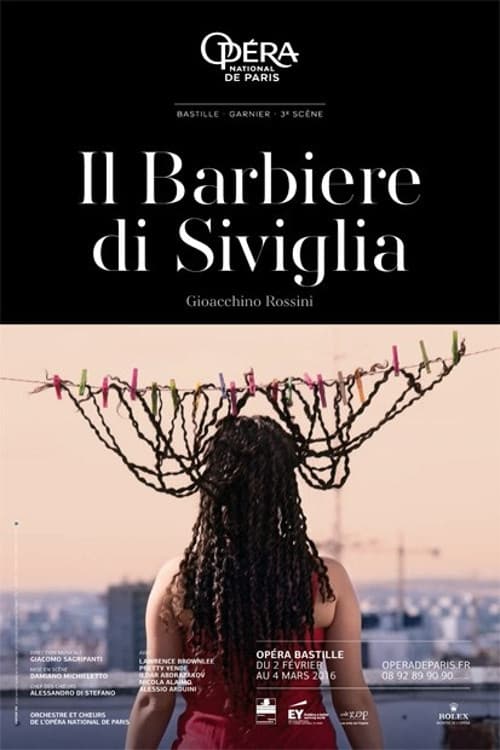
The composer's opera buffa transcends the spirit of Beaumarchais’ comedy and combines the absurd with a touch of satirical realism in a score where rhythm and virtuosity place the comic effects in an ongoing dramatic narration. As a result, the characters – Rosina in particular – gain a new degree of realism and break with the usual archetypes. Damiano Michieletto’s giddying production embraces this perpetual motion and carries in its wake the happy couple formed by Lawrence Brownlee and Pretty Yende.
Subscribe for exclusive insights on movies, TV shows, and games! Get top picks, fascinating facts, in-depth analysis, and more delivered straight to your inbox.