Action
Adventure
Animation
Comedy
Crime
Documentary
Drama
Family
Fantasy
History
Horror
Music
Mystery
Romance
Science Fiction
Thriller
War
Western
Explore all movies appearances

Alcohol, national costumes, dance, as well as confrontation with unpleasant truths – that is what lies ahead for a young girl named Eliška, who gets stuck in a mysterious pub. She has to find an answer to whether everything ends with death or, rather, it is only the beginning.

When the Tugendhat family had their villa built in the late 1920s, they had no idea how many stories it would inspire. A few years ago, British writer Simon Mawer wrote a novel called "The Glass Room." The novel tells the story of Liesel and Viktor Landauer, set in Brno between the two world wars. He was a promising industrialist, she was a rich beauty from a good family. As a wedding gift, they received a plot of land and had an Austrian architect build them a monumental house made of glass and concrete. Inside the house, their family life unfolds, but so do passionate stories of infidelity and even lesbian love. Through the glass of their villa, however, they can also observe the brown threat approaching from Hitler's Germany and the transformations of the young Czechoslovak Republic. When the threat becomes real, the Landauers understand that their time in the fictional City and in the house with the glass room has come to an end.
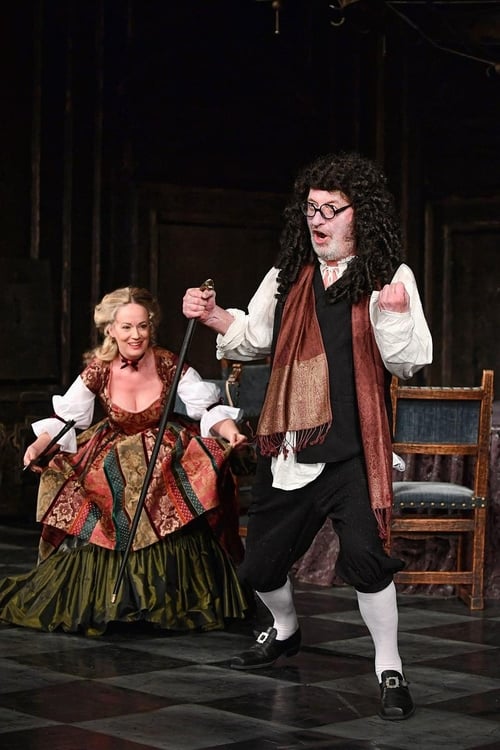
Accumulating money through usury and self-denial is Harpagon's passion and ostentatiously displayed purpose in life. He loves money more than his good name, honor, and dignity. His wealth is more important to him than his own children. He plans to marry his daughter Eliza off without a dowry to an aging rich man, his son Cleante to a wealthy widow – and he himself has chosen the beautiful young Mariana as his bride, regardless of the fact that his son is in love with her. And this is only the beginning of the hypocrisy, deceit, and manipulation that develops in his family and among his servants under the influence of Harpagon's miserliness...
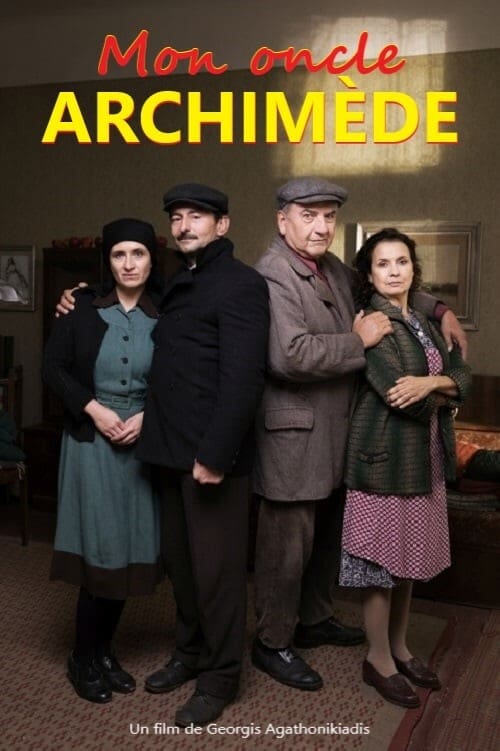
Telling the story of Archimedes, one of thousands of refugees who left Greece for Czechoslovakia at the end of the 1940s, as the Greek civil war meant many communist fighters sought refuge in communist countries. Told through the eyes of Archimedes’ grown-up nephew Aris, who recalls how his uncle's life changed when he escaped from Greece to Czechoslovakia with the naive dream of a rosy future under a socialist regime. But all was not as it seemed.

Honza, the son of a poor cottage woman, sets out into the world one day to escape the royal recruiters. On his journey, he meets a magical herbalist, and from that moment on, his numerous adventures begin. Thanks to a magical violin, he frees a magical mill from devils, outwits a fearsome dragon, and with the help of enchanted cherries, he also defeats a treacherous king and his proud and deceitful daughter. In the end, Honza returns home with a bride after all—the kind and sincere princess's maid Madlenka, who helped him escape from the royal dungeon.
The production was based on Ivan Olbracht's novel Nikola Šuhaj loupežník (Nikola Šuhaj the Robber). The music draws on Petr Ulrych's famous LP, which was released in 1974, won the Bílá vrána (White Crow) award from Mladý svět magazine, and subsequently inspired a production at Prague's Divadlo Ateliér theater. Among other things, the band Javory was formed on this occasion. The expanded band Javory also plays and sings in the 2002 production of the Brno City Theater, and additional musical numbers were created for it. Of the 25 numbers, more than half are new to the performance. Petr Ulrych won the A. Radok Award for his music. Director and author of the theatrical adaptation Stanislav Moša incorporated film footage into the production, which works wonderfully as a reminiscence of natural beauty. Also worth mentioning is the impressive choreography of the police and bandit choirs and the excellent acting and singing performances, led by Petr Štěpán in the lead role.
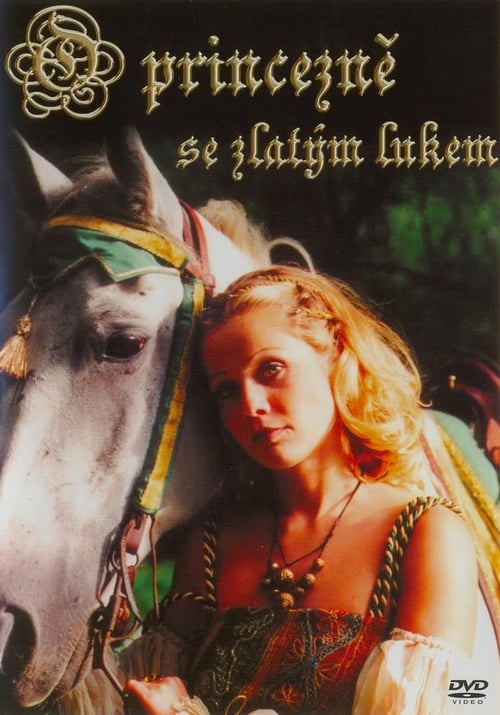
At a roadside inn, the wandering knight Dan and his squire Vítek meet two offended former ministers of the Forest Kingdom. They complain that the young princess Jelena, who recently took the throne, spends her time hunting with her female companions, but hates men and does not want to marry—and with a capricious woman on the throne, the country will soon come to a bad end. This intrigues the young men—they have never met Amazons before—and so they set off for the capital city.

An intimate psychological film which elaborates the Faustian theme about the dispute between the body and the soul - a study on human identity. Two young doctors carry out the surgical exchange of the brains of two women who are dying after a car accident - a young girl and member of a criminal gang, and a lonely seventy-year-old associate professor of oriental studies. The young girl wakes from the operation thinking like the elderly intellectual and tries in vain to live with her new identity. (https://www.filmovyprehled.cz/en/film/22344/double-role)
It tells the story of a young man who was turned into a donkey by curiosity and a fatal mistake. While the hero despairs and does not know how to return to human form, we can observe through his eyes the society that surrounds him. The television fairy tale of screenwriter Jiří Bednář and director František Filip alternates dramatic tension with comic moments.
The entire village and its surroundings are plagued by the greed of the local miller and the castle scribe. The scribe takes a liking to the beautiful Fanka, who works at the mill. But first, he must get rid of Fanka's beloved Kuba. So he decides to send him off to war. And because they want to fill their coffers with gold coins together with the miller, they confiscate Kuba's mother's cottage and fields and drive her out of the village. She curses the miller and the clerk. When Kuba finds out that he has lost everything, he no longer wants to live…
Subscribe for exclusive insights on movies, TV shows, and games! Get top picks, fascinating facts, in-depth analysis, and more delivered straight to your inbox.