
Action
Adventure
Animation
Comedy
Crime
Documentary
Drama
Family
Fantasy
History
Horror
Music
Mystery
Romance
Science Fiction
Thriller
War
Western
Explore all movies appearances

The opening of The Vasulka Effect couldn’t be more apt: Steina Vasulka addresses her husband Woody through various TV screens. He does the same and replies. A perfect image of the relationship between the free-spirited, groundbreaking pioneers of video art. After meeting in Prague in the early 1960s, they relocated from Czechoslovakia to New York, where they later founded The Kitchen, their legendary art and performance gallery.
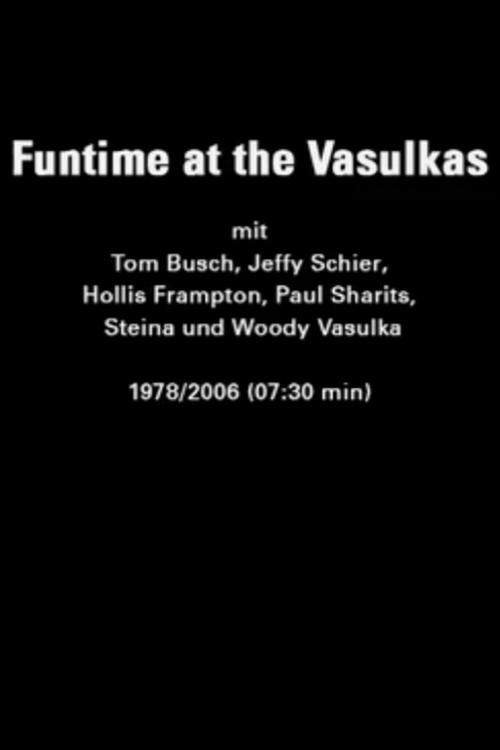
A recording of a meeting in the studio where Jeffrey Schier and Woody show colleagues and teachers a new tool. Between 1976 and 1980, Woody and Schier designed a prototype device, the Vasulka Imaging System, or Digital Image Articulator. It was one of the first digital audiovisual tools to generate image algorithms and convert them to an analog signal. In the 1970s and 1980s, the Department of Media Study at the State University of New York at Buffalo became one of these places of, teaching and mediating, in the area of Media Art, developing into what was perhaps to the most influential school for media in the twentieth century. Teaching there under the leadership of the founder Gerald O’Grady were the (meanwhile canonized) structuralist, avantgarde filmmakers Hollis Frampton, Tony Conrad, and Paul Sharits, documentary filmmaker James Blue, video artists Steina and Woody Vasulka, and Peter Weibel.
A short documentary on the life and art of Steina and Woody Vasulka, produced in 1996. The Vasulkas speak candidly about their work and worldviews, and the piece features excerpts from their early works and a glimpse into their '90s output.

Cantaloup is an informal documentary on the Vasulkas' Digital Image Articulator, an imaging device they designed with Jeffrey Schier. Using a cantaloup and the three artist/designers as source material, Steina explains the capabilities of the machine, including its real-time imaging ability and the articulation of images in a digital code. She describes the varying sizes of pixels (picture elements), the layers (or slices) of color and tone that can be derived from one image, and techniques such as "grabbing" the image and multiplying it. This document offers an informative demonstration of a complex imaging device.
This is a documentary about video artists Bill & Louise Etra, Woody & Steina Vasulka, and Kit Fitzgerald & John Sanborn.
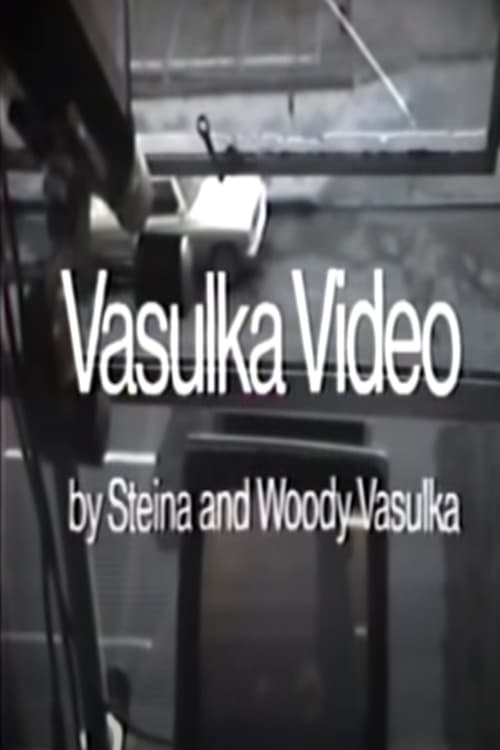
In 1977 the Vasulkas were commissioned by public television to create six half-hour programs (Steina, Objects, Digital Images, Transformations, Vocabulary, Matrix) for broadcast on WNED in Buffalo, New York. The resulting series, entitled Vasulka Video, is innovative and informative television. The Vasulkas introduce and contextualize their works and discuss their processing techniques, providing invaluable insights into their groundbreaking experiments with electronic image and sound manipulation.

B&W Vasulka project with a rotating camera, keyed and alternating directions. This experiment is excerpted in their 1977 work Orbital Obsessions.
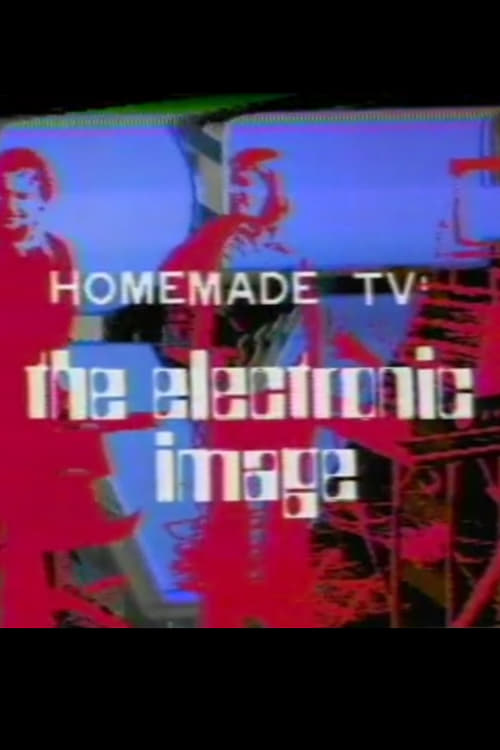
A broadcast presentation of Steina and Woody Vasulka's experiments with the electronic image. Featuring a 15-minute "jam session" of improvised video feedback art.
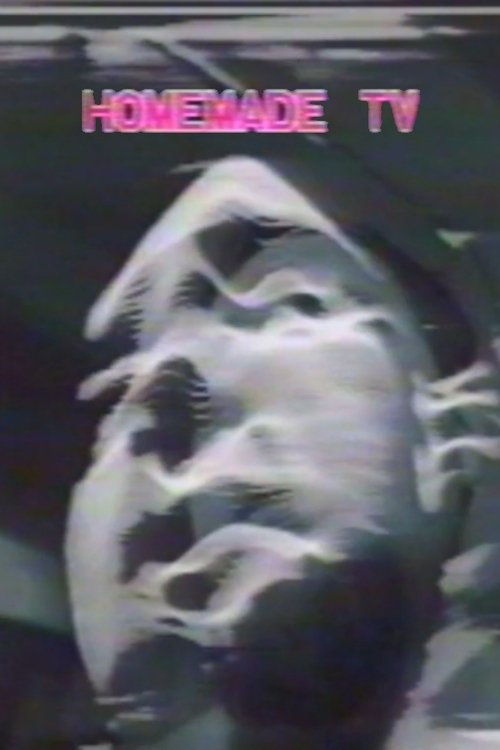
Description from Portable Channel catalog: "This Program is a unique broadcast presentation of the Vasulka's recent experiments with the electronic image. It is not "video on TV" but a "videobroadcast" direct from the Vasulkas' loft in Buffalo, New York." The broadcast does in fact feature 3 Vasulka projects in their entirety: The Matter, Soundgated Images, and C-Trend.
Subscribe for exclusive insights on movies, TV shows, and games! Get top picks, fascinating facts, in-depth analysis, and more delivered straight to your inbox.