Action
Adventure
Animation
Comedy
Crime
Documentary
Drama
Family
Fantasy
History
Horror
Music
Mystery
Romance
Science Fiction
Thriller
War
Western
Explore all movies appearances
France 1429. Giovanna appears as a prophetic figure while the French are in the throes of the 100 Years War against the English. After a dream, Carlo is inspired to seek a sanctuary near Rouen where he meets Giovanna, who predicts the end of France’s suffering. Her father, Giacomo, believing she is possessed, attempts to turn her over to the English. After her capture, Giacomo realises his mistake and frees her. Giovanna leads the French to victory but pays the ultimate price.
A collection of social media snippets created entirely through volunteer work for the LA Opera during the 2010/2011 season. Director Thomas Storesund received The Presidential Volunteer Work Award by President Barack Obama for this effort.
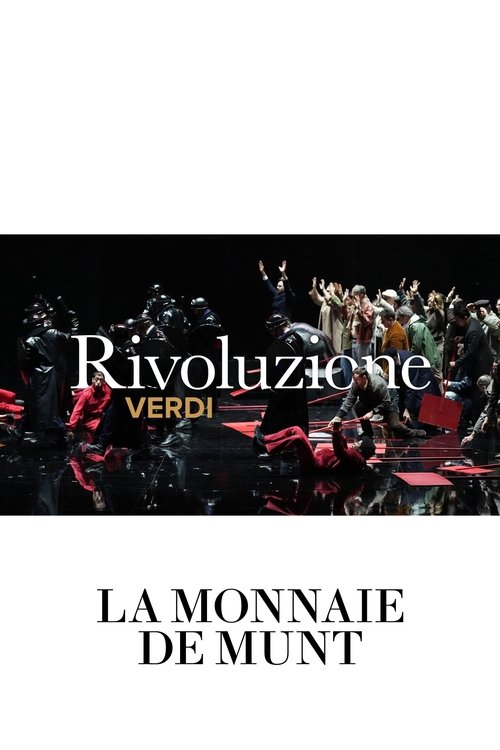
PART 1. Late 1960s. Growing social tensions are spreading across Europe. Three young men, Carlo, Lorenzo and Giuseppe, find themselves involved in a protest movement. All three gravitate towards Laura, a committed activist who is studying violin. As the revolution gradually turns into a physical confrontation with the authorities, personal and emotional conflicts break out between members of the group and Laura's ideal of peaceful resistance is overtaken by reality. How far will she go for her beliefs?
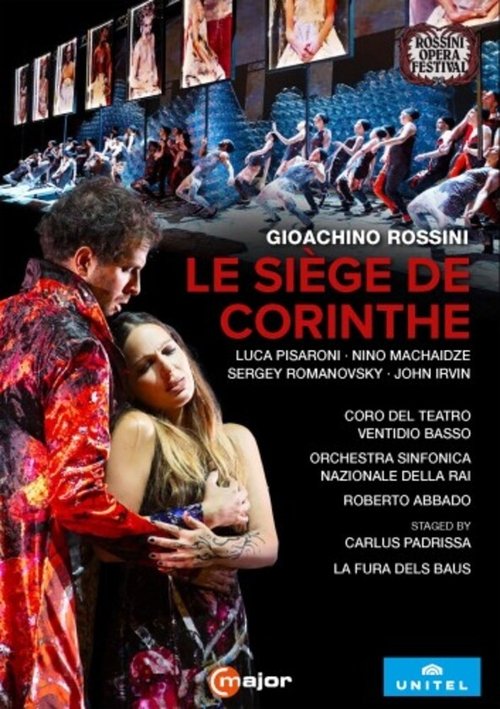
When Rossini’s opera Le Siège de Corinthe was premiered in 1826 in Paris it became a huge success all over Europe. The Rossini Opera Festival presents the opera in a new production from Carlus Padrissa of the Barcelona collective La Fura dels Baus, “which here has one of its most interesting shows” (connessiallopera.it). Artistically “Roberto Abbado holds the ranks excellently and supports a well-cohesive and balanced cast” (L’ape musicale) “where bass-baritone Luca Pisaroni growled fearsomely as Sultan Mahomet, tenor Sergey Romanovsky as Néoclès matched a warm tone with pinging top notes, and tenor John Irvin was self-assured as Cléomène, but soprano Nino Machaidze as Pamyra thrilled most of all, as she purred effortlessly through pyrotechnic coloratura” (Financial Times).
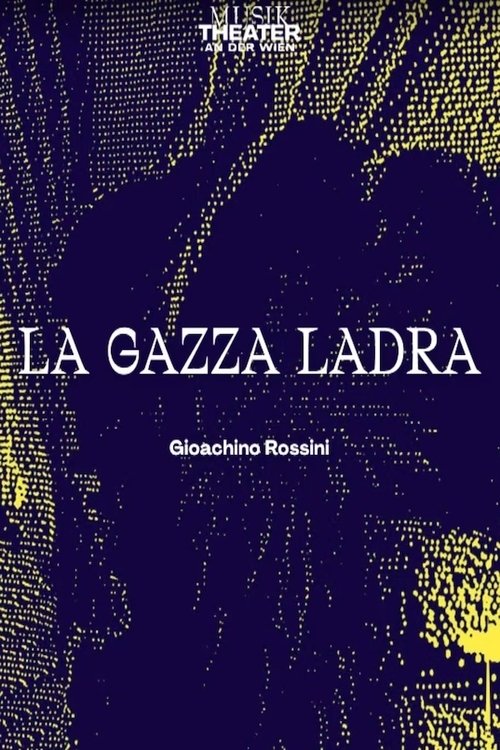
A feathered thief, a servant wrongly sentenced to death and a corrupt, power-hungry politician: those are the protagonists of Rossini’s semi-serious opera whose overture, with its drum rolls and oboe solo, is one of the best-known pieces in the history of music. La gazza ladra (The Thieving Magpie) is set in a time of great social upheaval. When Ninetta is accused of stealing a silver spoon, a series of unfortunate events begins that initially makes the happy ending expected from an opera semiseria seem highly unlikely. What sort of world is it where a person can be executed for the alleged theft of a spoon? Tobias Kratzer, successful as a director throughout Europe, now debuts in Vienna with Rossini’s opera that received its first performance in 1817 and traces the uncertainty felt by people in a politically and socially destabilised world.
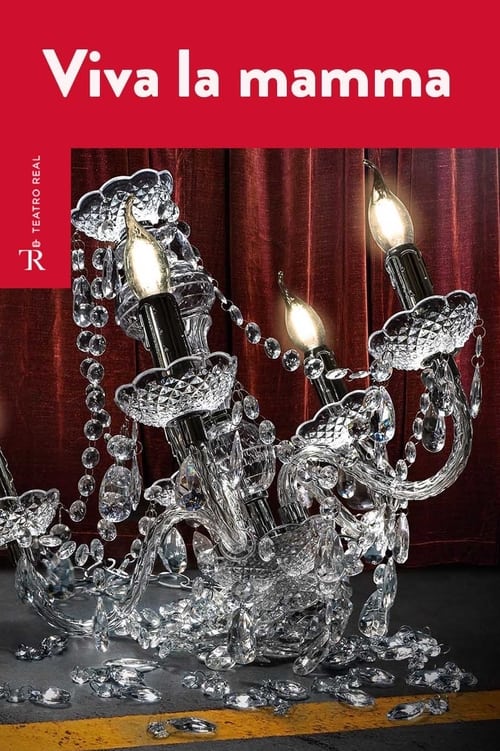
First seen in Naples in 1827, this farce of a “theatre within a theatre” narrates the mishaps of a second-rate opera company as it stages the great serious drama Romolo ed Ersilia in a provincial theatre. The unbearable tensions between the two lead singers are finally resolved with the decisive intervention of one of their mothers. The co-production by Ópera de Lyon along with the Grand Theâtre de Genève and Teatro Real is brought to life by Laurent Pelly, a tireless champion of Donizetti's comedies.

No plot available for this movie.
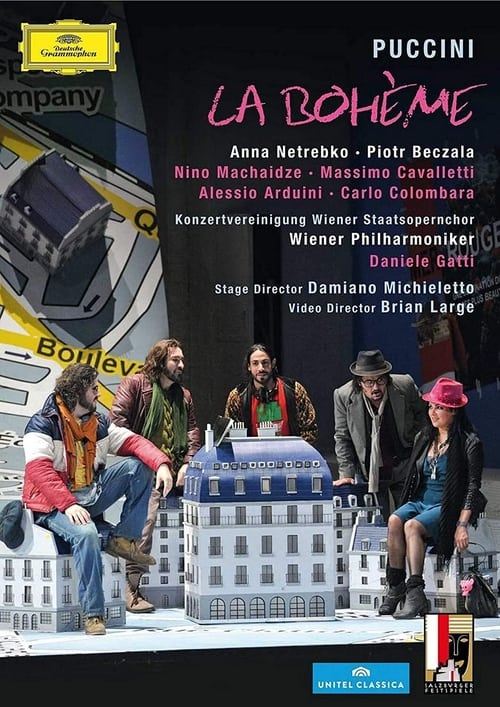
Live performance of Puccini's opera at the Salzburg Festival in Austria. Piotr Beczala stars as Rodolfo with Anna Netrebko as Mimi, Massimo Cavalletti as Marcello and Nino Machaidze as Musetta. Daniele Gatti conducts the Vienna Philharmonic, the Vienna State Opera Chorus and the Salzburg Festival and Theatre Children's Choir.
No plot available for this movie.
In this high-definition film of Bellini's historical bel canto drama, "I Puritani", tenor superstar Juan Diego Flórez is partnered by new young Georgian soprano Nino Machaidze, in her first appearance on a Decca DVD. Joining them in a striking new staging by Pier'Alli at the Teatro Comunale di Bologna is celebrated bass baritone, Ildebrando D'Arcangelo (DG). The context is England's Civil War between the Roundheads (the Parliamentarians, or Puritans of the title) and the Cavaliers (Royalists). A love triangle between Arturo (a Puritan), Riccardo (a Royalist) and the beautiful Elvira results in a drama of escapes, disguises and captures, during which Elvira loses her reason, before a final pardon restores her senses and unites her with her beloved Arturo. The lead tenor role is notoriously difficult and Juan Diego Flórez shows no strain or difficulty throughout the role. Opera fans will undoubtedly be impressed with the overall production and the tenor's performance in particular.
Subscribe for exclusive insights on movies, TV shows, and games! Get top picks, fascinating facts, in-depth analysis, and more delivered straight to your inbox.