
Action
Adventure
Animation
Comedy
Crime
Documentary
Drama
Family
Fantasy
History
Horror
Music
Mystery
Romance
Science Fiction
Thriller
War
Western
Explore all movies appearances

Santa Claus, expelled from the Heavenly Council because of his alleged failure, finds work on Earth as a stoker in a children's hospital. His willingness to help soon makes him indispensable.

In 1923, Judge Böhnsdorf and Inspector Dumke convict 22-year-old Fritz Bondersen of treason, accused of selling military secrets on the testimony of General Director Gotthardt, and sentence him to 15 years in a Zuchthaus. Despite his protestations of innocence, Bondersen can’t produce proof. Two years later, his fiancée Edith Volkmann, aided by journalist Günther Borchert, tracks down a French officer whose eyewitness account could discredit Gotthardt’s statement. Their quest to expose a massive fraud offers Bondersen a final hope for justice.

The film describes the activity of an ABV of the People's Police in its section in East Berlin. A mixture of “positive” characters from the beginning, the extensively staged “owl”, who is introduced as a criminal and over the course of time, especially due to the influence of the ABV, develops into a good citizen, and incorrigible characters, with whom the ABV fails with its extensive attempts at rehabilitation and who are arrested after having committed again offenses.
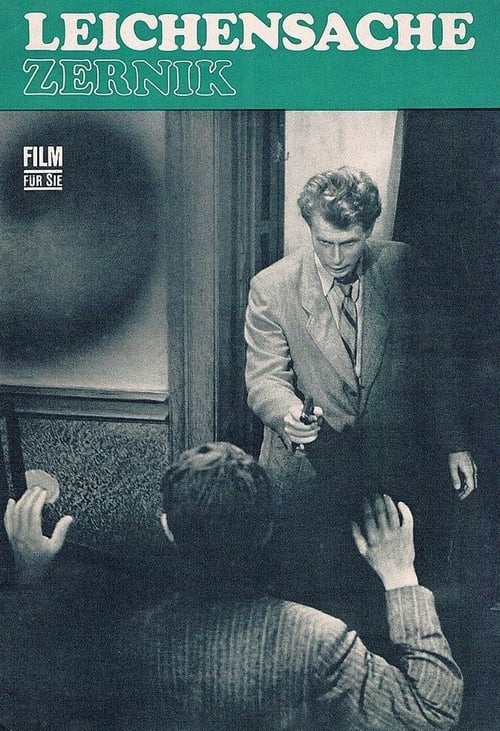
After meeting the woman on the train Erwin Retzmann kills her in the forest.

Using the example of three generations of a Hamburg working class family, the rise of the working class from the founding of the Wilhelmin Empire to the First World War, over the time of the Weimar Republic and National Socialism to the destruction of the Third Reich.

Experiences and problems of an air squadron: Commander Milan has reached the age limit for pilots and must come to terms with the fact that he will have to give up flying from now on. Lieutenant Lenz loses control of the plane during a flight and is seriously injured during the parachute rescue, in the worst case scenario he remains paralyzed. He doesn't want to tie his girlfriend Anka to him, but she sticks by him. Young Kullas comes into the squadron to replace Lenz. His predecessor's accident makes him afraid and he tries to find out what courage means to him. Lieutenant Herzog loves the teacher Sigrid. She returns his love, but it is difficult for her to choose a "hero" once again. Two years earlier, her husband was killed defusing a bomb. But Herzog does not want to give up his job. The fifth, Captain Wendland, is a party secretary. He takes flying just as seriously as his concern for his comrades.
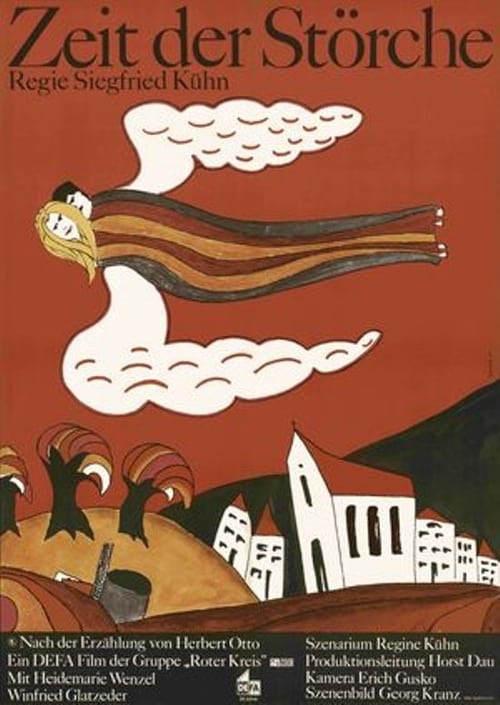
Susanne and Christian get to know each other during a wonderful week in summer - and fall in love. This, however, leads to conflicts: up to now, Susanne has been living with Wolfgang, a biologist. This shared life was harmonious and based on mutual trust. Wolfgang is not only resolute and in full command of social situations; he has also always been the stabilizing force in the relationship. This is precisely why Susanne now feels drawn to the unsettled, unsteady and frivolous Christian, the complete opposite of the calm, well-balanced Wolfgang. And Christian, working as a shift boss on a natural gas derrick, has become more aware of his personal and social responsibilities as a result of loving Susanne.

Hoffi is starting fresh after his release from prison. He travels with his brother to different construction sites in search of Urban, an acquaintance and role model he met during a brief hospital stay. Along the way, Hoffi meets Gila, who sees beyond his past in prison. Despite disapproval from her family, Gila decides to build a relationship and future with Hoffi, but Hoffi initially hesitates at this responsibility. It takes the encouragement of his workers’ brigade for Hoffi to realize his mistake and give his relationship with Gila a chance.
Teacher Ellen is fed up with her lame partner and colleague Horst. He teaches with such complacency! Ellen is different, she wants to inspire her pupils. No wonder the emancipated young woman turns down Horst's marriage proposal. She has also met someone new: the charming Brigadier Frank, finally a man who doesn't just talk the talk but walks the walk...
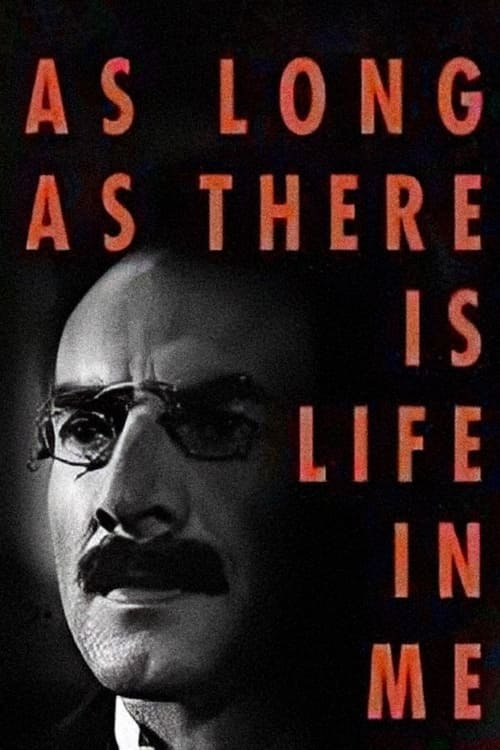
This is part one of a two-part biopic about Karl Liebknecht. In 1914, Germany is arming itself for war. Karl Liebknecht, left-wing revolutionary Social Democrat, workers’ leader and a virulent antimilitarist, is one among 110 SPD members of Parliament who vote against approving war loans. From then on, he is considered un-German and a traitor to the fatherland, and his own party’s leadership turns against him. Despite threats, Liebknecht speaks up against the war and writes the manifesto “The Main Enemy Is at Home.” Even when he is arrested and charged with treason, he does not surrender.
Subscribe for exclusive insights on movies, TV shows, and games! Get top picks, fascinating facts, in-depth analysis, and more delivered straight to your inbox.