
Action
Adventure
Animation
Comedy
Crime
Documentary
Drama
Family
Fantasy
History
Horror
Music
Mystery
Romance
Science Fiction
Thriller
War
Western
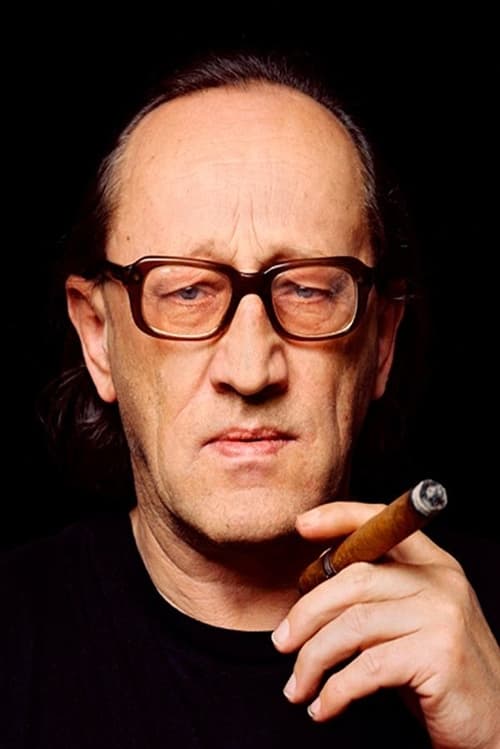
Heiner Müller was a German dramatist, poet, writer, essayist and theatre director. His "enigmatic, fragmentary pieces" are a significant contribution to postmodern drama and postdramatic theatre.
Explore all movies appearances

Heiner Müller defines Stoicism as an attempt to deal with anarchy. For him, Erich Honecker is an example for "forced stoicism". Müller agrees with the following quote by Goethe: May God save me from self-awareness! For Müller, it represents a stoic attitude. When asked about "patriotism" in the sense of "What would you risk your life for, if necessary?", he can only come up with something "silly" at first: his daughter. But Müller is also a patriot of theater, in the sense of "maeeuticism", of putting-effort-into-it.
This film not only illuminates Heiner Müller's life and works, it is more about questioning the "Sphinx" of the East and its saying about the loss of utopias and examining whether Heiner Müller's texts, as he himself said, were messages in a bottle for the future or not.
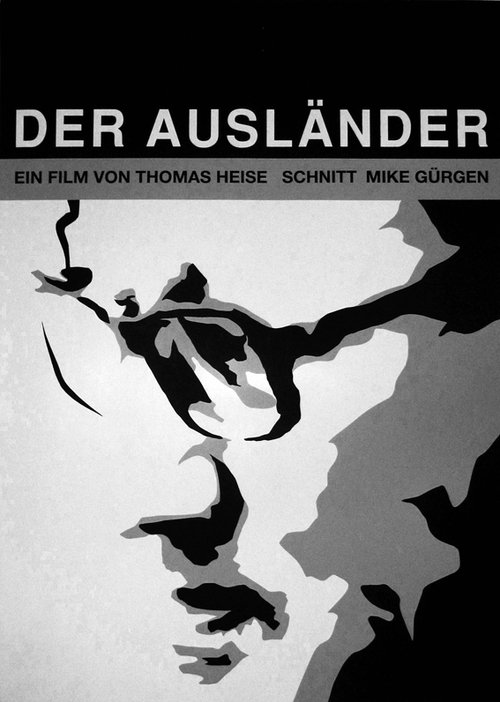
Documentary by Thomas Heise filmed in East Berlin in 1987/88.
The point of departure for this discussion is the question of whether the collapse of the Soviet Union is dramatic material. Müller answers with this Brechtian sentence: "Oil resists the five acts." He describes how difficult it is to make a dramatic adaptation of structures or massive processes that are not bound to biographies.
A few months before his death, Müller responded to the keywords "breathing" and "smoking" with an anecdote that interprets breathing as an indiscretion towards the dead. In his view, smoking is a means of practicing stoicism: "Whoever smokes looks cold-blooded" (Brecht) and "Whoever smokes becomes cold-blooded" (Müller).
Müller describes Ovid's Metamorphoses, Golding's translation of which (1603) was one of Shakespeare's sources, as an encyclopedia of the Greek myths, its dramatic central theme being the transformation of human beings into animals, plants, stones---either as a punishment or out of a need to escape.
The discussion begins with the parable of a frog in boiling water. It comes from the book "Post-heroic Management: A Manual" by Dirk Baecker, which is what Heiner Müller is currently reading at the time of the discussion.

Documentary filmmaker Troller criss-crosses post-reunified “Transgermania” for a year, probing German identity through festivals (Carnival, Oktoberfest), films, small towns and big cities. He attends a Black–Bavarian wedding at an “animal fair,” chats with chimney sweeps, students, artists and elites (from Grass to Müller), and asks uneasy questions about unity, memory and the future - all from his outsider’s lens.
The title of the interview is from a line in a poem written by an American about the battle of Ypern in World War I: “My rendezvous with Death took place in a trench.” Müller begins the interview by narrating how he prepared himself, both mentally and physically, for his throat operation to remove a cancer.
One of Müllers's vocal cords was paralyzed as a result of a life-saving radical operation (1995). At the beginning of the discussion Müller observes that figures from Greek mythology live on today as trademarks for products (Ajax as a cleaning agent, Polydor as a record).
Subscribe for exclusive insights on movies, TV shows, and games! Get top picks, fascinating facts, in-depth analysis, and more delivered straight to your inbox.