
Action
Adventure
Animation
Comedy
Crime
Documentary
Drama
Family
Fantasy
History
Horror
Music
Mystery
Romance
Science Fiction
Thriller
War
Western
Explore all movies appearances

Made 1965 / 1983 With Kenneth King and Phoebe Neville. "Kenneth King's CUP/SAUCER/TWO DANCERS/RADIO (1964) is an essay in Pop Art style, in which all the elements listed in the title have equal emphasis. Phoebe Neville, dressed in bra, girdle, curlers, and toe shoes, marches across the floor on pointe with a radio clasped to her ear. King, dressed in undershirt and shorts and a black tie, does calisthenics. Both spill colored solutions from the coffee cup all over themselves, embrace one another emotionlessly, and mechanically caress their own bodies, while rock and roll songs comment ironically on the action and a taped voice explains the dance's structure. Mekas, recording a 1965 performance of this key postmodern dance, has translated it into an extraordinary film ..." -- Sally Banes, Village Voice, Oct. 18, 1983.
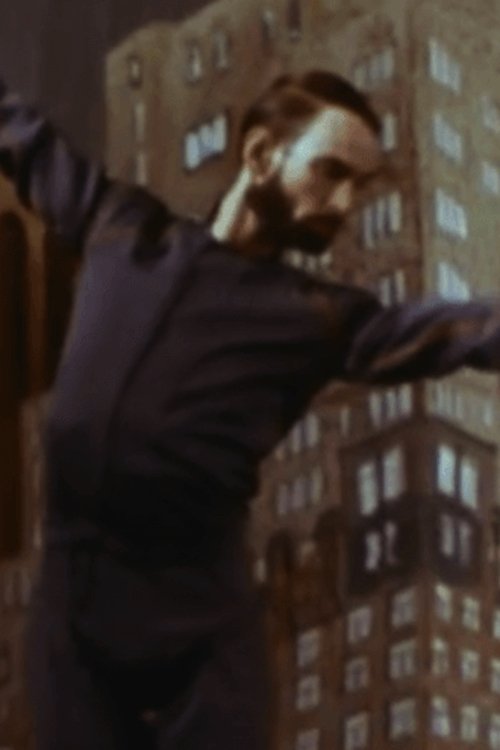
Scripted collaboratively with King and Brintzenhofe, the filmmakers created a cinedance that takes the viewer through the thresholds of dreaming, waking, and transcendental awareness, using real and painted images of the city, a 19th century attic and outer space. King’s voice recounts a dream of space without walls, a time of childhood and ecstacy. © 1981 Robyn Brentano, Andrew Horn, Kenneth King
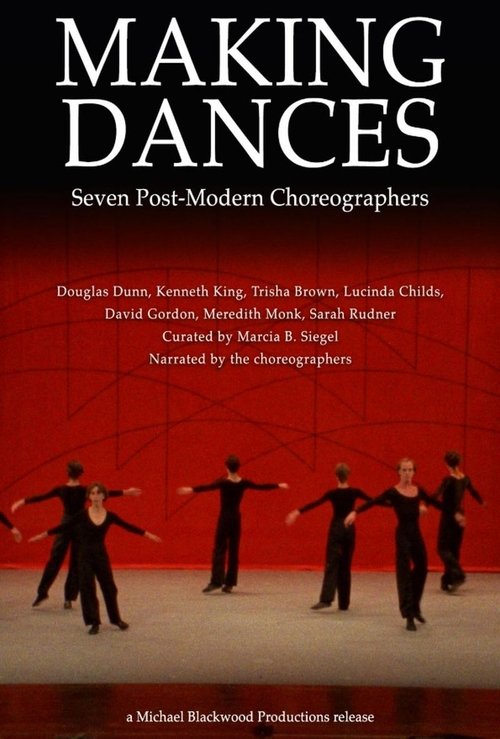
Made in 1980, this film explores the contemporary dance scene through the work of seven New York-based choreographers. They discuss the nature of dance and the evolution of their own work. Filmed at rehearsals, performances, and during interviews, the film is a unique primary source. The artistic roots of these seven artists can be found in Martha Graham's concern with modern life as a subject for dance and in Merce Cunningham's emphasis on the nature of movement. In the 1960s, the interaction of art forms generated choreographic innovations. Especially influential was John Cage, whose radical ideas served as a point of departure for much of the new choreography. Each of the choreographers in Making Dances draws inspiration from the Graham/Cunningham tradition, yet each makes a highly distinctive statement. Structure, movement in non-fictive time and space, and the nature of movement itself are recurring themes.
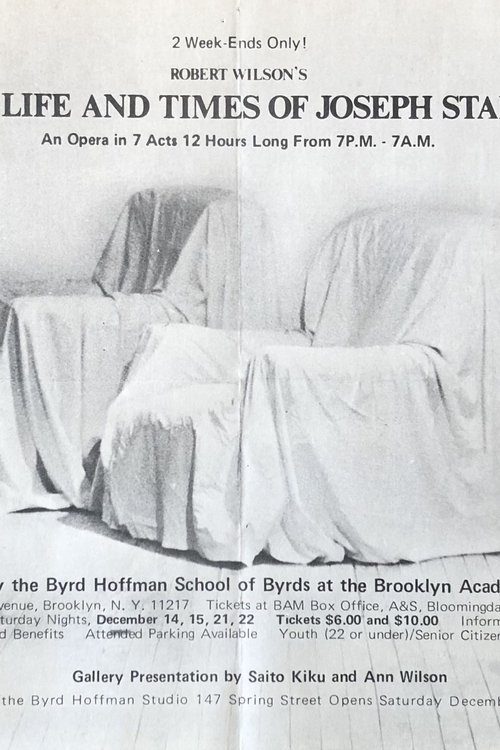
A full recording of an all-night performance of Robert Wilson's The Life and Times of Joseph Stalin: An Opera. Recorded on December 21, 1973. In many ways a compilation of all the stage work Wilson had done with the “Byrds,” The Life and Times of Joseph Stalin reworked elements of The Life and Times of Sigmund Freud, Deafman Glance, Overture, and KA MOUNTAIN AND GUARDenia TERRACE into a seven act, 12-hour piece.
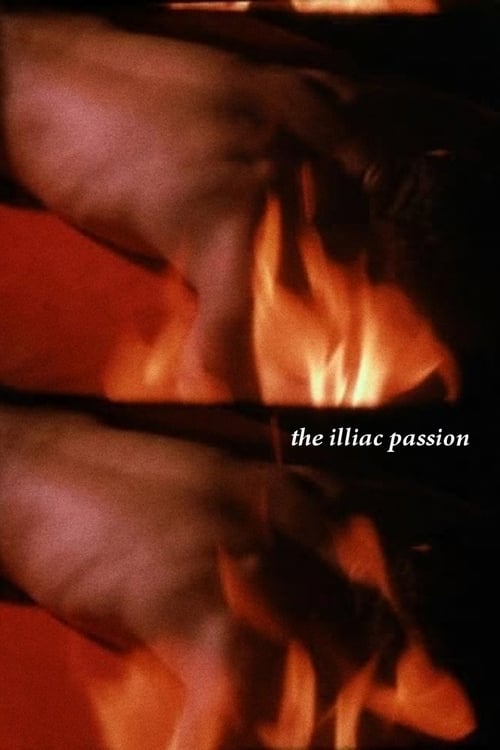
Prometheus, on an Odyssean journey, crosses the Brooklyn Bridge in search of the characters of his imagination. After meeting the Muse, he proceeds to the "forest." There, under an apple tree, he communes with his selves, represented by celebrated personages from the New York "underground scene" who appear as modern correlatives to the figures of Greek mythology. The filmmaker, who narrates the situations with a translation of Aeschylus' Prometheus Bound, finds the personalities of his characters to have a timeless universality.
Subscribe for exclusive insights on movies, TV shows, and games! Get top picks, fascinating facts, in-depth analysis, and more delivered straight to your inbox.