
Action
Adventure
Animation
Comedy
Crime
Documentary
Drama
Family
Fantasy
History
Horror
Music
Mystery
Romance
Science Fiction
Thriller
War
Western
Explore all movies appearances

Russian filmmaker Mark Donskoi, of "The Gorky Trilogy" fame, was responsible for the postwar Soviet drama The Taras Family (originally Nepokorenniye, and also released as Unvanquished and Unconquered). A semi-sequel to Donskoi's Raduga (1944), the story is set in Nazi-occupied Kiev. The drama focusses on the travails of a typical Soviet family and on the efforts by the Germans to force the reopening of a local munitions factory. The film is at its most grimly effective in a long sequence wherein the Nazis conduct a search for Jewish escapees, culminating in a horribly graphic re-creation of the slaughter of the Jews at Babi Yar. While Donskoi was critically lambasted for his cinematic "sloppyiness" during this sequence (hand-held camera, rapid cuts etc.), it can now be seen that he was attempting a realistic, documentarylike interpretation of this infamous Nazi atrocity.
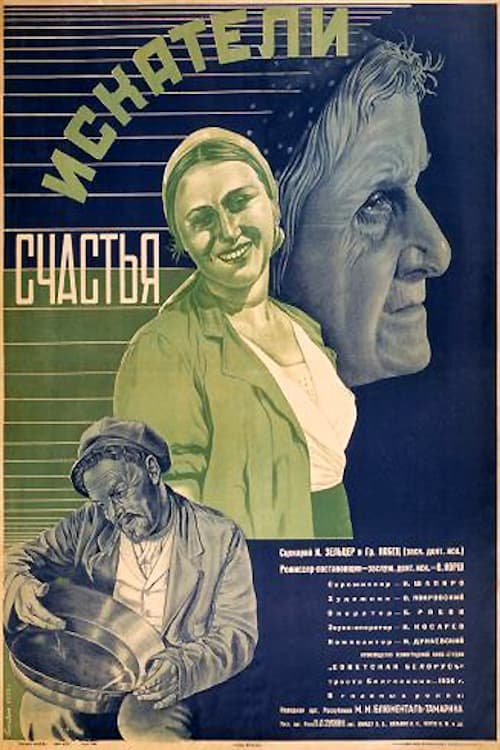
During the 1920s, many impoverished Jews searching for a better life made their way to Birobidzhan, the Soviet Jewish Autonomous Region on the Chinese border. This melodrama tells the story of a Jewish family's immigration to Birobidzhan and their experiences as settlers on a collective farm in the area.

The residents of the village of Staroje Dudino, located four kilometers west of the Soviet border, are completely dependent on the wealthy Novik, whose interests are protected by the local police and clergy. Novik is actively stirring up ethnic strife between the Jewish poor and Polish workers. During the traditional "black crown" ceremony (a wedding ceremony for an old man and an old woman), a group of factory workers led by the communist Haidul, together with the Jewish poor, attack the police and free Boris Bernstein, who had been sentenced to death.
Subscribe for exclusive insights on movies, TV shows, and games! Get top picks, fascinating facts, in-depth analysis, and more delivered straight to your inbox.