
Action
Adventure
Animation
Comedy
Crime
Documentary
Drama
Family
Fantasy
History
Horror
Music
Mystery
Romance
Science Fiction
Thriller
War
Western
Explore all movies appearances

Rossini’s La donna del lago, premièred in 1819 at the Teatro San Carlo in Naples, is a masterpiece based on the poem The Lady of the Lake by Sir Walter Scott, which is full of passion and romantic frisson. “With characteristic boldness, Michieletto reformulates this glittering music into something otherworldly” (Financial Times) and the performance is “musically brilliant” (Die Presse.com). “Marko Mimica and Varduhi Abrahamyan produce strong performances as Douglas and Malcom respectively. Flórez is laser like and fresh as ever and thrilling brutish …” (Financial Times) while the Frankfurter Allgemeine Zeitung writes: “Michele Mariotti and his outstanding orchestra were the stars of the evening.”

French writer Jean-Claude Carrière (1931-2021) traces the life and work of Spanish painter Francisco de Goya (1746-1828).

La del manojo de rosas, the Teatro de la Zarzuela's most emblematic and popular production, turns 30 years old. At its premiere in September 1990, it was very well received by the public and critics, and has continued to be so during the last three decades. Several generations of singers, artists, technicians and the public have enjoyed what is now Sorozábal's best-known zarzuela.
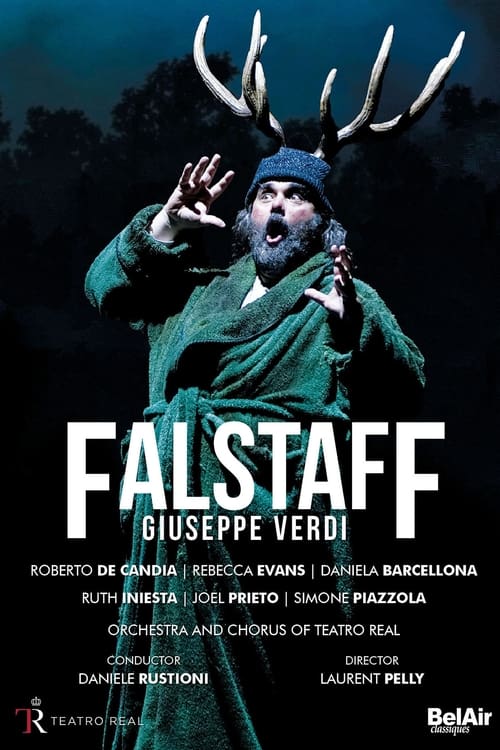
No plot available for this movie.
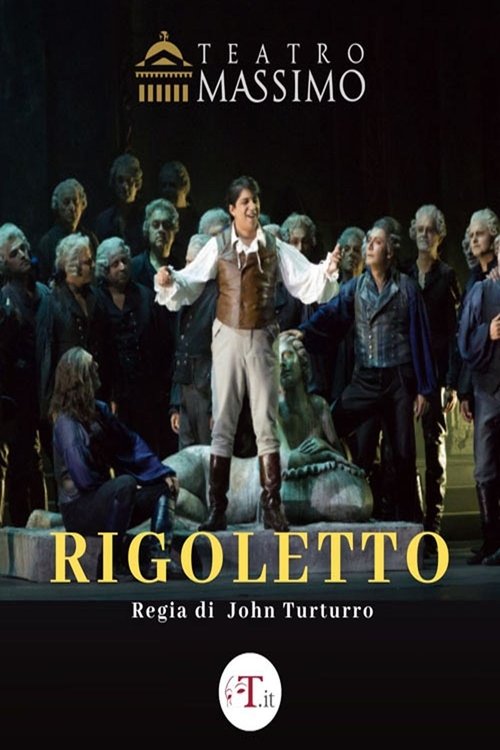
New production of Rigoletto at the Teatro Massimo in Palermo, co-produced with the Teatro Regio in Turin, the Opéra de Wallonie Liège, and the Shaanxi Opera House. Libretto by Francesco Maria Piave.
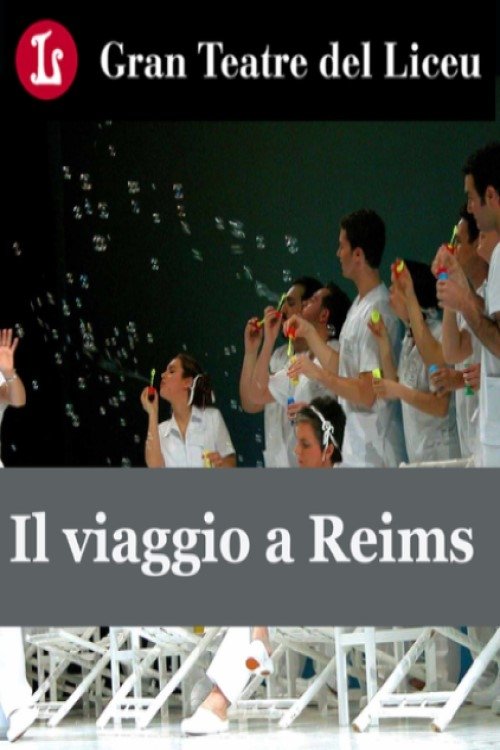
The Gran Teatre del Liceu’s 2017/2018 season opened with Rossini’s dramma giocoso Il viaggio a Reims, the “event piece” written exclusively for the coronation of France’s Charles X in Reims in 1825. Apart from the Rossini Opera Festival in Pesaro (one of the co-producers), this otherwise infrequently performed work has received a bright yet perhaps over-minimalist staging by Emilio Sagi. A fixed set portraying the sun deck and furnishings of a spa hotel (using only the stage front) provides the opera’s eclectic group of European aristocrats an unexpectedly informal aspect from the outset, replete with bathrobes, towels and slippers. This is novel, but confuses the audience as to who is who in the story. Not until the end of the second act, an hour and a half into the performance, does the cast change to more formal dining attire and the audience has a minimally clearer idea of the different nationalities (and idiosyncracies) portrayed.
Subscribe for exclusive insights on movies, TV shows, and games! Get top picks, fascinating facts, in-depth analysis, and more delivered straight to your inbox.
