
Action
Adventure
Animation
Comedy
Crime
Documentary
Drama
Family
Fantasy
History
Horror
Music
Mystery
Romance
Science Fiction
Thriller
War
Western

Jamuna Barua (10 October 1919 – 24 November 2005) was a leading Indian actress.
Explore all movies appearances

The story follows two friends, Mohan and Bhola, who stumble upon a mysterious garden house called "Mayakanan." The house is owned by Dr. Naresh Ray, a wealthy scientist with a dark secret. When Ray sets his sights on Shanta, Mohan's fiancée, he resorts to sinister tactics to win her over.
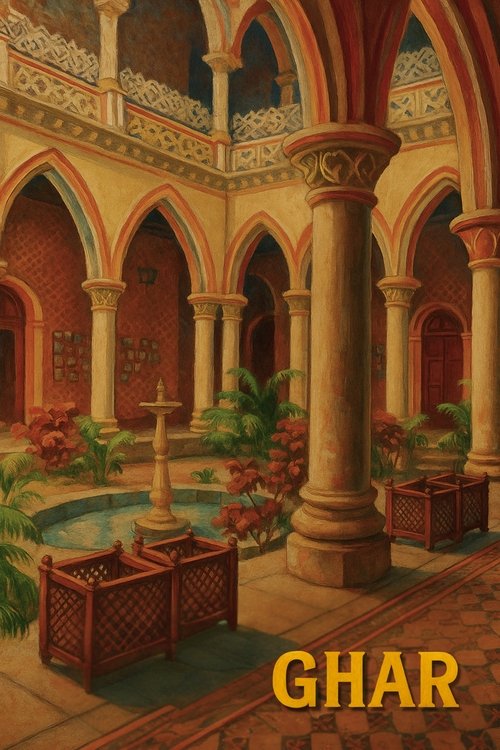
When young Jyoti is suddenly widowed, her life takes a dark turn as she faces an indecent proposal from her late husband's brother and pressure from her own sister to become a prostitute. Caught between impossible choices, Jyoti must navigate a treacherous world to find her own path.
No plot available for this movie.
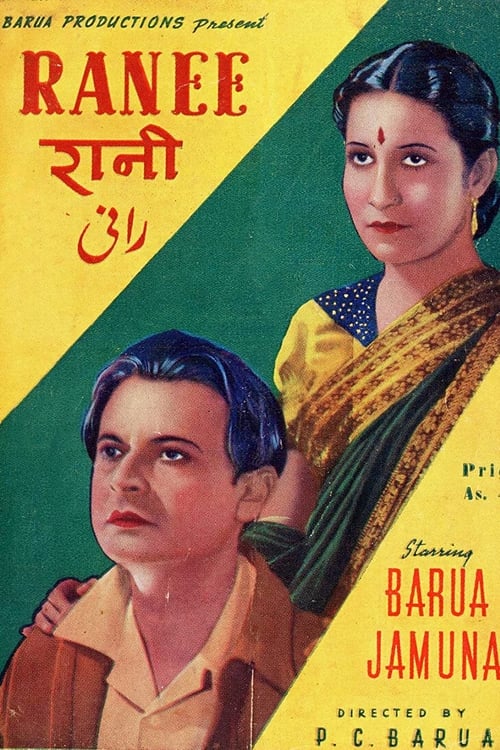
No plot available for this movie.
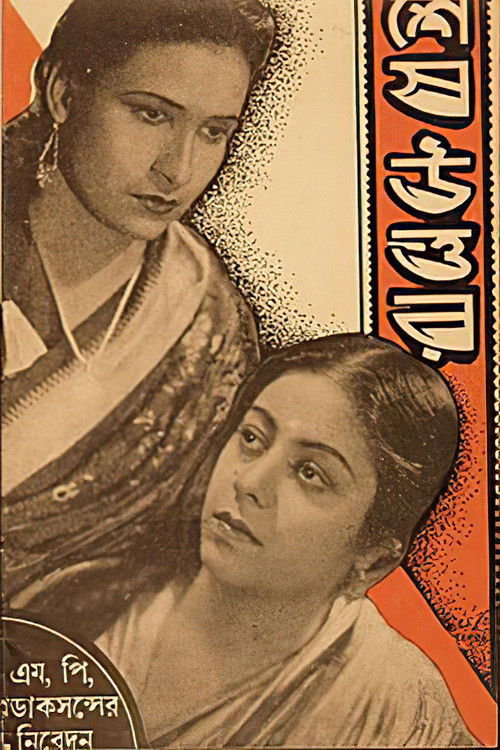
The wealthy, self-obsessed, and possibly crazed Manoj (Barua) is sent by his concerned family to the rural estate of his future father-in-law. Along the way, however, he gets lost and soon finds himself taking shelter in the abode of the railroad stationmaster whose beautiful, down-to-earth daughter, Meena (Kenan Devi), Manoj finds irresistible. When his haughty, progressive-minded fiancée gets wind of this, she freaks out and soon there is a showdown between the two women. In the aftermath, Manoj finds reason to go with his heart and marry Meena.
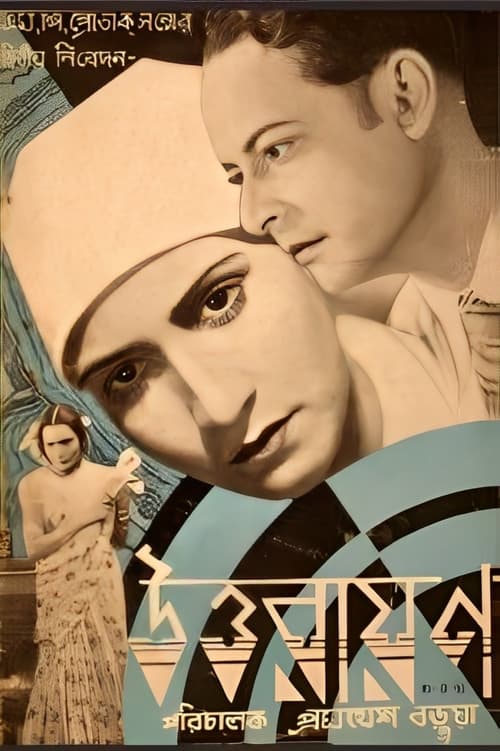
A 1941 Bengali film directed by Pramathesh Barua; the film was remade in 1963.

The story of an unemployed graduate who falls in love with a woman who ran away from her cruel husband.
Feudal melodrama: Veena (Jamuna), daughter of an exploitative landlord and wife of the drunkard Chunilal (Shivdasani), defies her family and fights for the exploited peasantry. In the process she falls in love with the poor Madhu (Nandrekar). When her evil husband cannot undermine the peasants' unity he commits suicide. The heroine is disinherited by her father, but remains committed to nationalism. The film prominently deploys Gandhian symbols (e.g. the spinning wheel), and contrasts an idyllic notion of erstwhile India to the penury of its people today.
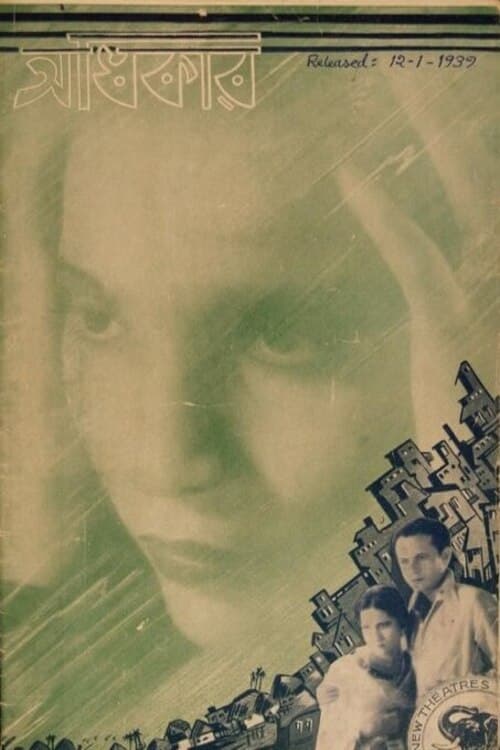
Melodrama about lineage and property questions. Nikhilesh (Barua) loves heiress Indira (Jamuna). A poor orphan girl, Radha (Menaka Devi), arrives claiming to be Indira's stepsister and therefore part inheritor of the family estate. Indira agrees to share her inheritance but then Radha makes a play for Nikhilesh. Ultimately, Radha turns out to be the real and sole heir. Love proves to be stronger than material possession as Indira and Nikhilesh get married and Radha finds happiness with Ratan, a man she had known and loved during her days of poverty. As each character returns to the class of his/her birth, the message hammered home is a warning to people never to transcend their social status.
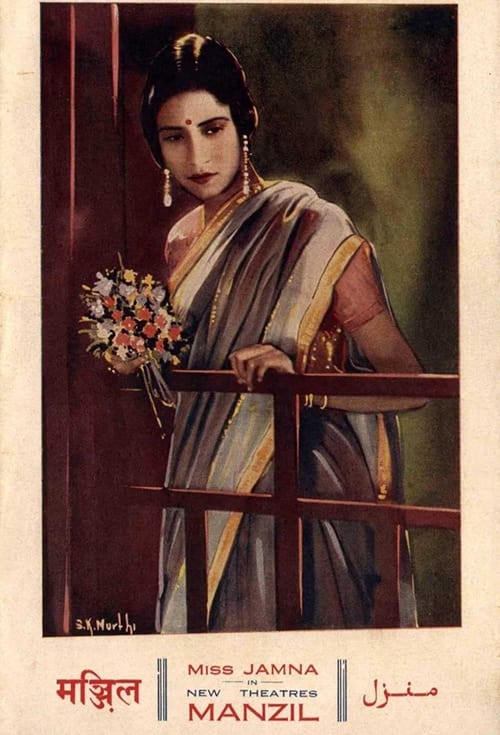
The poor but educated Mahim and his childhood friend, the rich but conservative Suresh, both fall in love with the same woman, the liberated Achala. Mahim marries her and they move to a village but she cannot forget Suresh. Her smoldering unhappiness takes the form of resentment towards the orphaned Mrinal, raised by Mahim's father, and receives a dramatic visual embodiment when their house burns down. Mahim falls ill, is rescued by Suresh, and nursed back to health by Achala. On a train (a metaphor for the irreversibly linear course of life) to a health resort where Mahim is supposed to convalesce, Suresh on a rainswept night gives in to temptation and elopes with Achala. At the end of the film, there is a dubious reconciliation as Achala is shown following Mahim's 'good' traditionalism with Sharatchandra's barely concealed hostility towards Achala's liberated Brahmo Samaj upbringing.
Subscribe for exclusive insights on movies, TV shows, and games! Get top picks, fascinating facts, in-depth analysis, and more delivered straight to your inbox.