
Action
Adventure
Animation
Comedy
Crime
Documentary
Drama
Family
Fantasy
History
Horror
Music
Mystery
Romance
Science Fiction
Thriller
War
Western
Explore all movies appearances
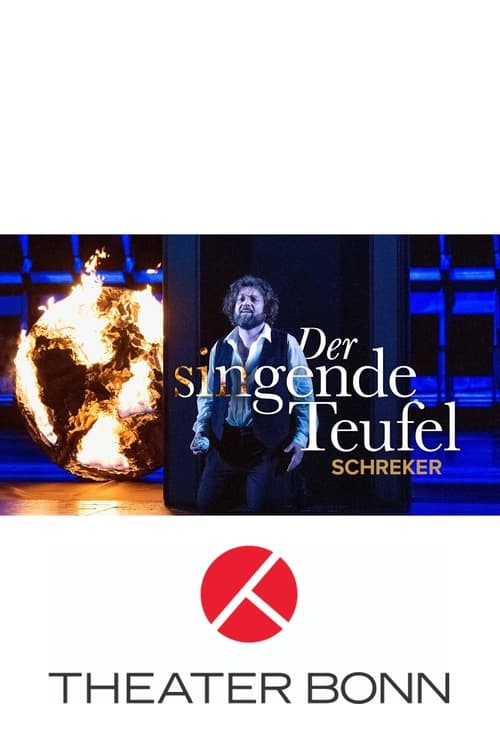
Amandus completes the construction of a magic organ just before a pagan attack on the monastery. The instrument’s heavenly sound pacifies the attackers, who lay down their weapons and kneel. But it won’t be long before the tones of this ‘singing devil’ resound again, this time from behind the burning walls of the monastery… In the beginning of the 20th century, Austrian composer Franz Schreker was one of the only opera composers in the German-speaking world whose success could compete with Richard Strauss. But as of 1933, Schreker’s works were banned in Germany and began to disappear from the international repertoire.

In the vision of Philippe Grandrieux, the director of Tristan und Isolde, the latter is the driving force behind the passionate drama of Tristan and herself. She is an erotomaniac who wants to possess and swallow him whole. Philippe Grandrieux's direction focuses on Isolde's desire and not the desire of both of them (as classical literature usually reads Wagner's opera).
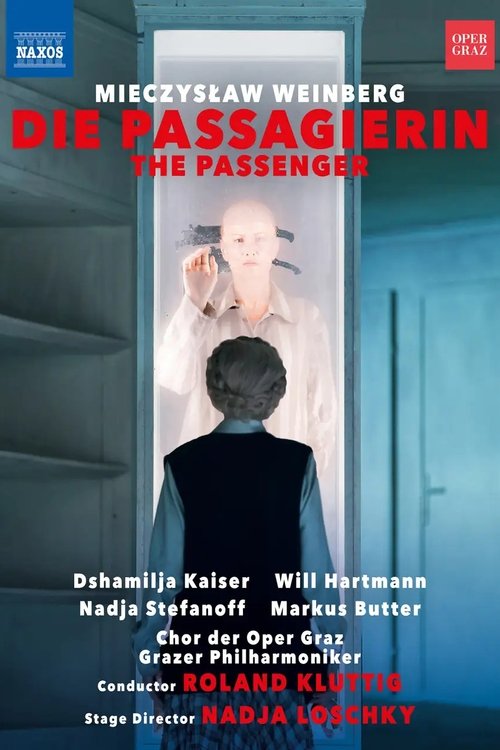
Mieczyslaw Weinberg's powerful Holocaust drama Die Passagierin channels his and his family's ordeals of wartime and Soviet persecution, applying them musically to Zofia Posmysz's autobiographical novel.

Pascal Dusapin delves into the deepest abysses of the human soul and, with highly complex music that is dazzling and incredibly changeable, creates a blood-stained work, a parable about man's lust for power. Macbeth, who murdered the king and became king himself, died a violent death after his reign of terror. Pascal Dusapin and his librettist Frédéric Boyer have cursed Macbeth and his lady to relive and reenact their story over and over again in the underworld. Lorenzo Fioroni stages it as an eternal nightmare in the antechamber to hell, where all the spiritual garbage of human history has accumulated in Paul Zoller's stage design.
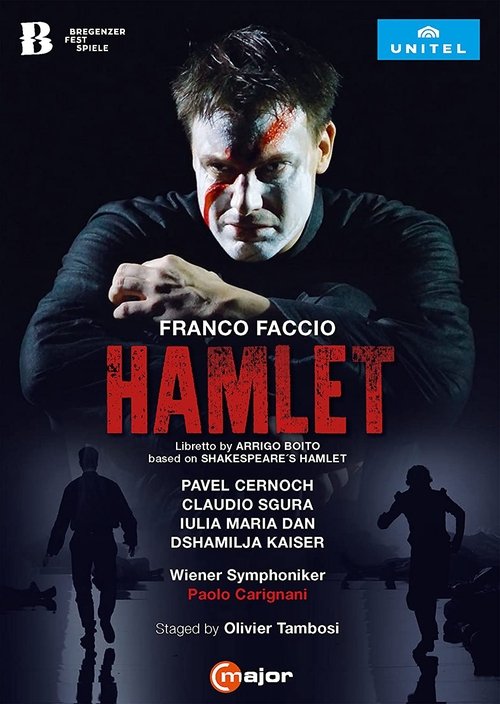
Hamlet, an opera by Verdi contemporaries Franco Faccio and Arrigo Boito, based on Shakespeare's tragedy, had a "triumphal rebirth" (Deutschlandfunk Kultur) at the Bregenz Festival, where the opera was also recorded for the first time ever. Faccio, who conducted the first performance of Verdi's Aida in Italy and the world premiere of Otello, and Boito, Verdi's librettist of Otello and Falstaff, anticipated the musical language of later Italian verismo composers so their opera combines lovely musical interludes with superb vocal writing. Olivier Tambosi's "excellent staging served it well, with a clear focus on the high points (The Telegraph)". "In the intermission and at the end there was vociferous enthusiasm of the audience for the late first encounter with this music" (Neue Musikzertung).
Subscribe for exclusive insights on movies, TV shows, and games! Get top picks, fascinating facts, in-depth analysis, and more delivered straight to your inbox.