
Action
Adventure
Animation
Comedy
Crime
Documentary
Drama
Family
Fantasy
History
Horror
Music
Mystery
Romance
Science Fiction
Thriller
War
Western
Explore all movies appearances
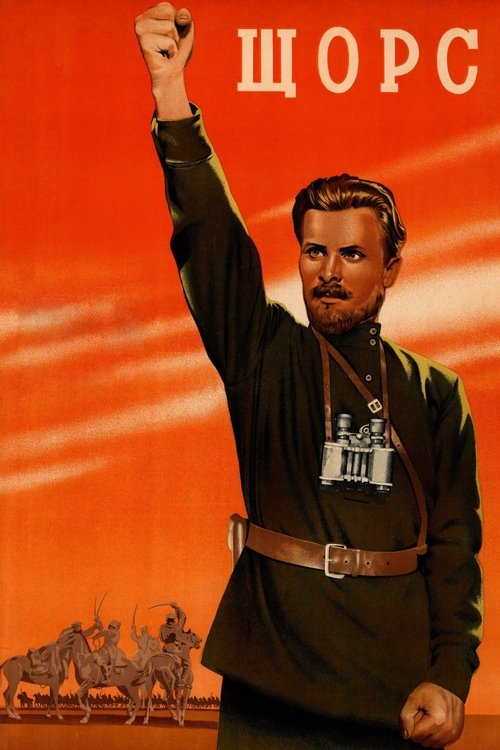
The year is 1919. German troops retreat from Ukraine. The Directory, the Ukrainian national government lead by Symon Petliura, takes control of Kyiv. Meanwhile, the Bolshevik division commanded by Mykola Shchors is marching on the capital. The Bolsheviks capture the cities of Vinnytsia, Zhmerynka, and others one by one, but lose Berdychiv to Petliura’s forces. They are demoralized by the defeat. By his personal example of courage and military skill, Shchors inspires the retreating Red troops and leads them to victory over the enemy.
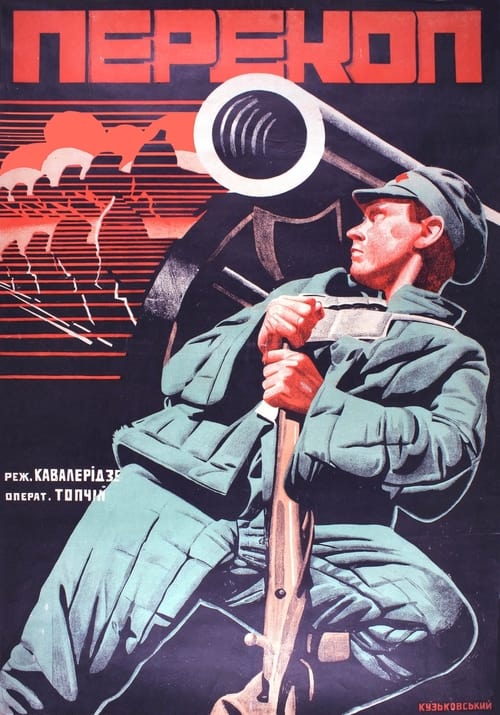
This revolutionary epic likens the push for industrialization of Soviet Ukraine with the battle for Perekop during the Civil War. A missing plow blade is presented as a symbol of the country's backward peasant economy that needs to be transformed in the course of the industrial construction. In an onslaught of rapidly changing images, Ukrainian village with its peasants suspicious of everything new, dramatically collides with the frenzy of working factories, plants, and mines.
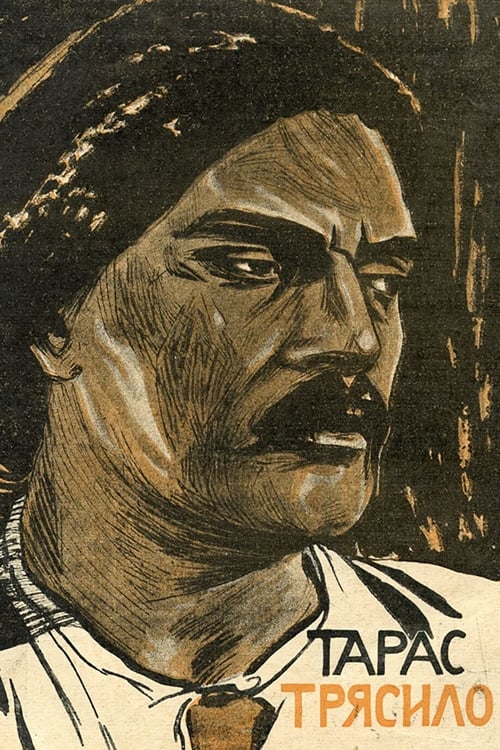
The film is set in the 17th century, when social antagonism is at its peak. The poverty of peasants and poor Cossacks is opposed to the lavish lifestyle of the Ukrainian and Polish noblemen, priests, and Cossack officers. Cossacks fight off Tatars’ attacks, however, they start to realise that the real enemy is much closer. Taras Triasylo raises Cossacks to help the rebellious peasants. A dramatic historical narrative, masterly mass shootings of horse attacks, hand-to-hand combats and public festivities contrast with lounge scenes in the palace – balls, feasts, and entertainment of rich people and their family members wearing brocade clothes. On a grand scale and with an eye for detail, the director draws the texture of the film and its characters. The leading actors of Les Kurbas’s theatre Berezil played film protagonists. The film based on Volodymyr Sosiura’s verse novel of 1925 was considered lost for a long time.
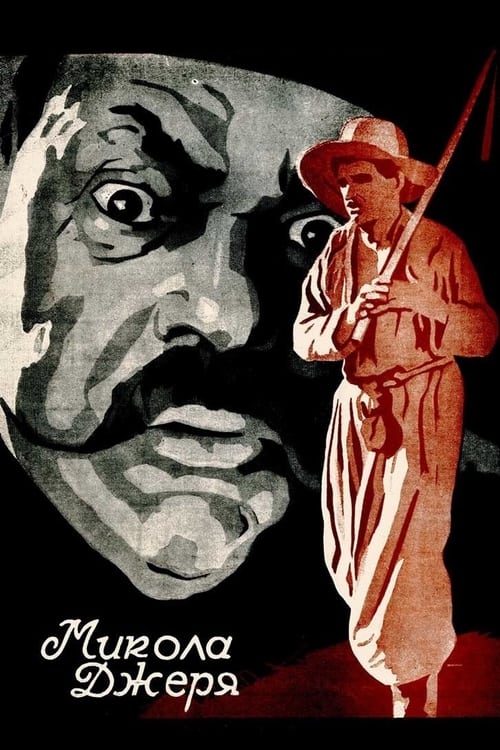
Freedom-loving Mykola Dzheria goes away from the village because of poverty and villainage. He leaves his senior parents, his young wife Nemydora and escapes to the sugar-mill. His friend dies because of slave work. Mykola goes to the Dniester reed beds. Working with other escapees, Mykola falls in love with the daughter of the cooperative leader. The girl also likes the handsome guy. However, their fate is decided by the landlord’s servants; they set the reed beds on fire, shackle Mykola and take him to Verbivka. The film was released on 01 April 1927 in Kyiv and on 24 May 1928 in Moscow. The film is lost.
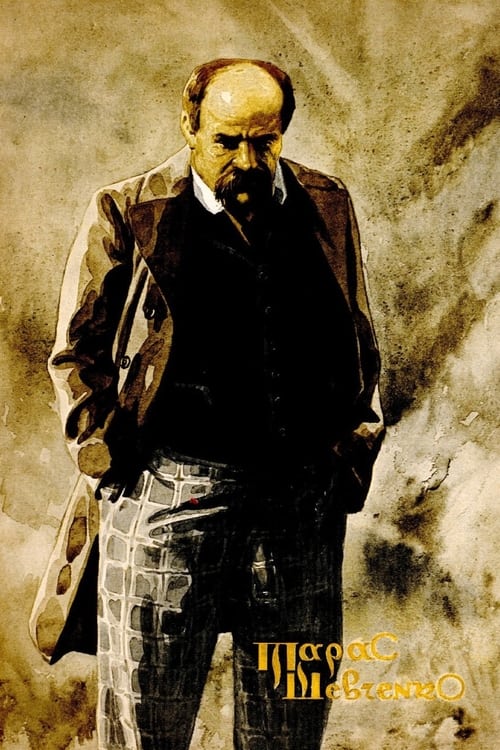
The film adaptation of Taras Shevchenko’s biography of 1925 is the first Ukrainian biopic. At that time, it was one of the most expensive films, as for the first time experts in history, ethnography, and literary studies were involved in pre-production. The famous Modernism artist, academician Vasyl Kryvhevskyi designed the film, and professor Serhii Yefremov served as a consultant. Consisting of numerous short stories, the film that shows the life of Shevchenko as an adolescent, a soldier, a poet, was successfully demonstrated in Ukraine and abroad and became the most acknowledged cinema project of 1926. Amvrosii Buchma played Taras Shevchenko.

A remote Ukrainian village. A poor peasant, Hryhorii Malynovskyi, wants to expose those who oppose the revolutionary changes in the village - the rich, led by Konstantin Popandopul, who have made their way into the village council and are ruling there. Since poor peasants enjoy certain privileges, the rich in the village council decide to exclude Grigory from the list of poor people. Outraged, Hryhorii goes to the city and writes a letter to the newspaper. Malynovskyi is murdered. The investigator uncovers the murder and the thieves are brought to justice. The film is based on the high-profile trial of the murder of the pro-Bolshevik rural journalist Hryhorii Malynovskyi in the village of Dymivka (later renamed Malynivka in honor of Malynovskyi in Odesa province, now Mykolaiv region), promoted by Pravda newspaper and mentioned by Stalin.
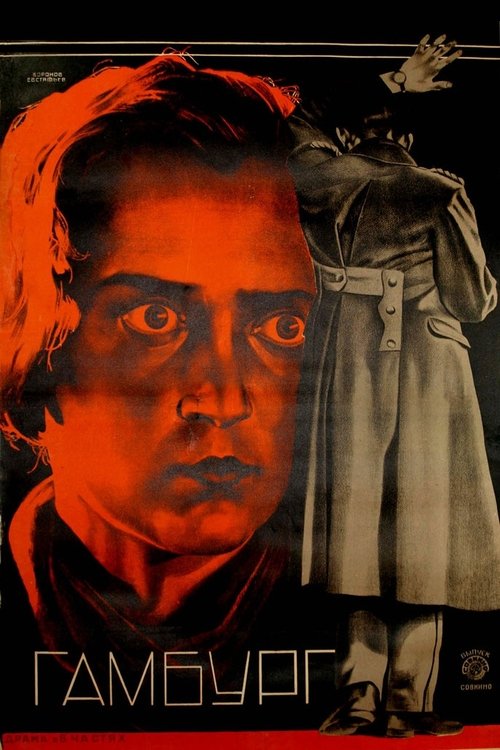
Germany, 1923. Workers, called to the struggle by the communist Niels Unger, seize the arsenal and turn every building into a fortress. The social democrat Buk does not fulfill Unger's order to blow up the bridge over the Elbe, so the Reichswehr troops enter the city. A bloody massacre begins. Nils Unger is arrested. Buk, who is associated with the punitive leader Meins, betrays the rebels during interrogations. A trial is scheduled for the rebels. To avoid political publicity during the trial, Nils Unger is declared insane, but manages to escape from the prison hospital. Once again, his call resounds through the streets of Hamburg: "Save your guns!"

The first Ukrainian adventure detective story. The action takes place in Odesa in 1920, occupied by Denikin's troops. The White Guard counterintelligence conducts a fruitless search for the Bolshevik agent "7+2". The search is led by officer Enger. Dizzying races, disasters, and murders further confuse the agent's trail. It is only with the arrival of the Bolsheviks that the case is solved. Incompletely preserved

A detachment of Red Army soldiers gives shelter to a woman with a newborn. After the child is revealed to be a doll, the woman gets shot.
A documentary fiction propaganda film about the famine in Ukraine in 1921-1922. Among the causes of the catastrophe, in addition to drought, the film mentions the consequences of revolutionary events. It shows swollen children, destroyed factories and plants, burning villages, dead cattle, and a number of actions aimed at helping the victims: the work of the Commission for the Relief of the Starving under the All-Ukrainian Central Executive Committee, the organization of feeding stations, workers donating their three-day salary to help the famine victims, etc. The very first film made in Odesa under the auspices of the newly founded VUFKU in nationalized pavilions that until recently belonged to film magnates Kharytonov and Borysov.
Subscribe for exclusive insights on movies, TV shows, and games! Get top picks, fascinating facts, in-depth analysis, and more delivered straight to your inbox.