
Action
Adventure
Animation
Comedy
Crime
Documentary
Drama
Family
Fantasy
History
Horror
Music
Mystery
Romance
Science Fiction
Thriller
War
Western

Magdalena Montezuma was born in 1943 in Würzburg, Bavaria, Germany as Erika Kluge. She was an actress, known for The Death of Maria Malibran (1972), Macbeth Oper von Rosa von Praunheim (1971) and The Rose King (1986). She died on July 15, 1984 in Berlin, Germany.
Explore all movies appearances

A mentally unstable woman and her son move to a sprawling mansion in Portugal to grow roses.

The final installment in Ulrike Ottinger’s Berlin Trilogy (following TICKET OF NO RETURN and FREAK ORLANDO) casts Delphine Seyrig as the nefarious Fritz Lang supervillain Dr. Mabuse, here the head of a powerful media empire that seeks to create headlines by manufacturing (and then publicly destroying) its own celebrity: the wealthy, handsome playboy Dorian Gray.

Set in Hamburg's “Hell's Kitchen,” a waterfront milieu of gangsters, pimps, dealers and prostitutes, the story follows the attempts of an ex-seaman first to insinuate himself into the scene, and then to extricate himself from it. He becomes a small-time pimp, sending his naive girlfriend out onto the streets thinking she is financing their middle-class future. When he becomes involved with an old pal, Nil, he increases his criminal portfolio. But when he steals Nil's girlfriend and things heat up, he leaves for his sister's middle-class home in Berlin, where his attempts to fit in are doomed from the start. Returning to Hamburg, he starts a rapid decline that delivers him into the waiting arms of Nil, whose revenge is merciless.

Eva, an upper-class housewife, frustratedly leaves her arrogant husband and decides to enter the call girl business. She lets Yvonne, a prostitute, teach her the basics and both set out for prey together, until Eva starts an affair with Chris, who turns out to be a call boy, as well. Consequently, she moves into his penthouse, large enough for both to offer their services separately.

Futuristic view of life in Pankow, East Berlin. The GDR has turned into a madhouse with serious economic problems.

Max Taurus, a sort of amateur detective, pursues the traces of general omni-present crime back to a partially demolished house. There, the remaining tenants try to gain pleasure and power from progressive abandonment in order to tear down their own conventionalities.

Oskar Panizza’s The Council of Love (1895) is a blasphemous play set in 1495, during the first recorded outbreak of syphilis, which Panizza satirically presents as the punishment from Satan for sexually active humans. As a result, Panizza was imprisoned for obscenity. Schroeter alternates scenes from the Panizza’s work with a dramatization of his trial, presenting the play as an expressionist spectacle performed by actors wearing exaggerated makeup who gesture and grimace grotesquely. The film thus forms a bridge between Schroeter’s use of tableaux in his early experiments with the political urgency of his 1980s films. On the eve of the AIDS crisis, Schroeter is presciently worried about disease as an excuse for governmental repression and the oppression of sexuality. - Harvard Film Archive
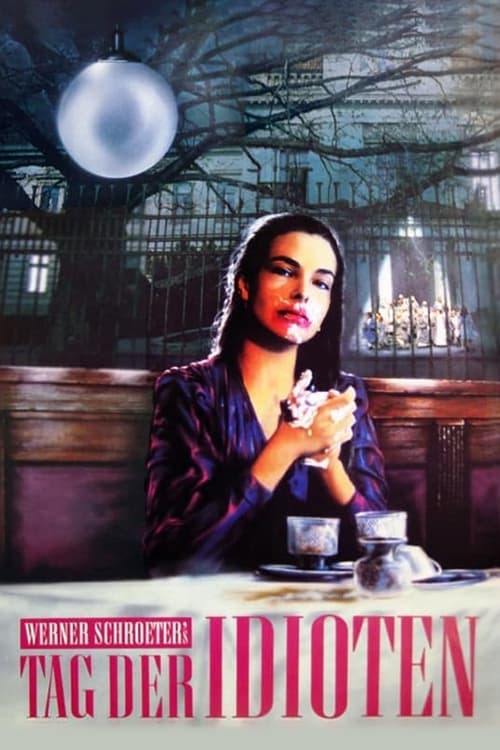
A woman experiences psychic disintegration and ends up in a psychiatric hospital.
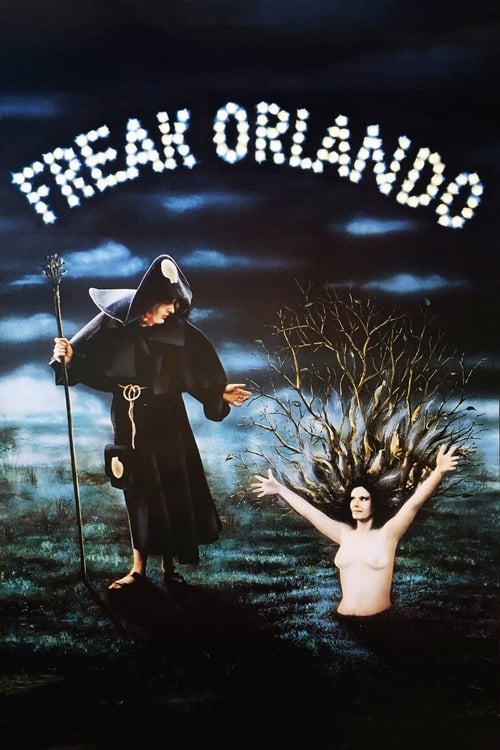
Five more-or-less distinct sections, all featuring "Freak" Orlando, a woman played by the late Magdalena Montezuma, who appears in various guises and deformities throughout.

Frank, a gay school teacher, has a very active sex life and an interest in making films. One evening, he meets Bernd and they become lovers. But while Bernd is attentive and caring, Frank gets bored and continues his polymorphously perverse ways.
Subscribe for exclusive insights on movies, TV shows, and games! Get top picks, fascinating facts, in-depth analysis, and more delivered straight to your inbox.