
Action
Adventure
Animation
Comedy
Crime
Documentary
Drama
Family
Fantasy
History
Horror
Music
Mystery
Romance
Science Fiction
Thriller
War
Western
Explore all movies appearances
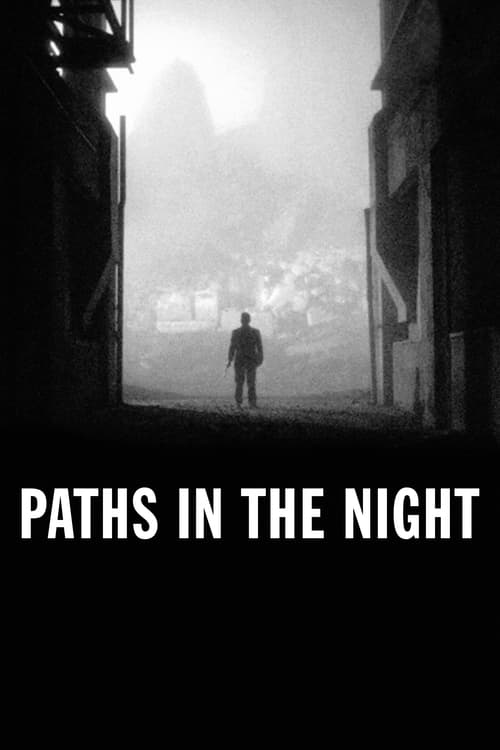
Set against the backdrop of post-unification Germany, the film explores the breakdown of relations in a decaying social structure.
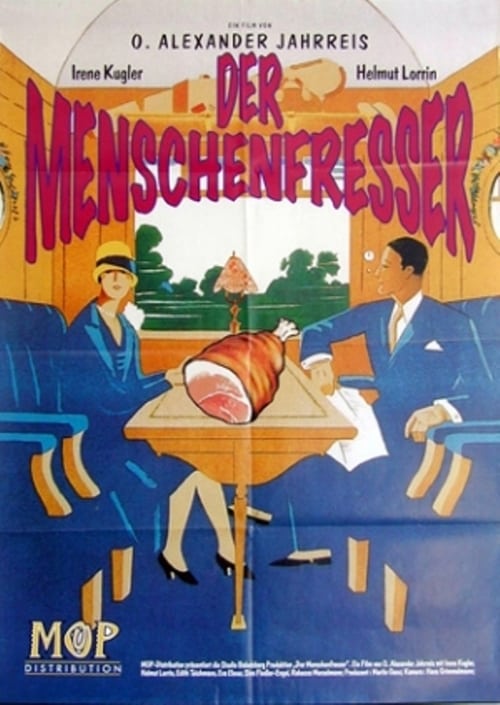
A crime writer on a train to Berlin shares her compartment with a mysterious man who claims to be a cannibal. Initially intrigued, she tries to humorously dismiss his claim while her imagination sparks a new novel featuring Detective Rosa Roth, who investigates a similar case. As the journey progresses, the writer’s confidence fades, replaced by fear and mistrust. The man’s behaviour becomes more unsettling, especially after a young girl reports inappropriate comments from him. In the dining car, he claims to have eaten a fellow passenger and reveals his tools are nearby. Despite her fear, the writer is drawn to learn more about his methods, blurring the lines between her novel and reality. Ultimately, her fantasy merges with reality, leading to dire consequences.
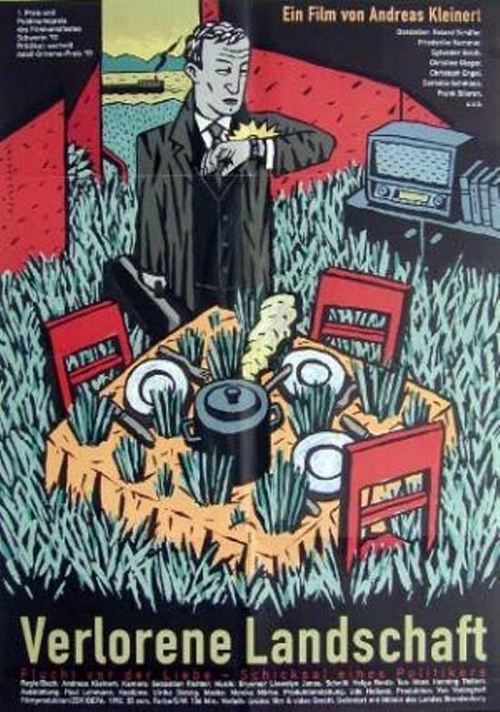
Elias, born at the end of the war, receives an anonymous phone call on his 47th birthday: his parents are dead. He is now a successful politician, but thirty years ago he had fled from his home and parents in the East to seek a new life in the West. The return to his parental home causes Elias a sense of unease and disturbs the rigid order and complacency of his life.
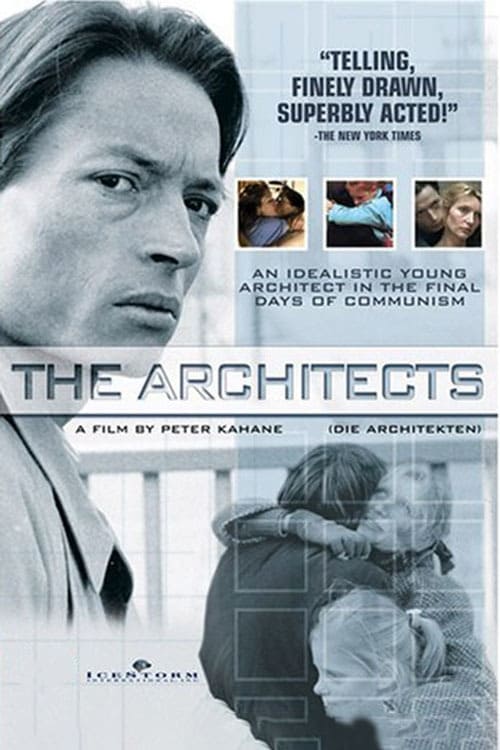
The architect Daniel Brenner is in his late thirties when he receives his first challenging and lucrative commission: to design a cultural center for a satellite town in East-Berlin. He accepts the offer under the condition that he gets to choose who he works with. This way, he reunites with former colleagues and friends - most of them architects or students of architecture who have since chosen a different profession due to personal restraint or economic confinement. Together, they develop a concept which they hope will be more appealing to the public than the conventional and dull constructions common to the German Democratic Republic. However, their ambitious plans are once and again foiled by their conservative supervisors. As frustration grows, Daniel has trouble keeping his career in balance with his family-life: his wife Wanda wants to leave for West-Germany.

Aging Knights of the Round Table confront a fading realm as moral decay and disillusionment spread. King Arthur doubts the Grail quest; Gawain and Lancelot return unchanged or failed. Parzival, now a chronicler, refuses to revive past glories. Meanwhile Arthur’s heir Mordret rejects knighthood and the Grail’s existence…
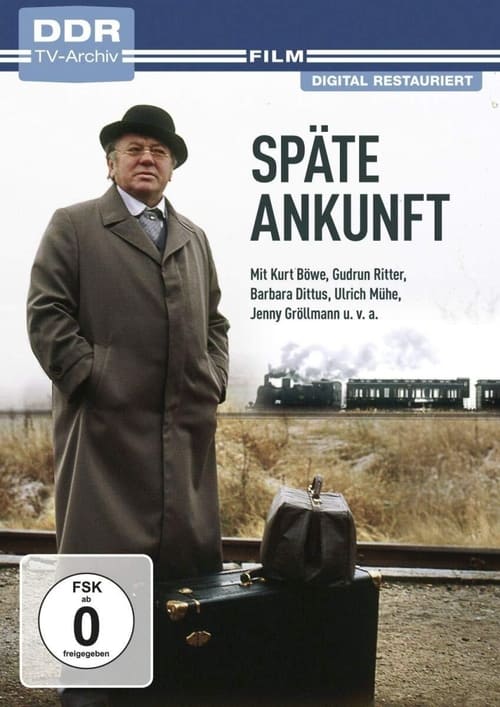
In 1896 the Berlin noble doctor Dr. Wilhelm Holtfreter takes over his well-to-do wife Mathilde and takes over the country doctor's office in the Prussian district of Westprignitz from the late Dr. Tochtenhagen. His decision was met with incomprehension everywhere.

The body of young Christa Gellert is fished out of the water in a small town on the Elbe in the spring of 1964. Everything points to an accident - Christa drowned while picking willow catkins during an official trip with town councillor Stegmeier and his colleague Anna Sell. That's what the people involved say, but then rumors start to spread. Detective Hans Gregor investigates. His boss Erwin Müller, who has known the councillor for many years, is unamused. When questioning the witnesses, Gregor only comes across hints. An exhumation of the dead is carried out. It is discovered that Christa was pregnant. Her colleague Helga, a former student on probation, knows about the councilman's relationship with Christa. But she is afraid to testify. Gregor has to fight his way through a web of dependencies, career thinking and mistrust until he solves the case.
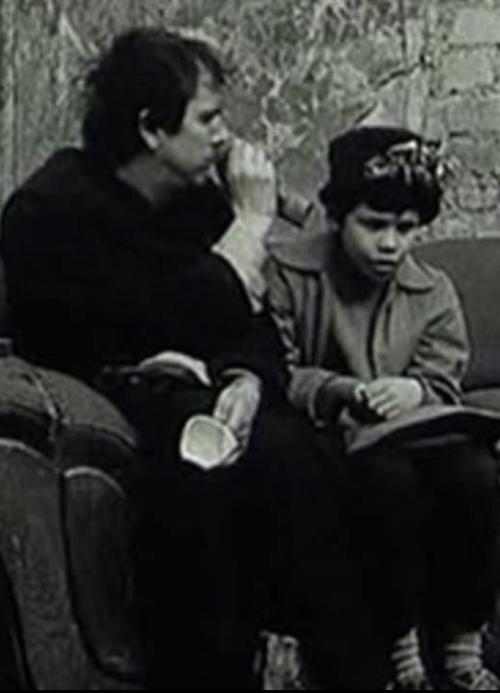
Film director Andreas Kleinert belongs to the last generation of filmmakers that emerged in the former German Democratic Republic (GDR). Born in 1962, Kleinert's attitudes were shaped by the late 1970s, and particularly by the 1980s—a period of increasing disillusionment. He wrote his thesis on “Levels of Consciousness in the Film Poetry of Andrei Tarkovsky,” the late Soviet film director who made a name for himself in the pre-perestroika years with bleak films. As Kleinert completed his film academy studies with his graduation film, Leb' wohl, Joseph ( Farewell, Joseph, 1989), the Berlin Wall fell, heralding the collapse of the GDR. Kleinert won the main prize for his diploma feature film, Leb' wohl, Joseph, at the Munich International Festival for Film Schools. The next year, this remarkable black-and-white Kafkaesque film of cryptic symbols and enigmatic metaphors was invited to compete at Locarno.
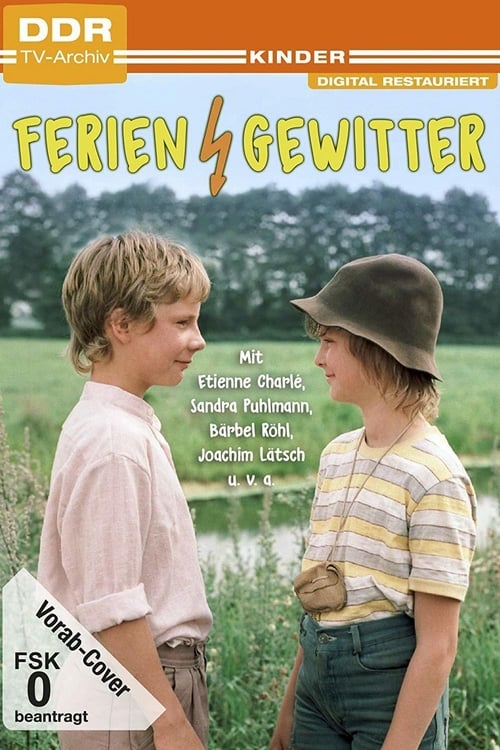
Summer holidays are beginning for 13 years old Daniel, a boy from East Berlin. He does not know yet that his parents are going to get divorced. They are afraid of Daniel`s reaction, so they have not told him about their decision until now. Together they drive to a village in the mountains. There Daniel finally recognizes the truth about his parents marital problems. When Daniel has an accident, this brings his parents together again, at least for the moment...
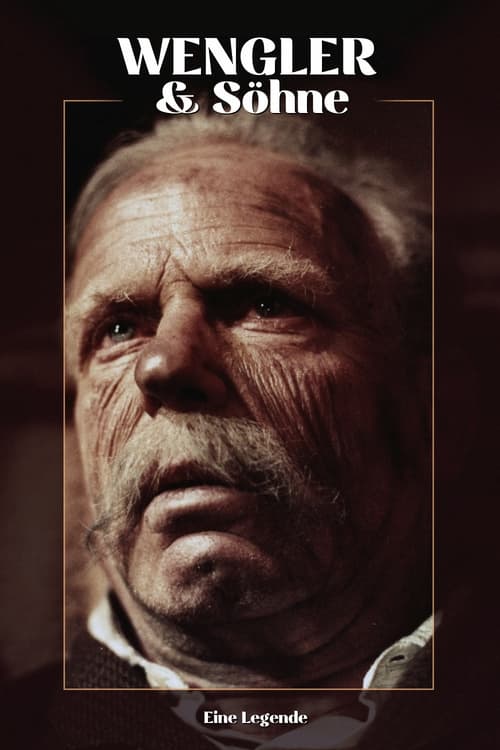
A story spanning three generations, from 1871 to 1945. When Gustav Wengler, a farmer’s son, returns from the Franco-German war in 1871, he goes to work for a precision mechanics and optical company, where he soon becomes a master craftsman. Wengler loyally promises the owner on his deathbed that his sons and grandsons will also stand by the company.
Subscribe for exclusive insights on movies, TV shows, and games! Get top picks, fascinating facts, in-depth analysis, and more delivered straight to your inbox.