
Action
Adventure
Animation
Comedy
Crime
Documentary
Drama
Family
Fantasy
History
Horror
Music
Mystery
Romance
Science Fiction
Thriller
War
Western
Explore all movies appearances
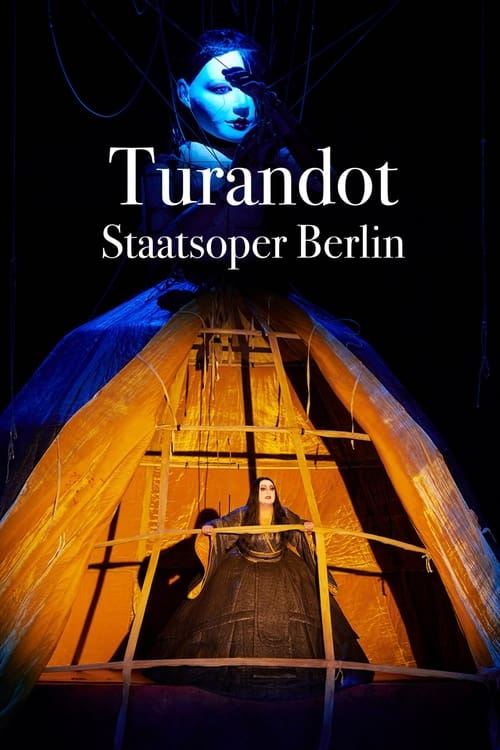
No plot available for this movie.

No plot available for this movie.
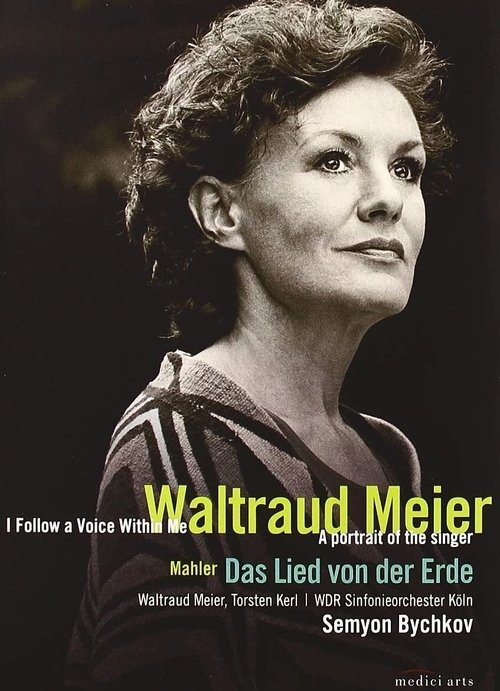
Waltraud Meier is “La Wagnerissima”, the queen of Wagner’s repertoire. In her very personal account “I follow a voice within me”, we enter her world and learn about her motivations, aspirations, and her joyful way of pursuing them. In addition to personal insights, this truly ingenious portrait presents Waltraud Meier on stage and in rehearsal in her most celebrated Wagner roles and as an interpreter of Mahler’s Lieder. It becomes clear how she coined today’s musical world when other great musicians such as Daniel Barenboim or Plácido Domingo speak about her and her work. This beautiful portrait of one of the greatest interpreters of our time is rounded off with a powerful recording of Mahler’s “Lied von der Erde”.
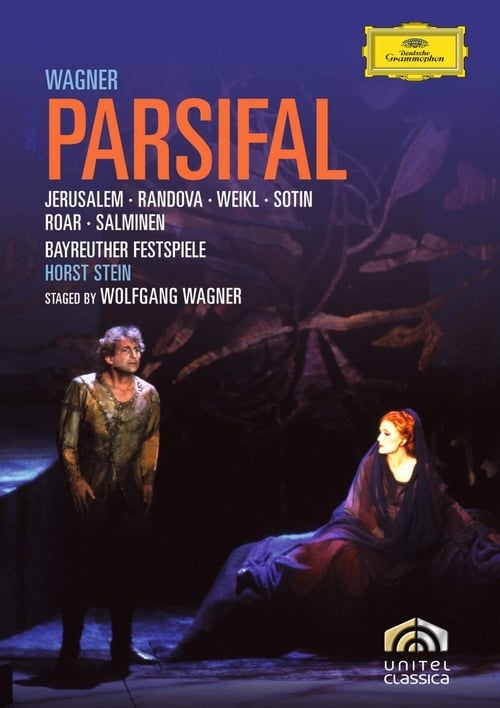
Wolfgang Wagner's Bayreuth production of his grandfather's 'farewell to the world'has 'an unusual beauty and logic of its own ... with a double stress - on nature undefiled and on a form of religious symbolism ... There is an air of magic and mystery about the staging ... The performance was excellent ... Horst Stein conducted a beautifully proportioned Parsifal'. New York Times
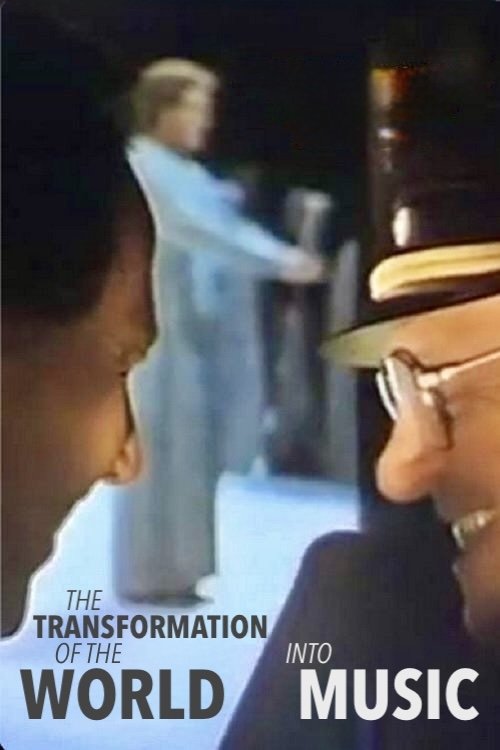
This film was prepared as a introduction to a series of opera broadcasts on German television. It depicts the behind-the-scenes manoeuvrings in preparation for the annual opera festival in Bayreuth.
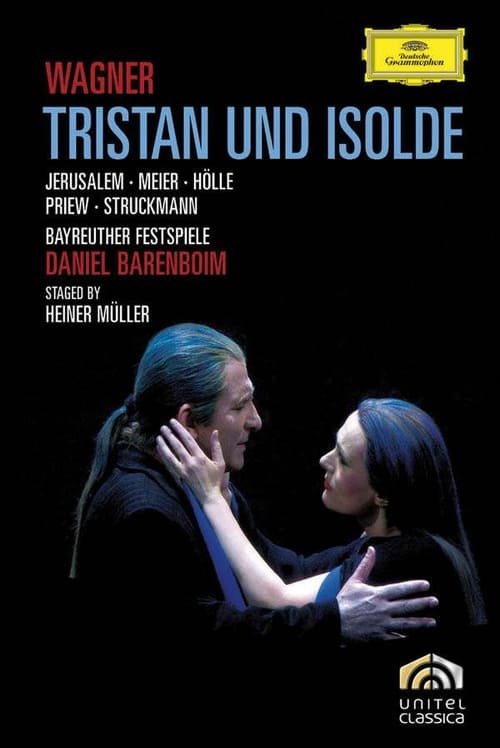
The Bayreuth Festival Opera House mounted this production of Richard Wagner's 1865 opera Tristan und Isolde as part of the Bayreuther Festspiele. Staged by Heiner Müller, it stars Siegfried Jerusalem, Waltraud Meier, Poul Elming and Uta Priew, and features musical accompaniment by The Orchestra and Chorus of the Bayreuther Festspiele.
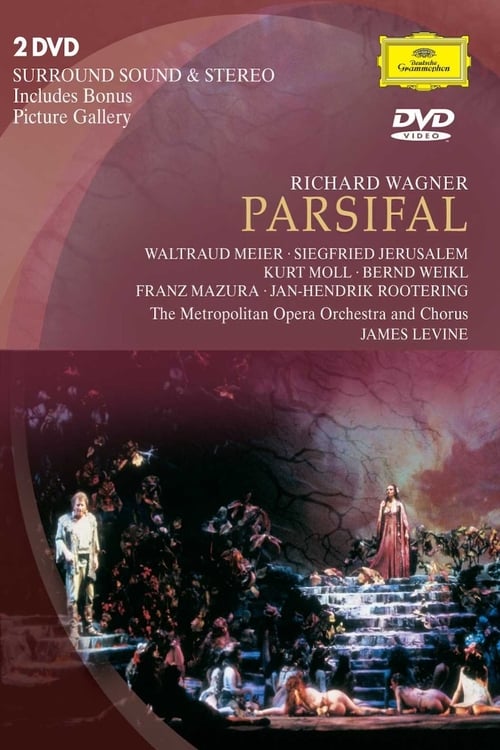
The Met production easily has the most beautiful staging, designed by Otto Schenck, who also produced the fabulous set for the Met's previous Ring cycle. Kurt Moll is a wonderful Gurnemanz, but compared to his studio recording under Karajan a decade earlier it has lost some of its original velvety body and luster. As Parsifal, Jerusalem is starting to show some wear and tear on his voice at the Met in 1992 as opposed to his prime form at Bayreuth in 1981, but is still quite good; only Placido Domingo could compete with him in the role at that time.
SECOND DAY OF THE RING CYCLE. Alberich's brother Mime raises the orphan Siegfried, hoping that Siegfried will kill Fafner and enable Mime to gain the ring. Mime attempts unsuccessfully to reforge the Nothung. Fulfilling prophecy, Siegfried reforges the sword himself and kills Fafner, who has the form of a dragon. When he accidentally tastes the dragon's blood spilt on his hands, Siegfried understands the song of a woodbird, who instructs him to take the Ring from Fafner. Reading Mime's thoughts of betrayal, Siegfried kills the dwarf as well. The woodbird also informs Siegfried of a mysterious woman asleep in the midst of fire, and Siegfried sets off to find her. After defeating a disguised Wotan and breaking his spear, Siegfried successfully awakes Brünnhilde, and the two fall in love. Filmed at the Bayreuth Festspielhaus in June & July 1992.
THIRD DAY OF THE RING CYCLE. Günter, the lord of the Rhine people, gives Siegfried a love potion that causes Siegfried to forget Brünnhilde and fall in love with Günter's sister Gutrane. Siegfried has given Brünnhilde the Ring as a token of their love, but her Valkyrie sister urges her to destroy it, because their father Wotan has lost his spear and power and is hiding out in Valhalla. Instead, Brünnhilde keeps it, and under the influence of the potion, Siegfried steals it from her. Enraged, Brünnhilde helps Alberich's son murder Siegfried, but Siegfried's memory returns, and he dies thinking of Brünnhilde. Brünnhilde repents and orders a funeral pyre to be built. She rides into the fire herself, and the Rhinemaidens get the ring back. The story closes with flames flickering about Valhalla in the background. Filmed at the Bayreuth Festspielhaus in June & July 1991.
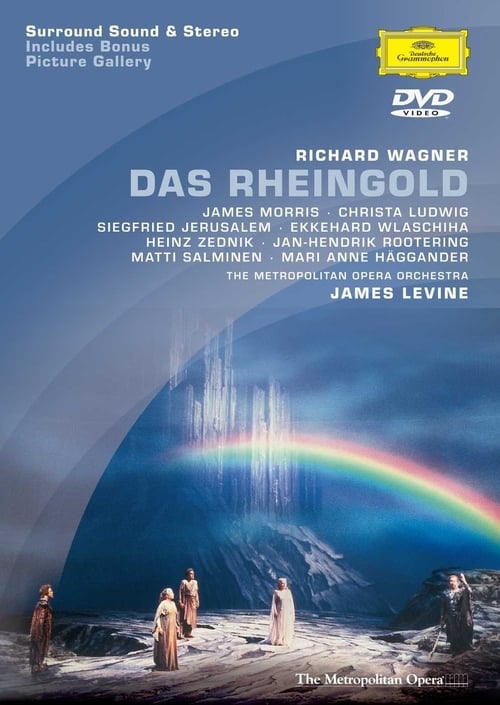
From the gorgeous scene deep in the river Rhine that opens the opera, up to the magic Rainbow Bridge that appears at the end, leading to a glistening Valhalla, Otto Schenk’s production captures the scenic world of Wagner’s Ring as brilliantly as James Levine and the Met orchestra capture the musical world. The cast is incomporable: an astounding James Morris as the young god Wotan, the great Christa Ludwig as his wife Fricka, incandescent Siegfried Jerusalem as Loge, the wily god of fire, and Ekkehard Wlaschiha as a complex Alberich.
Subscribe for exclusive insights on movies, TV shows, and games! Get top picks, fascinating facts, in-depth analysis, and more delivered straight to your inbox.
