
Action
Adventure
Animation
Comedy
Crime
Documentary
Drama
Family
Fantasy
History
Horror
Music
Mystery
Romance
Science Fiction
Thriller
War
Western
Explore all movies appearances

The time is World War II, and Juergen Siebusch and his mother are retreating along with the German army, just ahead of the invading Russian forces. Both mother and son hole up in the town of Hohengoerse, where Juergen finds some work watching over sheep - and learns a bit about the facts of sheep life that he extrapolates to some advantage when he meets the appealing Amelie, daughter of the landowner. He first helps Amelie out and later applies his new-found knowledge in a barn, appropriately enough. As the Red Army draws near, Juergen deserts a hastily put-together "people's force," as he prefers the barn to the gun. Russian soldiers are shown sleeping and snoring next to their tanks, and the local fascist executed - the war is over. When the new Communist government sets up a land reform package, Amelie's mother's land gets divided up into small plots for small farmers.

The six-part film series tells in impressive stages of the work of important doctors at the internationally renowned Berlin hospital in its medical and contemporary historical scope. The period spans the beginning of the 19th century to the Second World War, bringing the viewer close to the work of great medical professionals: Robert Koch, Ferdinand Sauerbruch, Rudolf Virchow and others. Film overview: • "The man from Jena" (Christoph Wilhelm Hufeland). • "The Little Doctor" (Rudolf Virchow) • "Krisis" (Robert Koch). • "Doctor in Uniform" (Theodor Brugsch and Georg Friedrich Nicolai). • "The seemingly impossible" (Walter Stoeckel) • "Die dunklen Jahre"(Ferdinand Sauerbruch)
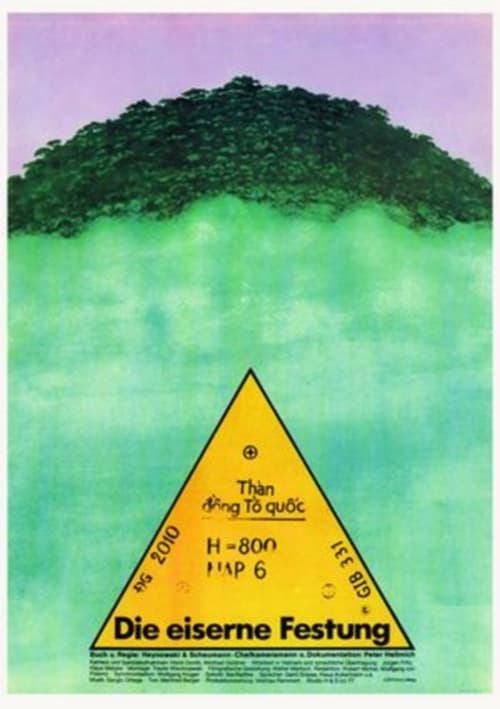
Weeks after the victory in Vietnam, first pictures of a new humanity are captured: old and sick people preparing for their future, children on their way to school.

His passion for hunting almost spells doom for the sales manager of a GDR convenience store: his ambition to shoot a big buck just before the start of the closed season leads him to fall for a joke played by his son. He has tied horns to a prize-winning breeding goat, leading the hunter on the wrong track. While he tries to cover up the incident, there is a great deal of excitement in the village; resentment and schadenfreude arise, intrigues are played out and village gossip makes the rounds.

For her husband, who has become famous as an actor, Angelika is the go-to girl. For years, she stands in his shadow. The only things they do together are premiere parties and receptions. Angelika, who is becoming increasingly frustrated, finally wants a satisfying occupation with which she can gain recognition. But this is where the problems really begin for the couple.
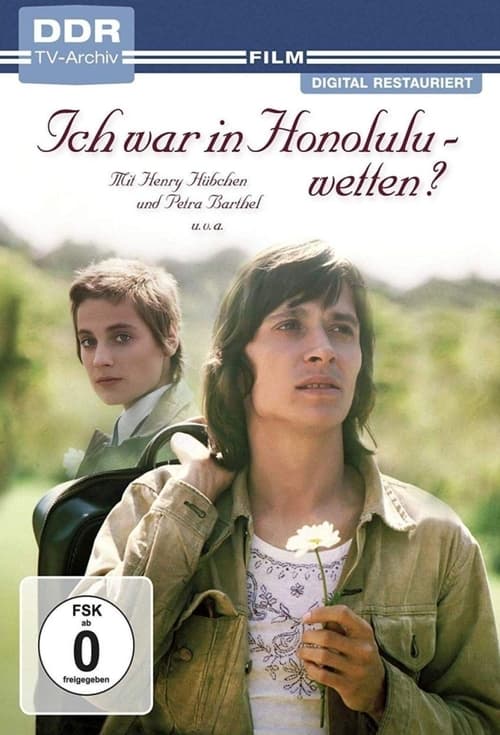
Uwe is a chemistry student and works as an excavator driver on various construction sites at weekends. One weekend, he meets the nursery nurse Gabi. As it turns out later, they owe their encounter to the daughter of the construction site brigadier Trunzer. But it doesn't stop at this one encounter and the resulting flirtation, as the two fall in love within a very short time. On another weekend, Uwe accompanies Gabi to visit her family. When construction site brigadier Trunzer returns from vacation a few days later, he first asks Uwe where he has been during his absence, to which Uwe replies: "I was in Honolulu - bet?".
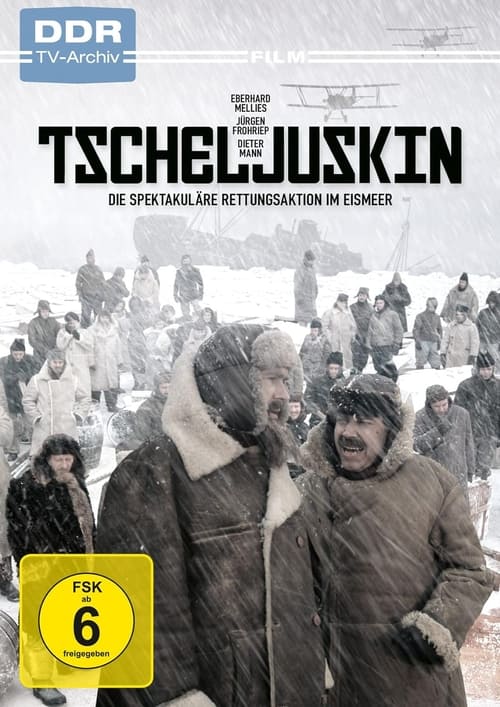
In the 1930s, the Soviet ship "Chelyuskin" embarked on an expedition to the Northern Ocean. But soon there is an accident in the ice and the team can save themselves on an ice floe. Two months, the over one hundred people have to persevere there until rescue from the air finally approaches.

Paul Pospischiel loses his job in the great colliery collapse in the Ruhr, retrains and builds a new life for himself. One day, he receives a letter from his mother, which tears him from his comfort zone and triggers a serious conflict. She has discovered the man who sent his father to a concentration camp decades ago and is therefore responsible for his death. The mother demands accountability from this man. Paul decides to confront the suspected informer and murderer...
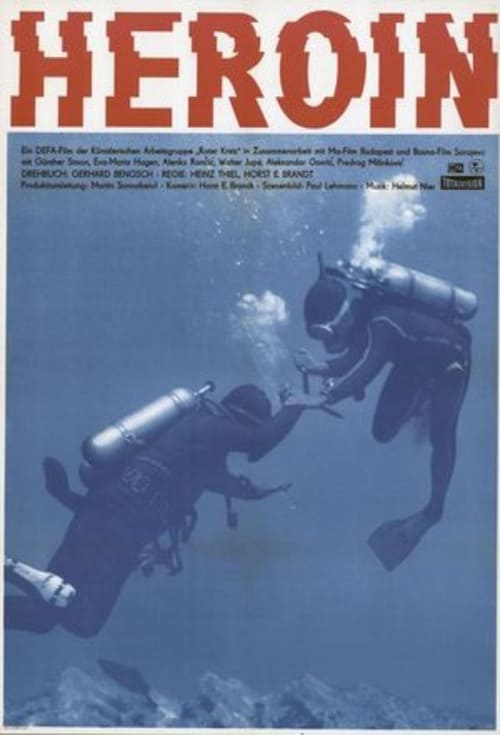
This East German movie was co-produced with studios in Hungary and Yugoslavia, with many interesting location shots (border checkpoint to West Berlin, the Gellert bath in Budapest, and more). The plot is about French drug dealers, who obtain heroin somewhere in the Middle East, and smuggle it in several steps to East Berlin, and from there to France (or so it appears), killing when necessary. The hero is an officer of East German customs, who with detective work, some masquerade, and occasional violent action ultimately unravels the whole network, of course with the support of the local customs departments.
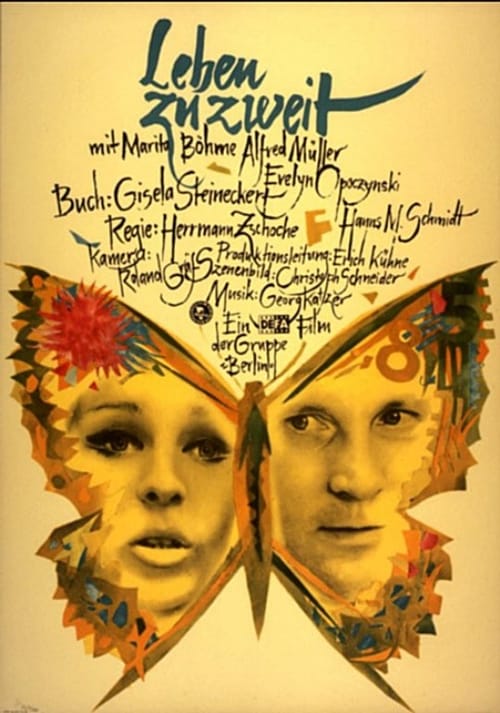
Karin, who is in her mid-thirties, works as registrar but has been divorced for several years. Together with her 16-year old daughter Nora, she leads a happy and independent life. Then, she finds a new partner in the mathematician Peter, but does not tell her daughter about him. When Peter proposes marriage, Karin always comes up with new excuses why such a step is still too early for her. She mainly fears that Nora would not be able to cope with another marriage of her mother. But when Peter cannot be dissuaded anymore by her excuses and finally wants to marry her, Karin comes up with a bizarre plan.
Subscribe for exclusive insights on movies, TV shows, and games! Get top picks, fascinating facts, in-depth analysis, and more delivered straight to your inbox.