
Action
Adventure
Animation
Comedy
Crime
Documentary
Drama
Family
Fantasy
History
Horror
Music
Mystery
Romance
Science Fiction
Thriller
War
Western
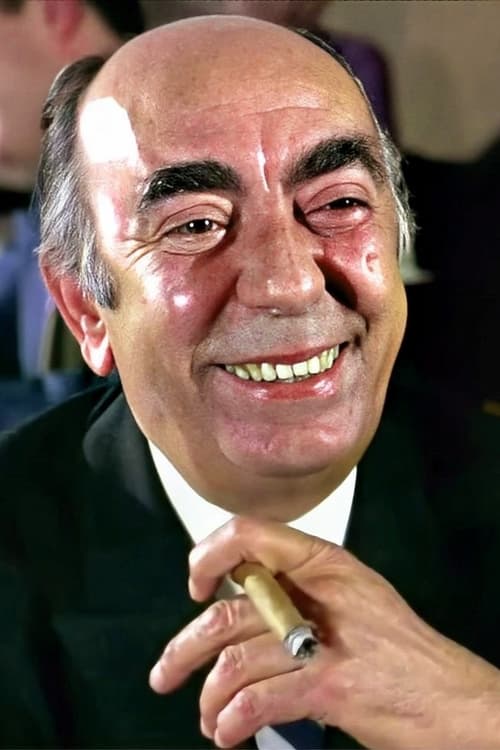
Dionysis Papagiannopoulos (Greek: Διονύσης Παπαγιαννόπουλος; 12 July 1912 – 13 April 1984) was a Greek actor. He was born in Diakopto in the northeastern part of Achaea in 1912. He studied at the Drama School of the National Theatre of Greece (Ethniko Theatro) in Athens and made his stage debut in 1938, appearing as the Knight in William Shakespeare's King Lear. He excelled in Shakespeare's Hamlet...
Explore all movies appearances

In 1821, in Cinema, he records the cinematic representations of the Revolution from the first decades of the 20th century. until the present day. Despite the fact that the Revolution of 1821 constitutes the founding act of the modern Greek state, as a subject matter it is underrepresented in national film production. This is one of the points on which the research looks, which simultaneously examines the periods of concentration of films on the subject of the Revolution or, respectively, the periods of its collective silence. The purpose of the documentary is to study the ideological discourse and the cinematic language of the films with the theme of 1821, in order to highlight the function of the cinema as a carrier of Public History and as a factor in shaping the collective historical consciousness.

An old communist returning to Greece after 32 years in the Soviet Union is disillusioned with the state of things.

Potis and Fotis are partners in a supermarket. One cares about the company, while the other prefers to party with a wasteful lady. But, a beautiful shoplifter offers the opportunity to Fotis to discipline his partner.

Three stories everyday madness. A retired headmaster angers me when I see the marks of his granddaughter and soon discovers that most education is dominated by bribing. A civil servant who lives a boring life with his wife and his mother in law, and a woman who has been trying for years to get its land in the city plan!

The beloved theater and film actor, Dionysis Papagiannopoulos, talks about his life in Diakopto, reminisces about his childhood and school years, and his first amateur theatrical attempts. He describes his passion for theater and the difficulties he faced in pursuing theatrical studies, mainly due to his family's objections.
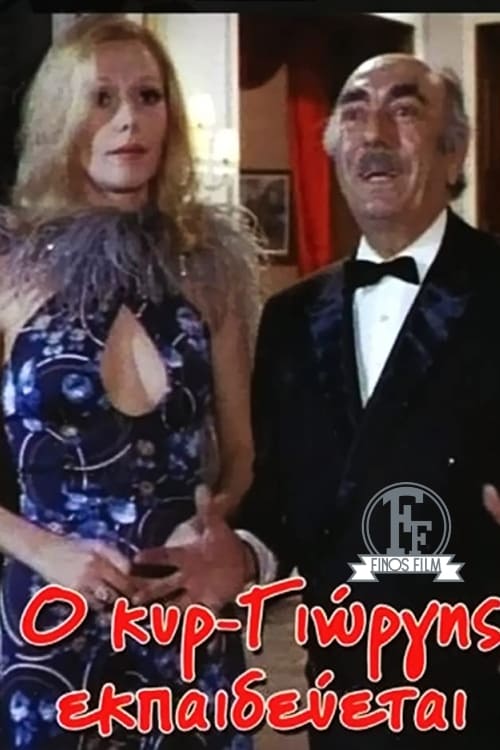
A tavern in Piraeus, Kyr Giorgis Adhesive (Dionysis Papagiannopoulos) has sent his son John in Europe, where he turns educated. He marries a woman of high society, the Riris Kalantzi, elected MP. It is absorbed rapidly from the social environment of the mother-in which is told that his father is owner. Kyr Giorgis should eventually appear in the salons. Man folk as they have to go through special training to suit the new environment. Very quickly, however, the student becomes a teacher of high society and gives lessons of honesty and fairness in the pretentious and sometimes scammers bourgeois, whose grandparents were sailing folk jobber.

A young man who grew up beneath the heavy shade of autocratic and avaricious mother, son Gregory, has lost initiative and the minimum footprint. The servility of his mother against his boss, which facilitates the solicitations of the latter to his sister, infuriates him. The fiancée, Soula, can not understand his sexual desires and his girlfriend, Julia, the only one that loves him really forced to abandon him. Gregory wonder with all this and rebels, but his rebellion brings him to the brink of madness. When you finally meet, forced to follow the commands of the mother and uncle ultraconservative so he marries the woman who suggest those.

An immigrant in Germany works hard to support his father and sister, who live in Greece. When he is forced to return home, he discovers that he has no money because the bank where he kept his savings has gone bankrupt. So he returns hidden in a refrigerated truck and arrives frozen, which starts a battle between refrigerator advertisers over who will convince him to advertise their refrigerators.

A harmless simpleton with a heart of gold arrives in Athens and falls in love. Can he prove his worth in the bustling big city and fulfil his destiny?

Based on Aristophanes's play, Athenian women band together to encourage their men to stop fighting the Spartans by withholding sex from them when they return from the front.
Subscribe for exclusive insights on movies, TV shows, and games! Get top picks, fascinating facts, in-depth analysis, and more delivered straight to your inbox.