
Action
Adventure
Animation
Comedy
Crime
Documentary
Drama
Family
Fantasy
History
Horror
Music
Mystery
Romance
Science Fiction
Thriller
War
Western

Writer, actor, and German filmmaker born in Munich in 1938. He spent his childhood and youth in Bavaria, region which remains until today its major source of artistic inspiration. Their activity is very diverse: he has composed pieces for theater and radio scripts, translator, painter and sculptor. As different as his artistic activities is his work, and therefore difficult to classify. In the wo...
Explore all movies appearances

Director Andi Niessner was production manager on Achternbusch's last two major feature films in 1996 and 1998. In conversation, Niessner manages to reveal the universal artist in a previously unknown intimacy and openness: Achternbusch talks about his parents, his childhood in Lower Bavaria and Munich, and his early days as a writer and filmmaker. We learn who and what influenced him, what his relationship with Bavaria is like, how his attitude toward the church has changed, and what his life is like today.
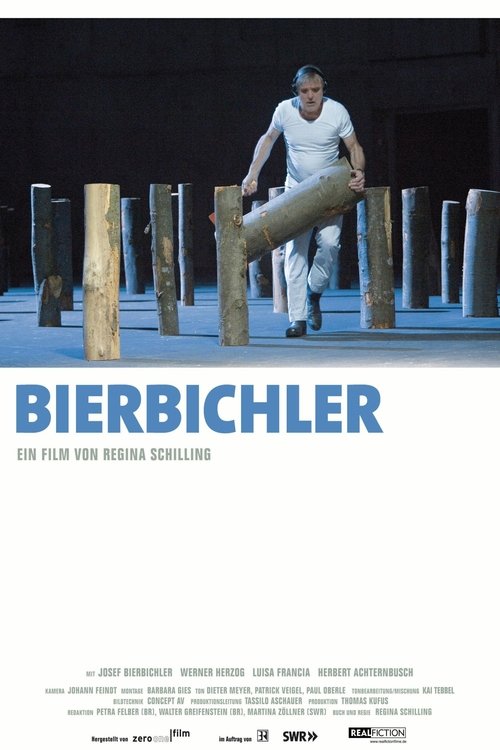
Documentary about actor Josef Bierbichler.
Documentary about the Maximilianstraße in Munich.
Two men try and fail to unhinge a stone.
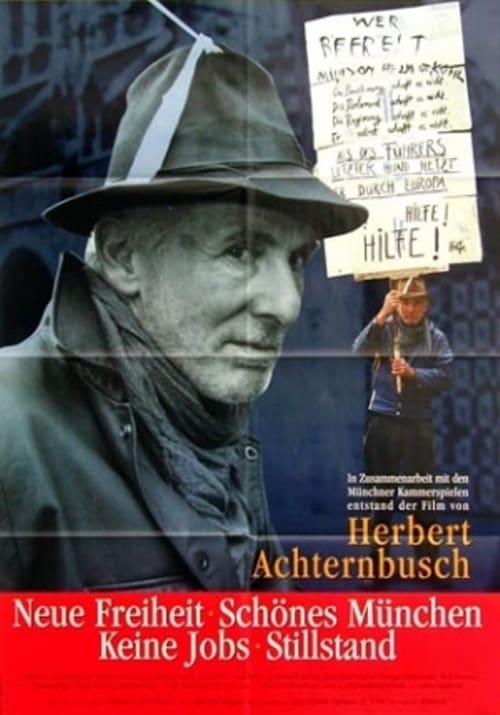
Chancellor Helmut Kohl is to blame in Germany and has to go away without violence. The homeless Hick takes up the idea and demonstrates the abolition of Kohl.
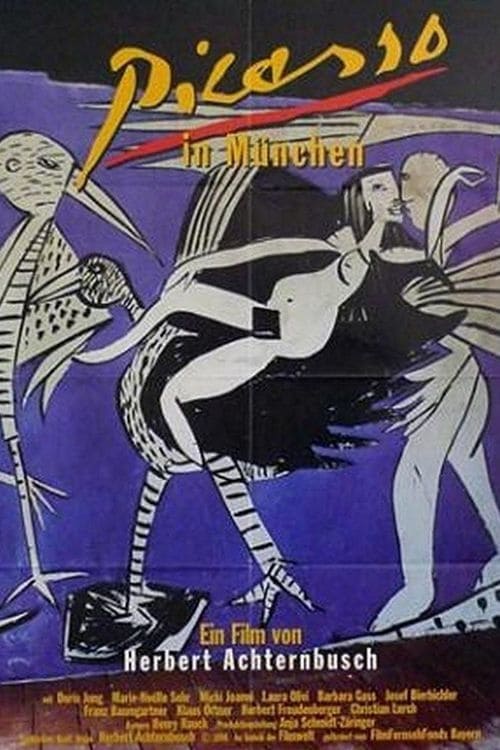
In this surrealist film director Picasso can awaken from the dead. He steals a paintings painted by himself of a couple of wealthy psychiatrists. When Picasso meets Takla Bash, a patient of the psychiatrists, Picasso falls in love. Although it is his own daughter, he remembers an incredible love affair, in which a film with a blue cow plays a role. In the majority of the paintings shown in the film are works of Herbert Achternbusch.

A portrait of Attwenger, the duo from Upper Austria (Markus Binder and Hans-Peter Falkner). The attempt to unite the worlds of Austrian folk music and hip-hop has already succeeded in the music of Attwenger.
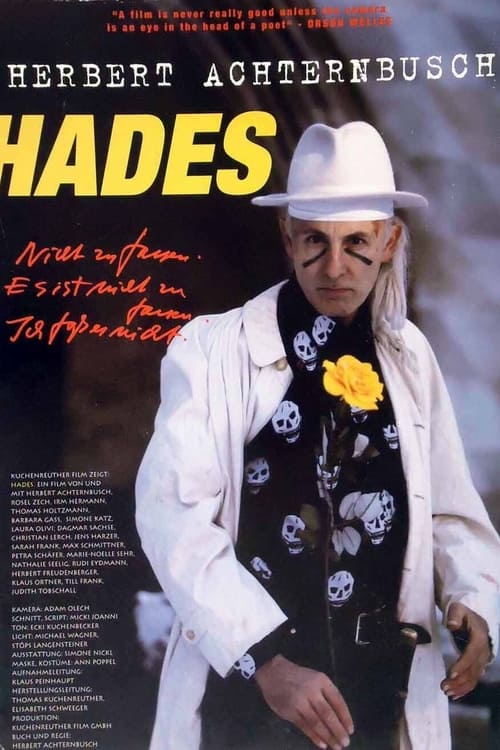
This German political drama from iconoclastic filmmaker Herbert Achternbusch takes a slightly askew look at neo-Nazis and the Holocaust. His non-story (a typical trait of Achternbusch films) is divided into three parts. The first introduces Hades, an eccentric half-Jewish coffin maker. Also introduced are the women in his life. The second part depicts different scenes from the city's Jewish ghetto. Included are disturbing film clips from Nazi propaganda footage that shows the naked corpses of starved Jews piled up in the streets with the insinuation that the heartless relatives of the dead would unceremoniously toss them out when they expired. In the third part, Hades is buried at sea. In between, neo-Nazis march unopposed in Munich, Hades battles skinheads, and Hades' shop is repeatedly vandalized. A scene where Hades is fascinated with death is also seen.
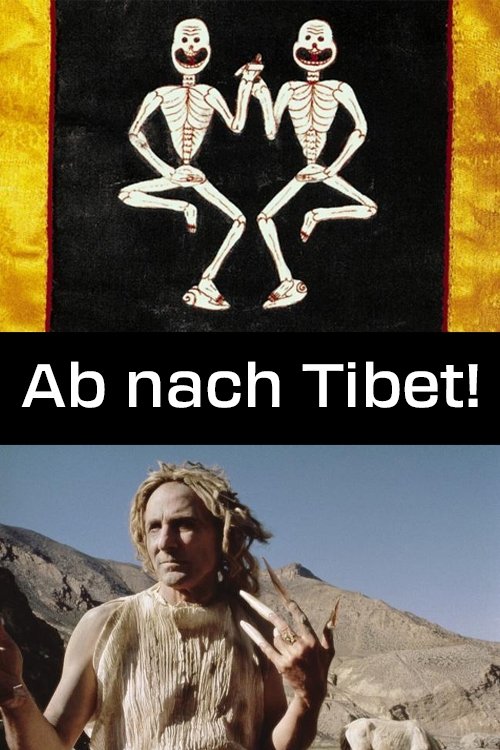
An anarchist surrealist film.
No plot available for this movie.
Subscribe for exclusive insights on movies, TV shows, and games! Get top picks, fascinating facts, in-depth analysis, and more delivered straight to your inbox.