
Action
Adventure
Animation
Comedy
Crime
Documentary
Drama
Family
Fantasy
History
Horror
Music
Mystery
Romance
Science Fiction
Thriller
War
Western
Found 20 movies, 4 TV shows, and 0 people
Can't find what you're looking for?
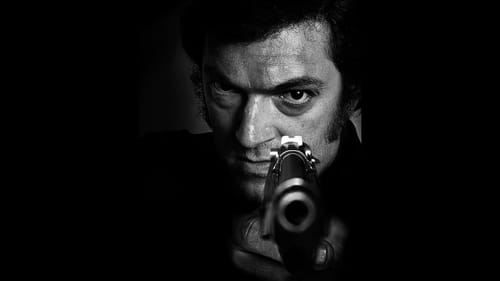
Jacques Mesrine, a loyal son and dedicated soldier, is back home and living with his parents after serving in the Algerian War. Soon he is seduced by the neon glamour of sixties Paris and the easy money it presents. Mentored by Guido, Mesrine turns his back on middle class law-abiding and soon moves swiftly up the criminal ladder.
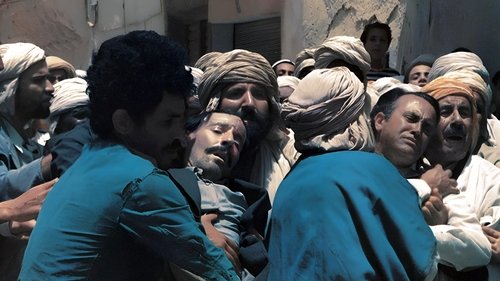
A meticulous chronicle of the evolution of the Algerian national movement from 1939 until the outbreak of the revolution on November 1, 1954, the film unequivocally demonstrates that the "Algerian War" is not an accident of history, but a slow process of suffering and warlike revolts, uninterrupted, from the start of colonization in 1830, until this "Red All Saints' Day" of November 1, 1954. At its center, Ahmed gradually awakens to political awareness against colonization, under the gaze of his son, a symbol of the new Algeria, and that of Miloud, half-mad haranguer, half-prophet, incarnation of Popular memory of the revolt, the liberation of Algeria and its people.
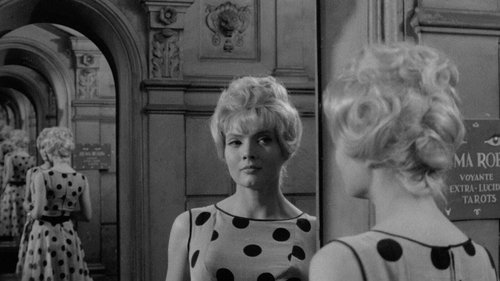
Agnès Varda eloquently captures Paris in the sixties with this real-time portrait of a singer set adrift in the city as she awaits test results of a biopsy. A chronicle of the minutes of one woman’s life, Cléo from 5 to 7 is a spirited mix of vivid vérité and melodrama, featuring a score by Michel Legrand and cameos by Jean-Luc Godard and Anna Karina.

The film traces the story of a patrol of the Algerian National Liberation Army (ALN), whose mission is to transport a prisoner French soldier to the Tunisian border. Through the march of this group of guerrillas we witness the spirit of sacrifice and combativeness of these men from the people. The patrol will be decimated, but a young peasant will take over and complete the mission.
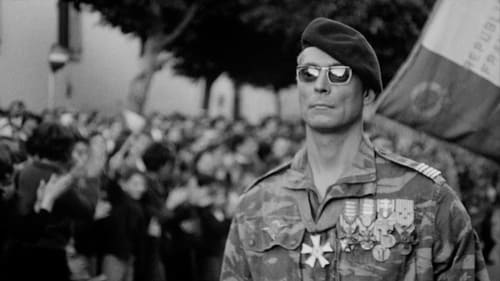
Paratrooper commander Colonel Mathieu, a former French Resistance fighter during World War II, is sent to Algeria to reinforce efforts to squelch the uprisings of the Algerian War. There he faces Ali la Pointe, a former petty criminal who, as the leader of the Algerian Front de Liberation Nationale, directs terror strategies against the colonial French government occupation. As each side resorts to ever-increasing brutality, no violent act is too unthinkable.
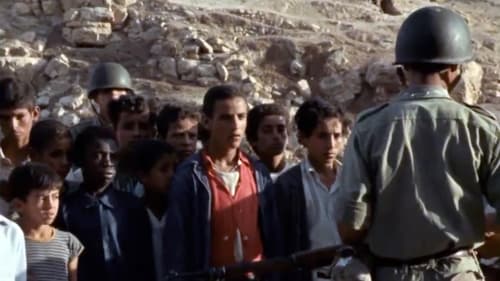
This rambling political melodrama tells the story of a French Breton who learns about colonialism while teaching native students in France's colonies of Tunisia and Algeria and returns to his native Brittany to see that the same conditions prevail there.
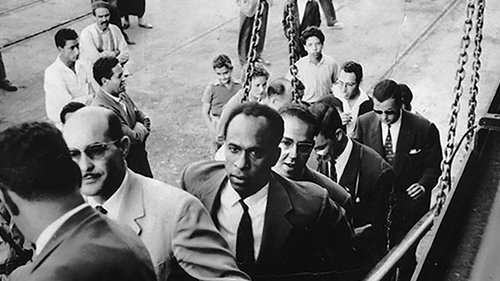
Frantz Fanon alone embodies all the issues of French colonial history. Martinican resistance fighter, he enlisted, like millions of colonial soldiers, in the Free Army out of loyalty to France and the idea of freedom that it embodies for him. A writer, he participated in the bubbling life of Saint-Germain with Césaire, Senghor and Sartre, debating tirelessly on the destiny of colonized peoples. As a doctor, he revolutionized the practice of psychiatry, seeking in the relations of domination of colonial societies the foundations of the pathologies of his patients in Blida. Activist, he brings together through his action and his history of him, the anger of peoples crushed by centuries of colonial oppression. But beyond this exceptional journey which makes sensitive the permanence of French colonialism in the Lesser Antilles at the gates of the Algerian desert, he leaves an incomparable body of work which has made him today one of the most studied French authors across the Atlantic.

1956. Algeria is a French colony. Fernand and Helene are madly in love. Fernand is an activist, fighting for independence alongside the Algerians. Helene is fighting for Fernand’s life. History will irrevocably change the course of their destiny.
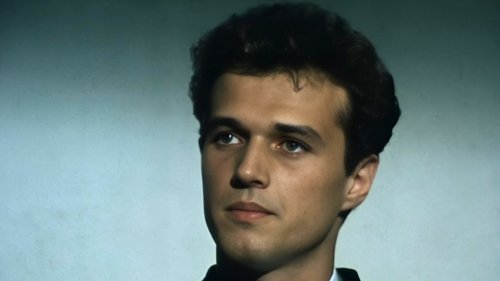
In 1958 in Paris, during the Algerian War, a young trainee lawyer, Maître Chabrier, was assigned to defend an Algerian garbage collector against paratroopers who had beaten him. Stay out of Algerian affairs, his peers advise him because the trial is taking a political turn. Chabrier acquired the reputation of the Fellaghas' lawyer.
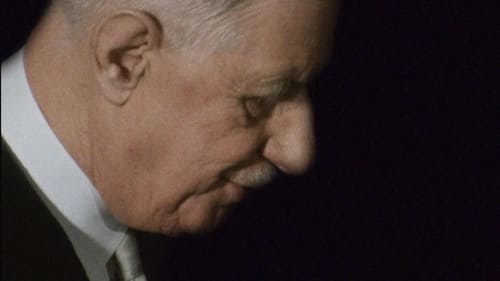
Charles de Gaulle, the first president (1958-1969) of the Vth Republic, France’s current system of government, left his mark on the country . He was statesman of action and has been compared to a monarch. This film depicts the general’s personality through the great events of his presidential term, at a time when the world was undergoing considerable changes.

No description available for this movie.
Explores the life and work of the psychoanalytic theorist and activist Frantz Fanon who was born in Martinique, educated in Paris and worked in Algeria. Examines Fanon's theories of identity and race, and traces his involvement in the anti-colonial struggle in Algeria and throughout the world.
In 1960, nine-year-old Bachir dreamed of becoming the son of a martyr because he had heard that the children of martyrs would obtain everything after independence. He sets up a whole plan to get rid of a certain François, enemy of his country, while his father, Saddek, abandoned him with his mother and brothers. Through this fiction, the film looks at the life and visions of little Algerians during the War of National Liberation. Karim Traïdia looks back on his own childhood during the Algerian war (1945-1962). On a humorous note, it tells the adventures of a young child and his innocent friends against the backdrop of a raging merciless war.

In 1962, René Vautier, together with some Algerian friends, organised the audio-visual formation centre Ben Aknoun to encourage a "dialogue in images" between the two factions. Together with his students he made a film that shows the history of the Algerian War and of the ALN (National Liberation Army), and life during the reconstruction.
No description available for this movie.
This 17-minute documentary is featured on the 3-Disc Criterion Collection DVD of The Battle of Algiers (1966), released in 2004. An in-depth look at the Battle of Algiers through the eyes of five established and accomplished filmmakers; Spike Lee, Steven Soderbergh, Oliver Stone, Julian Schnabel and Mira Nair. They discuss how the shots, cinematography, set design, sound and editing directly influenced their own work and how the film's sequences look incredibly realistic, despite the claim that everything in the film was staged .
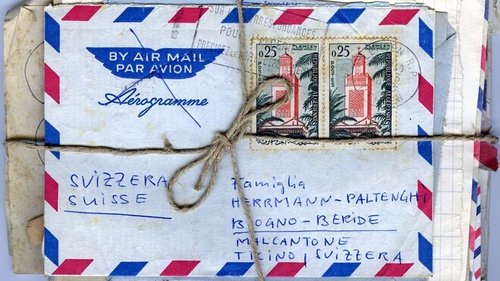
Between 1954-1962, one hundred to three hundred young French people refused to participate in the Algerian war. These rebels, soldiers or conscripts were non-violent or anti-colonialists. Some took refuge in Switzerland where Swiss citizens came to their aid, while in France they were condemned as traitors to the country. In 1962, a few months after Independence, Villi Hermann went to a region devastated by war near the Algerian-Moroccan border, to help rebuild a school. In 2016 he returned to Algeria and reunited with his former students. He also met French refractories, now living in France or Switzerland.

Portrait of Si Mohand U M'hand, an Algerian Amazigh poet from the end of the last century, whose tragic destiny was marked by wandering and revolt. Refusing all compromise, he lived in insubordination to the new order imposed by the French colonial presence in Algeria.
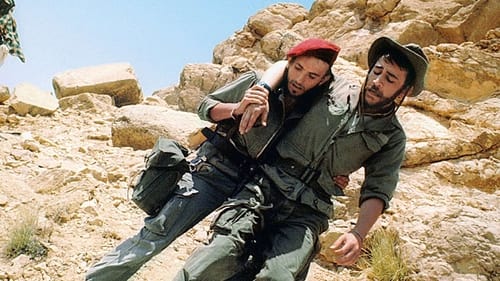
A group of refractory and pacifist Bretons is sent to Algeria. These beings confronted with the horrors of war gradually become killing machines. One of them did not accept it and deserted, taking with him an FLN prisoner who was to be executed the next day.
No description available for this movie.