
Action
Adventure
Animation
Comedy
Crime
Documentary
Drama
Family
Fantasy
History
Horror
Music
Mystery
Romance
Science Fiction
Thriller
War
Western
Found 40 movies, 31 TV shows, and 0 people
Can't find what you're looking for?

Aliens may have been on Earth since the dawn of time and the truth about their visitation over the eons is far more profound than we realize.

A CBS primetime docudrama special, hosted by Darren McGavin, discussing ancient mysteries surrounding the Pyramids of Eqypt, Nostradamus, the Bermuda Triangle and the Shroud of Turin.

Over twenty-five hundred years ago, the ancient citizens of Athens, Greece built the most magnificent temples that mankind has ever been inspired to create. These towering shrines, shrouded with unworldly spirits, were home to mysterious cults that performed bold sacrifices and evoked unspeakable wonders. And yet, from the citadel of the Acropolis came the very hallmarks of civilization, ideas that remain today the highest testament to the nobility of man -- democracy, science, philosophy and theatre. Through stunning film, interviews with experts and vivid reenactments, you'll explore the haunting mysteries that still lie buried in the mystical world of Ancient Greece.

From the mysterious origins of civilization to startling revelations about the pyramids, discover how the ruling elite have hidden ancient knowledge from the masses for millennia. We are just now beginning to re-discover our true past. Many believe we know all there is to know about our ancient past but nothing could be further from the truth. Discover the amazing secrets that our ancestors knew and subsequent generations have forgotten. We will see how the ruling elite hid and destroyed evidence and further darkened our vision of the past.

This film traces the story of Egypt from the prehistoric period to the time of the Ptolemies, focusing on the Nile, temples, pyramids and the Sphinx. Here, Garner showcases a single shot of ruins as light and dark as clouds pass, a signature of his. The filmmaker waxes poetic in this statement: "For Egypt is a monument, not to the conqueror or statesman, but to the artist, the architect, the painter, the sculptor, whose works will remain in the minds of men, when pomp and ceremony are but whispering echoes in the corridors of time."
This film recreates the ancient Greek world through its extant art and literature. The narration is from translations of Greek authors, including Hesiod, Pindar, Aeschylus, Sophocles, Euripides, Aristophanes, Herodotus, Thucydides, Plato, and Plutarch, and accompanies visual impressions of Greek religious philosophy and history through the golden age. The film features spectacular footage of Crete, Knossos, Mycenae, and the sculptures of Athens. It discusses the Persians at Marathon, then 10 years later, Xerxes at Thermopylae.
In the beginning was sex. To the ancient cultures, sexuality, love and sex were inextricably connected with the creation of the earth, the heavens and the underworld. To the citizens of the ancient civilizations that gave birth to ours, sensuality and sexuality were an integral part of society. This series exploration of Egyptian and Roman sexual practice allows viewers the opportunity to see how attitudes and beliefs about sexuality functioned in the early civilizations, and how those attitudes reveal the unspoken rules that defined public and private behavior. Episodes cover human sex and sexuality from a historical perspective, and examines in detail different texts and images which provide us with evidence about sexual practices, beliefs and ideologies in the ancient world – from erotica on pots to legal texts, phallic votive objects, fertility ceremonies, prostitution, female and hermaphroditic creator deities, from religious rituals to sex manuals.
The Romans saw the Seven Wonders of the Ancient World as the crowning achievements of their predecessors. Through stunning on-location and re-created visuals, learn how and why they were built and how they dazzled the ancients.

Sociocultural anthropologist James Eder documents the Batak tribes' eco-friendly hunter/gatherer way of life on the Philippine island of Palawan. Increasingly driven to take part in the island's growing cash economy, the tenacious Batak struggle to maintain their cultural and spiritual identity. Can conservationists, who approve of their sustainable methods of harvesting, help to secure the tribe's ancestral forest before it is lost?

The site of the famous Oracle, Delphi spanned two great classical civilizations - the Greeks and the Romans - and attracted travelers from all over the ancient world. The city's walls contain the hopes and dreams and the victories and failures that defined entire civilizations.
Throughout the history of mankind, the buildings displayed power and a certain meaning, but also kept secrets. Sometimes by accident, sometimes deliberately, the whole cities would be drawn with an invisible ink. This show shows how and why buildings are filled with secrets.

Uncover the secret conspiracy linking America's power elite. What are its implications on future generations of American citizens?

Documentary discussing the seven manmade wonders listed by Philo of Byzantium 2000 years ago: the Colussus of Rhodes, the statue of Zeus at Olympus, the Mausoleum at Halicarnassus, the temple to Artemis at Ephesus, the pyramid of Giza, the Pharos of Alexandria and the Hanging Gardens of Babylon.
No description available for this movie.
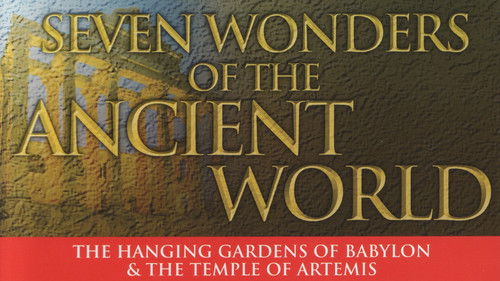
Explore with host John Romer, the influence of ancient eastern civilizations. The Hanging Gardens of Babylon, in what is now Iraq, were rumoured to be part of the palace of Nebuchadnezzar. Today, scientists believe that the exotic gardens were actually more fable than fact. The Temple of Artemis at Ephesusm in modernday Turkey, was built to honour the mother goddess. She was a powerful force for many different people - the Romans knew her as Diana, the Anatolians as Kybele - and her temple was one of the holiest shrines in Alexander the Great's world

Ancient Egypt, The Viking Seas, Ancient Maya Resurrection, The Secrets of Pompeii's Dead, The Lost Worlds of the Mediterranean, The Roman Empire

Long-buried treasures and newly discovered monuments are shedding new light on Celtic society. Classical writers condemned what they saw as the barbarian society - a lifestyle built around rituals, bloody sacrifices and savage fighting. This program reveals that there was a rich sophisticated element to Celtic culture.

Host John Romer ventures to the sites of two ancient cities created by Alexander the Great - cities that were considered among the most beautiful and unusual the world had ever seen. We also explore the culture and environment that created several of the seven wonders. This episode examines two unparalleled testaments to the power of the era: The Pharos (Lighthouse) at Alexandria, which stood more that 300 feet, making it the tallest structure of its time, and the Mausoleum at Halicarnassus, which was considered one of the greatest tombs ever created. The Mausoleum's perimieter was not decoreated with icons of ancient gods, as was the custom of the time, but with ennobled and enlarged figures of real people. These statues are thought to have been an inspiration for the citizens - telling them they could be as great as the gods.

Author and archaeologist, John Romer, contemplates the mystical aspects of the Seven Wonders, exploring the enduring fascination of the only surviving Wonder, the Pyramids. John then focuses his attention on the city of Rome which had become a magical city, surrounded by a wall of iron enclosing seven hills, one for each day of the Creators rest. There were 365 squares in Rome, 365 streets, 365 palaces for the popes and each palace had 365 steps and each step was covered with bread enough to feed the world. It was a dream of poor people. imagining a legendary past. A past of endless wealth and wonder. Ghosts of Wonder demonstrates how the story of the Wonders is also the story of the modern imagination and has John Romere travelling from Australia to New York to illustrate how people are still haunted by ghosts of the ancient past.

Examine the spectacular wonders of the ancient city which stood on the northern coast of Africa, near modern day Tunis. This "Lost Treasures" program allows us a unique glimpse of the "new city", including the mighty walled fortress of Byrsa, which overlooked Carthage's splendid twin harbors.
Odysseus, the legendary King of Ithaca, embarks on a long and perilous journey home following the Trojan War. Throughout his voyage, he is forced to confront the whims of gods, mythological monsters, and trials that stretch both his cunning and his humanity to the breaking point.

After the death of Emperor Marcus Aurelius, his devious son takes power and demotes Maximus, one of Rome's most capable generals who Marcus preferred. Eventually, Maximus is forced to become a gladiator and battle to the death against other men for the amusement of paying audiences.

In year 1250 B.C. during the late Bronze age, two emerging nations begin to clash. Paris, the Trojan prince, convinces Helen, Queen of Sparta, to leave her husband Menelaus, and sail with him back to Troy. After Menelaus finds out that his wife was taken by the Trojans, he asks his brother Agamemnon to help him get her back. Agamemnon sees this as an opportunity for power. They set off with 1,000 ships holding 50,000 Greeks to Troy.

The prehistoric Croods family live in a particularly dangerous moment in time. Patriarch Grug, his mate Ugga, teenage daughter Eep, son Thunk, and feisty Gran gather food by day and huddle together in a cave at night. When a more evolved caveman named Guy arrives on the scene, Grug is distrustful, but it soon becomes apparent that Guy is correct about the impending destruction of their world.
A story very loosely based the 480 B.C. Battle of Thermopylae, where the King of Sparta led his army against the advancing Persians.

The rebellious Thracian Spartacus, born and raised a slave, is sold to Gladiator trainer Batiatus. After weeks of being trained to kill for the arena, Spartacus turns on his owners and leads the other slaves in rebellion. As the rebels move from town to town, their numbers swell as escaped slaves join their ranks. Under the leadership of Spartacus, they make their way to southern Italy, where they will cross the sea and return to their homes.

Alexander, the King of Macedonia, leads his legions against the giant Persian Empire. After defeating the Persians, he leads his army across the then known world, venturing farther than any westerner had ever gone, all the way to India.

A historical drama set in Roman Egypt, concerning philosopher Hypatia of Alexandria and her relationship with her slave Davus, who is torn between his love for her and the possibility of gaining his freedom by joining the rising tide of Christianity.

A 6th-century Scandinavian warrior named Beowulf embarks on a mission to slay the man-like ogre, Grendel.

History's favorite Gauls assist Queen Cleopatra when she wagers that the Egyptian people can build a palace for Julius Caesar in just three months.

As the Roman empire crumbles, young Romulus Augustus flees the city and embarks on a perilous voyage to Britain to track down a legion of supporters.

In 140 AD, twenty years after the unexplained disappearance of the entire Ninth Legion in the mountains of Scotland, young centurion Marcus Aquila arrives from Rome to solve the mystery and restore the reputation of his father, the commander of the Ninth. Accompanied only by his British slave Esca, Marcus sets out across Hadrian's Wall into the uncharted highlands of Caledonia - to confront its savage tribes, make peace with his father's memory, and retrieve the lost legion's golden emblem, the Eagle of the Ninth.
Britain, A.D. 117. Quintus Dias, the sole survivor of a Pictish raid on a Roman frontier fort, marches north with General Virilus' legendary Ninth Legion, under orders to wipe the Picts from the face of the Earth and destroy their leader, Gorlacon.

Sentenced to spend out the rest of his adult life laboring in the harsh deserts of Egypt, the Thracian slave Spartacus gets a new lease on life when he is purchased by the obese owner of a Roman gladiator school. Moved by the defiance of an Ethiopian warrior, Draba, Spartacus leads a slave uprising which threatens Rome's status quo. As Spartacus gains sympathy within the Roman Senate, he also makes a powerful enemy in form of Marcus Lucinius Crassus, who makes it a matter of personal honor to crush the rebellion.
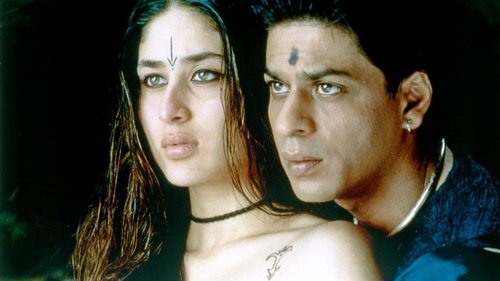
A young Prince Asoka works to perfect his skills in battle and also deals with family conflict. During a struggle with one of his step-brothers, his mother urges Asoka to escape to stay alive. While away, Asoka meets Kaurwaki and falls in love, but must use his skills as a warrior to protect her. A dangerous and heartbreaking web of conspiracy follows, which leads Asoka to embrace a Buddhist path.

In the heart of the Jordanian desert, the ancient city of Petra is full of mysteries. How was this architectural wonder created over 2,000 years ago? The technical prowess of Petra, an ancient city in southern Jordan, which was a wonder in the middle of the desert.
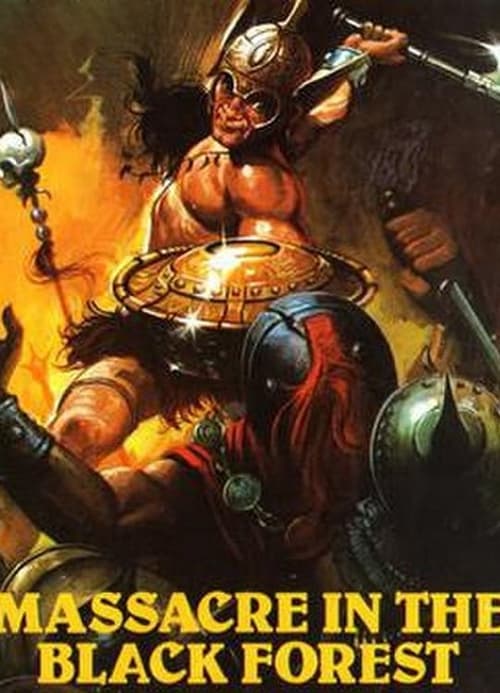
In the first half of the first century A.D., the Teutonic tribes, led by Arminius The Terrible, rebel against the cruel and conquering Roman Empire. In raging torments and blood curdling battles, the barbarian tribes and Roman Legions fight a war of attrition, so brutal and terrible that Arminius becomes a legend throughout the empire. Only Augustus, Emperor of Rome is evil and treacherous enough to enslave the Teuton barbarian and halt his murderous uprisings.

A series of bawdy and satirical episodes written during the reign of the emperor Nero and set in imperial Rome. Like the more famous version made by Federico Fellini, an adaptation of Petronius' Satyricon.

Kaashmora, a present era black magic specialist; Rajnayak, an ancient era warlord and Ratnamahadevi is his queen. How these three are connected? What are the issues that arise?

The work-shy, lazy Germanicus is taken to Rome by slave traders and sold straight to the nouveau riche Roman Tusnelda. He manages to escape, but only to end up in the next misery as a taster at the imperial court. When the emperor dies, he is arrested as an emperor's assassin and is to be thrown to the tigers in the arena.With the help of the black slave Saba, he manages to win the deadly fight and is proclaimed - against his will - the new emperor of the Roman Empire.His pragmatic ideas as a statesman explain why the Roman Empire ended so abruptly. At the side of Saba, who is elevated to empress, he returns to his home village of Sumpfing, where he now promises himself completely new perspectives ...