
Action
Adventure
Animation
Comedy
Crime
Documentary
Drama
Family
Fantasy
History
Horror
Music
Mystery
Romance
Science Fiction
Thriller
War
Western
Found 34 movies, 7 TV shows, and 0 people
Can't find what you're looking for?

Director Ilan Ziv traces the origins of antisemitism in France from the Middle Ages to the Dreyfus Affair. Combining personal and collective narratives, Ziv showcases how the depiction of "the Jew" in society established an ideology of hate that eventually led to the Holocaust. In the aftermath of the war, a devastated France continued this ideology of antisemitism that set the stage for a modern wave of anti-Jewish sentiment and attacks, including the murders of Ilan Halimi and Mireille Knoll.

Since the massacre by the terrorist organization Hamas on October 7, 2023, it has been clear that anti-Semitism is also a massive problem in Germany. The media reports on anti-Semitic incidents almost every day. Jews no longer feel safe and are often victims of discrimination and hatred. More than 75 years after the liberation of Auschwitz, Jewish life in Germany is still often exposed to anti-Semitic hostility. Schools, kindergartens and synagogues must be guarded. In the wake of pro-Palestinian demonstrations on German streets, aggressive anti-Semitic agitation by angry Islamist mobs is increasingly occurring. Politics is failing to act on its promise. But the breeding ground for this is older. The documentary attempts to show that, based on age-old hatred, stereotypes and prejudices, anti-Semitism from the right-wing, from left-progressive circles and the middle of society is omnipresent in Germany.

Antisemitism in the US and Europe is spreading and is seemingly unstoppable. Andrew Goldberg examines its rise traveling through four countries to follow antisemitism and their victims, along with experts, politicians and locals.
No description available for this movie.
Since the outbreak of the global corona pandemic, the number of anti-Semitic content on the Internet and social media has also been increasing. Researchers see a connection between online radicalization and anti-Semitic violence – and also attacks. "Jud Süß 2.0" documents the visual roots of this new anti-Semitism.

Josh Frydenberg, former treasurer of Australia, presents a powerful and emotional documentary on the devastating impact of antisemitism on Australia following the horrendous terrorist attack on Israel by Hamas terrorists on October 7 last year. The documentary examines the rise in hostility towards Jewish people taking place around the world at levels not seen since the Holocaust.

The number of anti-Semitic incidents in Germany has increased significantly since the massacre by the Palestinian terrorist organization Hamas in Israel on October 7, 2023. Jews are insulted, defamed, berated and attacked not only on the street, but also at universities and in the cultural sector. The anti-Semitic riots at the Free University of Berlin on December 14, 2023 and the completely inconsistent reactions to them from those responsible and politicians are representative of this. Jewish students in Germany have to fear for their lives again. Left-wing groups demand solidarity with Palestine, question Israel's right to exist, but completely ignore the Hamas massacres and, in their view of the Jews, rely on a simple worldview shaped by ancient prejudices and narratives.
Narrated by Benjamin Hall: The rise of antisemitism has deep historical roots defined by persecution and massacres of Jewish people. The Israel-Hamas War has polarized sentiments in the U.S. and heightened tensions.
Kyra Phillips reports from the Holocaust Memorial Museum in Washington, D.C., on the rise in hate towards Jews and on the importance of bearing witness to what happened during the Holocaust.

Creating a safe space for Jewish families free from antisemitism and societal exclusion in post-WWII Ontario, Abe Siskind founded Wingate, an extraordinary cottage community, complete with a grand-size swimming pool, swimming lessons, and summer camp for the kids. A co-op ahead of its time, with 28 cottages built from 1948 to 1955, Wingate flourished, evolved, and transformed as the world transformed. Through interviews and archival photos, this short documentary shares the history of Wingate and memorializes family stories that have been told orally for generations, but never recorded
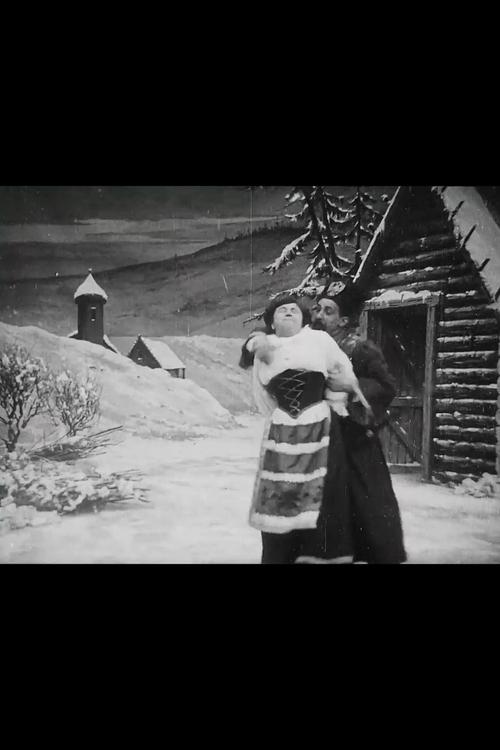
A Jewish home is attacked.
Sarah Halimi was murdered by her Malian-born neighbor during the French presidential campaign of 2017. The media initially ignored the case before a few journalists managed to mobilize public figures and the President. The investigating judge only wanted to see it as a murder committed by a "madman" having a "delusional episode." This case is emblematic of the rise of anti-Semitism in France today. The various developments in the case, particularly the fact that there are no longer any charges against the murderer, and the prevention of any reconstruction of the case, make it a new Dreyfus Affair. One of the biggest scandals in France today.
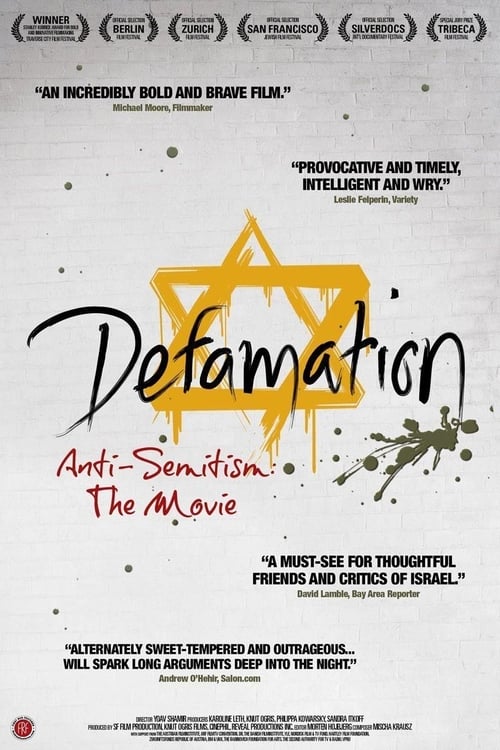
Intent on shaking up the ultimate 'sacred cow' for Jews, Israeli director Yoav Shamir embarks on a provocative - and at times irreverent - quest to answer the question, "What is anti-Semitism today?"
No description available for this movie.

The story of J. Robert Oppenheimer's role in the development of the atomic bomb during World War II.
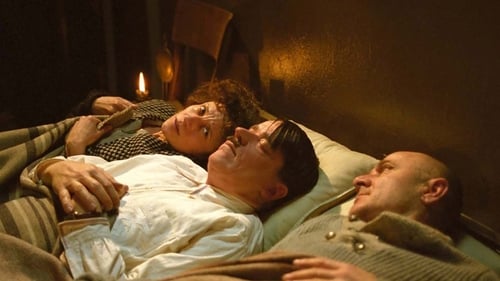
Hitler no longer believes in himself, and can barely see himself as an equal to even his sheep dog. But to seize the helm of the war he would have to create one of his famous fiery speeches to mobilize the masses. Goebbels therefore brings a Jewish acting teacher Grünbaum and his family from the camps in order to train the leader in rhetoric. Grünbaum is torn, but starts Hitler in his therapy ...

A rich widow shocks her snobbish WASP family when she decides to marry her Jewish, divorced, doctor. His family is equally shocked.

A magazine writer poses as a Jew to expose anti-Semitism.

Budapest in the thirties. The restaurant owner Laszlo hires the pianist András to play in his restaurant. Both men fall in love with the beautiful waitress Ilona who inspires András to his only composition. His song of Gloomy Sunday is, at first, loved and then feared, for its melancholic melody triggers off a chain of suicides. The fragile balance of the erotic ménage à trois is sent off kilter when the German Hans goes and falls in love with Ilona as well.
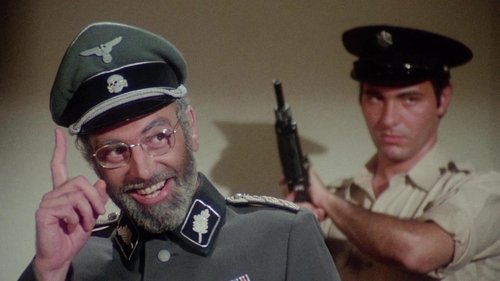
Arthur Goldman is a rich Jewish industrialist, living in luxury in a Manhattan high-rise. He banters with his assistant Charlie, often shocking him with his outrageousness and irreverent musings on aspects of Jewish life. Nonetheless, Charlie is astonished one day when Israeli secret agents burst in and arrest Goldman for being a Nazi war criminal. Whisked to Israel for trial, Goldman forces his accusers to face, not only his presumed guilt, but their own.

Hamburg, Germany, 1939. Getting a passage aboard the passenger liner St. Louis seems to be the last hope of salvation for more than nine hundred German Jews who, desperate to escape the atrocious persecution to which they are subjected by the Nazi regime, intend to emigrate to Cuba.

Kazakh journalist Borat Sagdiyev travels to America to make a documentary. As he zigzags across the nation, Borat meets real people in real situations with hysterical consequences. His backwards behavior generates strong reactions around him exposing prejudices and hypocrisies in American culture.
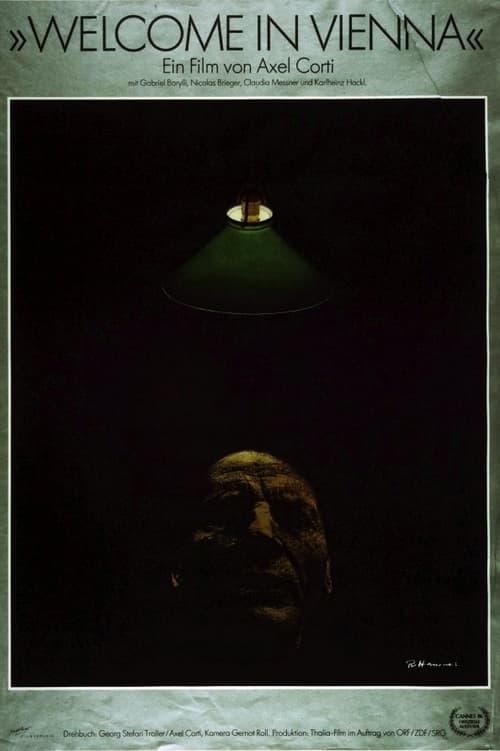
Freddy, a Viennese Jew who emigrated to New York after Hitler's invasion, and Adler, a left-wing intellectual originally from Berlin, return to Austria in 1944 as soldiers in the U.S. Army. Freddy falls in love with the daughter of a Nazi, and Adler attempts to go over to the Communist Zone. But with the advent of the Cold War and continuing anti-semitism, the idealism of both characters is shattered as they find themselves surrounded by cynicism, opportunism, and universal self-deception.
A winemaker overcomes the ignorance and illiteracy of his era to become a Torah commentator who defends the right to spiritual choice and freedom in the 11th century.
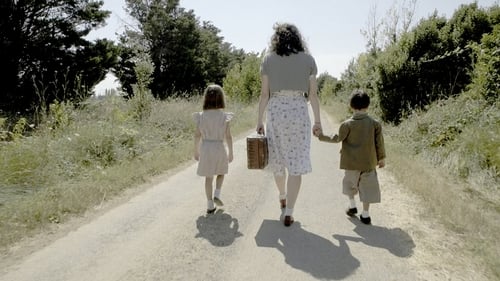
A captivating and personal detective story that uncovers the truth behind the childhood of Michaël Prazan's father, who escaped from Nazi-occupied France in 1942 thanks to the efforts of a female smuggler with mysterious motivations.
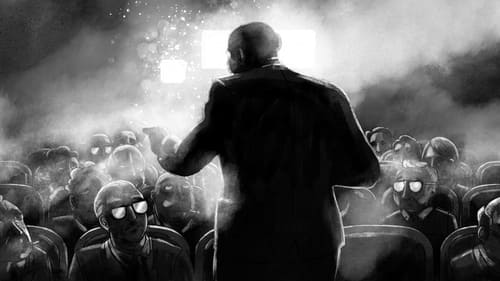
Paris, 1940. German occupation forces create a new film production company, Continental, and put Alfred Greven – producer, cinephile, and opportunistic businessman – in charge. During the occupation, under Joseph Goebbels’s orders, Greven hires the best artists and technicians of French cinema to produce successful, highly entertaining films, which are also strategically devoid of propaganda. Simultaneously, he takes advantage of the confiscation of Jewish property to purchase film theaters, studios and laboratories, in order to control the whole production line. His goal: to create a European Hollywood. Among the thirty feature films thus produced under the auspices of Continental, several are, to this day, considered classics of French cinema.
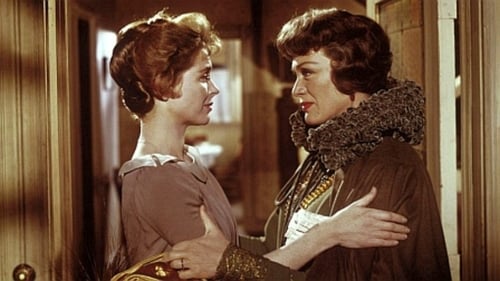
In Oklahoma in the 1920s, Rubin Flood loses his job as a traveling salesman when the company goes bankrupt. This adds to his worries at home. His wife Cora is frigid because of trying to make ends meet. His teenage daughter Reenie is afraid of going out on dates, but eventually makes friends with a troubled Jewish boy Sammy Golden, and his son is a mama's boy. He finally storms out of the house when Cora falsely accuses him of having an affair with Mavis Pruitt.

In 16th-century Prague, a rabbi creates the Golem - a giant creature made of clay. Using sorcery, he brings the creature to life in order to protect the Jews of Prague from persecution.
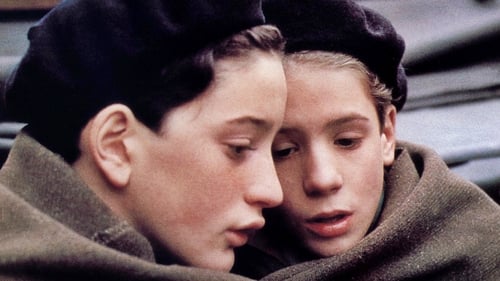
Au revoir les enfants tells a heartbreaking story of friendship and devastating loss concerning two boys living in Nazi-occupied France. At a provincial Catholic boarding school, the precocious youths enjoy true camaraderie—until a secret is revealed. Based on events from writer-director Malle’s own childhood, the film is a subtle, precisely observed tale of courage, cowardice, and tragic awakening.
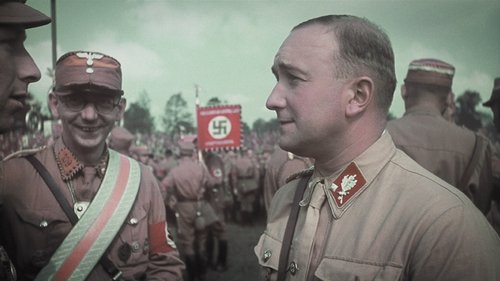
What would your family reminiscences about dad sound like if he had been an early supporter of Hitler’s, a leader of the notorious SA and the Third Reich’s minister in charge of Slovakia, including its Final Solution? Executed as a war criminal in 1947, Hanns Ludin left behind a grieving widow and six young children, the youngest of whom became a filmmaker. It's a fascinating, maddening, sometimes even humorous look at what the director calls "a typical German story." (Film Forum)
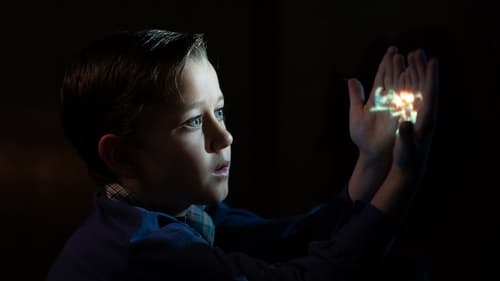
Growing up in post-World War II era Arizona, young Sammy Fabelman aspires to become a filmmaker as he reaches adolescence, but soon discovers a shattering family secret and explores how the power of films can help him see the truth.

After his father is murdered by the Nazis in 1938, a young Viennese Jew named Ferry Tobler flees to Prague, where he joins forces with another expatriate and a sympathetic Czech relief worker. Together with other Jewish refugees, the three make their way to Paris, and, after spending time in a French prison camp, eventually escape to Marseille, from where they hope to sail to a safe port.
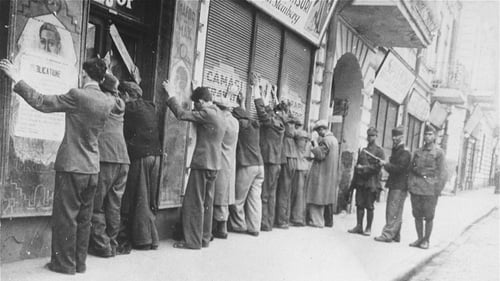
In Iasi, Romania, from June 28 to July 6, 1941, nearly 15 000 Jews were murdered in the course of a horrifying pogrom. At the time, the programmed extermination of European Jews had not yet began. After the war, the successive communist governments did all they could to ensure the Iasi pogrom would be forgotten. It was not until November of 2004 that Romania recognized for the first time its direct responsibility in the pogrom. All that remains of this massacre are about a hundred photographs taken as souvenirs by german and romanian soldiers, and a few remaining survivors.
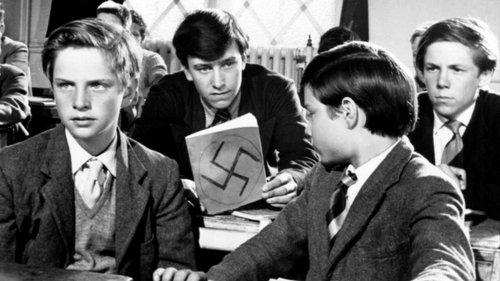
During World War II, teenage boys in a small English town are consumed with jingoism and brutal war games, hoping dearly that the war won't end before they can fight in it.