
Action
Adventure
Animation
Comedy
Crime
Documentary
Drama
Family
Fantasy
History
Horror
Music
Mystery
Romance
Science Fiction
Thriller
War
Western
Found 26 movies, 1 TV show, and 0 people
Can't find what you're looking for?
No description available for this movie.

No description available for this movie.
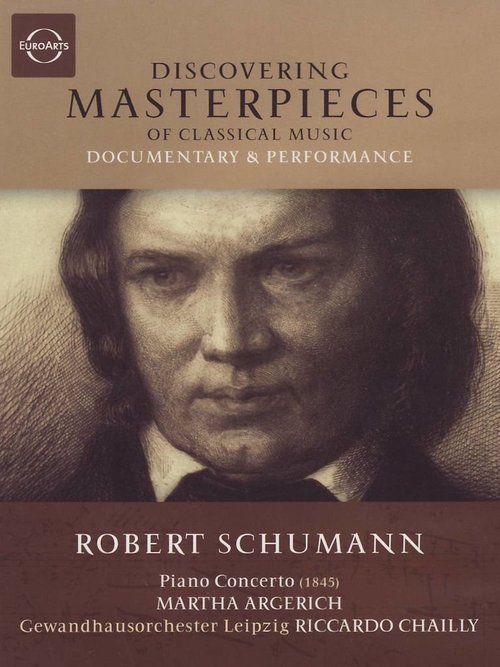
Music historian Wulf Konold reveals the story behind Robert Schumann's Piano Concerto in A minor, op. 54, in this program, which also features a performance of the piece by pianist Martha Argerich and the Gewandhausorchester Leipzig. This classical music guide explains the structure of Schumann's masterpiece and chronicles the composer's life and times, focusing on the events that led to the creation of his famous romantic concerto of 1845.
No description available for this movie.

Koda Kumi's Premium Symphonic Concert that took place at Billboard live @festival hall in Tokyo

A brilliant showcase of Disney music performed by a classical orchestra in 2013.
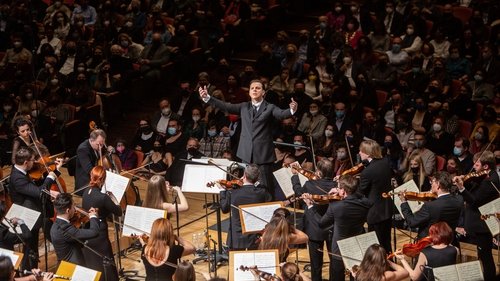
Ludwig van Beethoven headed for Symphony No. 9 literally his entire life. As early as the 1790s, he had an eye on Ode to Joy, perhaps the most well-known poem by Friedrich Schiller, written on the threshold of the French Revolution (1786). In his mature and, in particular, later years, the deaf composer with an acute ‘hearing vision’ increasingly distanced himself from conventional forms and genres and wrote parts beyond the possibilities of instruments of his day. He nurtured the idea of a symphony with a choir for at least several years. The history of the Ninth’s interpretations includes 200 years of staggering revelations and lingering stagnation. Performed by the musicAeterna orchestra, choir, and guest soloists under the baton of Teodor Currentzis, Beethoven’s opus magnum acquires the original poignancy and energy of a recent discovery.

Mozart’s Requiem – his final and unfinished masterpiece – is an extraordinary work. Discover the piece at the Salzburg Festival in the hands of conductor Teodor Currentzis, the ensemble musicAeterna, Anna Prohaska (soprano), Katharina Magiera (contralto), Mauro Peter (tenor), and Tareq Nazmi (bass). Few musical works are as steeped in legend as Mozart’s Requiem in D minor, K. 626. Commissioned anonymously by the eccentric count Franz von Walsegg, the funereal oeuvre would become Mozart’s last: when he died on December 5, 1791, only the Requiem aeternam and Kyrie movements were fully composed and orchestrated. Completed by other composers (Mozart’s student Franz Xaver Süssmayer in particular) using Mozart’s sketches and notes, the resulting work weaves the emotions we associate with death into a timeless musical exploration of every human being’s destiny, and constitutes a powerful final testament to its creator’s genius.
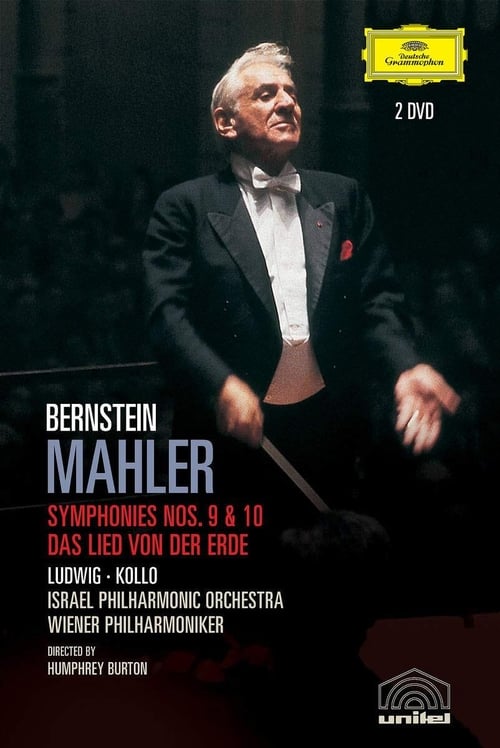
Filmed on tour at Berlin's Philharmonie, this account of the valedictory Ninth Symphony is an intense interpretation, expressing Bernstein's conviction that modern man had at last caught up with the message encoded in Mahler's last completed work. Having made his famous 1966 studio recording of "Das Lied von der Erde" in Vienna, Bernstein re-recorded this in Israel with the same searing subjectivity. René Kollo draws on the voice of a great Wagner tenor, while Christa Ludwig, the greatest exponent of the contralto songs at the time, is unbearably poignant in the final movement's fusion of elation and sadness.
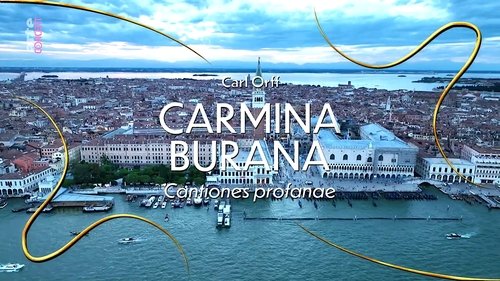
The Choir and Orchestra of the La Fenice Theatre, conducted by Fabio Luisi, take over Piazza San Marco in Venice for a grandiose concert. Facing the basilica, the musicians perform the famous cantata "Carmina burana", twenty-four medieval poems set to music by Carl Orff between 1935 and 1936.
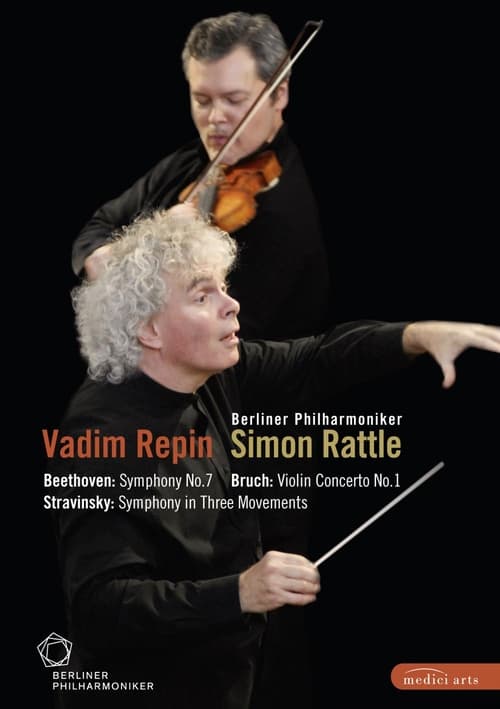
The Berliner Philharmoniker’s European Concert, held each year on 1 May, is invariably an international highlight. Performing in 2008 in Moscow's renowned Tchaikovsky Conservatory, the orchestra under Sir Simon Rattle presented outstanding performances of works by Beethoven, Stravinsky and Bruch, whose Violin Concerto featured one of today’s most fascinating artists, the Russian violinist Vadim Repin. Stravinsky: Symphony in Three Movements Bruch: Concerto for Violin No.1, op.26 Beethoven: Symphony No.7 in A major, op. 92

Performed by the Czech Philharmonic Orchestra conducted by J. Bělohlávek. Slavonic Dances are among the most popular works by Antonín Dvořák and Czech Romantic music in general. The first series, originally composed for four-hand piano and later orchestrated for symphony orchestra, is inspired mainly by Czech folk dances. The orchestral version of Slavonic Dances is considered a groundbreaking work, thanks to which Dvořák attracted attention abroad and launched his international career. A television recording of this outstanding performance was made in 2014. The Czech Philharmonic Orchestra is conducted by Jiří Bělohlávek.
On Air presents Igor Stravinsky's Petrushka, performed by the world-renowned Royal Philharmonic Orchestra, conducted by Peter Breiner, and recorded at BBC Television Centre. Expertly brought to life by some of the world's most sought-after classical musicians, the ensemble comprises 86 instruments: 51 string, 14 woodwind, 16 brass, 4 percussion and 1 piano. Available now to watch on demand in cinematic quality.
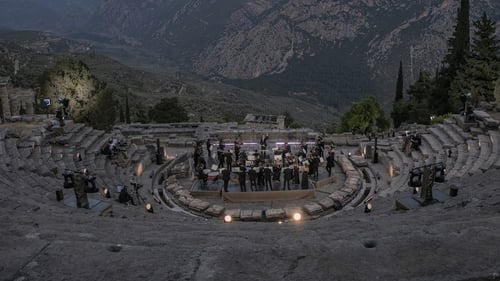
In the ancient theater of Delphi, against the backdrop of the ruins of the Temple of Apollo, musicAeterna, conducted by Teodor Currentzis, performs Ludwig van Beethoven’s 7th Symphony, in conjunction with a new choreography by Sasha Waltz and her company.
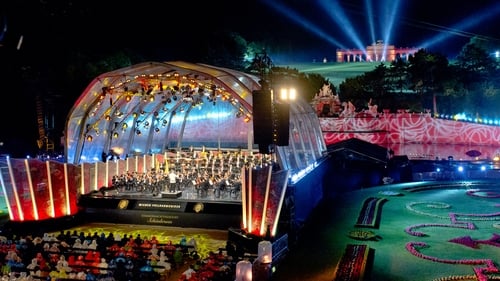
The renowned orchestra presents the world's biggest annual classical open air concert live from their hometown Vienna, Austria on Thursday, May 29th, 2014. The Summer Night Concert with the Vienna Philharmonic is an annual open-air event that takes place in the magical setting of the Schönbrunn Palace Park in Vienna with the palace as a magnificent backdrop. Everyone is invited to come to this unique occasion with free admission. Each year up to 100,000 people can take up the invitation, or enjoy on radio and TV in over 60 countries.

On Air presents Igor Stravinsky's The Rite of Spring, performed by the world-renowned Royal Philharmonic Orchestra, conducted by Peter Breiner, and recorded at BBC Television Centre. Expertly brought to life by some of the world's most sought-after classical musicians, the ensemble comprises 93 instruments: 51 string, 16 woodwind, 20 brass and 6 percussion. The full performance is available to watch on demand in cinematic quality.
No description available for this movie.

On Air presents Igor Stravinsky's The Firebird, performed by the world-renowned Royal Philharmonic Orchestra, conducted by Peter Breiner, and recorded at BBC Television Centre. Expertly brought to life by some of the world's most sought-after classical musicians, The Firebird comprises 74 musicians: 51 string, 11 brass, 8 woodwind and 4 percussion. Available now to watch on demand in cinematic quality.
No description available for this movie.
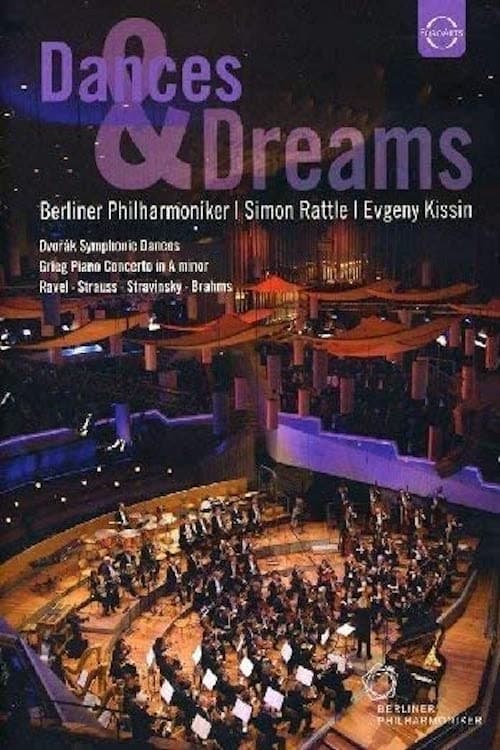
The New Year’s Gala Concert is a tradition for the Berliner Philharmoniker and its music director, Sir Simon Rattle. This 2011 concert, Dances and Dreams, has a theme of dances (two Dvorak Slavonic Dances, Stravinksy’s Firebird Suite, Grieg’s Symphonic Dance, Richard Strauss’s Dance of the Seven Veils, and Brahms’ Hungarian Dance No. 1) and dreams (Ravel’s Alborado del Gracisoso and the famous Grieg Piano Concerto in A minor). This generous mix of romantic and impressionistic music shows off the magnificent Berlin ensemble at its best. It is also great to see star pianist Evgeny Kissin at the keyboards.
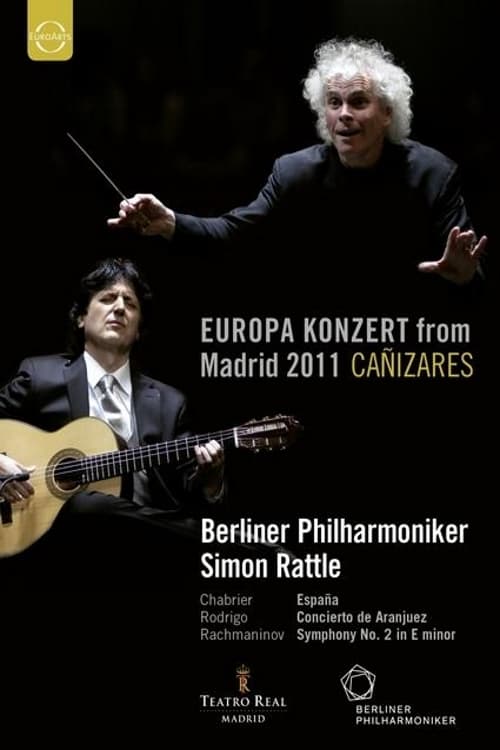
or twenty years the Berliner Philharmoniker has celebrated its 1882 founding with a concert at a major European venue, and the 2011 event takes place at the magnificent Teatro Real in Madrid. The renowned orchestra, under the baton of Sir Simon Rattle, performs Joaquín Rodrigo’s beloved Concierto de Aranjuez, Emmanuel Chabrier’s exuberant España, and Sergey Rachmaninov’s dramatic Second Symphony. It is joined for the Concierto by the famous flamenco guitarist Cañizares, whose virtuosity and sensitivity are given full opportunity to shine in this multi-faceted and subtle work.

Surely Bach’s French Suites, which he composed during his years at Cöthen (1717–1723), are among the finest inducements to practise that any teacher has ever made to a pupil. In this case Bach wrote them for his young wife, Anna Magdalena. The over-riding impression left by these suites is one of endearing tunefulness. Clavier-Übung II is a later collection of didactic keyboard pieces. It comprises two greatly contrasted works: the Italian Concerto and the Overture in the French Style. These performances admirably demonstrate the thoughtful and persuasive approach that András Schiff adopts when performing Bach. Recorded live at the Bachfest 2010, Protestant Reformed Church of Leipzig, 11 June 2010 Repertoire J.S. Bach: French Suites Nos. 1–6, Overture in the French Style in B minor, Italian Concerto in F major, BWV 971
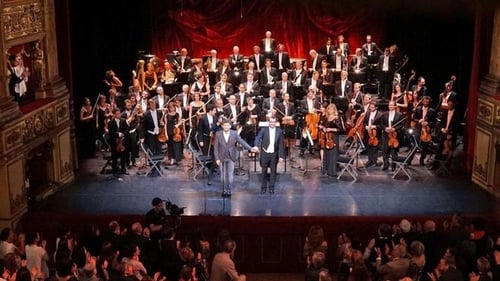
JK's is definitely in love with Italy; not only is he fluent in Italian but he sings here traditional songs some of which are in the Napolitanean dialect and he is good at it. There are wonderful views of the Italian coastline with Jonas driving an iconic Alfa. There are bits of black and white film from his childhood spending holidays in Italyas a boy. The audience adores him and his voice soars easily as such songs are easy on someone used to much heavier Verdi or Wagner roles. A delight to the ear.
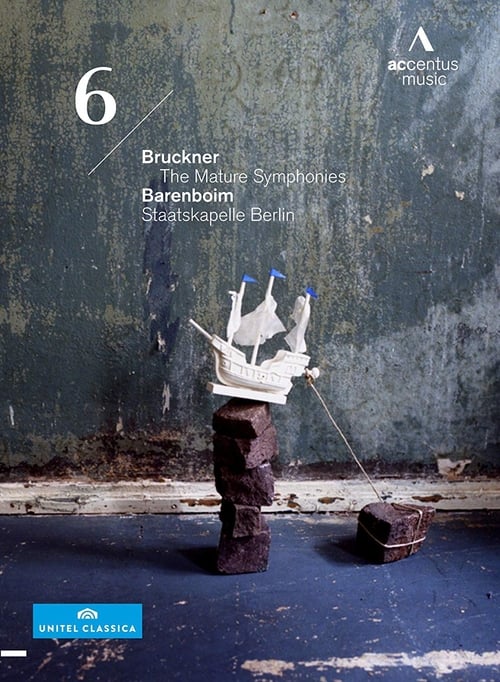
Anton Bruckner’s 6th Symphony was written between 1879 and 1881: a very happy time in his life. Unlike most of Bruckner’s symphonies, the 6th was not revised. Of all his works, this one seems to come from a single source of inspiration. Bruckner himself called it his “boldest” symphony – probably due to its extreme degree of motivic, rhythmic and harmonic originality. This live recording of the seldom-performed 6th Symphony is the next instalment of the acclaimed Bruckner cycle by the Staatskapelle Berlin and Daniel Barenboim. Anton Bruckner Symphony No. 6 in A major (original version) Daniel Barenboim, Conductor Staatskapelle Berlin Recorded live at the Philharmonie Berlin, 22 June 2010
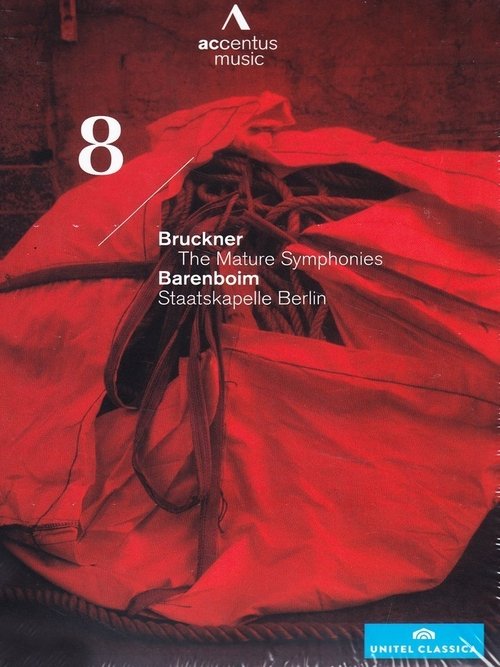
“Clarity was one thing that made this performance a marvel. Another was the flexibility of Barenboim’s speeds…. The flexibility of Barenboim’s tempi meant that Bruckner’s charm – an often overlooked aspect of his genius – shone through, especially in the genial Trio.” (The Telegraph) Bruckner’s 8th is the last symphony completed by the Austrian composer. Many of his contemporaries regarded the symphony as “the pinnacle of 19th century music”. Even today, this monumental work fascinates listeners with its virtuoso orchestral technique, its immensity of sound, and its inexhaustible richness of detail. Symphony No. 8 in C minor (second version 1887-90, Robert Haas Edition) Daniel Barenboim, Conductor Staatskapelle Berlin Recorded live at the Philharmonie Berlin, 26 June 2010
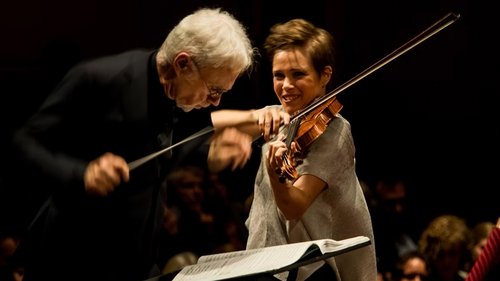
Like many of John Adams’ operas, Doctor Atomic is based on recent world historical events—here, the effusive Robert Oppenheimer, “father of the atomic bomb,” anxiously awaits the bomb’s first test in Los Alamos, New Mexico. Adams adapted the work into a symphony, comprising its three main acts. In the second half of the program, Adams conducts his 2015 violin concerto, Scheherazade.2, which restages the tale of the One Thousand and One Nights heroine as a strong woman navigating a patriarchial society, incarnated by the solo violin part. The work was composed specifically for Canadian-American virtuoso Leila Josefowicz and co-commissioned by the Royal Concertgebouw Orchestra, who perform it to perfection. The evening then closes out with Tromba Lontana, an orchestral fanfare written to mark the 150th anniversary of Texas’s independence from Mexico in 1836.