
Action
Adventure
Animation
Comedy
Crime
Documentary
Drama
Family
Fantasy
History
Horror
Music
Mystery
Romance
Science Fiction
Thriller
War
Western
Found 39 movies, 2 TV shows, and 1 person
Can't find what you're looking for?
Filmmaker Robert Fenz returned to the locations of three classic films made by the pioneering American ethnographic filmmaker Robert Gardner. Dead Birds (1964) was filmed in West Papua, Rivers of Sand (1974) in Ethiopia and Forest of Bliss (1986) in Varanasi, India. Correspondence is an elegy for a kind of imagemaking that is in the process of disappearing.

While working on her recent film commission for Kettle’s Yard, Here is Elsewhere , Sarah Wood became curious about what the exhibition of art means at this time. In one part of Kettle’s Yard Alfred Wallis Rediscovered is installed and in another part of the gallery, Wood’s film. How do they relate to one another? How does art enable connection? The answer was Correspondence – a short essay film constructed from archive footage taken around the Cornish coastline. Correspondence speaks across time to fellow artist Alfred Wallis about the role the site of art plays in a time of social isolation. The scripted voiceover in the new film takes the form of a letter written by Wood to Wallis.

Correspondence is a three-minute and 22-second 3D animation set in an undefined war and deals with issues that arise when power and control are abused. This is illustrated by the main character who is unknowingly trapped in a situation where he risks his life for a frivolous cause.
The relationship between Ed, a married astronomer and Amy, his lover, who spend their years apart, is based only on phone calls and texts. One day Amy begins noticing something strange in Ed's messages.
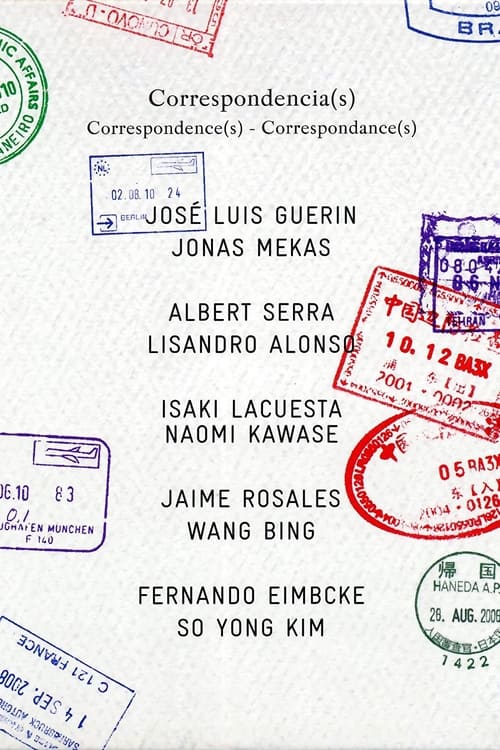
The exhibition 'The Complete Letters' features epistolary works defined by cinematographic creation. This is an experimental communication format used between pairs of film directors. Although each director is situated in a location geographically distant from that of their partner, they are united by their willingness to share ideas and reflections on all that motivates their work. Within this space of freedom, the directors featured in the exhibition examine their affinities and differences, within an environment of mutual respect and simultaneity of interests and with notable formal variants established in each of the correspondences.
A series of video letters between José Luis Guerín and Jonas Mekas.
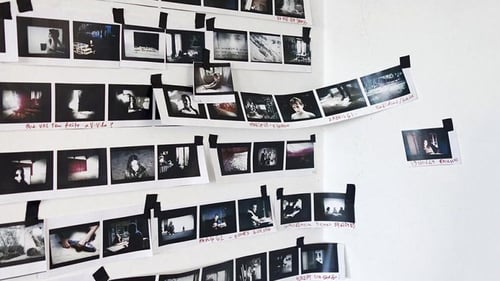
Jorge de Sena was forced to leave his country. First he moved to Brazil, and later to the USA. He never returned to Portugal. During his 20-year-long exile, he kept an epistolary correspondence with Sophia de Mello Breyner Andresen. These letters are a testimony of the profound friendship between the two poets, letters of longing and of desire to “fill years of distance with hours of conversation”. Through excerpts and verses, a dialog is established, revealing their divergent opinions but mostly their strong bond, and their efforts to preserve it until their last breaths.
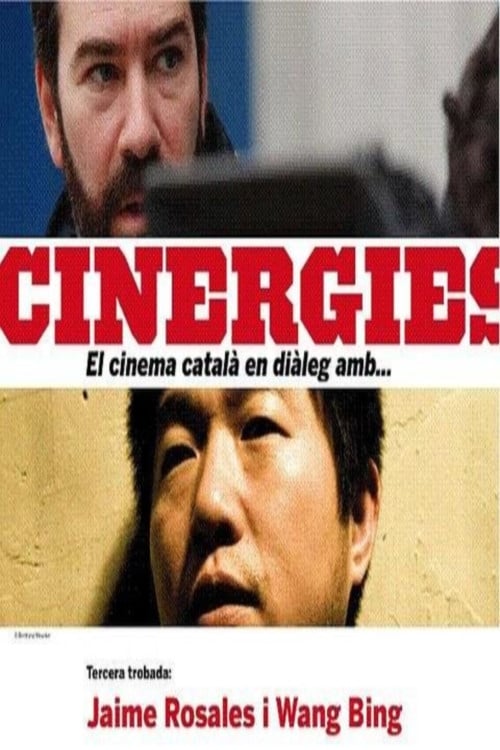
This correspondence between Spanish auteur Jaime Rosales and critical chronicler of contemporary China Wang Bing is divided into three short films each consisting of documentary observations.
The exhibition 'The Complete Letters' features epistolary works defined by cinematographic creation. This is an experimental communication format used between pairs of film directors. Although each director is situated in a location geographically distant from that of their partner, they are united by their willingness to share ideas and reflections on all that motivates their work. Within this space of freedom, the directors featured in the exhibition examine their affinities and differences, within an environment of mutual respect and simultaneity of interests and with notable formal variants established in each of the correspondences.
The film takes shape through the form of a video exchange between Hirokazu Kore-eda and Naomi Kawase. Each films the world around them and intimately reflects on their individual struggles with making films. Kore-eda self-consciously reflects on his process, “What does a camera shoot? What does a film capture? The emptiness in my life reflects in my work.” Kawase concentrates on her everyday life and candid moments with her friends, who say, “Hang in there Naomi we are all on your side,” and, “You never keep the promises you make, but I love you anyway.”
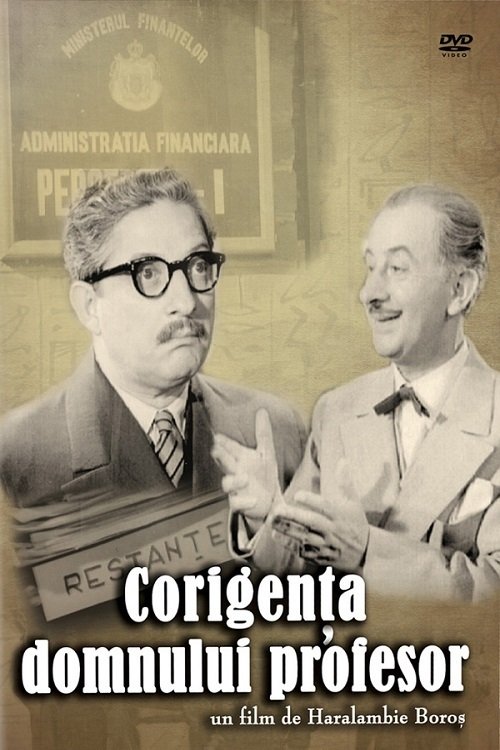
A subpoena on perception turns the life of a teacher upside down when he finds himself taxed for what he never even had: two buffalo. Because of the aberrant bureaucracy, he can't even get rid of the fictitious cuckolds...
In the form of a filmed epistolary conversation, two young, experienced filmmakers discuss film, present and past family, heritage and maternity. The personal and profound reflections—which are embodied in the graceful images taken day-to-day—are suddenly echoed by the political emergency of a country.
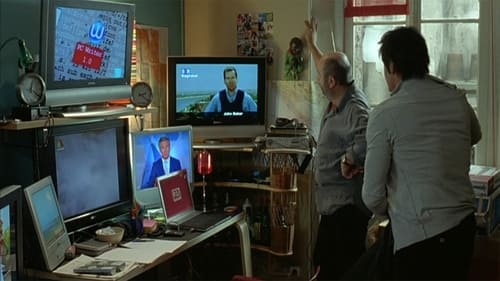
R2I, a famous news radio station, sends its best reporting duo to Iraq: Frank, journalist, and Poussin, sound engineer. Very quickly, millions of listeners follow their highly documented stories, reflecting the hot intensity of the fighting and the difficult survival of the population.
A sensitive animated short depicting a daughter penning a letter to her deceased mother, detailing the day-to-day events and personalities of her life.
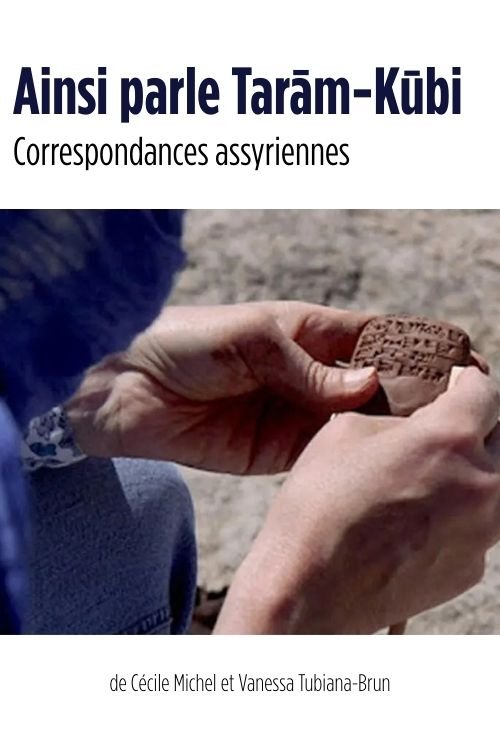
About 4 000 years ago, Assyrian merchants established a commercial settlement in the ancient city of Kaneš, within Central Anatolia. They came from Aššur, north of Mesopotamia. We have come to understand their history through their writings on clay tablets that have stood the test of time: more than 22 500 cuneiform tablets have been unearthed from the archaeological site of Kültepe. How did these Mesopotamian clay tablets arrived in Anatolia and what do they tell us? The voice of Tarām-Kūbi, an Assyrian woman who corresponded with her brother and her husband in Kaneš, takes us back in time.
Relationships and multiple influences between two great directors of modern cinema.
When she realizes that her grandmother, the woman who raised her, is losing her sight, the director decides to explore the bond that unites them through the episodes of non-vision that these three generations share, the memories of the past, the misunderstandings and the new memories they seek to have in common.
Mr. Peter Jones has vowed to get married. In his efforts to secure a desirable wife he has inserted some advertisements in the newspapers. So we find him going through hundreds of letters as he thrusts aside disdainfully the greater number of photographs accompanying the answers. One letter finally finds favor in his eyes; the writing is excellent, the phrasing is pleasing and the photograph which he extracts from the envelope shows to him the likeness of a young girl, pretty, smiling, lovely, in every way ideal for a life’s companion. But while he dreams with half-open eyes of the joys in store for him, old Truth comes out of a well in the middle of the room, and she presents to him a mirror in which he may see reality.
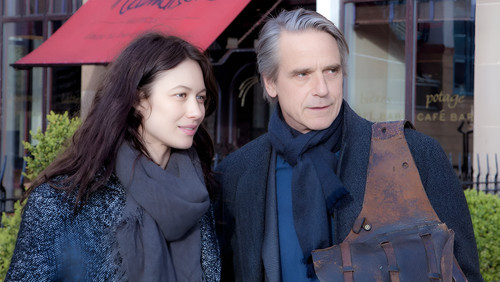
The Correspondence (2016), directed by Giuseppe Tornatore, follows Amy Ryan, a brilliant but emotionally isolated stuntwoman who is involved in a long-distance relationship with Ed Phoerum, an older astrophysics professor. Their affair unfolds entirely through letters, emails, parcels, and recorded messages.

A film correspondence between Yuri Obitani and Ming-Yu Lee, between Tokyo and Taipei, starting from 2019 to 2021. In the era of the pandemic, they communicate and understand each other through letter films.
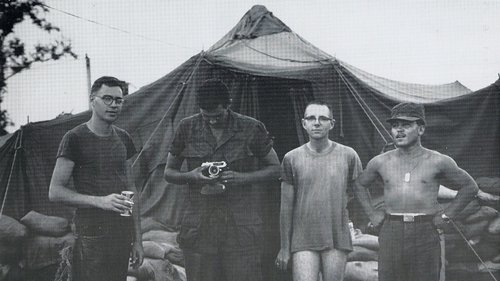
Real-life letters written by American soldiers, sailors, airmen, and Marines during the Vietnam War to their families and friends back home. Archive footage of the war and news coverage thereof augment the first-person "narrative" by men and women who were in the war, some of whom did not survive it.

Centuries-old vampire Count Dracula travels to Victorian London, where he becomes obsessed with Mina Murray—the fiancée of his solicitor, Jonathan Harker—believing her to be the reincarnation of his long-lost love.
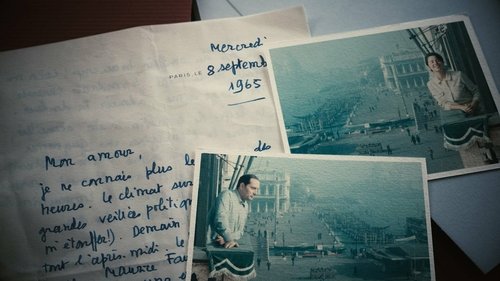
In the summer of 1963, François Mitterrand was going through a deep existential crisis. His political career was at a standstill and, after 19 years of marriage, the couple had grown apart. It was at this point that François Mitterrand met the woman who was to give new meaning to his life. Anne Pingeot, aged 19, was to become the companion of a lifetime, a woman who would be with him throughout his rise to power and who would remain by his side until his last breath. For the first time, Anne Pingeot has agreed to allow the fragments of this passionate love story — hundreds of letters and a diary — to be shown on television, before being donated to the National Library.
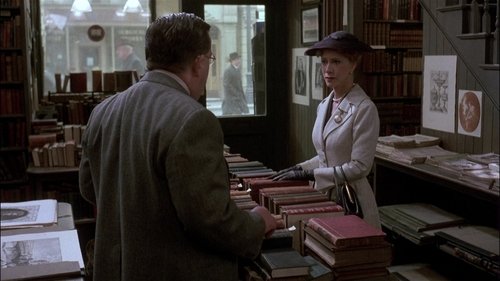
When a humorous script-reader in her New York apartment sees an ad in the Saturday Review of Literature for a bookstore in London that does mail order, she begins a very special correspondence and friendship with Frank Doel, the bookseller who works at Marks & Co., 84 Charing Cross Road.

During the quarantine in 2020, the two friends Mariano Llinás and Matías Piñeiro sent each other video letters – 8 in total, 4 each of them – to create a compilation of ideas, thoughts and exchanges commissioned by Sergi Álvarez Riosalido for La Casa Encendida (Madrid). Llinás is in Argentina and Piñeiro is in New York, and they begin to order each other portraits of places, reflections on artists, ideas on cinema.
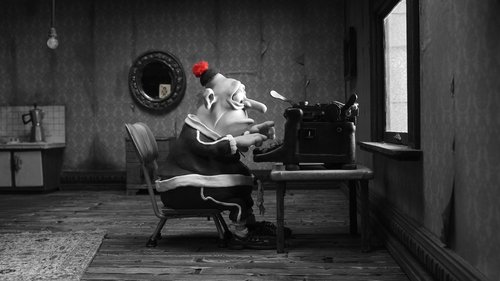
A tale of friendship between two unlikely pen pals: Mary, a lonely, eight-year-old girl living in the suburbs of Melbourne, and Max, a forty-four-year old, severely obese man living in New York.
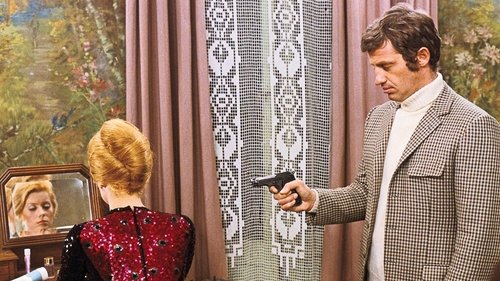
A tobacco planter on Réunion island in the Indian Ocean becomes engaged through correspondence to a French woman he does not know. The woman that arrives does not look like the picture he received, but he marries her anyway.
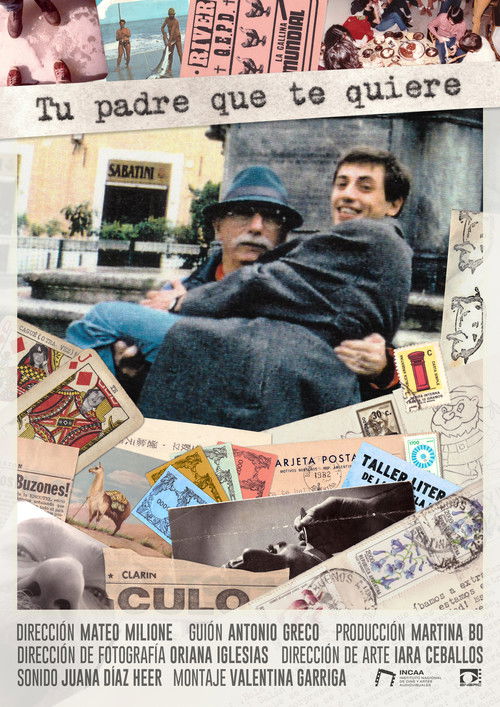
In the late ‘70s, in the midst of the military dictatorship, a surrealist literary work- shop is the oasis of Martín, a tormented young man who seeks to improve his poetry. Caron, a brilliant and eccentric writer, adopts him as a son. Their bond is recorded in short home movies and an unusual correspondence.
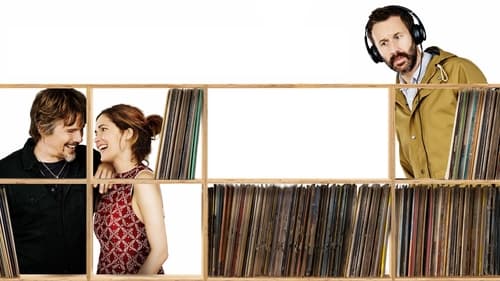
Annie is stuck in a long-term relationship with Duncan – an obsessive fan of obscure rocker Tucker Crowe. When the acoustic demo of Tucker's hit record from 25 years ago surfaces, its discovery leads to a life-changing encounter with the elusive rocker himself.
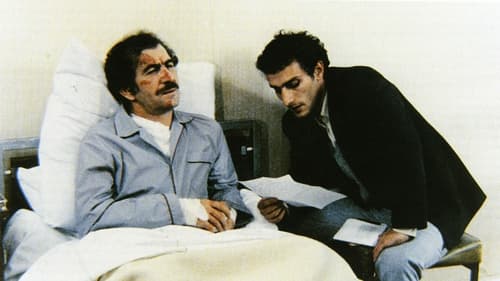
A young Greek man goes to Paris seeking help from a solitary and almost misanthropic distant relative who works as a furrier. With him, he takes nothing from his homeland but a photograph of a woman that he finds on the pavement. A misunderstanding regarding the photograph sets off a series of dramatic misunderstandings which trap him in a vicious circle of lies and fantasies.
A film correspondence between a filmmaker, the ghost of an artist, and the city of Guayaquil.

A married couple, suspecting one another of infidelity, decide to "live separately together."
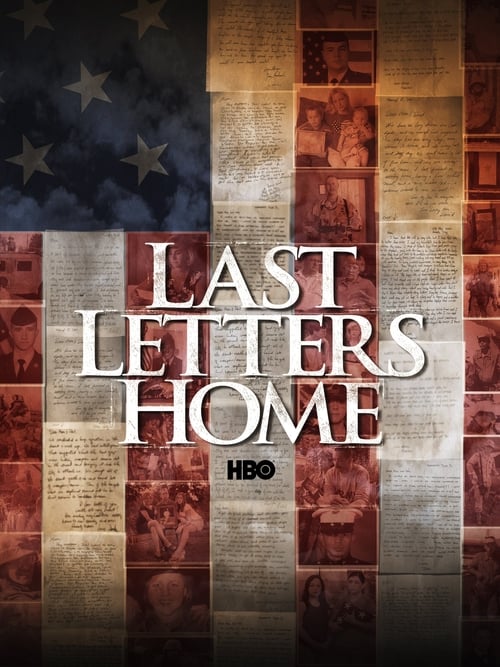
Ten families read letters from their loved ones killed during Operation Iraqi Freedom in this powerful and moving HBO documentary by Oscar and Emmy Award-winning filmmaker Bill Couturie (Dear America: Letters Home from Vietnam). Photos of the soldiers in military and civilian life are shown as family members read the final correspondence received from Iraq and share their thoughts and memories about the fallen troops and the realities of war.

Hate Mail is an epistolary play something like Love Letters, with two actors reading letters and other correspondence, but it's a little wilder and more hysterically funny. It tells the story of Preston, a spoiled rich kid who meets his match in Dahlia, an angst-filled artist. Their worlds collide when Preston sends a complaint letter that gets Dahlia fired from her job, and then there's no turning back. The play stays with their increasingly crazed correspondence as they move from hate to love, and then right back again.
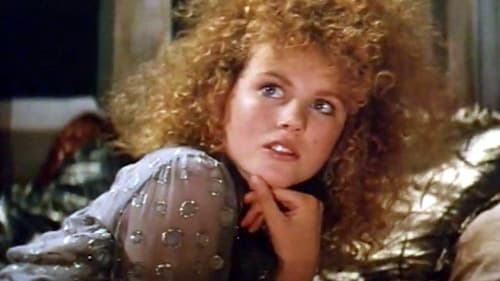
Parody of historical epics that focuses on real-life Australian explorers William John Wills and Robert O'Hara Burkes, who tragically tried to cross the Australian continent from the south, to the north, a distance of 3,250 km.
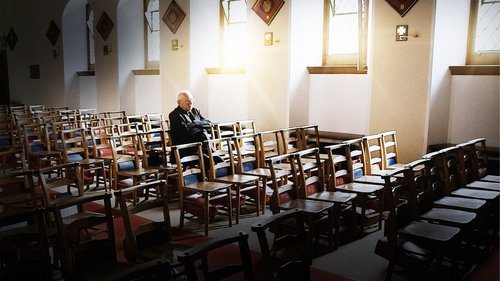
In the wake of the 2012 Sandy Hook Elementary School massacre that took the lives of 20 first graders and their teachers, local clergymen Father Bob Weiss receives a letter from a fellow priest in Dunblane, Scotland, whose community suffered an eerily similar fate in 1996. From across the Atlantic, the two priests forge a poignant bond through the shared experience of trauma and healing.
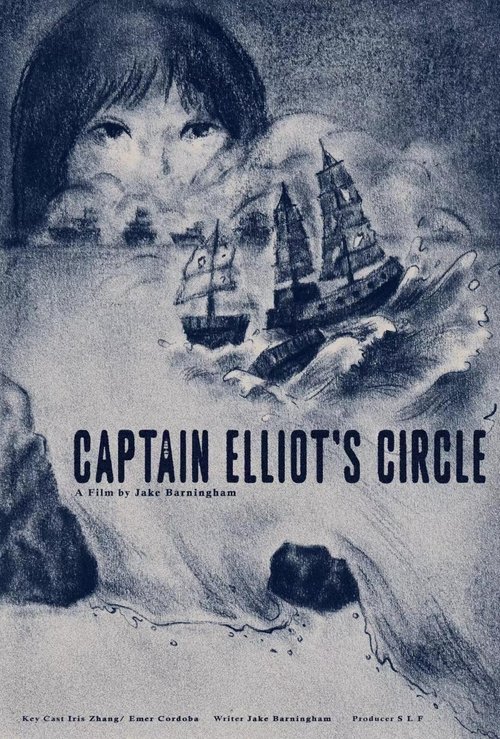
Equal parts documentary, essay, and narrative,"Captain Elliot's Circle" is mostly a poetic interaction with an obscure corner of Chinese and British history. Constructed using primary source documents about the taking of Zhoushan, Britain's first choice for a seaport, in the late 1830s,this movie uses Captain Charles Elliot's reluctance to brutalize the Chinese to reflect on the cyclical nature of history and the power structures that move it. The long takes used throughout function to illustrate the dramatically different ways in which people who lived in the mid-19th century perceived time. Additionally, it represents the psychological effect of living on an island regardless of what era you were born in.The last third of the movie focuses on a young woman whose strange day job has taken her far away from the island of Zhoushan generations after Captain Charles Elliot was last there. "Captain Elliot's Circle" was shot on location in Zhoushan and Hangzhou.

No description available for this movie.
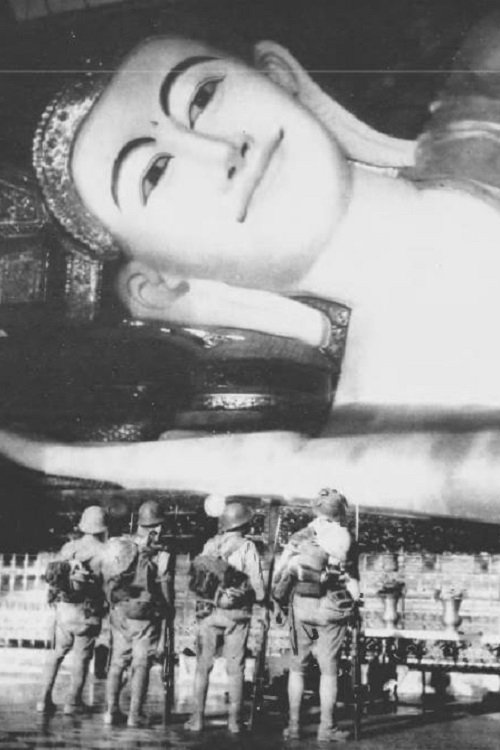
This film records the Japanese military's efforts to capture the Burma Road,one of the major supply lines to China, from the British beginning in December 1941. The film ends with the fall of Mandalay in May 1942.