
Action
Adventure
Animation
Comedy
Crime
Documentary
Drama
Family
Fantasy
History
Horror
Music
Mystery
Romance
Science Fiction
Thriller
War
Western
Found 41 movies, 13 TV shows, and 2 people
Can't find what you're looking for?
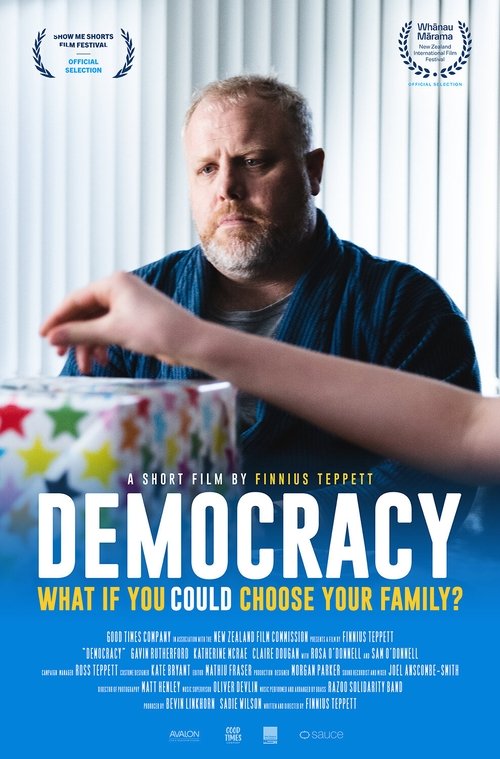
A dad is voted out of his family, and when he mounts a campaign for re-election, he finds out he's not the only one in the running.

Part of paraconsistent sequence series. “A paraconsistent logic allows inconsistency without absurdity.” The works in this subcollection contain contradictions of time and place, reorganizations of past, present and future.
A wall fan convincing the modern situation of India, a large democratic country.
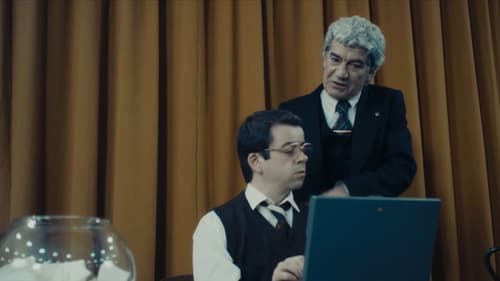
The manager of a company proposes a daring plan for keeping the workers’ morale high.
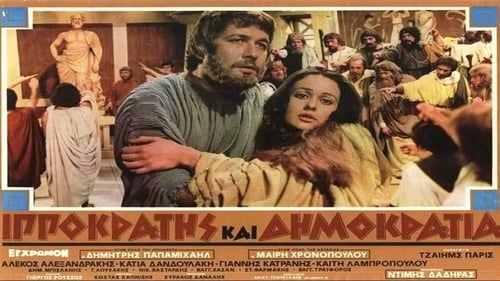
The father of medical in Kos, Hippocrates, believes that illnesses can be treated with medicines and herbs instead of prayers and comes into conflict with the medical establishment of the island. Leaving Kos, he goes to Athens, where he is called to face a plague for save the city.
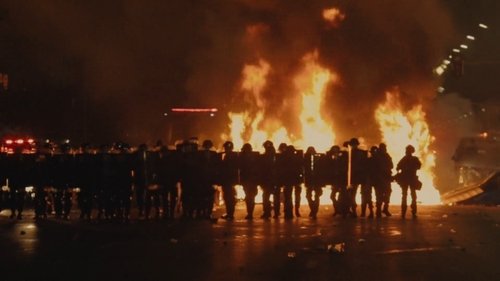
A cautionary tale for these times of democracy in crisis—the personal and political fuse to explore one of the most dramatic periods in Brazilian history. With unprecedented access to Presidents Dilma Rousseff and Lula da Silva, we witness their rise and fall and the tragically polarized nation that remains.

The Story is about two Male Angels that has been sent on a duty on Earth by God's order. meanwhile one of the Angels falls in love with a Girl on earth who was part of their mission.the Angel asks The Lord to become a Human and stay on earth for her.
Some years ago, the Palácio de São Bento suddenly shook from visitors singing Zeca Afonso’s 1972 Grândola, Vila Morena in protest against Prime Minister Pedro Passos Coelho’s neo-liberal politics. Do the Carnation Revolution’s dreams live on in verses such as "On each corner there's a friend / In each face there's equality / Grândola, brown town / Land of fraternity"?
The story of life of an Iranian army leader who has faults in his life and now in purgatory wants to retaliate for his faults.
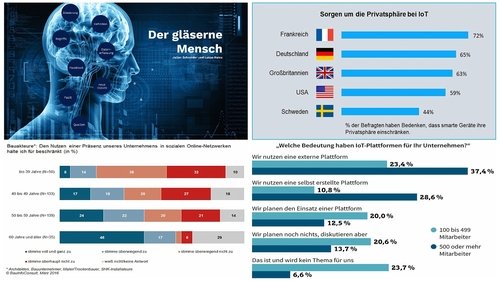
Digitalization has changed society. While data is becoming the "new oil", data protection is becoming the new "pollution control". This creative documentary opens an astonishing inside view into the lawmaking milieu on EU level. A compelling story of how a group of politicians try to protect todays society against the impact of Big Data and mass surveillance.
It is 1976 in Yugoslavia. Brotherhood and unity is also evident on the local radio station, where everyone is rejoicing. Namely, they received the award for the most homogeneous collective. The most homogeneous collective, however, soon begins to disintegrate, as it turns out that the award is in fact intended for the best individual.
In this journal, Alexander Kluge and Heiner Müller talk about the dark side and the inevitability of democracy. Heiner Müller believes that democracy has its roots in the tragedy of the Atreidae.
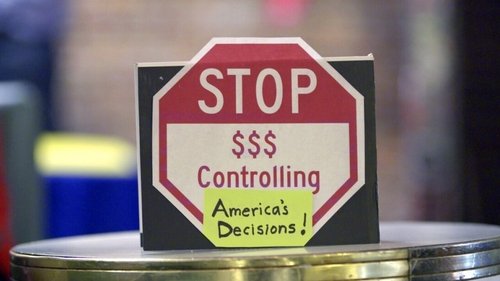
In the United States of America, lobbyists, corporations and billionaires invest millions of dollars to ensure that a suitable candidate, one inclined to support their personal ambitions and economic projects, wins an election, which inevitably affects everything, from the selection of local officials to presidential elections, creates countless conflicts of interest and undermines what supposedly used to be a model democracy.
A completely black background and, before it, a microphone; during this film a total of ten women and men will step up to this microphone. In December 2011, Berlin venue Haus der Kulturen der Welt held a symposium on the topic of the current state of our democracy. The speakers’ appraisal is shocking: the Euro crisis and so-called best alternative to ‘save the markets’ means that the poker game over our common currency has taken precedence over visionary politics and institutions and parliamentarians are reduced to playing extras in a hectic race against time. Professing themselves to being at the mercy of practical constraints, politicians are at the same time using this line of argument to legitimise the dismantling of justice, freedom and solidarity.
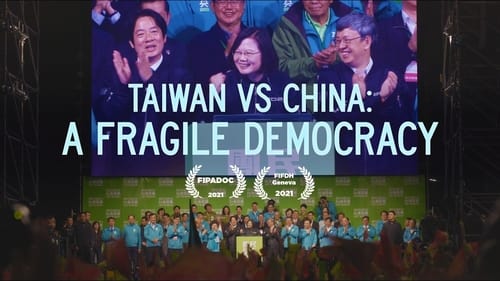
One Country, Two Systems? No Way! say the youth of Taiwan. But China under President Xi Jinping wants more than ever to bring the island of Taiwan back into the fold, just like Hong Kong. Can the burgeoning democracy on China’s doorstep, driven by digital technology, resist the Middle Kingdom’s advances? To China Taiwan is a breakaway province that must return to the fold. To its 24 million inhabitants it is a sovereign state with its own constitution and democratically elected leaders. Now that Hong Kong has been brought into line, Taiwan remains determined to stand up as a vibrant, young democracy. But it won't be easy. Since the Sunflower Movement in 2014 when the young came out to prevent an economic agreement with China, citizen groups have been fighting for the transparency of institutions.
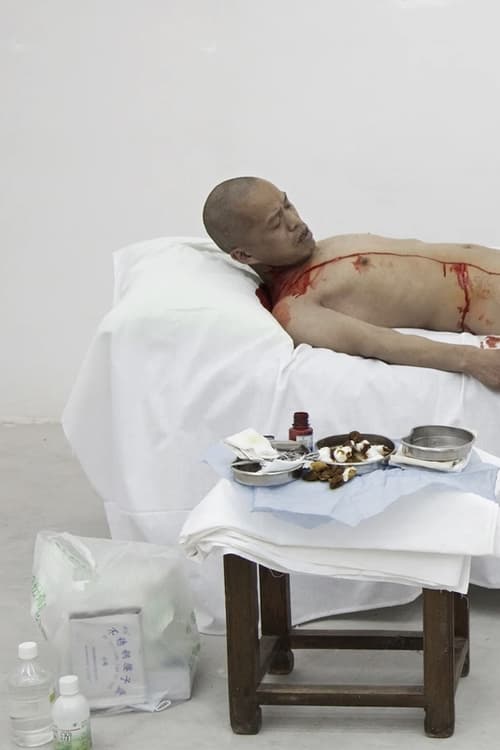
One Meter of Democracy (2010) challenged the endurance of viewers, as well as the courage of the artist. In a quasi-democratic process, He Yunchang invited approximately 20 friends to vote in a secret ballot on whether he should have a surgeon cut a one metre incision the length of his body, from collar bone to knee, without anaesthesia. The vote was carried by a narrow majority, with several abstaining. The performance was documented in video and photographs that reveal the emotional cost of witnessing this gruelling event. This work, sometimes also known as ‘Asking the Tiger for its Skin’ was also staged on a symbolic date: 10 October 2010 was the 99th anniversary of the Wuchang uprising and the Xinhai Revolution which led to the fall of the Qing Dynasty and the establishment of the Republic of China. The final image shows the group with sombre, shocked faces.
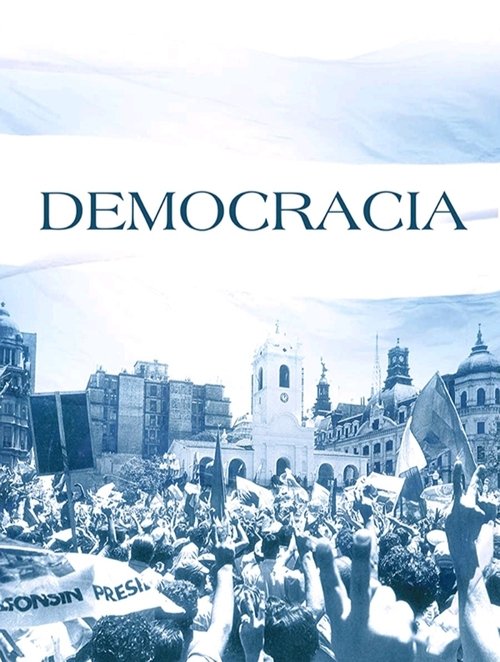
1983: After more than seven years of terror, the Argentineans recover the democracy. The reconstruction of a climate of time and an event that marked a point of break not only in the policy but in the culture and the arts of Argentina
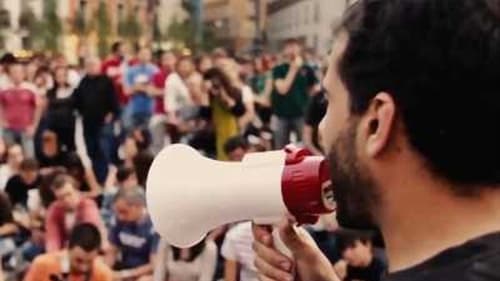
Over the 2010s decade, even in different contexts and different democracies, the lack of satisfaction of society with politics became an unifying trait that caused riots in Brazil, the United States, France, Egypt and Ukraine. All of those governments fell, whether by force or by elections, but corruption keeps happening in the new governments. "The Paradox of Democracy" analyzes this problem with the help of intellectuals who have been studying 21st-century political science.
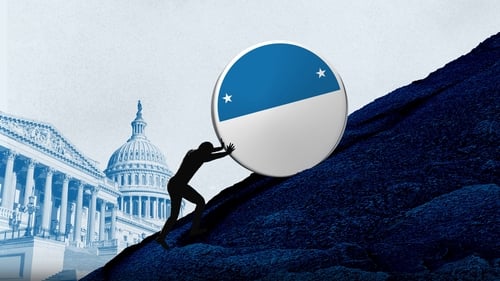
Examines the often overlooked, yet insidious issue of voter suppression in the United States in anticipation of the 2020 presidential election. With the perspective and expertise of Stacey Abrams, the former Minority Leader of the Georgia House of Representatives, the film offers an insider’s look into laws and barriers to voting that most people don’t even know is a threat to their basic rights as citizens of the United States.

Turkish democracy got over the 27th of May and the 12th of March and set off again, but the storm did not subside and the mutual reckoning was not over. On the contrary, new fronts were opened in the country and blood began to flow like a gutter. Finally, on September 12, there was a knock on the door again. Those who came that day changed everything, everything. Nothing would ever be the same again, nothing would be the same as before.
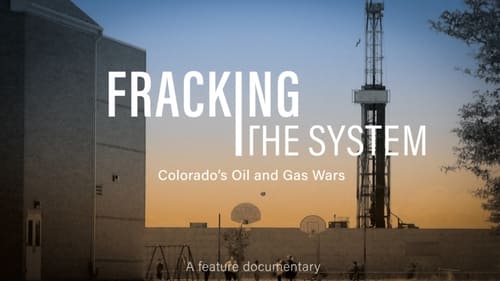
Fracking the System is a political thriller documentary from the front lines of climate justice activism in Colorado. When a fracking mega-site gets moved from a White neighborhood to a BIPOC neighborhood, a concerned mother fights to try and stop it. This is an investigative exposé about the harms of fracking, the lengths to which the government is complacent with industrial pollution, and the nefarious tactics that the oil and gas industry uses to undermine democratic elections.
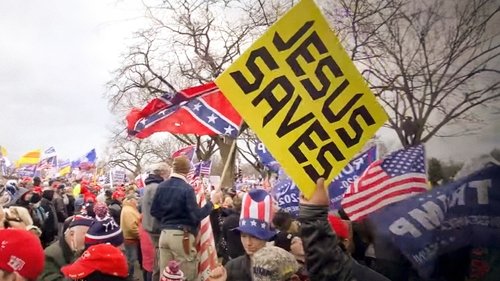
Examines the implications of Christian Nationalism, how it distorts not only our constitutional republic, but Christianity itself, and asks the question: What happens when a faith built on love, sacrifice, and forgiveness grows political tentacles, conflating power, money, and belief into hyper-nationalism?
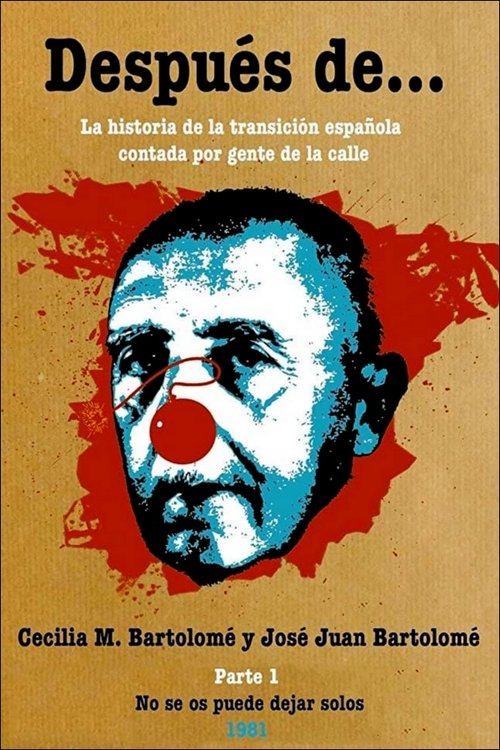
A history of the Spanish Transition told in first person by the main protagonists: on the one hand, the politicians, idealistic or merely opportunistic, who brought it to a successful conclusion in the tribunes and offices; on the other hand, the citizens who, in the streets, supported it sincerely or fought it with ferocity.
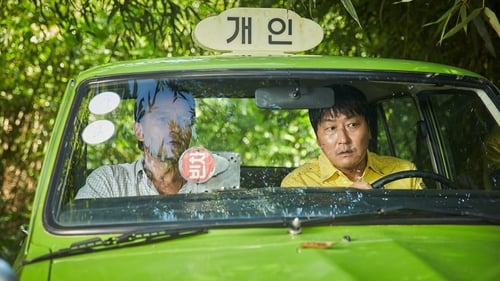
May, 1980. Man-seob is a taxi driver in Seoul who lives from hand to mouth, raising his young daughter alone. One day, he hears that there is a foreigner who will pay big money for a drive down to Gwangju city. Not knowing that he’s a German journalist with a hidden agenda, Man-seob takes the job.
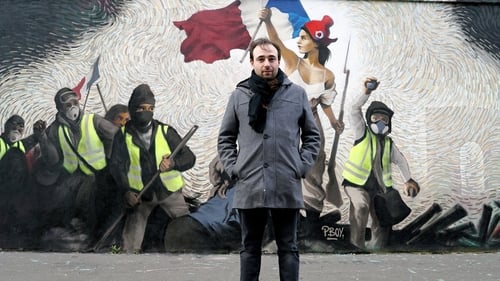
Thoughts of a diversity of public and private citizens on the virtues of democracy, its faults, its decadence, its fall and the rise of populism.
A director feels he is about to lose himself to the market forces and thinks that the only way he can protest is by making a political film. He contacts Thomas Hylland Eriksen, who will become his mouthpiece and articulate what is wrong. But along the way the director becomes distracted by another person, a young, fumbling girl reminiscent of himself.
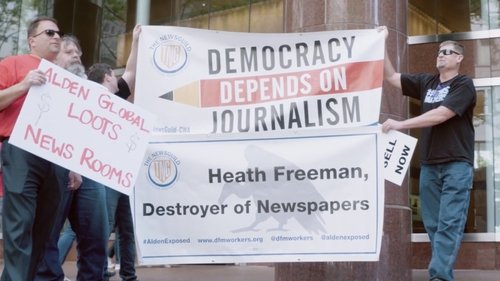
A secretive hedge fund is plundering America's newspapers, and the journalists are fighting back. Backed by the NewsGuild union, they go toe-to-toe with the faceless Alden Global Capital in a battle to save and rebuild local journalism across America.
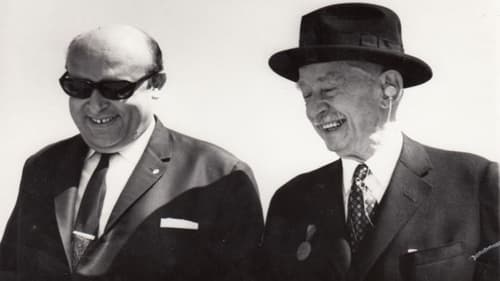
By the end of 1963, the word coup was no longer spoken in Turkey. Talat Aydemir is history, the last tremors of the May 27 earthquake have passed and the sliding faults of the regime have begun to settle into place. In this transition period, which lasted more than four years, the person who managed to get the ship to the port without running aground was İsmet İnönü. He ruled for four troubled years in a country torn between armed uprisings, Cyprus crises, coalition governments and regime debates. But meanwhile, he was also worn out. In the local elections held at the end of 1963, while the CHP's votes remained at 37 percent, the AP found 45 percent. But on the very day of the final election results, a few gunshots heard from across the Atlantic turned everything upside down...
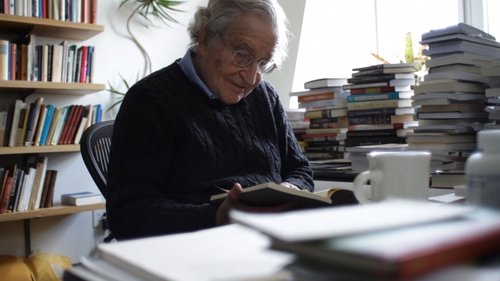
Through interviews filmed over four years, Noam Chomsky unpacks the principles that have brought us to the crossroads of historically unprecedented inequality – tracing a half-century of policies designed to favor the most wealthy at the expense of the majority – while also looking back on his own life of activism and political participation. He provides penetrating insight into what may well be the lasting legacy of our time – the death of the middle class, and swan song of functioning democracy.
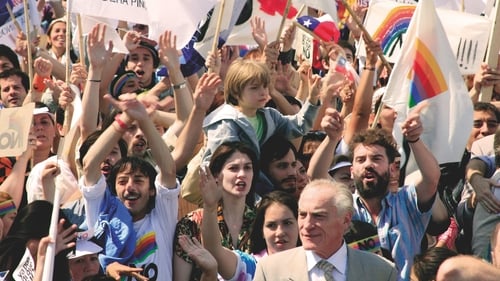
In 1988, Chilean military dictator Augusto Pinochet, due to international pressure, is forced to call a plebiscite on his presidency. The country will vote ‘Yes’ or ‘No’ to Pinochet extending his rule for another eight years. Opposition leaders for the ‘No’ vote persuade a brash young advertising executive, René Saavedra, to spearhead their campaign. Against all odds, with scant resources and while under scrutiny by the despot’s minions, Saavedra and his team devise an audacious plan to win the election and set Chile free.
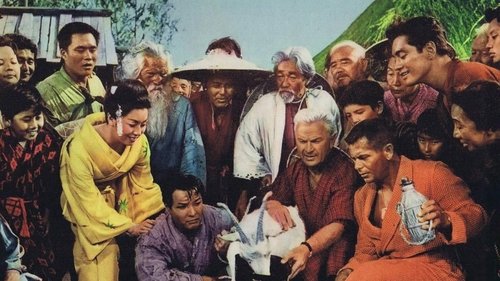
In post-WWII Japan, an American captain is brought in to help build a school, but the locals want a teahouse instead.

No description available for this movie.
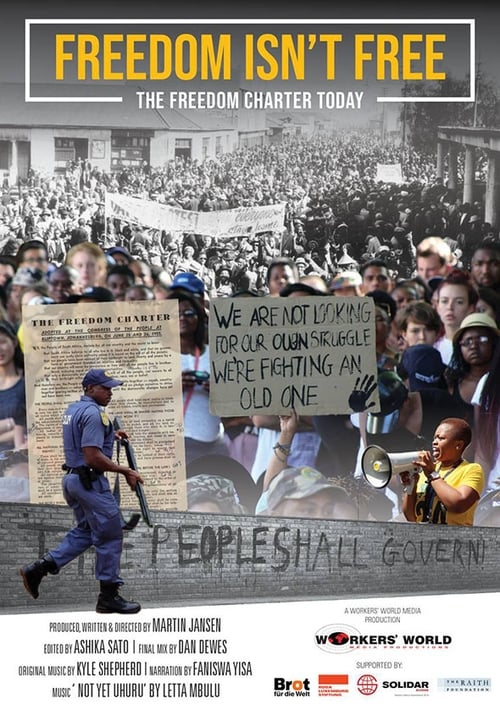
Since its adoption in June 1955 by the Congress movement, the Freedom Charter has been the key political document that acted as a beacon and source of inspiration in the liberation struggle against Apartheid. It was reputedly the main source that informed democratic South Africa’s liberal constitution and a constant reference point for the ruling African National Congress (ANC) and rival political parties that it spawned since 1994, all claiming the Freedom Charter’s legacy. Freedom Isn’t Free assesses the history and role of the charter, especially in relation to key political and socio-economic aspects of developments in South Africa up to the present period. It includes rare archival footage with interviews of a cross-section of outspoken influential South Africans.
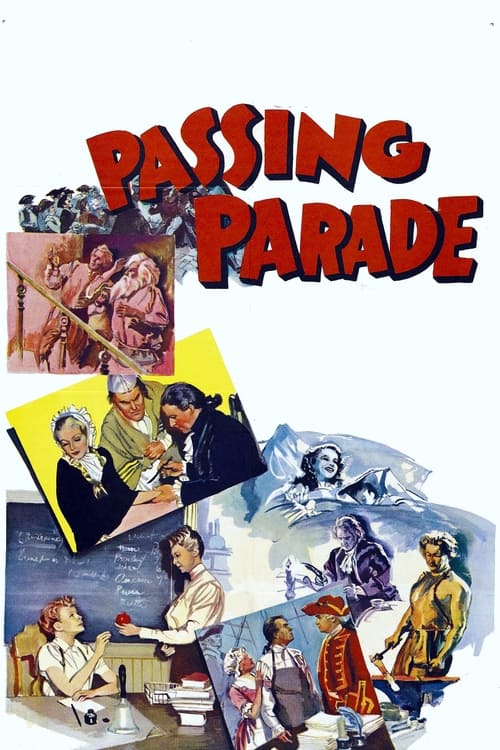
Made just before America would be forced into the Second World War, this short subject is a brief dramatized history of American democracy. It targets a perceived threat to democracy from board room and soapbox fascists who advocated a government based upon contemporaneous European models.
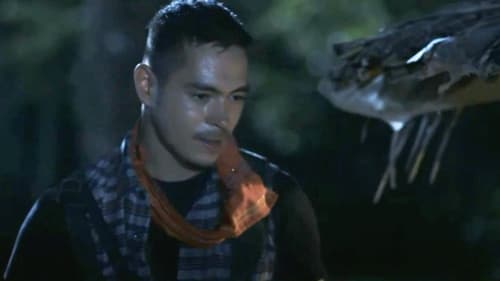
The film splits itself between two timelines. In 2006, Ada is basing her thesis on a massacre that occurred twenty years prior in a village called Acacia. Her mother Cecilia was part of a fact-finding mission into a massacre, and Ada’s inquiries bring up her history as a member of the NPA. The other timeline traces the relationship of Ka Felix and Ka Jimmy, two rebels who fall in love, despite the movement’s laws against such a pairing.

Two decades after the initial exposé of the corporation, this follow-up unveils a world now fully remade in its image and perilously close to fascism.

As local newsrooms vanish, "News Without a Newsroom" explores journalism's uncertain future in the digital age. Through powerful stories and expert insights, the film examines the collapse of traditional media, the rise of misinformation, and the fight to preserve truth, trust and accountability in an era of disruption.
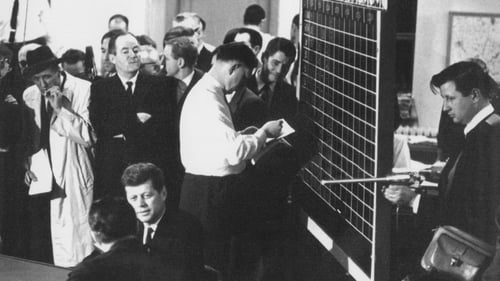
Primary is a documentary film about the primary elections between John F. Kennedy and Hubert Humphrey in 1960. Primary is the first documentary to use light equipment in order to follow their subjects in a more intimate filmmaking style. This unconventional way of filming created a new look for documentary films where the camera’s lens was right in the middle of what ever drama was occurring. Preserved by the Academy Film Archive in partnership with The Film Foundation in 1998.

An in-depth look into the inner workings of the commune system of Rojava and how they work in practice.

During the dictatorial regime of Juan Vicente Gómez, the bachelor Ibarra is imprisoned for political conspiracy. In prison, the inmates live together remembering the events that led to their imprisonment. Finally, a group, led by the bachelor Ibarra, manages to carry out a plan to escape from the prison.

Short film by Alfredo Lugo.