
Action
Adventure
Animation
Comedy
Crime
Documentary
Drama
Family
Fantasy
History
Horror
Music
Mystery
Romance
Science Fiction
Thriller
War
Western
Found 42 movies, 11 TV shows, and 1 person
Can't find what you're looking for?
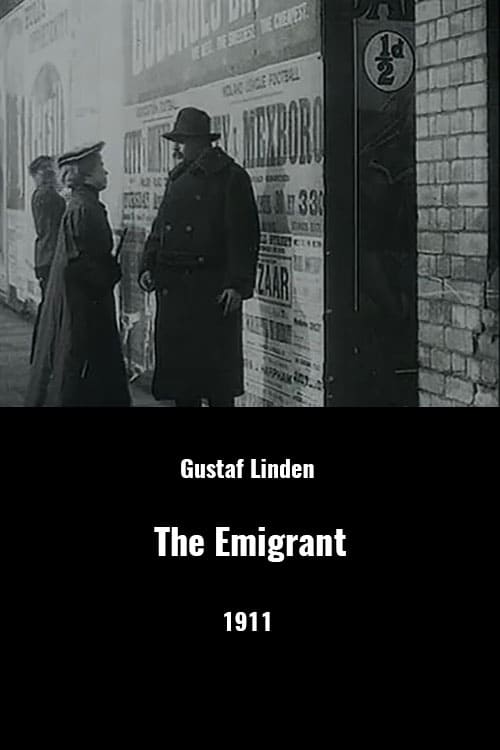
A short, cautionary tale of emigrating to America.

Sweden, 1849. A poverty-stricken family decides to move to America in the hope of finding a better and more prosperous life. Although they know the journey will be dangerous and the pressure of facing a new life in a strange and wild land is great, they are determined to succeed.

The biblical tale of Joseph is told from an Egyptian perspective in this interesting character study. In this film, Joseph is called Ram. Ram, tired of his family's backward superstitious life, and tired of being picked on by his brothers, wants to go to Egypt to study agriculture. His brothers travel with him across Sinai, but then suddenly sell him to Ozir, an Egyptian who works for a Theban military leader, Amihar. Amihar is impressed by Ram's drive and personal charm and so grants Ram some desolate land outside the capital. Ram soon finds himself a pawn in the political and sexual games between Amihar and his wife Simihit, a high priestess of the Cult of Amun.

Fearing a gangster's vengeance,his moll sails away to South Africa ,where many emigrants intend to work in the mines there.
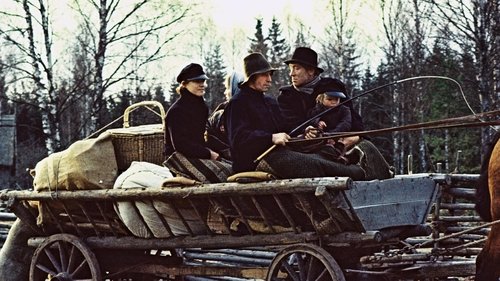
Karl and Kristina Nilsson work on a farm in a cold and desolate area of 19th century rural Sweden. Growing privations, combined with increasing social and religious persecution, motivate the Nilssons and many of their neighbors to strike out for the United States. Following a treacherous ocean crossing and an equally grueling land passage, the emigrants find themselves in seemingly idyllic Minnesota.

Emigrants from Calabria arrive at Milan station with their luggage, to make their home there or set off for other destinations. A man falls asleep in a waiting room. The travellers look lost and tired. The language of the others is henceforth incomprehensible; they are already foreigners in their own country.

A feature film "Emigrants" is like a protest against the most painful current process in Lithuania - emigration. "Emigrants" encloses a tragic, but filled with light humour and irony story of one Lithuanian family.

No description available for this movie.
Teleplay based on Slavomiras Mrozekas' works.
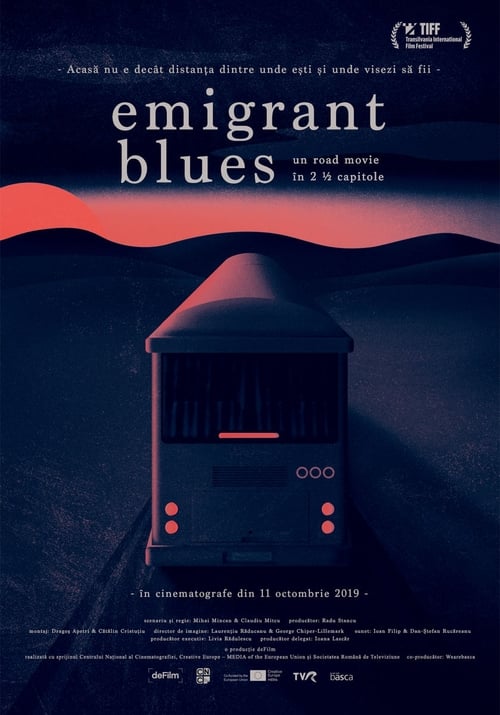
A 55 hours journey, from Bucharest to Madrid, in a bus packed with Romanians sleeping on the floor, spending time in empty parkways or eating in small restaurants from the highways. A collective portrait of the children of Romanian emigrants in Spain, through the short clips they have in their mobile phones and their stories of nostalgia. The final trip of a Romanian to his native country, in the back of a hearse, with two Romanian undertakers who make all the mistakes they could have made. Three fragments from the lives of people who are dreaming about the day they will return home, but are too scared to completely reset, once again, their whole lives.

Documentary portrait of Bolivian, Peruvian and Paraguayan communities that migrated to Argentina in search of work made by CERC (Centro de Experimentación y Realización Cinematográfica) students.

Three volunteer crisis-hotline psychologists struggle against their country’s totalitarian landscape, their patients’ emotional needs, and their own mental health.

In this universal, moving fable, a parent and child forced into exile embark on an odyssey that leaves them changed forever.

Movie starts with a small boy watching his father boarding a ship to America. Years later, all grown up and in colour, Pippolo Cavallo (Adriano Celentano) takes the same route (dressed as a woman) to search for his father and begin a new life.

Three friends, Maro, Shpera and Yuri are unemployed and hardly make ends meet. They have complicated and hysterical relationships with the people closest to them. They seem to have emigrated from their families and their country. Provoked by a mysterious telephone call, they set out on a journey, filled with the hope to change their lives.

While the city of Cadiz helds the carnival festivities, in the solitary deck of a boat a nice old man contemplates excited the party. For many years he has visited his hometown and now he fears to face the absence of his loved ones. He remembers the welcome extended to him the last time he returned from the campaign in Cuba, his youth and migration.
A multifaceted portrait of the German writer W.G. Sebald.

No description available for this movie.
A saboteur sneaks into Tajikistan. Having killed a collective farm instructor, according to his documents, he arrives at the collective farm. He manages to persuade the collective farmer Kamil to emigrate. Having experienced the brunt of the exploitation of the Muslim clergy and the bourgeoisie, Kamil flees to his homeland and exposes the enemy.

An Italian singer who found fame in America comes back to his native country and finds out that his former girlfriend is in prison.
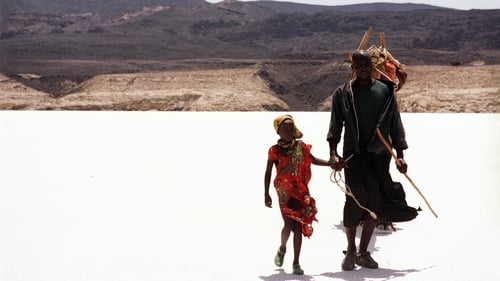
On the one hand, there’s the desert eating away at the land. The endless dry season, the lack of water. On the other there’s the threat of war. The village well has run dry. The livestock is dying. Trusting their instinct, most of the villagers leave and head south. Rahne, the only literate one, decides to head east with his three children and Mouna, his wife. A few sheep, some goats, and Chamelle, a dromedary, are their only riches. A tale of exodus, quest, hope and fatality.

Documents the highlights of a concert version of the musical written by former ABBA members Benny Andersson and Björn Ulvaeus, performed in Minnesota. Based on a series of novels detailing a family's poverty-driven migration from Sweden to America in the mid-19th century, we also meet some of the descendants to the emigrants.

Not just another documentary on the French resistance movement, this film focuses on one particular group of underground fighters in France: those from Eastern Europe. Many were Jews and all had fled their native countries before the war broke out. They were among the most staunch and fearless enemies of fascism, as shown here in personal interviews and memoirs of war-time experiences. But the most famous of these immigrants were 23 who were rounded up among several hundred Parisians in 1943, tried for their activities, and executed -- all were immigrants under the leadership of the Armenian poet Manouchian. After their execution, Paris was papered with posters decrying these 23 martyrs as "foreign communists."
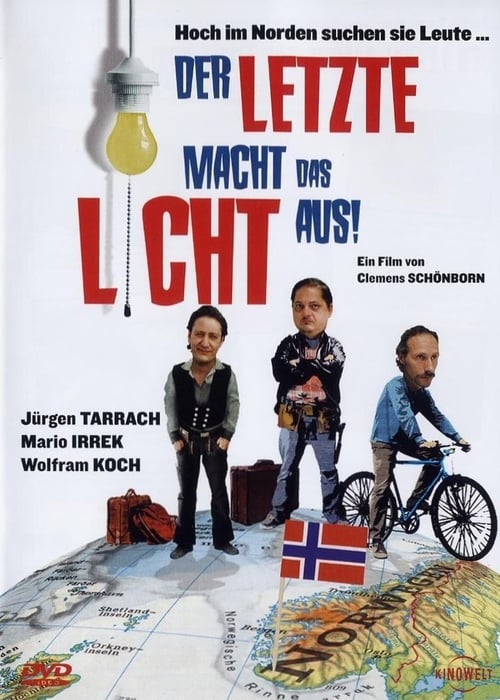
The Berlin construction workers Micha, Silvio and Norbert are out of work. The way out spells - Norway. Because German craftsmen are in demand. The three, with 17 other desperate people, are bawling Norwegian and preparing themselves for "it's always just salmon" and fearing the darkness. Too bad that their wives have other plans.
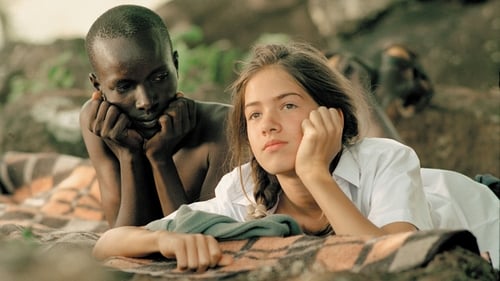
A Jewish woman named Jettel Redlich flees Nazi Germany with her daughter Regina, to join her husband, Walter, on a farm in Kenya. At first, Jettel refuses to adjust to her new circumstances, bringing with her a set of china dishes and an evening gown. While Regina adapts readily to this new world, forming a strong bond with her father's cook, an African named Owuor.
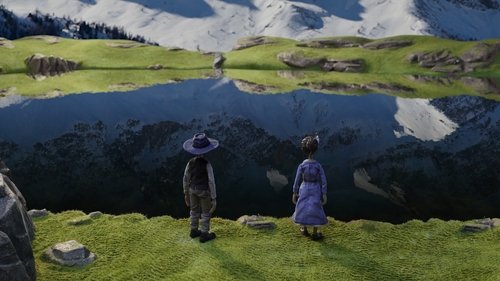
Early 20th century, in the Ughetto family's home village, Ughettera, Northern Italy. Life in the region had become very difficult and the Ughettos dreamed of a better life abroad. Legend has it that Luigi Ughetto crossed the Alps and started a new life in France, thus changing his beloved family's destiny forever. His grandson retraces their story.
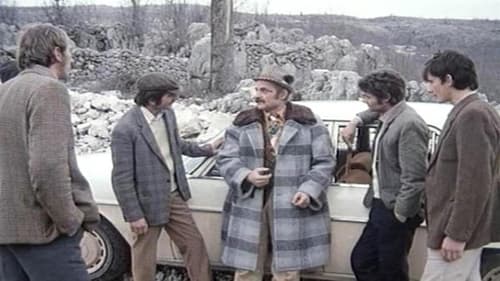
Encouraged by the stories of guest workers who pay visit to their homeland, a young man Filip finds himself on a central station in Frankfurt on the Main, Germany. While looking for his old friend Mate who would help him to get around in new environment, Filip experiences one trouble after another until he finally finds Mate lethally wounded.

A nurse from Ukraine searches for a better life in the West, while an unemployed security guard from Austria heads East for the same reason. Both are looking for work, a new beginning, an existence, struggling to believe in themselves, to find a meaning in life...

In the beautiful area of Paris, Maria and José Ribeiro lived for almost thirty years on the ground floor of a Haussmann building, in their dear little lodge.

After his plane crashes in Siberia, a Russian dancer, who defected to the West, is held prisoner in the Soviet Union. The KGB keeps him under watch and tries to convince him to become a dancer for the Kirov Academy of Ballet again. Determined to escape, he befriends a black American expatriate and his pregnant Russian wife, who agree to help him escape to the American Embassy.
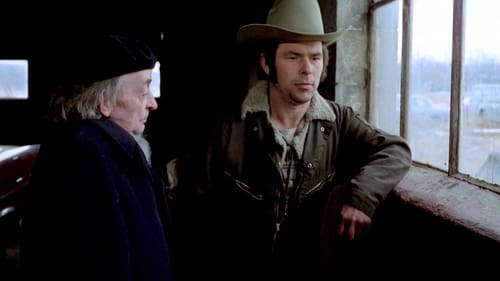
Bruno Stroszek is released from prison and warned to stop drinking. He has few skills and fewer expectations: with a glockenspiel and an accordion, he ekes out a living as a street musician. He befriends Eva, a prostitute down on her luck and they join his neighbor, Scheitz, an elderly eccentric, when he leaves Germany to live in Wisconsin.

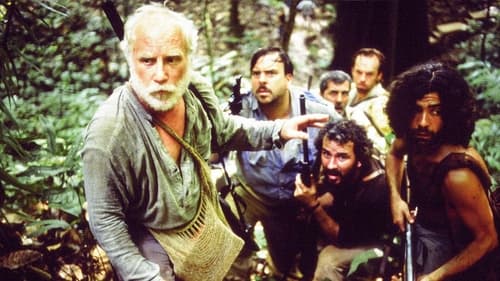
An inventor spurns his city life and moves his family into the jungles of Central America to make a utopia.

In 1970, Tahar, a young Tunisian, travels to France for the first time to help his older brother, who is wrongly accused of murder and incarcerated in Paris. He first stops in Marseille, where he meets Tunisians very different from those familiar to him; enigmatic French people; and a strange atmosphere that makes him doubt his brother’s innocence, his own innocence and his own mental integrity.

After his return from World War I, there is no more work for Fidelis in his parents' butcher shop in Swabia, Germany. To make a better life for himself and Eva, the former fiancée of a friend who fell in battle, he emigrates to Argus, a town in North Dakota, in the United States. The artist Delphine, in whom Eva will find a friend, also moves there. To relieve Eva's homesickness, Fidelis founds a singing club.
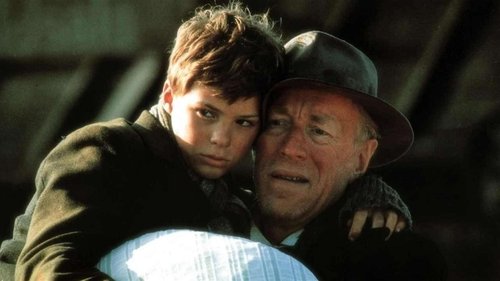
In the late 19th century, two Swedish emigrants, Lasse Karlsson and his son Pelle, arrive on the Danish island of Bornholm hoping to find work on a farm and save enough money to travel to the United States of America.

A young Polish-born, Berlin-based lawyer working on refugee cases is unexpectedly reunited with his father, who is his only tie left with his homeland.
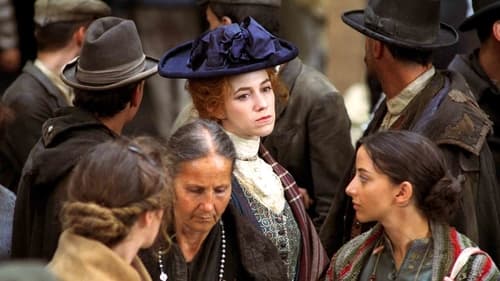
The story is set at the beginning of the 20th century in Sicily. Salvatore, a very poor farmer, and a widower, decides to emigrate to the US with all his family, including his old mother. Before they embark, they meet Lucy. She is supposed to be a British lady and wants to come back to the States. Lucy, or Luce as Salvatore calls her, for unknown reasons wants to marry someone before to arrive to Ellis Island in New York. Salvatore accepts the proposal. Once they arrive in Ellis Island they spend the quarantine period trying to pass the examinations to be admitted to the States. Tests are not so simple for poor farmers coming from Sicily. Their destiny is in the hands of the custom officers.

After growing up poor in Salmonella, Vincenzo Cortino installs himself as the preeminent, if bumbling, Mafia don of the New World. But now he must pass on power to one of his two sons: either level-headed veteran Anthony or vituperative loose cannon Joey.

A returnee from Australia causes uproar in his native village when he announces he's looking for bride.

Paul and Agnes have been going out for quite a while and Agnes is shocked to learn that he'd rather live with two roommates on campus than move in with her. As soon as he meets one of his roommates, Louis-Anault, Paul's behavior changes - he is attracted to Louis without realizing so himself. Agnes, on the other hand, gets quite jealous and offers a bet: Whoever gets to have Louis-Anault first, wins... If she does, Paul will no longer explore his homosexual desires, if he does - she'll walk away. Meanwhile, Paul meets Mecir, a young Arab worker, who shows him there's more to life than elite colleges...
A man is forced to confront a dangerous female jaguar and his own past through the sacrificial killing of the beast he has grown to love.

No description available for this movie.