
Action
Adventure
Animation
Comedy
Crime
Documentary
Drama
Family
Fantasy
History
Horror
Music
Mystery
Romance
Science Fiction
Thriller
War
Western
Found 12 movies, 2 TV shows, and 0 people
Can't find what you're looking for?

Since the time of the Qing Dynasty, villagers of Xiaotun have performed a folk opera in which all the actors wear masks. Known as the “Guansuo Opera”, its performances were suspended during the Cultural Revolution, and its script was burned. In 1980, through the approval of the local government, it started to perform again. “Mask” records the various antagonisms and attitudes amongst villagers, performers, village and county officials, local cultural researchers and filmmakers. More significantly, it reveals the cultural confrontation between “the observed” in the village and the filmmaking crew.

Do animals have feelings? Empathy even? A documentary with some insights due to advancing technology.

Explores the Pyramids of Giza as Egyptologists try to unravel the mysteries and decipher the clues behind these stone giants built over 4,500 years ago.

A team of archaeologists examines an ensemble of finely crafted gold and silver artifacts from a temple in Laos. The expedition takes the researchers from the vault where the treasure is now housed to ancient temples hidden deep in the jungle. The team makes spectacular discoveries at excavation sites scanned from the air...

Born in London in 1934, Jane Goodall spent decades in Tanzania’s Gombe Stream National Park, studying the social and family structures of chimpanzees and helping to bring their ecological vulnerability into the public consciousness. She also founded and remains integral to the Jane Goodall Institute, which encourages environmental activism and stewardship among young people. In this program, the famous scientist reflects on her many years spent observing and learning about our primate cousins.
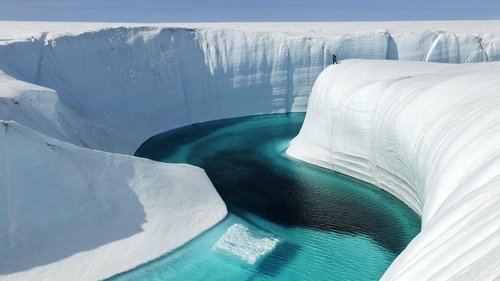
When National Geographic photographer James Balog asked, “How can one take a picture of climate change?” his attention was immediately drawn to ice. Soon he was asked to do a cover story on glaciers that became the most popular and well-read piece in the magazine during the last five years. But for Balog, that story marked the beginning of a much larger and longer-term project that would reach epic proportions.

Why did the Roman Empire, which dominated Europe and the Mediterranean for five centuries, inexorably weaken until it disappeared? Archaeologists, specialists in ancient pathologies and climate historians are now accumulating clues converging on the same factors: a powerful cooling and pandemics. A disease, whose symptoms described by the Greek physician Galen are reminiscent of those of smallpox, struck Rome in 167, soon devastating its army. At the same time, a sudden climatic disorder that was underway as far as Eurasia caused agricultural yields to plummet and led to the westward migration of the Huns. Plagued by economic and military difficulties, attacked from all sides by barbarian tribes, the Roman edifice gradually cracked.
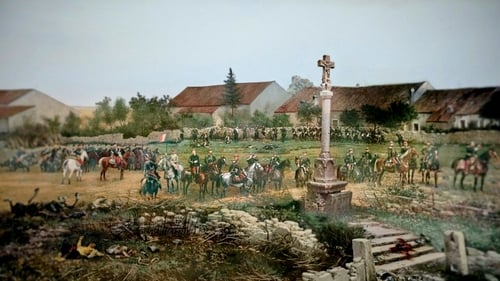
The end of the Franco-Prussian war (1870-71) saw the birth of the panoramas of war, huge circular paintings depicting scenes of war, cruelty and desolation that were contemplated by thousands of spectators, a kind of inmersive static newsreels, a mass media prior to the era of mass media, a virtual reality on canvas.
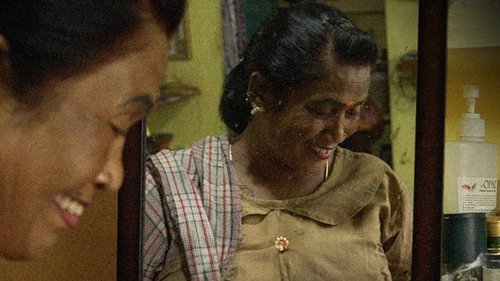
A humorous yet raw and authentic study of women’s reproductive labour across the marriage-market continuum, including, sex work, erotic dancing, surrogacy and egg donation, paid domestic work and unpaid domestic/care work across India, while also offering a comparison of the law’s highly differential regulation of these apparently disparate forms of female reproductive labour.

No description available for this movie.

Around four million years ago, ape-like creatures discovered the advantages of walking upright. The starting point of a fascinating journey that, with many dead ends and setbacks, leads to modern man, who populates the whole world as a successful model of evolution. The impressive computer animations bring viewers closer to prehistoric and early man than ever before. The film also accompanies the world-renowned paleoanthropologist Friedemann Schrenk from the Senckenberg Research Institute in Frankfurt to hotspots of human history between South Africa and Europe. The film shows documentary scenes from the hotspots of human history as well as spectacular computer animations.
No description available for this movie.