
Action
Adventure
Animation
Comedy
Crime
Documentary
Drama
Family
Fantasy
History
Horror
Music
Mystery
Romance
Science Fiction
Thriller
War
Western
Found 41 movies, 7 TV shows, and 3 people
Can't find what you're looking for?
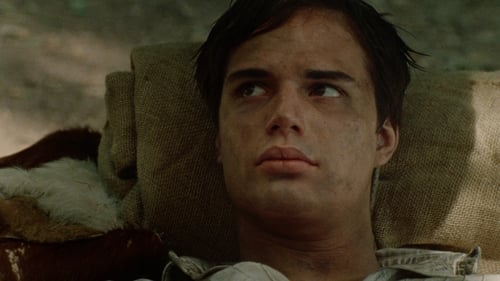
In 1849, the liberation war against the Habsburg Empire is close to its end in Hungary. Having hidden from military draft, Barnabás leaves his hometown and walks across the country to find and save his wounded brother who has been hiding with a guerilla group deep in the forest. Despite their exhaustion, lack of food or information, they are still fighting for their cause. Barnabás finds his brother alienated and distrustful. The tension between the boys further increases when they turn out to be attracted to the same nurse in the camp. Hoping he can earn his brother's trust and take him home, Barnabás decides to stay and lie about his past. In the meantime, he has to face the cruelty of war.

A young boy takes a nap.

In an ominous atmosphere, a bus halts. Black-dressed characters bring an inflatable gorilla to life. While they have the roaring ape stomp across an industrial looking part of town, plants and animals dart out.
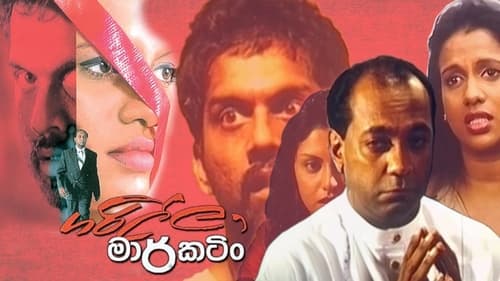
Thisara, the owner of an advertising firm, gets a contract to make a propaganda campaign for the opposition leader Gregory Mahadikaram at the next presidential elections.
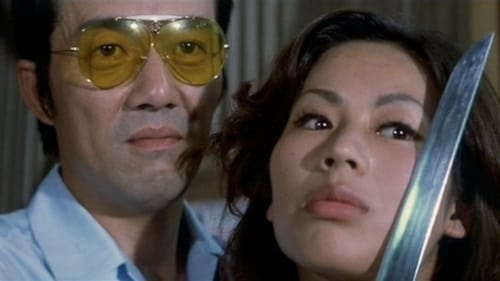
Sachiko is the leader of a girl gang from Shinjuku who wind up in Kyoto and make a bid to take over the local girl gangs there.
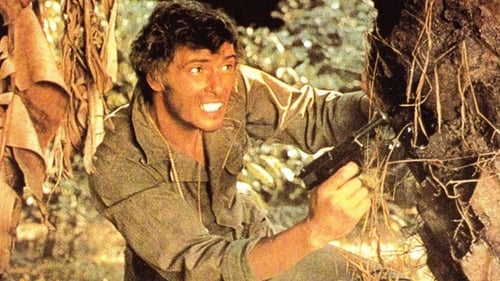
Under the mundane guise of a public relations firm, Singrid Karaman is actually running an intelligence network. Her new mission is to foil an upcoming coup attempt in the African country of Myassaland, and to recover the large stock of diamonds that have fallen into the hands of the mercenaries behind the plot. She instructs a former Nazi, Eric, to form a shock commando and her assistant, Carol, to contact the mercenary leaders, Commandant St Robert and Captain Tarquier. Although Tarquier is very suspicious, St Robert agrees to go aboard Ingrid's yacht.

These are stories from the urban environment, the main characters are people of different generations and come from different walks of life.

Under the auspices of Rio Chiquito, Bruno Muel and Jean-Pierre Sergent’s 1965 report on the birth of the FARC, and Dunav Kuzmanich’s 1981 fiction film Canaguaro about the end of the Liberal guerillas, this is look back on 70 years of clandestine life in the Columbian forest. Women and men who took up arms amid profound social inequality and political violence recount their years as fighters and their return to civilian life, without disowning their past. From 2012, when the peace negotiations began, to 2022 — the story of a new struggle.

Zanyar Adami looks down at Bagdad from an airplane heading to Sweden. His mother is still down there at the airport. His father isn’t even there to wave goodbye. At the time, Zanyar is only five years old. 23 years later Zanyar, soon to be a father, sits in his kitchen in a suburb of Stockholm. His father, Taher, sits in front of him. Any day now, Zanyar will become a father himself and he knows that he can’t wait anymore. He has to confront his father with the question he has been afraid to ask all his life: How could Taher leave him in the midst of a war and then send him to Sweden all by himself?
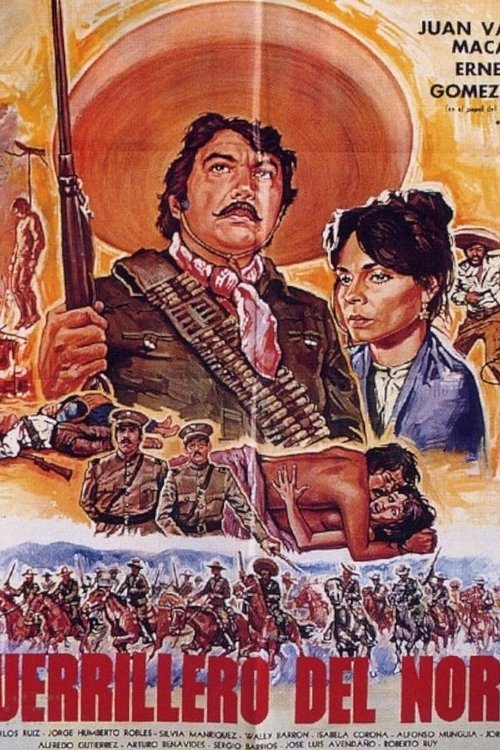
The Mexican Revolution in the state of Sonora.
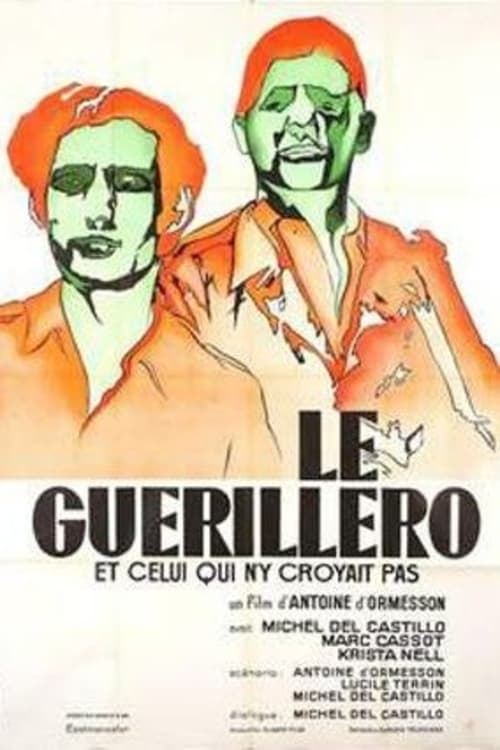
The friendship, somewhere in South America, between a revolutionary and the mercenary who holds him prisoner.
A second lieutenant Kim In-Ho, who has been brought to Manila city as a student soldier under the Japanese occupation during the World War Two, becomes friendly with not only the Japanese Army's major general Oh Cheol but also his daughter named Eun-Hee. Iwabuchi, or the chief of the Japanese Army's Military Police, gives him instruction to make the arrested Filipino guerilla flee falsely, by which the guerilla's agitating post is discovered. A guerilla named Jose and his younger sister Maria express gratitude to Kim to become friendly each other. According to Iwabuchi's order, Kim has hidden the gold ingot of the Central Bank of the Philippines, but almost dies by Kwabuchi's plot. He barely escapes and goes to the Filipino guerilla Jose. On the way looking for Kim, Iwabuchi is attacked by the Filipino guerrillas and flees. Upon the US Army's arrival at the Philippines, Kim is forced to sent to Korea. And Maria.........

An American gambler masquerades as a Catholic priest during the fall of Manila early in World War II in the Pacific to obtain clearance to fly out on an official military transport. Five American showgirls wrangle a pass with the aid of a helpful U.S. Army colonel to leave on the same plane. Ironically, the transport crashes at sea. The gambler and the girls wind up on a Japanese held island. Initially, they stay out of sight from the enemy, but inevitably things change.

Danger and Kaspar are graffiti artists who have each been ejected from their respective crews. They decide to work on a project in honor of one of their deceased brethren.
When we speak, lead, teach, and preach sometimes very destructive can happen over time, small at first, and then it grows... Filmed live at the Poets, Prophets, and Preachers seminar in July 09' in Grand Rapids, The Poets, Prophets, and Preachers is a five part film series devoted to reclaiming the ancient, beautiful, provocative, healing, inspired art form known as the sermon. Over the five talks Rob explores the theological, conceptual, practical and personal dimensions involved in giving a talk, sermon, message, or teaching.
The third and final edition of a series of three DVDs documenting the New York City area hardcore punk scene from 2001-2003. Featured bands are Billy Club Sandwich, Subzero, Irate, Ensign, Murphy's Law, and special sections on Atomic Recording Studios in Brooklyn, New York Hardcore Tattoos in Manhattan, Afro-Punk documentary, and Hardcore artists Chris Beee and Kentax
No description available for this movie.

After a numerous amount of aggressions, four young women, living in a Catholic Orphanage Refuge, will create their own guerilla against a men’s gang operating with total impunity in the neighborhood.
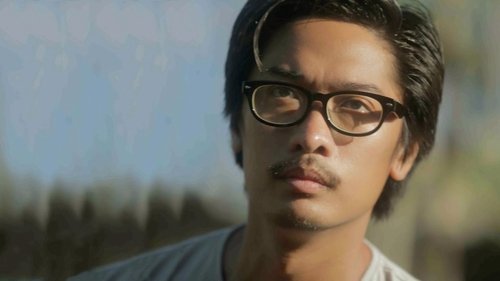
The tale of an activist’s journey during the turbulent years of Martial Law, until his capture in the mountains and the dark, nine years of imprisonment that followed, leading to his birth as a poet.
For over half a century, civil war paralyzed Colombia and kept much of its wild lands frozen in time. In December 2016, that changed. The war that resulted in the deaths of 220,000 and displaced 6 million people came to an end. And the land wars began. With the FARC officially gone, the forests of Colombia are open for business.
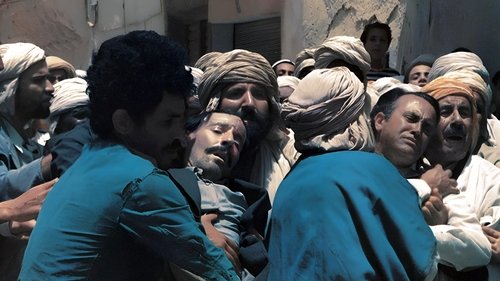
A meticulous chronicle of the evolution of the Algerian national movement from 1939 until the outbreak of the revolution on November 1, 1954, the film unequivocally demonstrates that the "Algerian War" is not an accident of history, but a slow process of suffering and warlike revolts, uninterrupted, from the start of colonization in 1830, until this "Red All Saints' Day" of November 1, 1954. At its center, Ahmed gradually awakens to political awareness against colonization, under the gaze of his son, a symbol of the new Algeria, and that of Miloud, half-mad haranguer, half-prophet, incarnation of Popular memory of the revolt, the liberation of Algeria and its people.
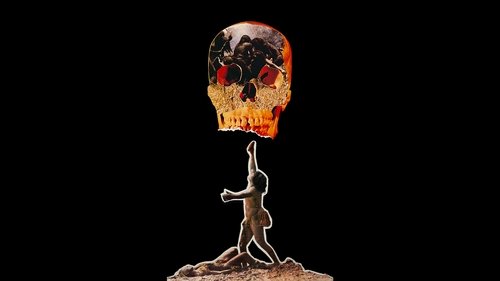
A New York University professor returns from a rescue mission to the Amazon rainforest with the footage shot by a lost team of documentarians who were making a film about the area's local cannibal tribes.
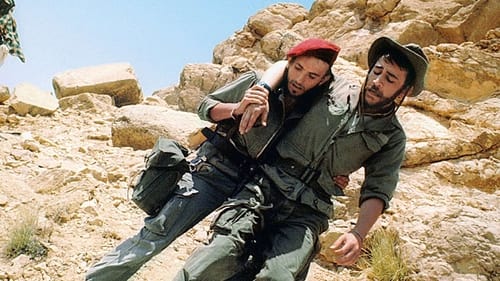
A group of refractory and pacifist Bretons is sent to Algeria. These beings confronted with the horrors of war gradually become killing machines. One of them did not accept it and deserted, taking with him an FLN prisoner who was to be executed the next day.
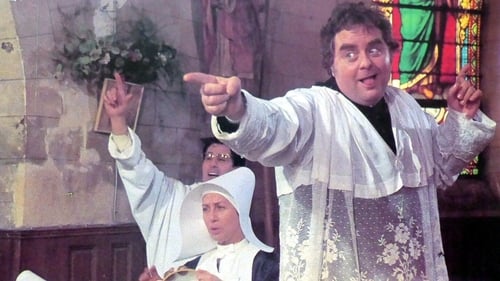
Maximin, priest in a little village in the South-West of France, inherits from his brother a brothel in Thailand, although he's always been told it was a very strict catholic school. The journey to Asia is full of surprises (a plane hi-jack, pirates...) and once in Thailand, Maximin is taken into 'political' turmoils.
A young foot soldier in the yakuza seeks revenge when his prostitute girlfriend dies after a session with a high-ranking Japanese politician with a taste for torture. He sets out on a 'kamikaze' mission to kill his bosses and the politician; along the way, he acquires the aid of a taxi driver who has recently returned to Japan after living in South America for several decades and is struggling to cope with poverty and the prejudices of native-born Japanese.
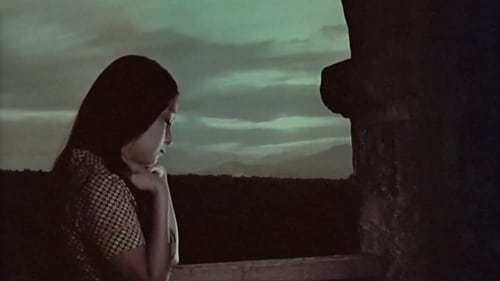
Set during World War II, a schoolteacher, Rosario, enters a forbidden relationship with a Japanese soldier, Masugi.

Misfortune and tribulations with domestic violence lead to an expectable romance. The fairy godfather must save poor Cinderfella from misery and servitude. How will the princess strike back, exactly? This modernized fairy-tale short film by Keeley Knight and Dave Lojek reverses gender roles.

The film traces the story of a patrol of the Algerian National Liberation Army (ALN), whose mission is to transport a prisoner French soldier to the Tunisian border. Through the march of this group of guerrillas we witness the spirit of sacrifice and combativeness of these men from the people. The patrol will be decimated, but a young peasant will take over and complete the mission.

Is there an audience for Latin American movies? These are some of the questions posed by an Ecuadorian filmmaker whose latest movie was a commercial flop. He embarks on a query to find answers to his questions and relief for his despair. His research leads him to a giant contraband market in the port city of Guayaquil, where pirated movies from all over the world are sold for one dollar each. Here, he discovers a number of Ecuadorian low budget movies produced by amateurs, with titles he had never heard of before: from action packed productions to evangelical melodramas.
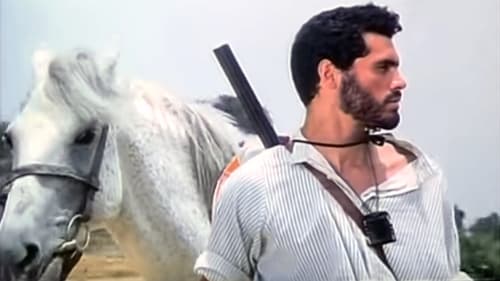
In 1955, what was known as the "Algerian War" gradually escalated into all-out war, and the French army inexorably transformed into a soldiery accustomed to colonial humiliation and massacres. Amar is a young deaf and mute man who wants to join the resistance, but he is rejected because of his disability, despite all the training he received from his father, who was an expert in hunting and horses. The raid on his village, which he watches helplessly, drives him to seek revenge, he who had until then been locked away in "The Gates of Silence."

Kuyashii Gonzo: Blood Visions and Chaos Magic is a Gonzo documentary about trying to make a no-budget feature film against the onset of the COVID-19 pandemic, unemployment, and death. To never give up, no matter how hard things get.
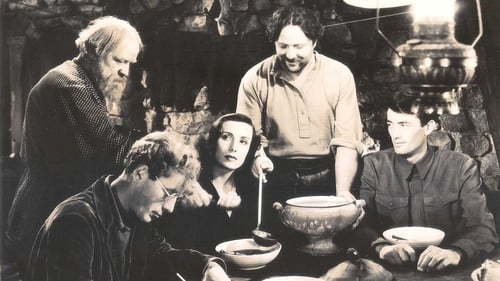
A heroic guerilla group fights back against impossible odds during the 1941 Nazi invasion of Russia.

In this film, four key witnesses, who live in Algeria today, as full-fledged Agerians, show us what this colonization was really like, so "beneficial" that they themselves perceived it as the oppression of one people by another. Three of them, who today would be called "pieds noirs," in other words, those Europeans to whom France, the occupying power, gave the best land, taken from the indigenous populations, work, and exclusive rights, not shared by the entire population, lived rather well compared to the majority of the "natives." The fourth was far from all that and lived in Argentina. Annie Steiner, Felix Colozzi, Pierre Chaulet, and Roberto Muniz explain to us what led them to show solidarity with the struggle of the weak, the humiliated, and to risk their freedom and their lives by committing to liberate Algeria.

On a faraway mountaintop, eight kids with guns watch over a hostage and a conscripted milk cow.
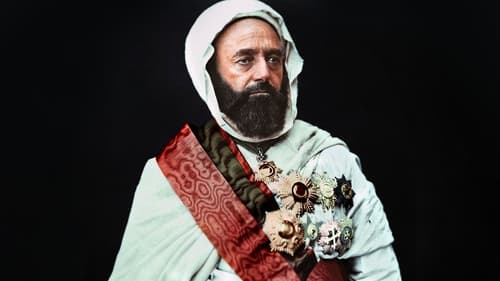
Abdelkader ibn Muhieddine (Arabic: عبد القادر بن محي الدين (ʿAbd al-Qādir ibn Muḥyiddīn), also known as Emir Abdelkader, or Abdelkader El Djezairi (Abdelkader the Algerian), born September 6, 1808 in El Guettana, in the regency of Algiers, and died on May 26, 1883 in Damascus, then in the Ottoman Empire and in present-day Syria, is an Algerian emir, religious and military leader. Barely 20 years old, he federates the tribes and led a struggle against the conquest of Algeria by France in the middle of the 19th century.After his surrender, he was held captive in France before going into exile in Syria where he devoted himself to poetry and established great relations friendship with Paris, which showered him with honors after having intervened in favor of the persecuted Christians in Syria, he intervened by force to protect the Christian families who came to take refuge in large numbers in the Algerian district. of certain death.
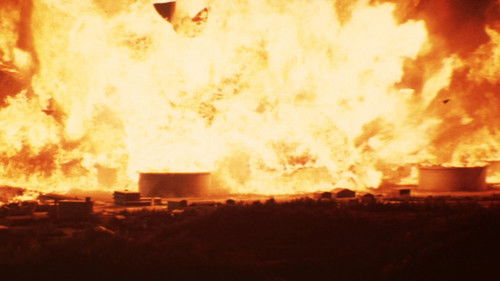
Global South guerrillas hijack the Japanese oil tanker Arabian Light, threatening to blow it up in Tokyo Bay, unless the Cabinet complies with an economically devastating ultimatum.

Many of them participated in the struggle for Algerian independence. There are "those who believed in heaven", priests, Christians committed against torture, friends of the "natives", there are "those who did not believe in it", communist activists, students, progressive intellectuals, others remained in this country because they could not imagine living anywhere other than in this land of all passions. They are European and chose to stay in Algeria after independence, most of them opted for Algerian nationality. The film is another vision of the history of Algeria from the end of the fifties to the present day, told by these Europeans filmed at home, or in the context of their activities, illustrated by unpublished archive documents.
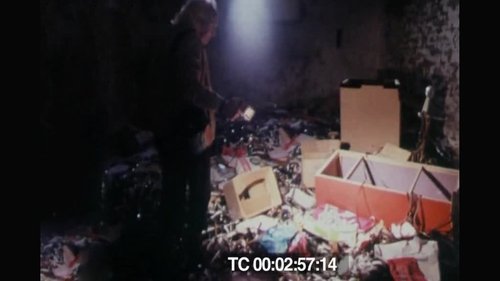
Resistance fighter under the occupation, committed to the FLN during the Algerian war, member of the Medvedkine group after May 1968 and defender of Breton autonomy, René Vautier was a committed filmmaker, author of an anti-colonialist work in which he denounces the repression, torture and racism. In 1983, René Vautier discovered, by the light of a flashlight, his films cut up and scattered at Fort du Conquet. Police also came to check the damage.

During the anti-Japanese war, truck driver Lee Sing's secret mission is to transport weapons and supplies for the resistance fighters. Sing has to deliver a signal gun to guerrillas at ten on that night for launching an attack against the Japanese soldiers. He works for the Ko's family and he has to send the gun to the provincial city to prevent it from being bombed. Sing carries on his vehicle a group of passengers including a Chinese traitor, a guerilla, a compassionate nurse, a comfort woman on the run, a teacher and his pregnant wife. Sing is given a hard time by the Japanese troops on the road. The Japanese ransack the vehicle and they find the signal gun. All the males on board are being interrogated with torture, but the passengers pool their efforts to subdue the traitor and accomplish their mission.
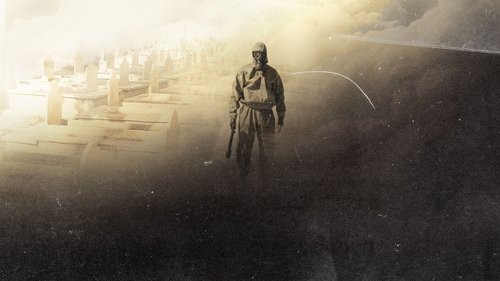
This documentary by director Claire Billet and historian Christophe Lafaye details the massive and systematic use of chemical weapons during the Algerian War. Algerian fighters and civilians, sheltering in caves, were gassed by "special weapons sections" of the French army. The gas identified on military documents is CN2D, whose widespread use forced insurgents to flee "treated" sites, at the risk of dying there. The method is reminiscent of the "enfumades" used by the French expeditionary force during the conquest of Algeria in the 19th century. Between 8,000 and 10,000 such operations are believed to have taken place on Algerian soil between 1956 and 1962. This historical aspect is little known due to the difficulty of accessing archives, many of which are still classified, raising questions about memory, historical truth, and justice.
Boom! Pro Wrestling Presents Horizon