
Action
Adventure
Animation
Comedy
Crime
Documentary
Drama
Family
Fantasy
History
Horror
Music
Mystery
Romance
Science Fiction
Thriller
War
Western
Found 10 movies, 0 TV shows, and 0 people
Can't find what you're looking for?

This documentary, produced in 1946 on the occasion of the half-century of Portuguese presence in Guinea-Bissau, reveals interesting contradictions. The activities and customs of the Guineans are filmed with a lot of attention and sometimes of proximity. Their resistance to colonization is even evoked, cleverly recovered by the comment which claims that they are all Portuguese. But the colonists are very few present: some dressed in a sparkling white costume and two very poor. The Africans, proud, talented, imposing, occupy the whole film.
Seara carefully documents the agricultural work of the Guineans – a heading indicates the names of the peoples. Harvesting of peanuts, coconuts, rice, cotton, followed by weaving and sewing, cutting of sugar cane and extraction; handicraft jewelry work and Muslim prayer. No white colonial settlers are shown in the frame…
The public rushes around the Minister to visit, as at the zoo, a Guinean village reconstituted in a park of Lisbon: daily activities, Muslim prayer, women with bare breasts. The camera pins faces, attitudes, busts. Then accompanies a dance to the sound of marimbas and drums. To conclude this exotic visit, kings of the tribe are decorated by a general, under the bust of the Republic.
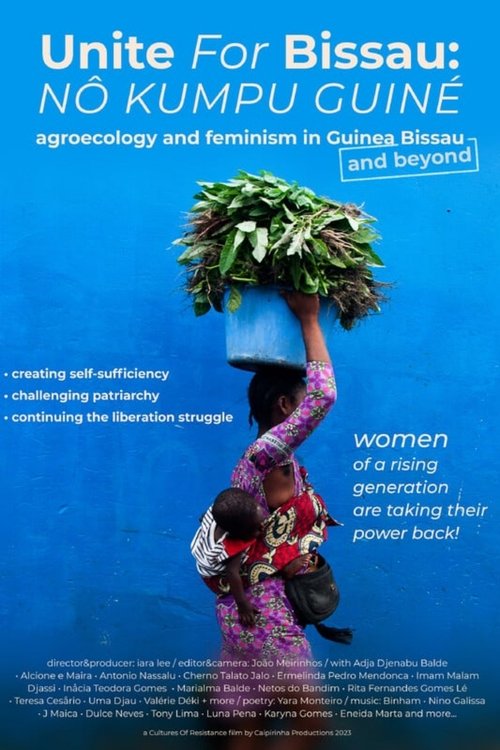
In the West African nation of Guinea-Bissau, we follow brave local women who challenge patriarchy by building institutions that promote self- sufficiency through agroecology. They also defy social norms by standing up against female genital mutilation and rejecting forced marriage. Carrying forward the legacy of Amílcar Cabral, the Bissau-Guinean independence leader who placed women’s rights at the center of the struggle for liberation, the women of a rising generation are taking their power back.
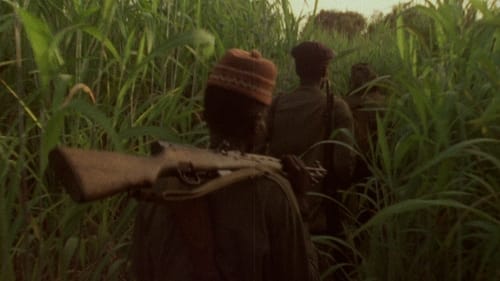
Based on powerful archival material documenting the most daring moments in the struggle for liberation in the Third World, this documentary is accompanied by classic text from The Wretched of the Earth by Frantz Fanon.

We went to research the conditions of the students in the guerrilla schools in the mangroves. Instead, we soon became ourselves the learners and the first lesson was how to walk. In the mangrove school the learning happens with the whole body.
The life of Malan Mané, once the star singer of the legendary band Super Mama Djombo from Guinea-Bissau, is turned upside down from one day to the next: After 30 years in exile in France, he is now allowed to sing in a sold-out stadium in Bissau, see his country again and return to the studio to finally complete the album he started decades ago.
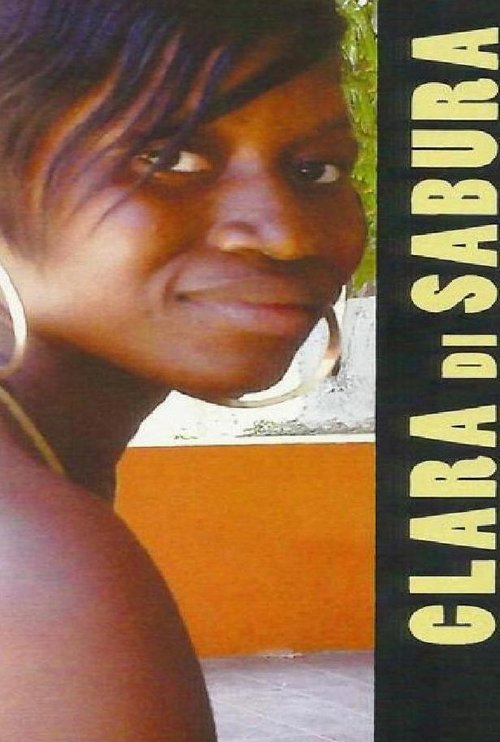
Clara is a lazy and irresponsible teenager, who live in Bissau (the capital city of Guinea-Bissau), and uses her beauty as a weapon. Everyone around her admonishes her, despising her and naming her as Clara di Sabura (Clara of Parties, of the Good Life).

"Diário de Bissau" was filmed in 2017 and reports the daily life of the capital city of Guinea-Bissau. By reading the newspaper Diário de Bissau, which the film is named after, we take notice of the local news. This reading is intercut with the testimony of Martinho Barbosa, a Guinean who witnessed Guinea's recent history and presents his view of the key issues facing the country.
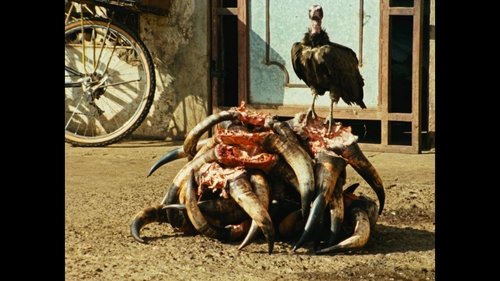
Poet, agricultural engineer and revolutionary Amílcar Cabral was born in Guinea-Bissau to Cape Verdean parents. After studying in Portugal, he emerged as the charismatic leader of the anti-colonial struggle against Portuguese rule. With his utopian ideas, he sparked a cultural and an armed uprising that went on to inspire other African liberation movements.