
Action
Adventure
Animation
Comedy
Crime
Documentary
Drama
Family
Fantasy
History
Horror
Music
Mystery
Romance
Science Fiction
Thriller
War
Western
Found 35 movies, 7 TV shows, and 0 people
Can't find what you're looking for?

Gulf War TV War was made in one of Auder's usual domestic modes: filming his TV, in which he documents American television news during the run-up to the first Gulf War, a mixture of crass propaganda and feeble journalism, image and text. Montages of antiwar demonstrators marching across Manhattan and gray-faced politicians at dark desks extolling invasion compete with commercials and text scrolling the pixilated screen.
TV doc about military training in the first Gulf War.
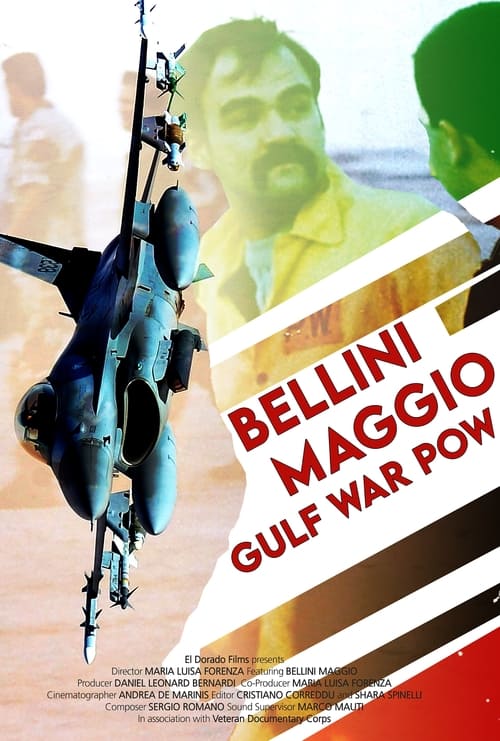
On the eve of Operation Desert Storm in the first Gulf War, the Italian government deployed eight Tornado Fighter-bombers. Gianmarco Bellini was one of these pilots. He was shot down, captured, and abused, but returned and was able to rise to the rank of General.
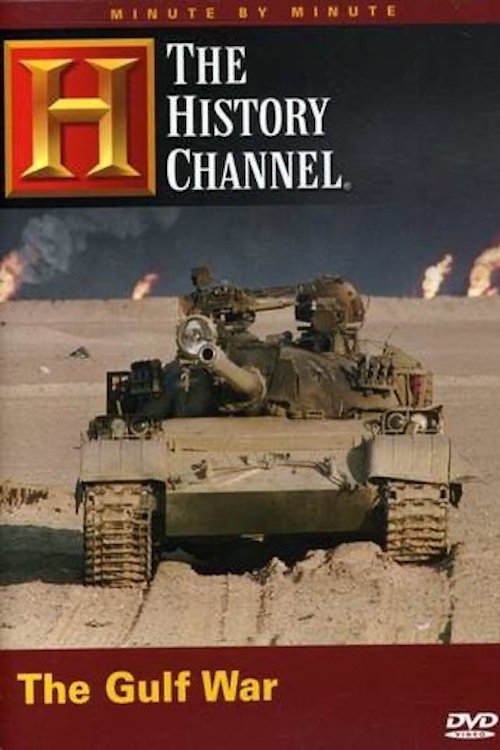
They came in the dead of night. Iraqi troops and tanks - hundreds of them - pouring over the desert border. Americans awoke to the news on August 2nd, 1990: Iraq had invaded Kuwait. The White House responded quickly. By January 17th, 1991, eight F-15 fighter jets swept through the Baghdad sky, raining missiles upon the city below. Operation Desert Storm had begun. Within three days, the allied coalition controlled the Iraqi sky. Six days after the invasion of Kuwait, President Bush announced the deployment of 100 thousand troops to the Persian Gulf.
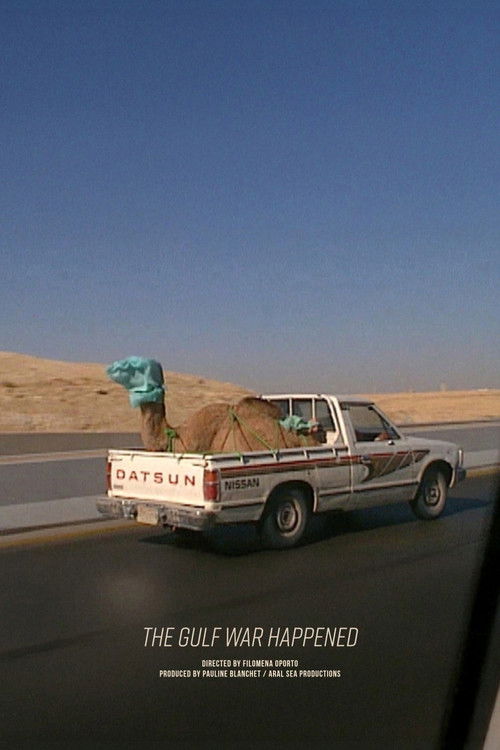
Revisiting Jean Baudrillard’s provocative claim that “The Gulf War did not take place,” the film reactivates archival material 30 years later, uncovering a chaotic and human reality behind the media spectacle.
In 1991, John Heroux served in Operation Desert Storm, piloting one of forty F16 Fighter Planes sent in to target large manufacturing facilities deep inside Iraq. Looking back on these missions, John explains that pilots, himself included, felt no pride at causing destruction, but did have pride in serving their country and completing their tasks. This is his story.
Many veterans of both Gulf Wars have returned from service in Iraq with a variety of symptoms that have become collectively known as Gulf War Syndrome.
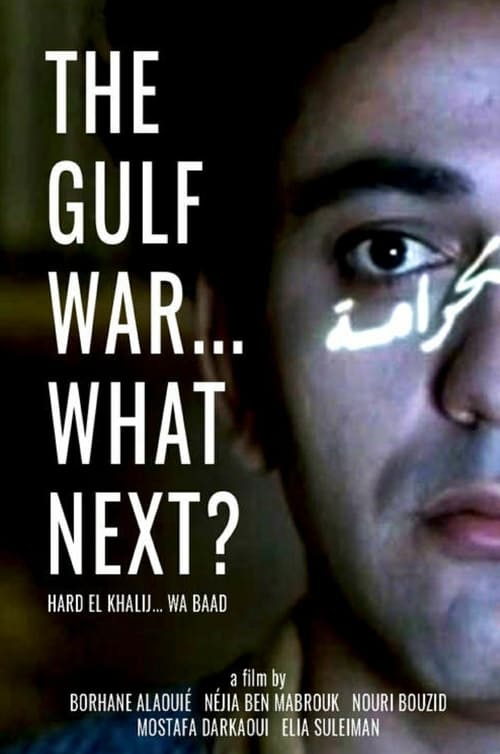
The second Gulf War from 1990 to 1991 represents in the collective Arab memory a turning point in regards to the Arab nationalism’s self-perception as well as a moment of deep historical and existential insecurity. Five Arab directors discuss the events from their personal perspective.

On August 2, 1990 Iraq invaded Kuwait prompting a coalition of forces led by the United States to build up in the Gulf region in preparation for conflict with the largest and most battle-hardened Arab army. This programme, produced before the outbreak of the Gulf War in 1991, is the next best thing to a classified Pentagon briefing on the military power of both sides of the then-ensuing conflict. Based on previously classified intelligence reports, it examines what was known of the massive arsenals of the Iraqi armed forces and the multi-national forces based in Saudi Arabia. Major weapons systems on both sides are examined, including previously unseen views of little known Iraqi weapons. America's top experts on Iraq predict the outcome of the battle with uncanny accuracy.
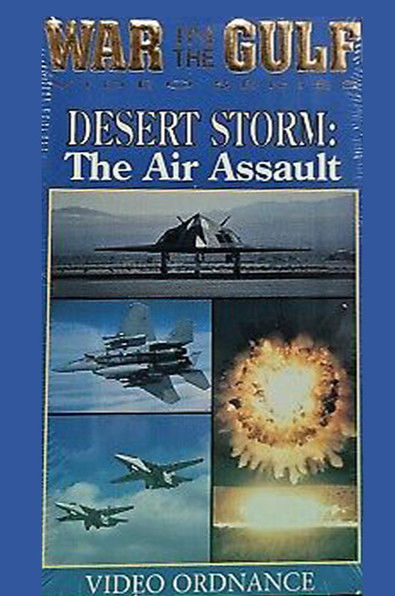
On January 16, 1991 the combined forces of the multi-national coalition in the Persian Gulf launched a massive air attack against the Iraqi Armed Forces in Iraq and occupied Kuwait. This program looks at the conduct of that air attack.

In the early morning hours of February 24, 1991, the coalition forces launch a ground attack against Iraqi forces in Kuwait and Iraq. In a rapid 3-day drive, the Desert Storm forces routed the Iraqi Armed Forces. Listen to U.S tankers explain the M1 Abrams firepower of the MLRS rocker launchers. Ride along with a French tank unit preparing for the battle. Watch actual footage of the Qatari tank attack which crushes the Iraqi offensive at Khadfji. This documentary portrays the operation in unprecedented detail.
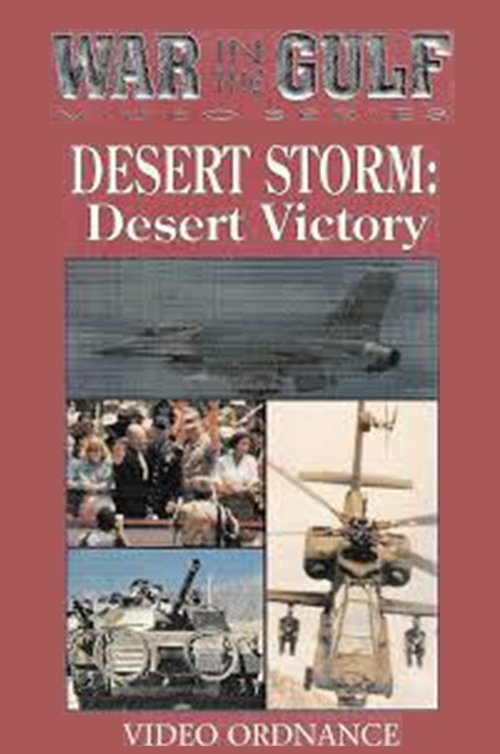
The Gulf War of 1991 ended in an overwhelming victory for the allied coalition forces. Concluding the quartet of War in the Gulf documentaries, "Desert Victory" goes beyond simply recounting the events of the war by analyzing the vital military lessons of Operation Desert Storm. Using actual combat footage of the preparations for the war and the final campaigns, this program provides a unique perspective on the strategies and tactics employed in Operation Desert Storm.
The story of the air war in the first Gulf War as described by generals Horner, Profitt, Tenoso, and Glosson.
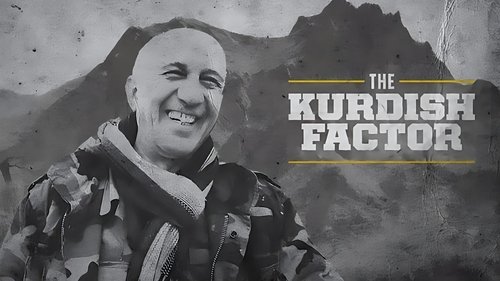
Democratic, pro-Western Iraqi Kurds are forward thinking, sensitive to women's rights, effective in the fight against ISIS and an important role in the 2 Gulf Wars. They stand on the threshold of an independent state and are a vital component in the establishment of long-term peace in the region.

An examination of the aftermath of Desert Storm and how servicemen and women were affected by it medically.
Journalist Maggie O’Kane returns to Iraq five years after Desert Storm to try to understand why she was not able to report the war freely and to investigate some of the stories which did not stand up.

A thief tries to go straight, but when predatory banks trap his father in debt, he returns to crime — with a determined cop closing in on his trail.
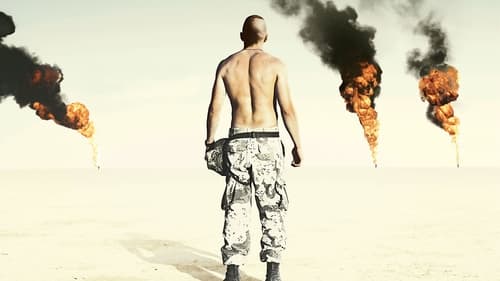
Jarhead is a film about a US Marine Anthony Swofford’s experience in the Gulf War. After putting up with an arduous boot camp, Swofford and his unit are sent to the Persian Gulf where they are eager to fight, but are forced to stay back from the action. Swofford struggles with the possibility of his girlfriend cheating on him, and as his mental state deteriorates, his desire to kill increases.

In response to political pressure from Senator Lillian DeHaven, the U.S. Navy begins a program that would allow for the eventual integration of women into its combat services. The program begins with a single trial candidate, Lieutenant Jordan O'Neil, who is chosen specifically for her femininity. O'Neil enters the grueling Navy SEAL training program under the command of Master Chief John James Urgayle, who unfairly pushes O'Neil until her determination wins his respect.
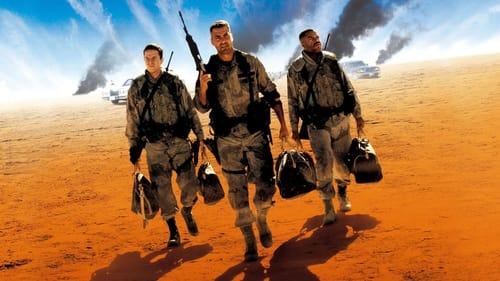
A group of American soldiers stationed in Iraq at the end of the Gulf War find a map they believe will take them to a huge cache of stolen Kuwaiti gold hidden near their base, and they embark on a secret mission that's destined to change everything.

Years after his squad was ambushed during the Gulf War, Major Ben Marco finds himself having terrible nightmares. He begins to doubt that his fellow squad-mate Sergeant Raymond Shaw, now a vice-presidential candidate, is the hero he remembers him being. As Marco's doubts deepen, Shaw's political power grows, and, when Marco finds a mysterious implant embedded in his back, the memory of what really happened begins to return.
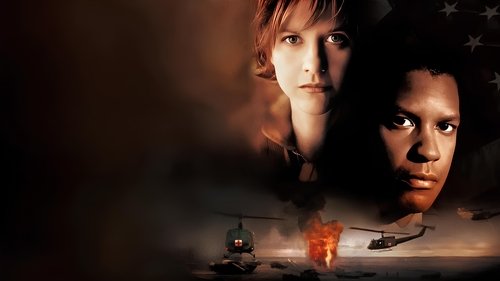
A US Army officer, who made a "friendly fire" mistake that was covered up, has been reassigned to a desk job. He is tasked to investigate a female chopper commander's worthiness to be awarded the Medal of Honor. At first all seems in order. But then he begins to notice inconsistencies between the testimonies of the witnesses...
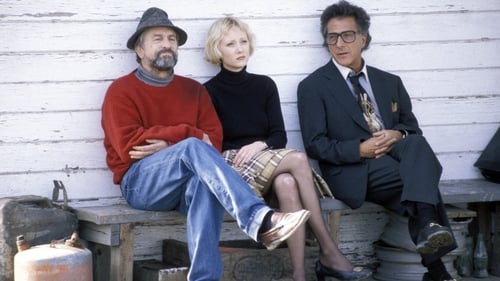
During the final weeks of a presidential race, the President is accused of sexual misconduct. To distract the public until the election, the President's adviser hires a Hollywood producer to help him stage a fake war.

A young Arab-American girl struggles with her sexual obsession, a bigoted Army reservist, and her strict father during the Gulf War.
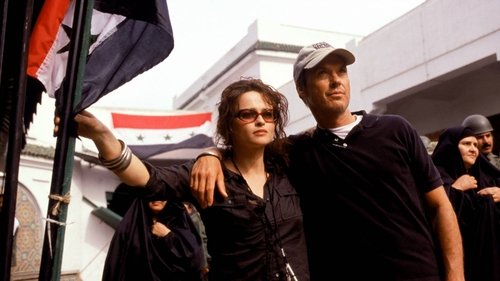
A group of CNN reporters venture to the Iraqi capital to cover the Gulf War.
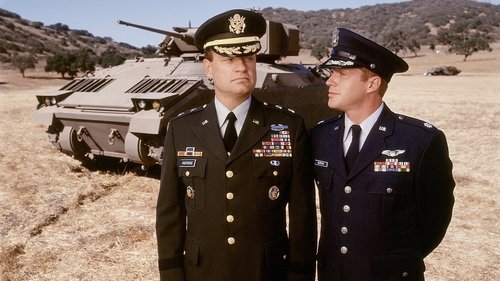
From the director of “Made In America” and “The Money Pit” comes a hilarious look at one of the most expensive blunders in military history. Over 17 years and almost as many billion dollars have gone into devising the BFV (Bradley Fighting Vehicle). There's only one problem. . . it doesn't work. (Spoiler alert: 25 years later ... it does work.)

A gang of thieves plot to rob a US military base in Okinawa, but rising tensions in the group threaten to put the plan in jeopardy.

Shortly after the Gulf War, oil fires were raging all through Kuwait. In the week before this sea of fire would be extinguished, Werner Herzog filmed this apocalyptic landscape with its murky skies, scorched earth and capricious flames.

Macho Lawrence 'Larry' Hammer and frailer Dean Mazzoli initially rival as U.S. Navy SEAL trainees, but become buddies in instructor chief petty officer Bosco's merciless training class. The friends date two girls, but both love Barbara, who chooses to marry Larry, as ideal father for her pre-teen son. After graduation from Basic UDT/SEAL training, they choose opposite oceans for further training. However Sadam Husein's invasion of Kuwait gets both mobilized in the same unit, with Bosco, who gets captured and tortured. Dean learns Barbara has left adulterer Larry. They mount a rescue together, taking risks even on their own side.
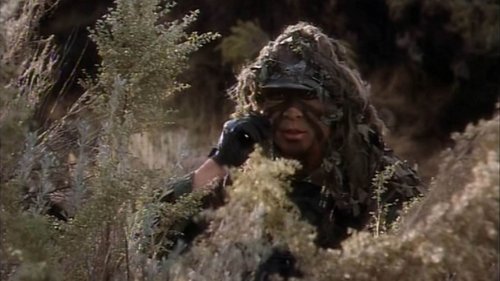
The Tactical Neutralization Team, or T.N.T., is a squad of elite soldiers sent on top-secret, near-suicidal missions around the world. After one of their missions ends in failure, team member Alex decides he's had enough of the special-op life and calls it quits. His commanding officer, however, doesn't want the security risk of a former member walking around, so he assigns another member of the team to hunt down Alex and retire him permanently.

20 years after going MIA in Desert Storm, Aaron returns home under mysterious conditions, not having aged since his disappearance, and must reestablish relationships with loved ones before an imminent return to an ambiguous other-worldly existence.
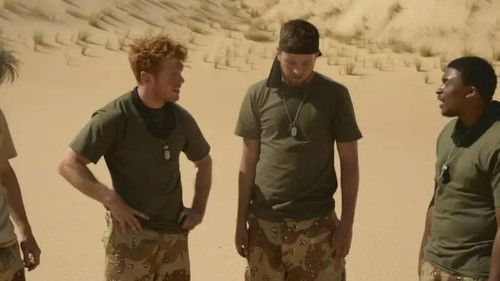
Two best friends are pitted against each other when a new girl comes to town, matters are further complicated when they enlist together in the U S Army to fight in the Persian Gulf War, the men and their unit captured by Iraqi forces and must work together with other prisoners of war to escape...

A Gulf War veteran returns to find his wife and daughter dead due to AIDS and his father murdered, and he hunts down those responsible.
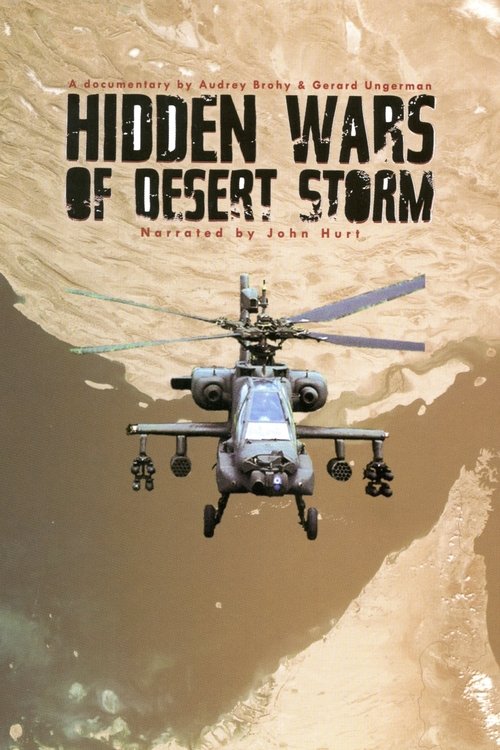
"Hidden Wars of Desert Storm" looks at the origins of the Gulf War crisis and challenges the official Western "party-line" view of a spontaneous crusade for "Freedom & Democracy". Instead, the documentary exposes the White House and US State Department's hidden agenda in the Gulf as well as the Pentagon's use of radioactive ammunitions made of uranium 238.

When BA Flight 149 unwittingly landed in a warzone, its passengers and crew were taken hostage. Did the UK government allow it? And who were the mercenaries on board?