
Action
Adventure
Animation
Comedy
Crime
Documentary
Drama
Family
Fantasy
History
Horror
Music
Mystery
Romance
Science Fiction
Thriller
War
Western
Found 29 movies, 3 TV shows, and 3 people
Can't find what you're looking for?
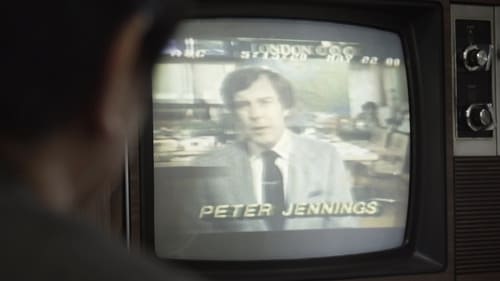
There are people whose lives have been shaken by the 'Gwangju Video'. On May of 1980, the course of their lives changed in front of a huge wave of truth in Gwangju. The people who made and spread the 'Gwangju Video' are also the people who had their bodies on the waves. The hidden stories of these people, the 40th anniversary of the Gwangju Uprising, and the pursuit to trace the missing 4 hours of mass shooting will be revealed for the first time.

A short film.

No description available for this movie.
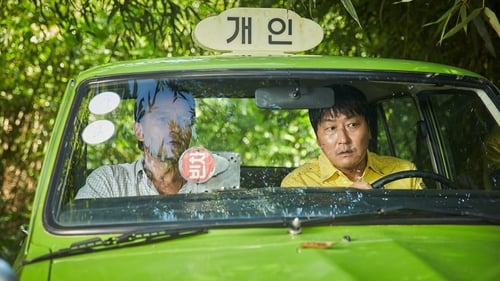
May, 1980. Man-seob is a taxi driver in Seoul who lives from hand to mouth, raising his young daughter alone. One day, he hears that there is a foreigner who will pay big money for a drive down to Gwangju city. Not knowing that he’s a German journalist with a hidden agenda, Man-seob takes the job.

This short documentary was created by painter Taeko Tomiyama—who consistently resisted various forms of injustice around the world through her art—and film director and producer Katsuhiro Maeda, who was inspired by her. The film centers on the Gwangju Uprising that occurred in South Korea in May 1980. The Gwangju Uprising saw the Chun Doo-hwan regime declare martial law and violently suppress student and citizen protests, resulting in many casualties. Tomiyama responded immediately to the tragedy by organizing a traveling exhibition featuring her print series Prayer for the Fallen. Moved by Tomiyama’s intense anger toward the dictatorship and her deep mourning for the victims, Maeda created this film in 1981. Combining news footage that documents the reality of the events with Tomiyama’s print works—unfolding like shadow play—the film powerfully conveys the nature of state violence and human sacrifice. The music was composed by pianist and composer Yuji Takahashi.

In the spring of 1999, a group of old friends gather to celebrate their 20 year reunion. Among the group is Yeong-ho, a cold, unhappy man, whose demeanor puts a damper on the festivities. The seriousness of Yeong-ho's depression becomes apparent when he climbs a railroad bridge and looks like he might jump. At this crucial moment, memories of seven crucial episodes from Yeong-ho's past flood his mind.
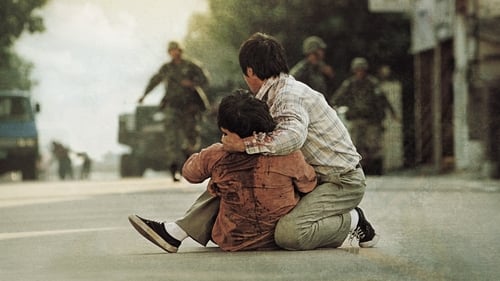
The citizens of Gwangju lead a relatively peaceful life, until one day the military takes over the city, accusing the residents of conspiracy and claiming that they are communist sympathisers preparing a revolution against the current government. Seeing as the soldiers beat defenceless people, mainly students, to death, the citizens are in for retaliation and form a militia.
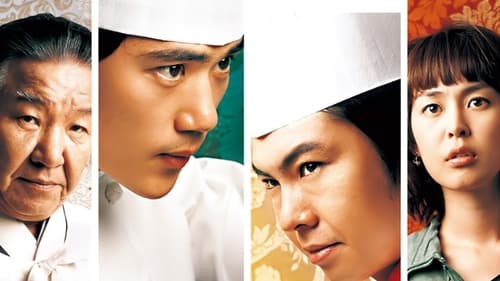
A disgraced chef tries to restore his name by competing in a culinary contest to win the knife of Korea's last royal chef.
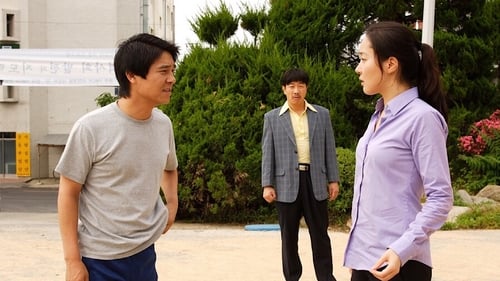
1980, Kwang-ju is fired up about a genius pitcher, a senior in high school. Ho-chang takes confident strides across the field making his way by cutting through the sand dust. He’s a university scouter on a mission. His task is to scout the genius pitcher, SUN Dong-yeul, a master of baseball who may be scouted to a rival university. But he is no where to be seen. But Ho-chang is determined to not let down his reputation as a successful scouter, and his scouting mission of 10 days begin! An original story of a scouter on a 10 day mission full of undisclosed history will now unfold!
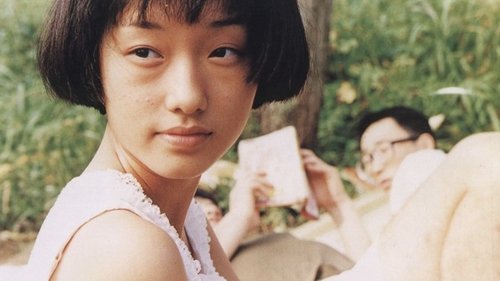
A young girl is caught up in the 1980 Gwangju massacre, where Korean soldiers killed hundreds, if not thousands, of protesters who opposed the country's takeover by the military the year before.
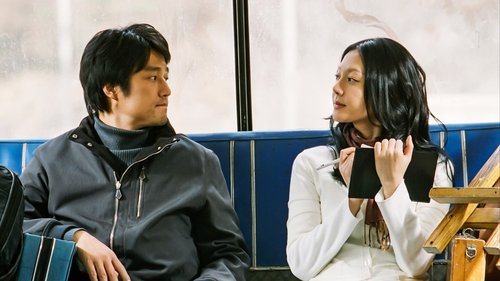
Activist Hyun-woo is released from prison after a 17-year stint. Journeying back to the village where he spent some time as a fugitive he recalls the time spent with Yoon-hee, a woman who gave him shelter and companionship.
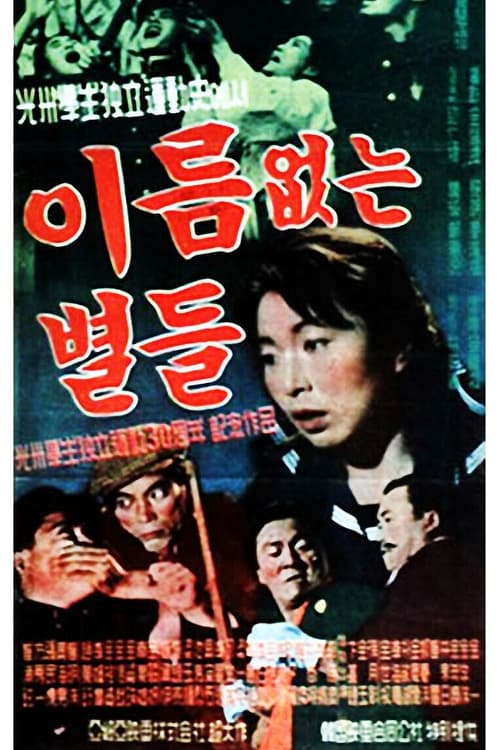
The son of a freedom fighter, Sang-hun is a member of an anti-Japanese resistance group called "Seongjinhoe," composed of students who share a dedication to the cause of liberation. Their spiritual guide is a teacher named Song Un-in. One day, Yeong-ae, whose brother is a detective in the Japanese police force charged with monitoring independence movements, joins their group. Following a series of sporadic incidents, the students gather one night to resolve on an uprising, but are discovered by the police. Young-ae is wrongfully accused of betraying their plans, but she risks her life in order to allow the group members to escape. The morning after, the students of Gwangju rise up against the Japanese government.
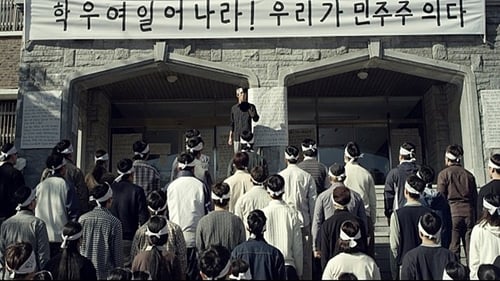
This is the story of a father who died mysteriously in May of 1980, a mother who lives in the shadows with a bullet in her head and not being able to forget May 18th and their daughter, and the nation's greatest comedian, Hee-soo.
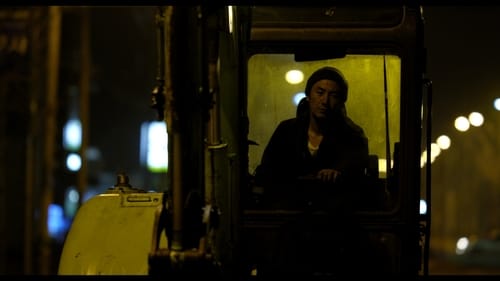
20 years after discharge from the army and now an excavator driver, a former paratrooper who had been mobilized to suppress the May 18th Democratic Uprising in Korea in 1980, happens to find a skull in the ground one day. Driving his excavator, he pays visits to his former superiors one by one and realizes they were all both assailants and victims of the times.
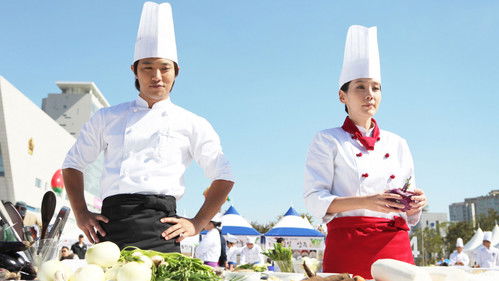
"Le Grand Chef 2" begins with the Korean president visiting the Japanese Prime Minister and becoming involved in a heated debate over the origins of kimchi. The Japanese Prime Minister makes the bold claim that kimchi is an original Japanese dish which sets off the Korean president. Upon the Korean's president return home he sets upon a globalization plan for kimchi, which includes a nationwide "Kimchi Contest". Then, a lady named Jang-eun (Kim Jung-Eun) and her step-brother Sung-Chan (Jin Goo) compete in the Kimchi dish contest, with both siblings using their mother's kimchi recipe.
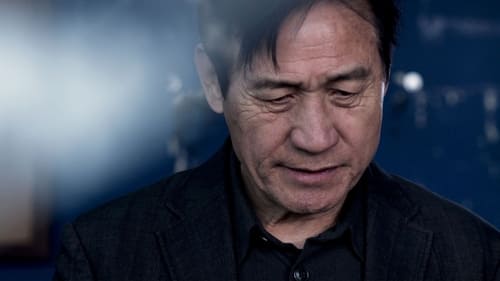
Chae-geun is a driver for hire with manic depression. He often talks to his son who is studying in the States and tells him he would keep his promise. He does a favor by acting as a temporary fiancé of a single woman named Jin-hee, who works as a waitress at a restaurant he frequents. Her father, who was a victim of the Gwangju Uprising in 1980, shows him a gun he stashed away 39 years ago and asks Chae-geun to help him exact revenge on those who were responsible for the May 18 incident.
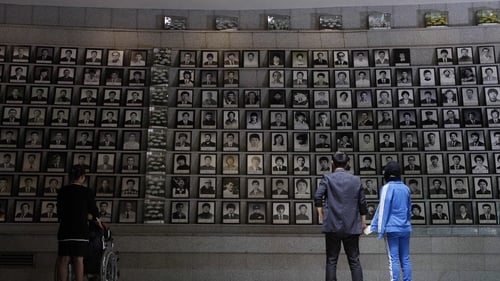
26 years ago, state troops were ordered to open fire on civilians in the city of Gwangju who were demonstrating as apart of a democratic movement. Thousands of civilians were killed. Now, a shooter from the national team, a gang member, a policeman, CEO from a large company and director of a private security outfit get involved in a plan to convict the person responsible for the massacre.
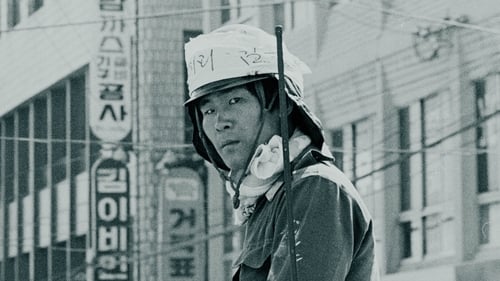
KIM-GUN searches for the whereabouts of a young man whose identity has sparked a national controversy over the 1980 May 18 Gwangju Uprising. Starting with the vague memories of those who had crossed paths with him during that time, the film tracks down those who participated in the Uprising as “Citizen Soldiers.” It also traces KIM’s final steps, based on photographic clues found in the firearms he carried and the “Surveillance Truck No. 10” in which he rode. By identifying KIM-GUN, we believe that we can find valuable leads to resolving the ongoing controversy over May 18. Why did a nameless young man join the Uprising? Why did he take up arms? Where has he gone afterwards? It is the answers to these questions that the film seeks.
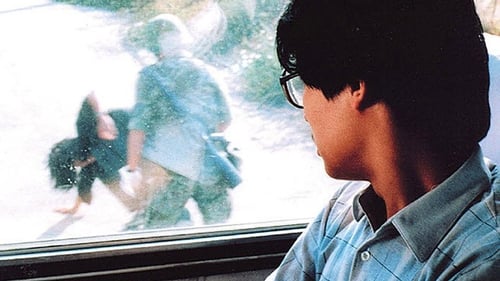
After the Gwangju Democratization Movement is terminated by brute force, Jong Soo runs from the authorities and goes to Dongducheon in search of Tae Ho, an older neighbor from his hometown. He is a student at Jeonnam University and a night school teacher who is on the run because of his involvement in the Gwangju Movement.
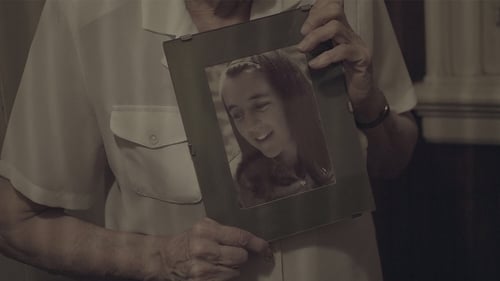
The title Good Light, Good Air is oddly paradoxical. Keenly working at the point where his artistic identity and persistent attention on modern Korean history meet, director Im in this film focused on where the history of oppression and struggle intersect between Gwangju and Buenos Aires. In both cities, a great number of people who fought against the dictatorship were slaughtered and disappeared. The people of both societies still live with that trauma. When the testimonies of the victims of the two cities cross over, the film gives us chills as the eerie history of the two is very similar. Through Good Light, Good Air, director Im asks us how we will remember the past from where we stand right now.
Eunju, a teenage girl, wants to go to a high school baseball game where the boy she has a crush on will be playing.
The South Korean city of Gwangju, will commemorate the May 18th 1980 uprising in style. They will stage a grand re-enactment of the scenes of the May uprising 25 years earlier, when martial law troops killed civilians, including women and children.
No description available for this movie.
This year is the 30th anniversary of the Gwangju Democratization Movement. Though the country commemorates the event as the official historical records, it does not include any 'real' accounts of the people who experienced it firsthand. The students who were part of the movement; the female vendors who made rice balls for the students; the female high school students cooked at the government building; now, past their middle age, they live as ordinary citizens in Gwangju city. How is the event remembered by these people?

While working on a case with farmers, lawyer Heo Seung comes to believe that the rural development movement is the only lasting way to preserve the identity of the country. With conviction, Seung throws himself into the rural area. However, this position is against the Japanese occupation policies and eventually, even his wife, Yun Jung-sun, ends up leaving him. The Japanese judge Masaki Hiroshi determines that Seung's rural development activities are actually a rebellion against Japan. He has Seung imprisoned as an ideology criminal. After spending five years in jail, Seung returns to the country to see his wife, Jung-sun, continuing her husband's work and waiting for him.
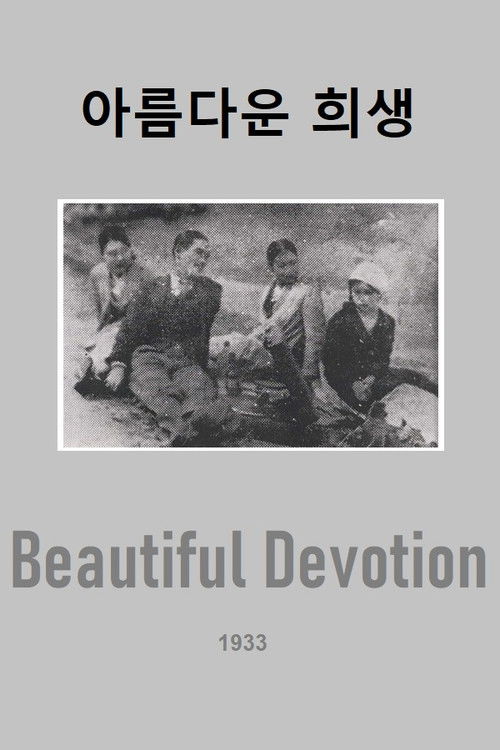
A melodramatic film about a fisherman who disappeared at sea. After many years, he returns and finds out that his wife has a different family. The fisherman does not disturb his beloved wife and secretly leaves his native place.
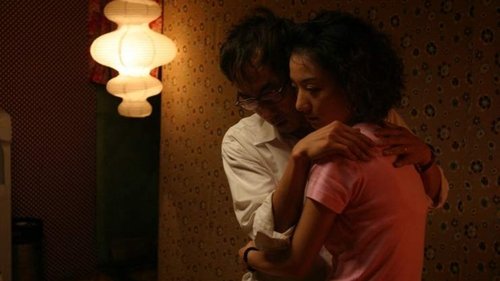
A mild-mannered stamp maker searches for the man who slept with his wife. Disguised as a customer, he approaches the man.

A woman gets killed in a department store. No one imagines this could lead to serial murders, but two days after the first murder, another homicide occurs. A woman is suffocated to death and the only evidence left at the crime scene is a sticker of the cartoon character “Princess Aurora”.
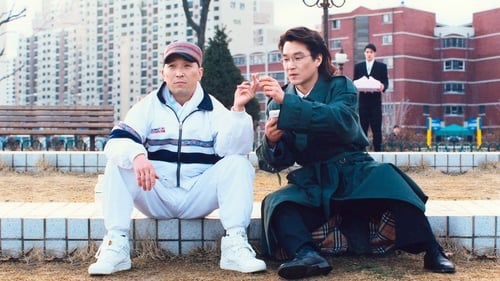
Tae-joo manages to rise in rank in a gang for saving the boss's life. However, prosecutor Dong-pal appears in front of him as his sworn enemy. Meanwhile, Jo-pil wants to get rid of Tae-joo's gang, training for revenge. The three men's goals intertwine.