
Action
Adventure
Animation
Comedy
Crime
Documentary
Drama
Family
Fantasy
History
Horror
Music
Mystery
Romance
Science Fiction
Thriller
War
Western
Found 28 movies, 21 TV shows, and 0 people
Can't find what you're looking for?
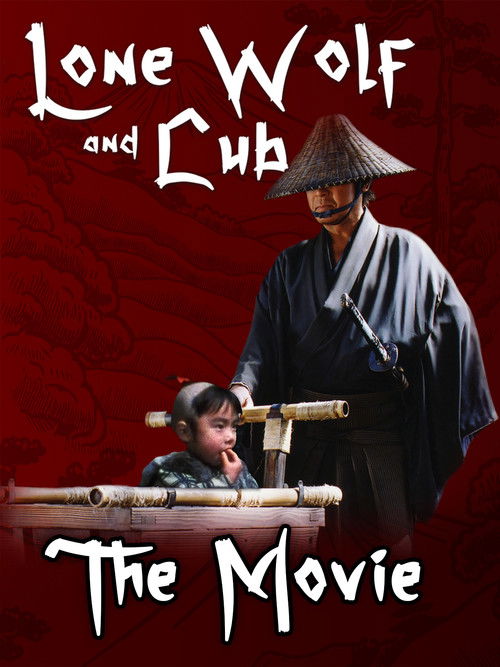
Ogami Itto, framed for treason and surviving a deadly attack, becomes a lone assassin with his son. They face ruthless ruffians, setting the stage for a showdown in his quest for justice.
Master director Sadao Nakajima brings to life the adventures of Shohachi, a ronin (masterless samurai) searching for his father's enemy. O-Tama, the star of a light acrobatics hut in the back mountains of Asakusa, falls in love at first sight with a ronin named Shohachi who appears out of nowhere and, impressed by his skills, asks him to become the troupe's bodyguard. Shohachi, who is searching for his father's enemy Hyoto, follows the troupe on their provincial tour and finally finds him. But it seems that his enemy is quite skilled.
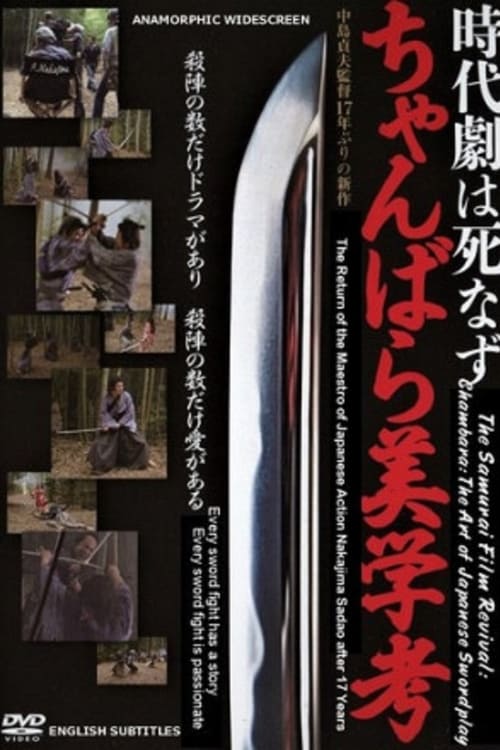
Veteran director Nakajima Sadao examines the appeal, background, context and transition of chambara, or period sword-fighting and samurai films, in Kyoto. Not only interviews with actors, choreographers and critiques are included, but the director orchestrates an original chambara scene for the documentary.

Genichiro Okugawa is appointed as the head of accounting in a feudal domain and travels with his servant Gonsuke to the country from Edo. Along the way, they are attacked by masked samurai on a mountain road. Genichiro is saved by Sukezaemon Tsuda, the supervisor of public works who was out hunting. Upon arriving in the domain, Genichiro is given a warm welcome by the vassals, who force him to drink heavily and find his subordinates to be rebellious. His proposed fiscal reforms are met with resistance, except by Tsuda who understands Genichiro's intentions. Genichiro marries Matsuo, the daughter of a senior councilor, but soon faces accusations of corruption.
A Ronin with a death wish reluctantly joins the Clan of the Forgotten Eight, a nasty crew of ronin who are wrapped up in a clan war over local prostitution.
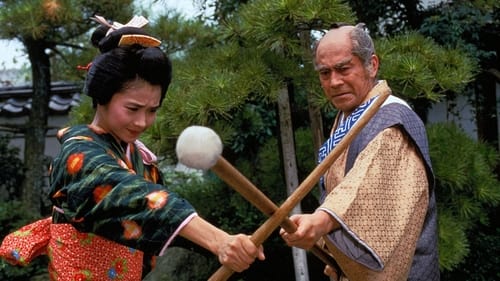
Japan's greatest jidaigeki star, Mifune Toshiro is Shogun's Advisor Okubo Hikozaemon who must be coaxed out of retirement to save Shogun Iemitsu from danger. The elderly Hikozaemon has been belittled of late and has seemingly lost the will to live, much less the desire to assert himself and make Iemitsu listen to reason. The plot thickens when a lovely young woman enters the picture. Can she change Hikozaemon's mind, and thus alter the path of Japanese history? No longer a young man, can Hikozaemon gain the shogun's ear, and succeed in warning him of the evil plot to overthrow him?
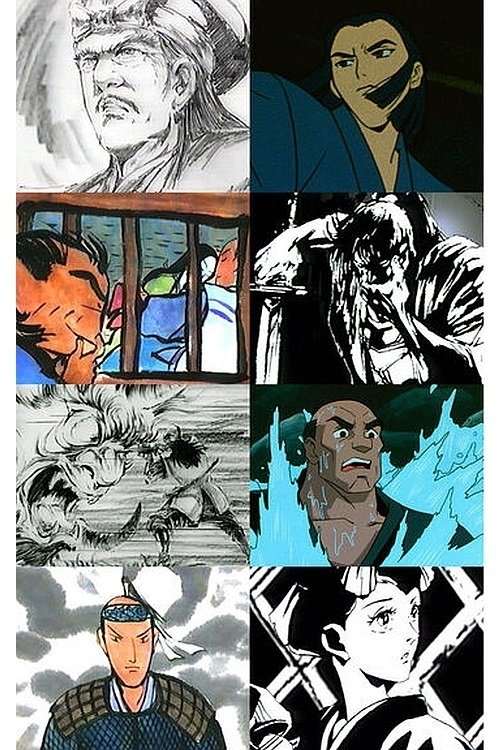
Tales include: THE HILL OF OLD AGE, which tells of a conspiracy hatched against Japan's unifier, Oda Nobunaga. SEEING THE TRUTH, about the assassin sent to murder Nobunaga's successor leyasu Tokugawa. THE EAR OF JINSUKE, about a wandering swordsman saving a damsel in distress from evil spirits. PRINTS FROM THE FALL OF THE BAKUFU, features a tomboy from a woodcut works charged with making a print of the young warrior Okita Soji.

Aired after Episode 253 - In an alternate reality world that takes place in 19th century Japan, Luffy acts as a member of the secret police. This is made up of two adventures. In the first, Buggy makes trouble in the town. In the second, a mysterious girl named Vivi appears. This special contains several cameos from characters throughout the entire series.
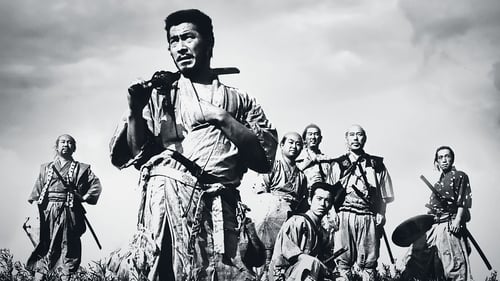
A samurai answers a village's request for protection after he falls on hard times. The town needs protection from bandits, so the samurai gathers six others to help him teach the people how to defend themselves, and the villagers provide the soldiers with food.

Shakespeare's King Lear is reimagined as a singular historical epic set in sixteenth-century Japan where an aging warlord divides his kingdom between his three sons.
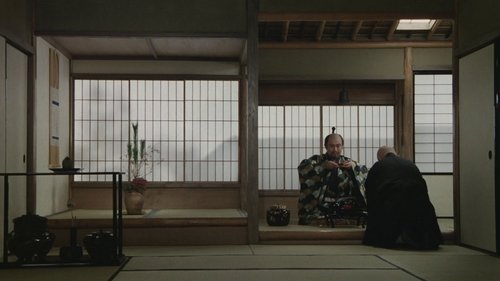
Late in the 1500s, an aging tea master teaches the way of tea to a headstrong Shogun. Through force of will and courageous fighting, Hideyoshi becomes Japan’s most powerful warlord, unifying the country.
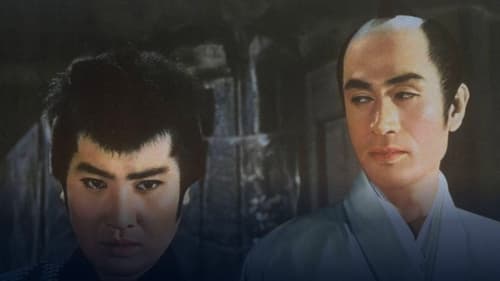
In the third, and final chapter of this epic tale, handsome swordsman Genji helps a vulnerable princess who is in search of a missing scroll that belongs to the Shogun. This is one of the most highly regarded trilogies featuring a youthful Nakamura Kinnosuke in one of his best roles. This was Kinnosuke at the height of his career, with charm, honor and a vicious sword. If you enjoyed the first two films in the series, you can't miss the exciting conclusion. Even without know-ledge of the first two films, this movie stands on its own with great action throughout!

Four people recount different versions of the story of a man's murder and the rape of his wife.
Down-on-his-luck veteran Tsugumo Hanshirō enters the courtyard of the prosperous House of Iyi. Unemployed, and with no family, he hopes to find a place to commit seppuku—and a worthy second to deliver the coup de grâce in his suicide ritual. The senior counselor for the Iyi clan questions the ronin’s resolve and integrity, suspecting Hanshirō of seeking charity rather than an honorable end. What follows is a pair of interlocking stories which lay bare the difference between honor and respect, and promises to examine the legendary foundations of the Samurai code.

Yataro Tanigawa, a one-eyed hired assassin, impresses yakuza boss Gomyo Kiyoemon with his skill. Gomyo hires Tanigawa as his bodyguard, or yojimbo, to protect him during an inter-clan conflict. Tanigawa quickly rises in stature in the clan, but finds his boss's enemies almost overwhelming.
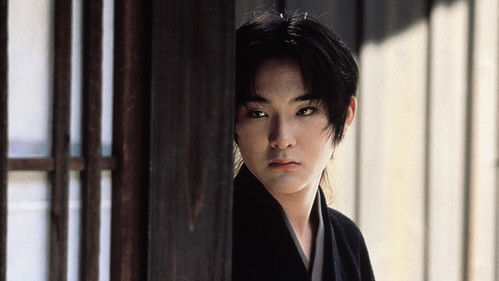
Set during Japan's Shogun era, this film looks at life in a samurai compound where young warriors are trained in swordfighting. A number of interpersonal conflicts are brewing in the training room, all centering on a handsome young samurai named Sozaburo Kano. The school's stern master can choose to intervene, or to let Kano decide his own path.
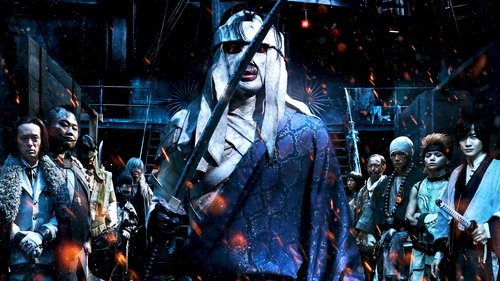
Kenshin has settled into his new life with Kaoru and his other friends when he is approached with a request from the Meiji government. Makoto Shishio, a former assassin like Kenshin, was betrayed, set on fire and left for dead. He survived, and is now in Kyoto, plotting with his gathered warriors to overthrow the new government. Against Kaoru's wishes, Kenshin reluctantly agrees to go to Kyoto and help keep his country from falling back into civil war.
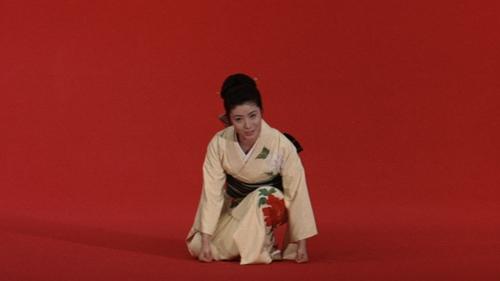
A local yakuza boss of a silk farming town shows kindness to the wandering gambler Oryu by letting her stay at his residence. When a rival yakuza gang, who wants to take over the town’s businesses, murders him, Oryu is obliged to protect his children and business.
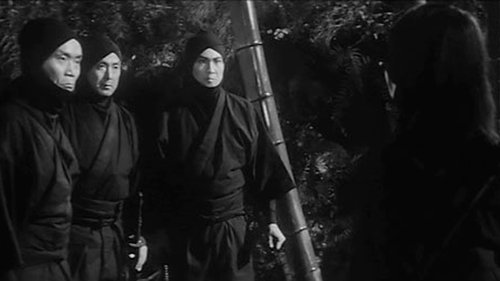
As the Shogun lays dying, seventeen Iga clan ninja are sent to infiltrate the impenetrable fortress where his youngest son is preparing to storm Edo Castle and name himself Shogun by force of arms. They are to either steal the documents that will eventually give him lawful claim to rulership, or they are to assassinate him. But even before they reach the castle walls, they find their every move countered by a ruthless ninja hunter in the employ of the would-be usurper (Konoe), who not only knows their every tactic but knows the exact make-up of their team thanks to his own spies within Edo Castle. As the Iga Ninja fall one by one, the mission's success or complete failure--where failure will result in a bloody war of succession--comes to hinge on a single young and inexperienced ninja (Kotaro).
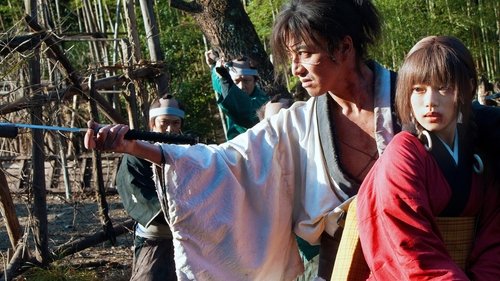
Manji, a highly skilled samurai, becomes cursed with immortality after a legendary battle. Haunted by the brutal murder of his sister, Manji knows that only fighting evil will regain his soul. He promises to help a young girl named Rin avenge her parents, who were killed by a group of master swordsmen led by ruthless warrior Anotsu. The mission will change Manji in ways he could never imagine.
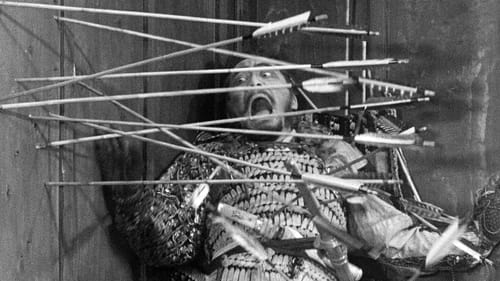
Returning to their lord's castle, samurai warriors Washizu and Miki are waylaid by a spirit who predicts their futures. When the first part of the spirit's prophecy comes true, Washizu's scheming wife, Asaji, presses him to speed up the rest of the spirit's prophecy by murdering his lord and usurping his place. Director Akira Kurosawa's resetting of William Shakespeare's "Macbeth" in feudal Japan is one of his most acclaimed films.
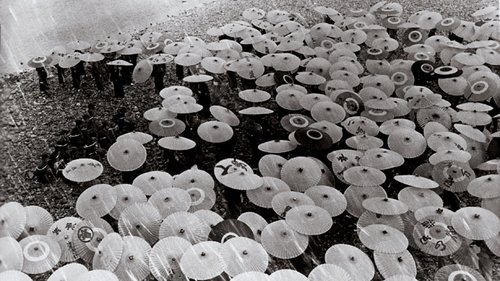
In 1863, when American warships approach Japan, an enigmatic ronin becomes an important figure in a complex game of power between the Shogunate and the empire.

The plot is based on the novel "Akechi Samanosuke no Koi," the final work in a trilogy by Hiroshi Kato about the forced suicide of Oda Nobunaga at the temple Honnoji. Historically, the general Akechi Mitsuhide is credited with causing Nobunaga's downfall. Kato's novel focuses on Mitsuhide's nephew Samanosuke, who fought alongside his uncle during the assault on Honnoji.
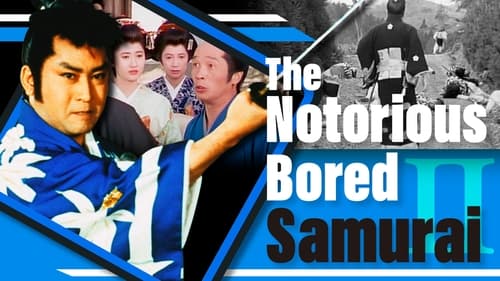
The Satsuma clan conspires with key figures in the shogunate to overthrow the government. However, the head inspector, Naito Yamashiro no Kami, cannot find the sworn statement of rebellion and takes responsibility by ending his own life. This deeply affects Mondonosuke Saotome, who was close to Yamashiro no Kami and who is known for his restless nature. Seeking an audience with Shogun Tsunayoshi to request a view of the sworn statement, Mondonosuke Saotome is granted permission to go to Satsuma. He sets off on this journey accompanied by Sasao Kinai and Yamashiro no Kami's sister, Shizue . However, on the way, they are attacked by a group of mountain monks. Mondonosuke Saotome manages to repel the monks in a brawl but becomes separated from Kinai and Shizue. Afterward, he encounters a mysterious woman named Oren, and with her guidance, he finally arrives in Satsuma.
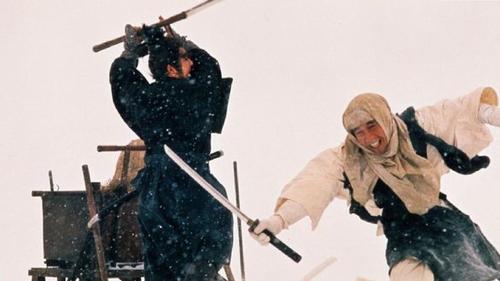
With most of his family already dead at Ogami Itto's hands, Retsudo launches one final plot to destroy him, and when that fails, unleashes the fury of every remaining member of the Yagyu clan.
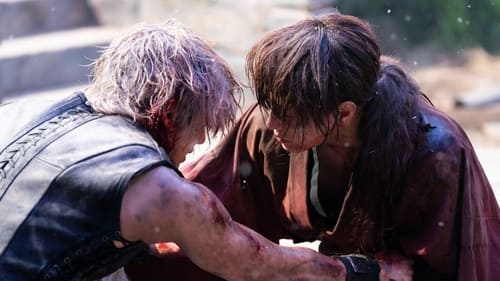
In 1879, Kenshin and his allies face their strongest enemy yet: his former brother-in-law Enishi Yukishiro and his minions, who've vowed their revenge.
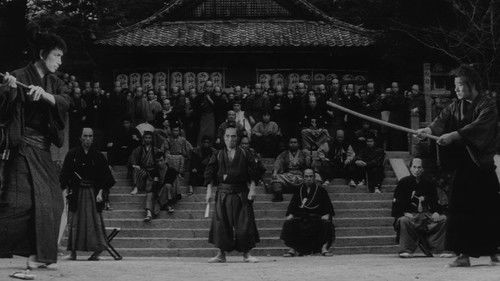
Misawa Ihei (Nagato) is traveling with his wife Tae (Iwashita Shima) who abhors the practice of sword fighting for prize money. Tae is the daughter of the clan's chief counselor who married the low-ranking Ihei to avoid becoming the clan lord's mistress. Into the mix comes Oba Gunjuro (Tetsurō Tamba), a mysterious ronin who will do anything for money. This leads to a fitting climax as the forces of hate and love converge while the couple attempt to break through the border!
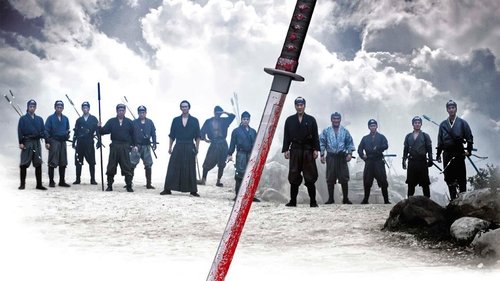
A bravado period action film set at the end of Japan's feudal era in which a group of unemployed samurai are enlisted to bring down a sadistic lord and prevent him from ascending to the throne and plunging the country into a war-torn future.