
Action
Adventure
Animation
Comedy
Crime
Documentary
Drama
Family
Fantasy
History
Horror
Music
Mystery
Romance
Science Fiction
Thriller
War
Western
Found 9 movies, 0 TV shows, and 1 person
Can't find what you're looking for?
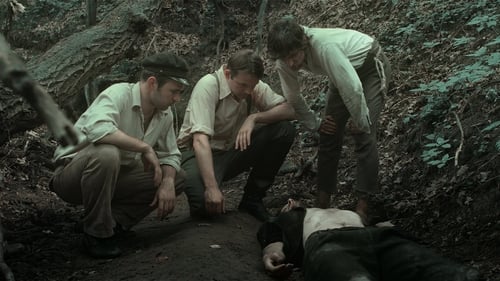
It is a sunny summer day in 1943. Poland is under German occupation. A group of young people, inhabitants of a nearby village, goes to the forest to gather fir cones and brushwood to use as firewood. They talk, flirt and make plans for the future. However this outing has an unexpected outcome: a certain event that is new to them will change their lives and the lives of other people who appear as the story develops.
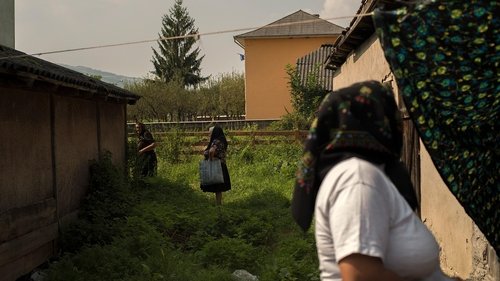
A Jewish wedding cameraman falls in love with a klezmer clarinetist and pretends to be making a documentary in order to spend time with her. His fake project leads to a real journey through Eastern Europe in search of lost klezmer melodies and the remnants of Yiddish culture. A documentary-fiction hybrid. Winner of the Best First Feature Award at the Berlin Film Festival.
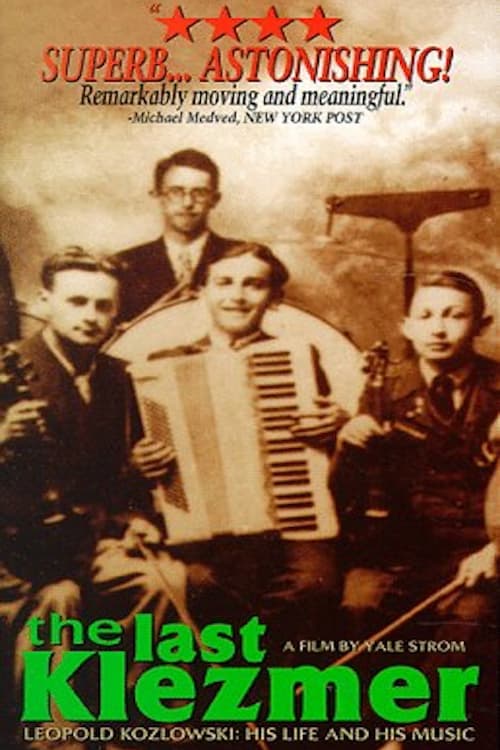
Years after the Holocaust, survivor Leopold Kozlowski lives in Poland, and is one of the few remaining experts in the Klezmer tradition of music, one played predominantly by the Eastern European Jewish community. Director Yael Strom follows Kozlowski as he travels back to his village in the Ukraine, where he visits his father's grave and speaks about his relatives who perished in the Holocaust. Strom honors Kozlowski's life as a teacher, musician and survivor.

An examination of the Jewish culture that thrives in 21st-century Poland despite the absence of a large Jewish population.

Klezmer is Eastern European Jewish folk music. In other parts of the country, klezmer seemed to disappear and then was revived. But in Philadelphia, the Hoffman family never stopped playing this music.
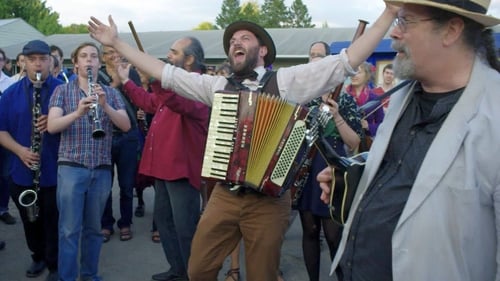
The story of five secretive characters, told with Klezmer music. Five 21st century young and not so young men someplace in the world. They are musicians in search for someone and something which might have been born in their imagination. Once upon a time in the beginning of the 20th century there lived a Klezmer musician and storyteller Prince Nazaroff. Many people don’t believe he ever existed, but these five do. They have imagined him, and imagination can be stronger than reality. To this day, Nazaroff lives in them. They can’t except that something could disappear forever. They call themselves ‘The Brothers Nazaroff’. A deeply emotional story told through Klezmer music about identity, emigration, inner emigration, brothers and godbrothers, religion and belief, faith and disbelief. A modern story about our strange world we live in.

A Jumpin' Night in the Garden of Eden was the first film to document the klezmer revival, tracing the efforts of two founding groups, Kapelye and Boston's Klezmer Conservatory Band, to recover the lost history of klezmer music. For nearly a millennium, this vigorous and soulful music was part of the celebration of Jewish life in Eastern Europe. In the early decades of this century, the music took root in America. Klezmer musicians learned hundreds of tunes by ear and their ears were open to Gypsy, Ukrainian and Greek melodies of the old world, as well as to the new sounds of American jazz. Music born in Eastern Europe lived on in the imaginations of composers for New York's Yiddish theater, men whose tunes entered the mainstream through such unlikely adapters as the Andrew Sisters. Eventually Klezmer went underground as its audience assimilated into mainstream American culture.
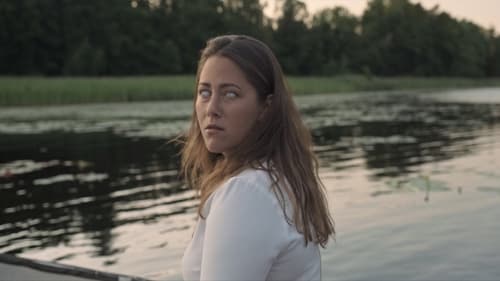
The film follows a man’s desperate trek down a river as he is continually hindered by strange figures trying to convince him to turn around or stop.
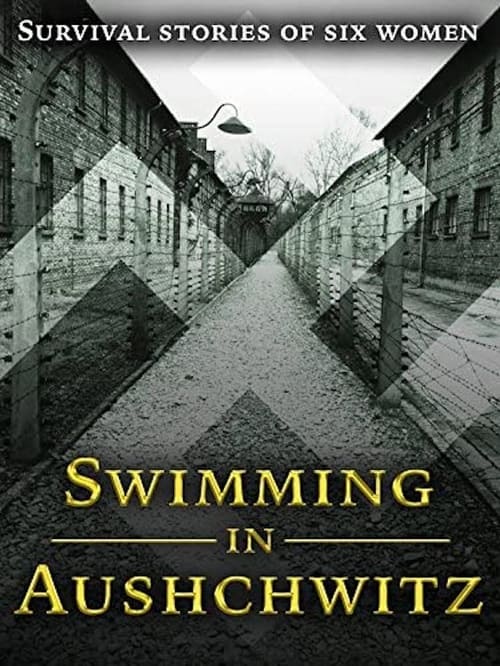
Six Jewish women, from different countries and different backgrounds, found themselves deported to the notorious concentration camp, Auschwitz-Birkenau, during the Holocaust. This film attempts to chronicle that experience through those same female eyes. While subject to the same physical hardships as men, these women do not dwell on that. Instead, they speak of camp families and faith, uplifting one another while trying to remain human. It was this path of spiritual resistance that, while not responsible for their direct survival, led to their ability to survive with healthy minds and spirits despite the constant barrage of their surroundings. Swimming in Auschwitz gives us a perspective of the camp, its surroundings and the Holocaust that we need to understand and remember, so that we never forget.