
Action
Adventure
Animation
Comedy
Crime
Documentary
Drama
Family
Fantasy
History
Horror
Music
Mystery
Romance
Science Fiction
Thriller
War
Western
Found 40 movies, 6 TV shows, and 5 people
Can't find what you're looking for?

Three politically incorrect lesbians talk about being lesbian.
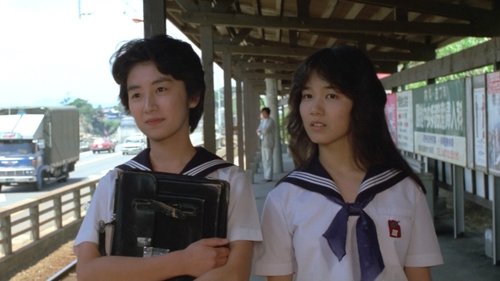
Two high school girls discover the pleasure of sex with each other until one of them chooses to be with a boy.

Two young women, Minako and Naomi, have been friends and lovers since their school days, and are now living as roommates in the city, working together for a large company. Although she cares for Minako, Naomi decides that she should leave behind her past, find a husband and have kids. Minako, on the other hand, is happy with things as they are and doesn't want to change. The two must work out what they really want out of life, going their separate ways if need be.

Four women—Redhead, Blackie, May Lily and Irina—survive 1990s Russia by luring wealthy drunks and desperate men into their flat with booze and promises, then robbing and sometimes killing them. Their hulking bodyguard Baban keeps their crimes quiet (and occasionally watches their secret lesbian parties). Even Blackie’s little daughter gets drawn into the fold, peeking through a crack in the wall. Together, they dream of escaping the post-Soviet grime and spending next Christmas in Paris.

A lesbian teacher (Kanako Kishi) comes to Tokyo in search of her student (Ichiko Kamata), who has dropped out of high school and started living with a bomb-making terrorist (Takeshi Ito).

As a result of the Holocaust and later, AIDS, the male homosexual community has sustained bitter losses and, according to Praunheim, lesbian women have now placed themselves at the head of the so-called queer movement. The female protagonists in the film represent two different generations; they also incorporate the past and present status of homosexuals in society.

Naomi, who runs a boutique, is a lesbian and has been having homosexual relationships with her staff, Reiko, and a married woman, Miyako. Her friend Mari, a singer, is also a lesbian, and this is a complicated love story between two women that begins when Reiko falls in love with her one-sidedly.

Rie, a housewife, spends lonely days without her husband taking care of her. One day, a middle-aged woman, Mitsuko, visits Rie's house to sell mourning clothes. Rie tries to refuse, but after being forced to try it on by Mitsuko, Mitsuko says, "You haven't been with your husband recently, have you?"

This documentary tells the tale of Buenos Aires lesbians, focusing on three personal stories. A former militant woman who now devotes her time to feminine soccer; a young woman who is active so no girl has to go through what she went through and a lesbian mother who recounts how hostile the laws are regarding the rights of lesbian women. In spite of the difficulties their characters go through, the stories have a lot of humour, some soccer and a tour of the city.

The film tells the story of Jiang Ping accidentally hitting and killing a drunken man while driving. A idle man named A Xing discovers this incident and uses it to blackmail Jiang Ping, forcing her to have a relationship with him. In response, Jiang Ping seeks help from her close friend, Fei Fei, who is also her homosexual partner. Meanwhile, Jiang Ping's husband's female secretary, who has been secretly in love with her boss, schemes to murder Jiang Ping. This leads to a complex and tangled story.
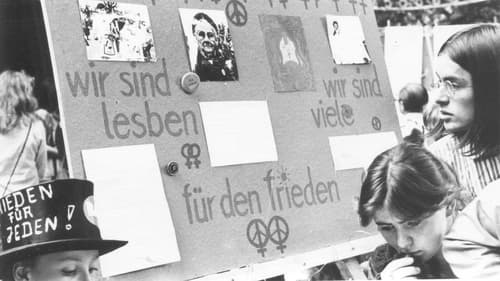
Paragraph 175, which made homosexual behavior punishable by law, was abolished in the German Democratic Republic (GDR) in 1968. At that time, heterosexual nuclear families constituted the center of socialist society, and homosexuality was considered a peripheral issue in the GDR. Out in East Berlin —Lesbians & Gays in the GDR tells the impressive-to-absurd personal histories of gay men and lesbians in the GDR, from the post WWII years until the fall of the Berlin Wall.
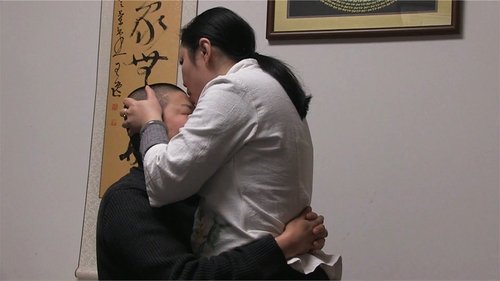
A decade after entering into lavender marriages, these lesbians have all divorced their contract husbands. During the filing, the COVID-19 pandemic swept the world, and China implemented a zero-COVID policy, requiring that no one be exposed to the virus. This documentary captures their lives during this time. Despite sharing a home with both their same-sex partners and their parents, none of these lesbians has come out. Their divorces have remained secret. Their efforts to have children have been unsuccessful. Their lesbian relationships are not recognized by the public. The abrupt change in the zero-COVID policy has not left anyone untouched. Despite the immense effort invested in this lesbian film, no cultural products about homosexuality are allowed to be published.

Gays, lesbians and transgender people - more and more people are admitting that they feel differently than their biological sex suggests. How openly can they live out their sexuality today? The documentary "My Body, My Love - Lesbians, Gays and Transgenders" shows people who live outside the sexual norm: a gay soccer club in Munich, a lesbian couple in Zurich, a gay police officer in Vienna, a transsexual politician. How important was "coming out" for them? Where do they encounter social boundaries? What makes life difficult for them?
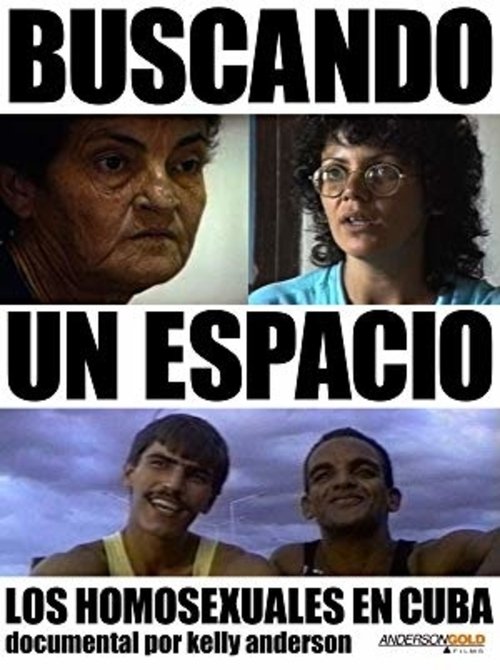
A documentary film examining the treatment of lesbians and gay men during the early years of the Cuban Revolution and perspectives of current residents of Cuba on questions of political ideology and sexual identity

Cling and I are friends. Both of us are lesbian. Being frustrated in lesbian relationships, we decided to get married with men. However, we couldn't make love with men at all. Eventually, I got divorced. Cling still struggles about continuing her marriage. Both of us are trying to gure out what happiness is.

Starting with a provocative title, two young directors from Tuscany Laura Landi and Giovanna Selis set out to show how the lesbian community in Italy must still fight against homophobic taboos. What emerges, above all, is the widespread attitude which denies and ignores, sometimes excluding, the existence of the "L World", which is doomed to invisibility. It's no accident that one of the girls interviewed in the film declares, "Actually, it's like lesbians do not exist". She thus highlights the existence of a psychological repression in public awareness, in which homosexual women have been shut up. A succession of voices and stories, dealing with GLBT parenting and relationship with their own parents, discrimination and affection. The film includes some brief sketches by Le brugole (The Allen Keys), the female cabaret duo who have performed on the TV comedy show "Zelig Off". A successful example of a low-budget production, financed by crowdfunding.

Misaki has been attending a women's university in Tokyo since this spring, and has been living with her boyfriend, Kenji, who is her senior in high school. However, one night she discoveres that he cheated on her and leaves him. She has no money and no place to go Misaki is in the women's dormitory at the university. She decided to enter the "Shirayuri Dormitory". The people who gently called out to Misaki were Shizuka, a fourth-year student and dormitory director, and Saori, a third-year student. A welcome party was held in Shizuka's room, and when Misaki returned to the room, Shizuka and her friends were in a mysterious atmosphere. The two were lesbians. Shizuka then taught Misaki about her university life, and she said that she thought of herself as her real sister and that she could talk to her about anything.

No description available for this movie.

A unique erotic drama depicting the hellish lust and love-hate of a father-in-law and daughter-in-law. While Natsuko is in a relationship with her colleague Ryoichi, she also allows herself to be with her father-in-law, Kyosuke. One day, when she meets a young girl named Akiko, she is attracted to her body and has a physical relationship with her.
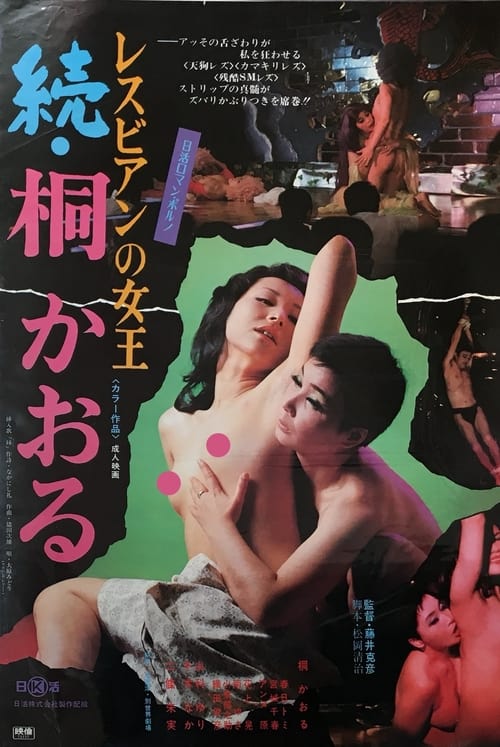
No description available for this movie.

A comic morality tale about two cocky young lesbians who bite off more than they can chew at a Texas roadside diner.
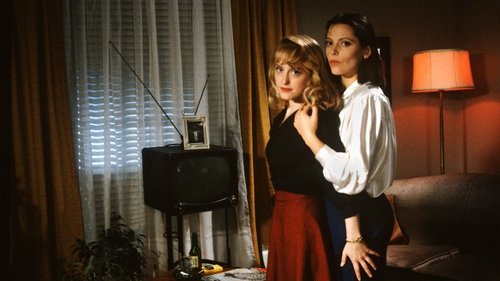
Ten women in Canada talk about being lesbian in the 1940s, 1950s, and 1960s: discovering the pulp fiction of the day about women in love, their own first affairs, the pain of breaking up, frequenting gay bars, facing police raids, men's responses, and the etiquette of butch and femme roles. Interspersed among the interviews and archival footage are four dramatized chapters from a pulp novel, "Forbidden Love".
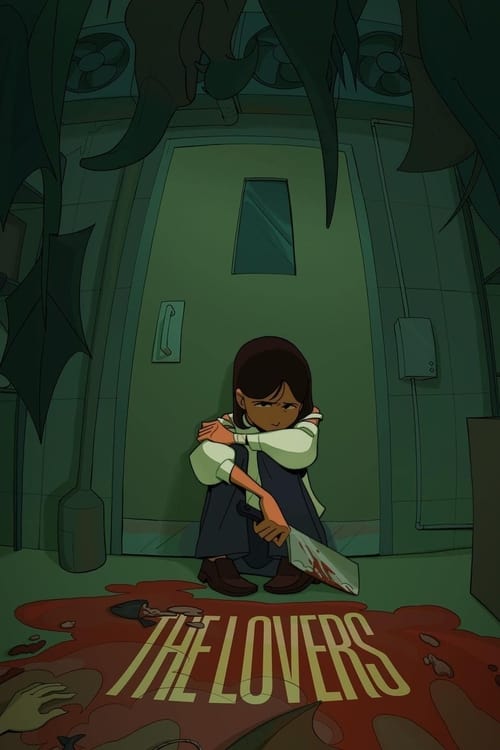
Sara Lim Baylon , a reluctant seafood chef from Binondo, Manila. As the youngest member of her family to run their restaurant, Sara faces the daunting pressure to live up to her late father's reputation and keep the business afloat. When the governor's inauguration dinner is planned at the restaurant, featuring a sirena as the centerpiece, Sara finds herself drawn into a dangerous affair with the mythical creature.

Set in the Los Angeles' criminal underworld with a dark but over-the-top Miami Vice vibe, 'Girltrash!' follows the story of five ass-kicking girls: tough-as-nails Tyler, her partner Daisy, con-artist LouAnne, and gang-bangers Misty and Colby, who try to get by any way they can, even if it means double-crossing a best friend or former lover. A gang war is brewing. You'll be asked to... pick a side.

In San Francisco, a city known for its queer community and bustling gay nightlife, there hasn't been a lesbian bar for almost a decade. Driven by nostalgia for a time when queer women had spaces, self-identified dyke Malia Spanyol sets out to build one for the next generation of women and femmes.

Ali must lie and say she is her wife's sister so she can be with her in the hospital. Through Ali's memories, we see the women's relationship develop as Ali faces the truth in the present.
Five teenagers, Chris, Kai, Nic, Alex and Katherine, explore the Australian wilderness to see if they can capture a ghost that science-fiction nerd Nic has read an article about. The group's teenage antics and increasingly heated arguments are interrupted when the innocent and unsuspecting Katherine disappears into the bush.

Sheridan Le Fanu's classic story, Carmilla, is contrasted with Veronica and Amélia's, two rising actresses. Their relationship, which floats between hate, desire and passion, gets more intense when both get chosen to play opposites in the theatrical adaptation of Fanu's tale.

In the 2000s, Isa, a 15-year-old, wakes up and sees the lavender flower that Tania, the girl she is in love with , gave her. Isa excitedly writes a letter confessing her feelings, planning to give it to Tania during break. Upon arriving at school, with the help of her friend Monse, Isa faces several obstacles in delivering the letter to Tania, turning her perfect day into the worst.

Ditched by her friend at a party, Dani is surrounded by strangers that she doesn't like. Among the crowd, she spots classmate Julia, loudly fighting with her boyfriend Paul.

A musical/comedy Dykeumentary about the "Dykes & Their Dogs", a popular contest held annually in West Hollywood, California
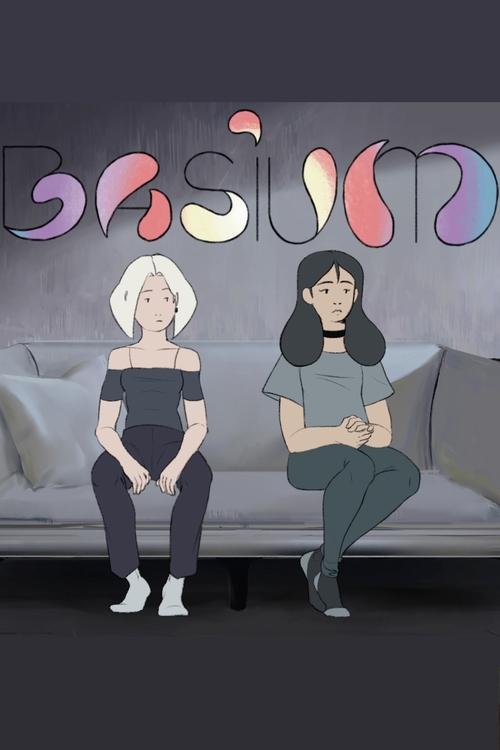
Two girls anticipate their first kiss

Early in the morning, Iris and Irina meet for the first and the last time. In between, a million things could happen.

Sofia and Aurora are two women who used to date, and on a random day, they end up running into each other and having one "last night together." The only thing is—Sofia and Aurora don't know that yet.

Helena wants to propose to Leticia, until tragedy strikes in their lives: they both have a car accident and end up dying. Now they both need to rest, but Helena suffers from wanting to propose while her beloved tries to convince her to move on to the other plane without revealing what has happened. Leticia, having already accepted death, understands what is happening and subtly tries to make Helena understand that it is necessary to leave. In the course of the story, while each of them deals with their own internal conflicts, the apartment they used to live in begins to be emptied so that new people can move in.

The initial idea was to make a children’s film about chocolate-covered marshmallows. How they are made, what they are made of, where they are made, who manufactures them under what conditions. The women who work on the assembly line are happy to tell us all about themselves. We are a welcome diversion. We noticed that the men have the better jobs and also earn more money. The women don’t entirely let themselves be taken in by the meritocracy. Talking, goofing off, and singing, they help each other to get through their 8-hour day. We like that. We drop the idea of a children’s film. In this film we tried out a documentary film form that deliberately does without interviews, relying instead largely on the effect of the images. From today's perspective the film alsooffers a glimpse into the history of migration in West Germany.

No description available for this movie.
At the end of 2001, the LIPS lassies put together one of their biggest group projects: a series of short films called ‘Dykes in the City’. In collaboration with GMAC, the Glasgow Media Access Centre, LIPS members took on almost every role – as scriptwriters, editors, actors, directors and cinematographers. The films they produced are mostly light-hearted depictions of lesbian and bisexual teenage life – coming out, school, crushes, safe sex. They capture a specific moment in Glasgow’s queer history, where the shadow of the AIDS crisis and tentative openness of a new post-Section 28 era merge.
Alone in Madness celebrates intergenerational queer community with a collaboration between Montréal's Lesbians on Ecstasy & next gen Lucy's Delirium, in this playful video. An ode to Le Cagibi, a longstanding queer cafe, co-op and performance space recently shuttered, Alone in Madness follows a robot getting their nerve up to play an open mic night to a dubious crowd.
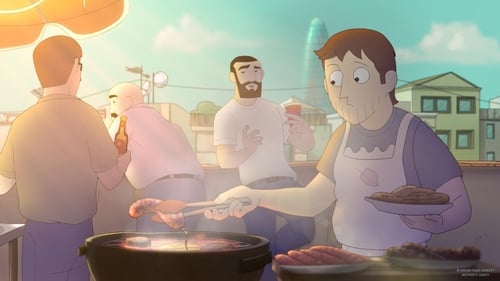
Paco, a 40-year-old bachelor, realizes a childhood dream: working at home in his pajamas.