
Action
Adventure
Animation
Comedy
Crime
Documentary
Drama
Family
Fantasy
History
Horror
Music
Mystery
Romance
Science Fiction
Thriller
War
Western
Found 24 movies, 2 TV shows, and 1 person
Can't find what you're looking for?

Fox Movietone newsreel featuring the first ever sound film footage of 'Mahatma Gandhi' ever recorded.

Mahatma: Life of Gandhi, 1869–1948 is a 1968 documentary biography film, detailing the life of Mahatma Gandhi. The film was made to seek to tell the life story Gandhi, and his incessant search for Truth. The film contains animation, live photography and old prints to provide an integrated image of his life. The story itself is narrated using mostly Gandhi's own words. There are several versions of the film. There is the 5 hour version in English, a shorter version which runs for 2 hours and 16 minutes, and an even shorter version which runs for an hour. A Hindi version exists, running for 2 hours and 20 minutes, and a German version at 1 hour and 44 minutes.
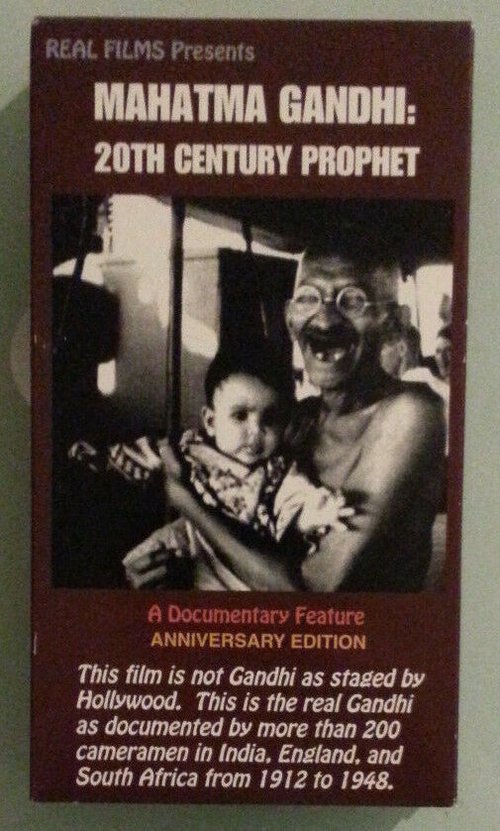
Funded by the American Academy for Asian Studies and assembled from more than 10,000 feet of newsreel and documentary footage spanning 37 years of Mahatma Gandhi's life from his early public years to his 1948 assassination. As the footage rolls on, the development of the Hindu leader's life views and philosophy is also presented.
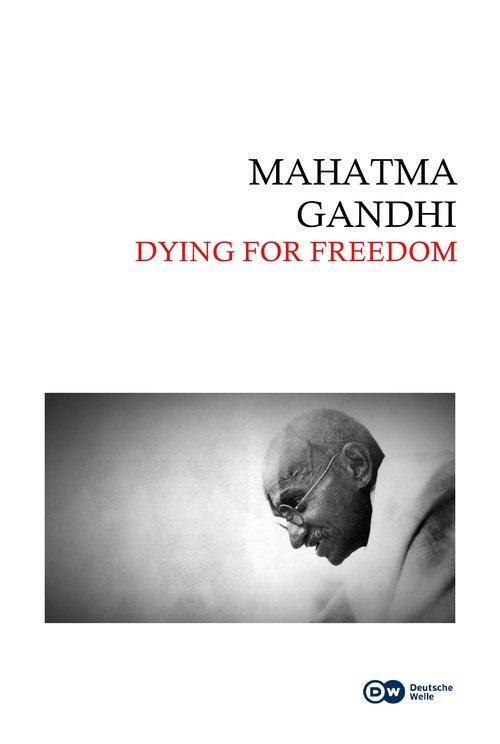
Indian freedom fighter Mahatma Gandhi was assassinated on 30 January 1948. Why was he killed and what events occurred before and after his murder? This documentary shows how India was dogged by nationalism and religious conflict on its path to independence - and how these factors mark the country to this day.
Rare Footage of Mahatma Gandhi's Funeral
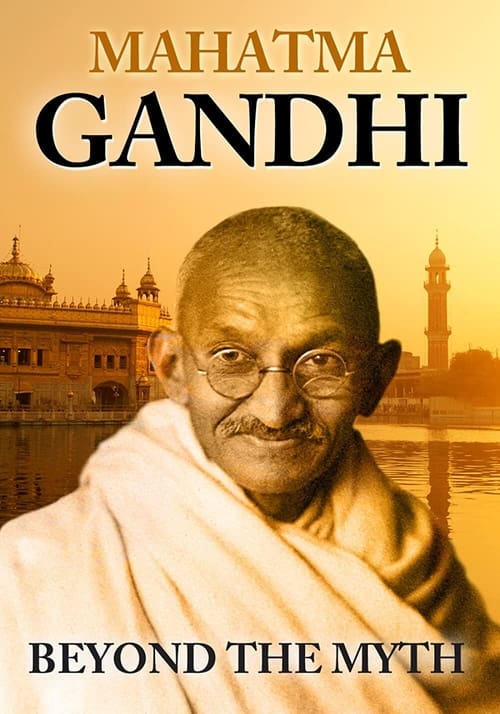
Explore the life of renowned historical figure Mahatma Gandhi, a lawyer, political ethicist, and anti-colonial nationalist whose non-violent methods led a movement that helped India successfully gain independence from Britain in 1947.
Remarkable amateur footage of Mahatma Gandhi shot by his great nephew in 1947.

Lovable goon Munna falls for a morning radio host by the name of Jahnvi, who also runs an elders' home which an unscrupulous builder seeks to attain. In order to gain Jahnvi’s attention, he cheats his way to winning a Mahatma Gandhi radio quiz. When Jahnvi consequently expresses interest in Munna, he and his best friend Circuit attempt to keep up the facade.
After a 60-year absence, Gandhi returns to India to resume his Satyagraha Movement. While there, he must deal with the various social, economical and political issues that exist within the country.

No description available for this movie.

A businessman from Switzerland, Jeff Boyd, dreams of living in Australia where his friend Morton, a crazy bakery shop owner, has already settled down. Morton tries to persuade him to join soon and help in the shop. Frank, who lets Jeff stay at his place while he’s abroad, advises to invest money with a commodity trading firm he knows. When Jeff signs the investment contract, he’s full of hope to leave the country with a pocket full of cash. After a phone call with his trader and a heavy argument with his boss at work, Jeff’s world collapses. That’s when he meets Wendy who's also in a delicate state after losing her job. They discover being soulmates. Their worries about the world and what it develops into comes more and more to light. They want to make a change, and develop a dangerous plan.
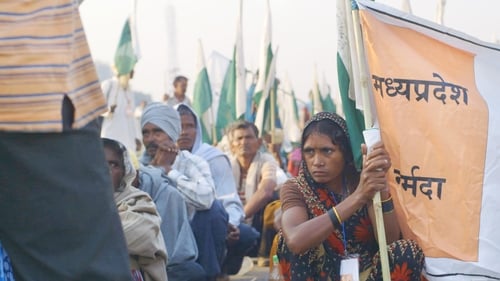
Hundreds of thousands of Indian men and women – indigenous inhabitants and landless farmers – demand their right to existence by making a 400 kilometre protest march from Gwalior to Delhi. How can one fight for one’s rights without using violence? With such an important contemporary question, the film spreads far beyond the borders of India. It shows the multiple facets of this imposing protest march and focuses as well on the daily realities of these proud people.
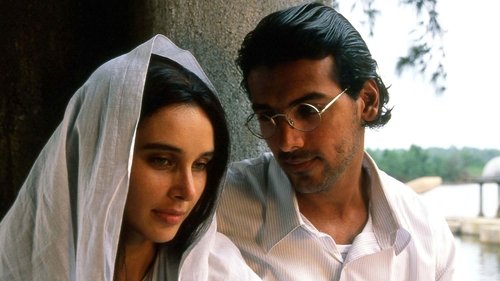
The year is 1938, and Mahatma Gandhi's groundbreaking philosophies are sweeping across India, but 8-year-old Chuyia, newly widowed, must go to live with other outcast widows on an ashram. Her presence transforms the ashram as she befriends two of her compatriots.
A secular expatriate American schoolmaster in India struggles to protect his students from fundamentalists.
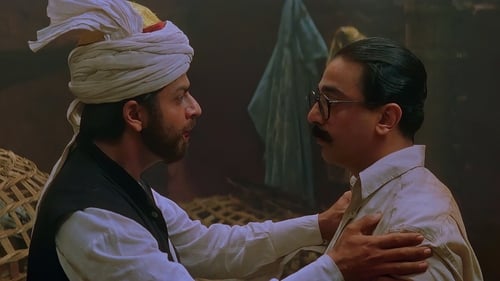
Saketh Ram's wife is raped and killed during direct action day riots in Calcutta. He is convinced that Mahatma Gandhi is responsible for all the problems happening in the country. He sets out to kill him.
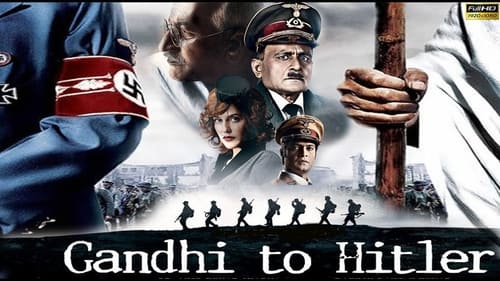
Chancellor Adolf Hitler assists Azad Hind Fauj, led by Subhas Chandra Bose, which include a group of Indians who are frustrated with the Gandhian manner of non-violence to compel the oppressive British to quit their country. Punjab-based Balbir Singh is one such member of the Fauj, who has left his wife, Amrita, and son, Veer, behind. Ironically, Amrita is a follower of Mohandas Gandhi, and patiently awaits her husband's return home. Mohandas writes to Adolf, addressing him as 'dear friend', imploring him to end the violence. The allies, which include America, Russia, Britain and France close in on the Germans, while Adolf, a little perturbed by defectors, but still in company of many loyal supporters, is determined to continue, and even makes preparations to wed his mistress of 12 years, Eva Braun. Meanwhile Balbir and the rest of the Fauj must risk their lives through treacherous territory..
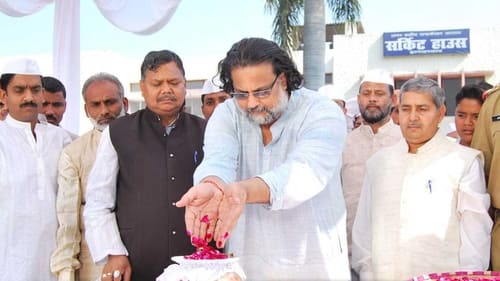
Hasmat, a devout Muslim, is asked to repair a vehicle that transported the ashes of Mahatma Gandhi. However, the situation soon complicates when his community is shaken by violence.

Unable to live in his father's gigantic shadow, Mahatma Gandhi's eldest son, Harilal, gets distraught and resorts to alcoholism.
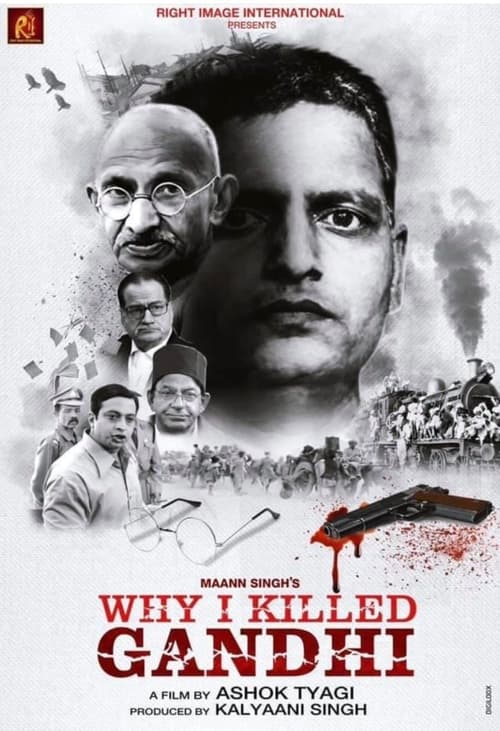
Indian freedom fighter Gandhiji was killed by Nathuram Godse. But what made Nathuram Godse to take this extreme step?
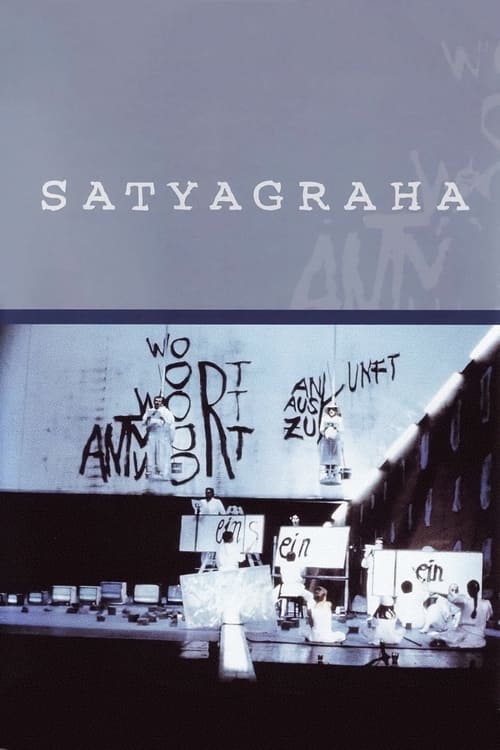
This luminous, visionary opera tells the story of how Mahatma Gandhi developed the philosophy of satyagraha, nonviolent active resistance, as a political revolutionary tool to fight oppression, connecting his lifework to three historical figures who advanced his philosophy: the celebrated Russian writer Leo Tolstoy, the great Indian poet and philosopher Rabindranath Tagore and the heroic American civil rights leader Martin Luther King. The libretto is comprised of passages from “The Bhagavad-Gita,” India’s greatest philosophical epic, and perfectly complements Glass’ ravishing score, mysteriously transporting the audience with a serene power and an all-encompassing sense of peace.
In an open letter to the most influential modern Indian political leader, the Late Mohandas Karamchand Gandhi, the filmmaker sequentially narrates the stories of three distinct individuals - that of a confused filmmaker who flows with time, a dedicated social reformer who guides the stratified masses into social upliftment and a divisive and regressive politician. The juxtaposition of their disfigured trajectories provokes a pertinent question: Did Gandhi ever foresee the dehumanized shape that his legacy has now dangerously morphed into?

Since the late 18th century American legal decision that the business corporation organizational model is legally a person, it has become a dominant economic, political and social force around the globe. This film takes an in-depth psychological examination of the organization model through various case studies. What the study illustrates is that in the its behaviour, this type of "person" typically acts like a dangerously destructive psychopath without conscience. Furthermore, we see the profound threat this psychopath has for our world and our future, but also how the people with courage, intelligence and determination can do to stop it.
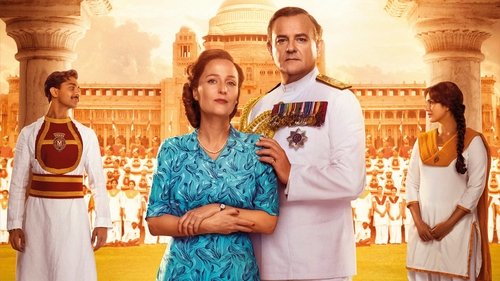
In 1947, Lord Mountbatten assumes the post of last Viceroy, charged with handing India back to its people, living upstairs at the house which was the home of British rulers, whilst 500 Hindu, Muslim and Sikh servants lived downstairs.
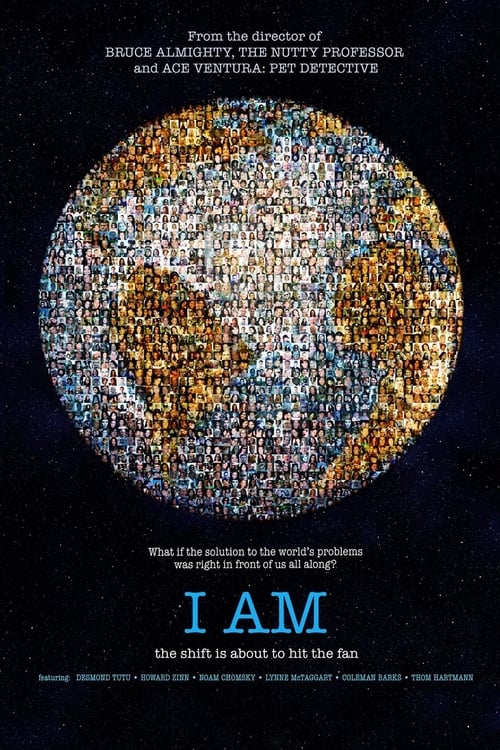
I AM is an utterly engaging and entertaining non-fiction film that poses two practical and provocative questions: what’s wrong with our world, and what can we do to make it better? The filmmaker behind the inquiry is Tom Shadyac, one of Hollywood’s leading comedy practitioners and the creative force behind such blockbusters as “Ace Ventura,” “Liar Liar,” “The Nutty Professor,” and “Bruce Almighty.” However, in I AM, Shadyac steps in front of the camera to recount what happened to him after a cycling accident left him incapacitated, possibly for good. Though he ultimately recovered, he emerged with a new sense of purpose, determined to share his own awakening to his prior life of excess and greed, and to investigate how he as an individual, and we as a race, could improve the way we live and walk in the world.