
Action
Adventure
Animation
Comedy
Crime
Documentary
Drama
Family
Fantasy
History
Horror
Music
Mystery
Romance
Science Fiction
Thriller
War
Western
Found 34 movies, 15 TV shows, and 1 person
Can't find what you're looking for?
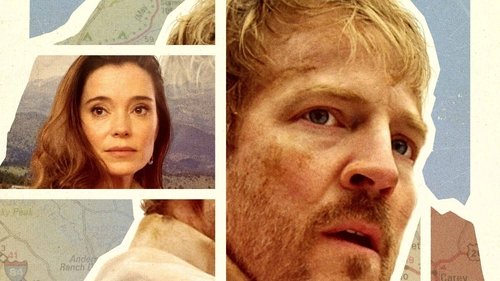
A young widower sidesteps grief, loss, and familial dysfunction when he steals his wife's ashes and sets off on an impulsive odyssey through America's heartland to find something he'd lost long before her death.

As anti-racism movements sweep the globe, young people are pushing for political action, drawing our attention to the racialised power structures embedded within society. Change is on the horizon.
A fictional struggle between cinema and sculpture in the development of the work of Robert Smithson, Gordon Matta-Clark and Dan Graham.
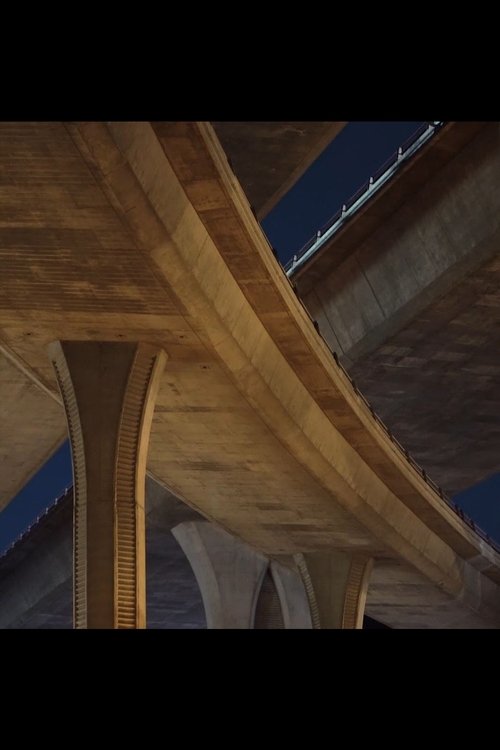
"Monuments" show a world that seems alien, although they spring from the most common experience one can have in Southern California: driving a car. These infrastructures of speed and power form gigantic concrete layers that dominate the landscape. They are the “accidental” monuments of the economic system we live in: a system that ignores the environment and human needs in order to provide itself with maximum efficiency.
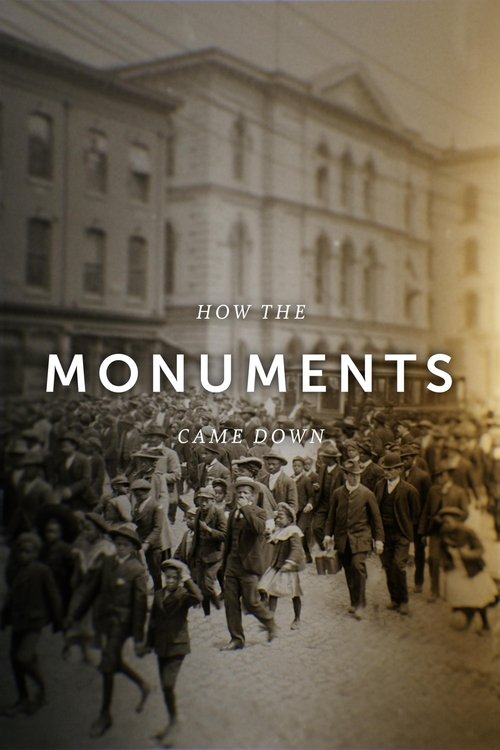
How the Monuments Came Down is a timely and searing look at the history of white supremacy and Black resistance in Richmond. The feature-length film-brought to life by history-makers, descendants, scholars, and activists-reveals how monuments to Confederate leaders stood for more than a century, and why they fell.

Travelogue of Venice
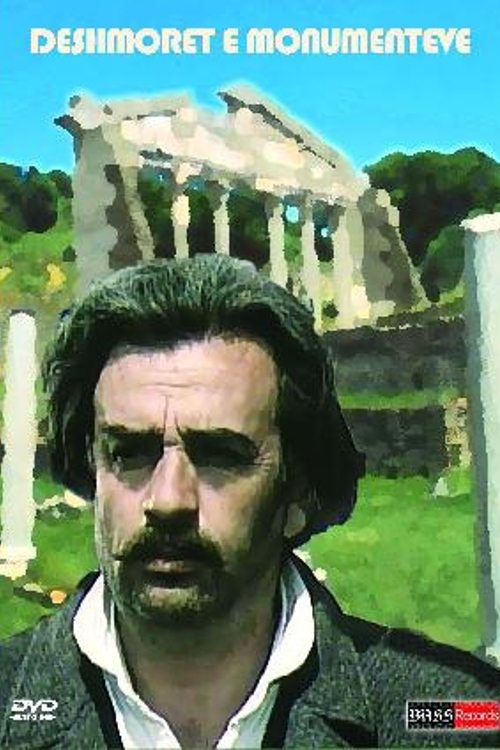
Set during World War I. An Austro-Hungarian expedition sets an archaeological site in the ancient city of Apollonia. The experts of this expedition want to steal ancient monuments, but the villagers of the area oppose them.
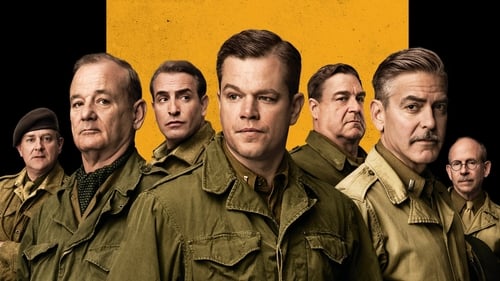
Based on the true story of the greatest treasure hunt in history, The Monuments Men is an action drama focusing on seven over-the-hill, out-of-shape museum directors, artists, architects, curators, and art historians who went to the front lines of WWII to rescue the world’s artistic masterpieces from Nazi thieves and return them to their rightful owners. With the art hidden behind enemy lines, how could these guys hope to succeed?
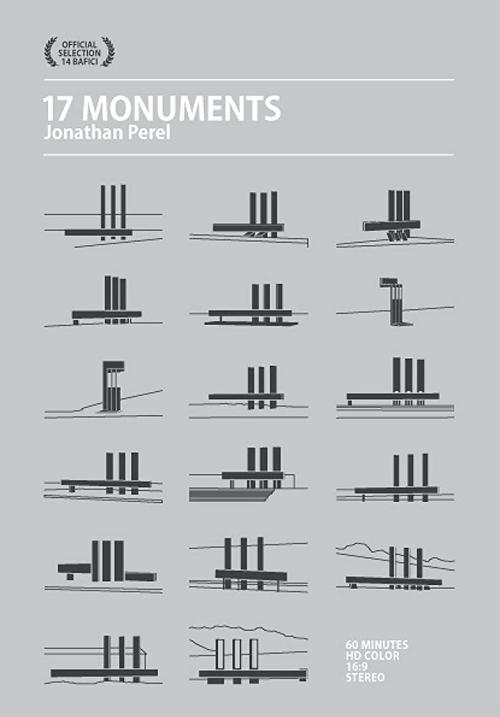
Seventeen tripod-bound shots of fixed length observe the diverse and disparate settings in which 17 monuments, each bearing the words 'Memory', 'Truth' and 'Justice', were built by law to mark locations used as detention and torture centres during Argentina's military dictatorship between 1976 and 1983.
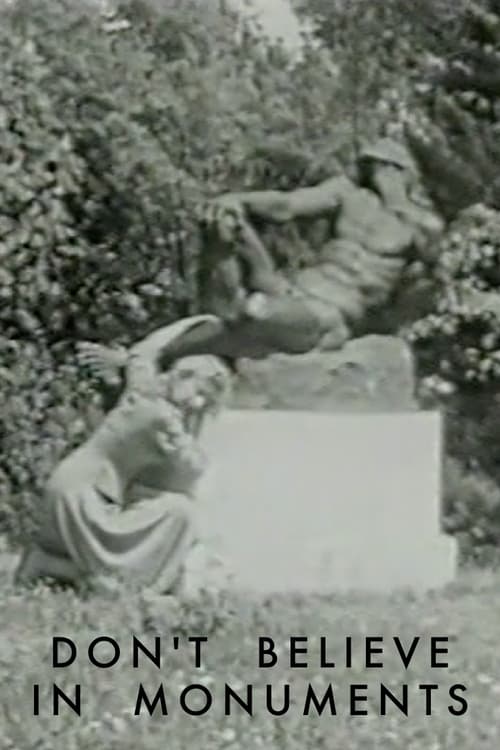
A young woman tries to make love to a park statue, but despite her passionate efforts, the monument remains cold and heartless. Don’t Believe in Monuments is an early short, where Makavejev subtly ridicules Yugoslav state-sponsored monument and history worship.
A bust of Mao Tse-tung is being passed from person to person.

One video channel shows people talking about a certain monument that was presumably erected to memorize the Catastrophe, but their speech falls apart, and we cannot compose a single image of either the monument or the catastrophe that happened to these people. Their speech is too desintegrated, their evidences get confused, their memory slips away, and the catastrophe remains dissolved in the air, like the city that appears on the screen in the form of fragments washed away by rain. On the other video channel, a person interacts with monuments, exploring the possibilities of juxtaposing her body and the stone bodies of historical catastrophes.

Animated woodcuts from the bibliophile edition “Monuments” (1961) by Milos Ciric (1931 – 1999), inspired by the texts of Serbian poets about sufferings during the Second World War.
The pathos of universal unity against the backdrop of the overthrown imperial monuments triumphs on the Russian screen with the arrival of the cinema youth. But the closer we get to the "year of the great turning point", the more palpable this pathos is replaced by the pathos of the class struggle. New monuments appear in place of the dropped ones. And the "little man", not having had time to grow up, finds himself again at the foot of new pedestals. Monumental forms in cinema crowd the living human content of films.
About the restoration work underway in Samarkand to restore the most valuable architectural monuments of Uzbekistan.
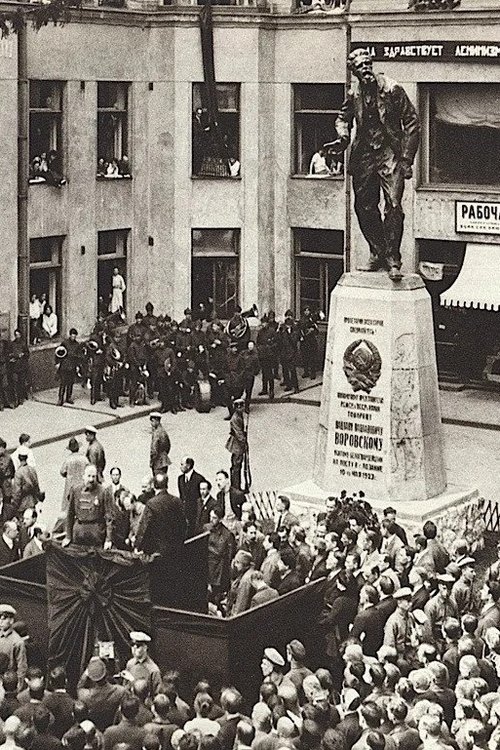
During the years of socialism, Moscow has turned into a kind of museum - a sort of glyptotek (collection of sculptures) of the Soviet period. But city monuments are not just museum exhibits, they "live" among us on the streets and squares, their fates are closely intertwined with the fates of the city and its inhabitants, with the events taking place at their pedestals. What place does the Soviet monumental heritage occupy in our cultural consciousness and in the space of a modern city?
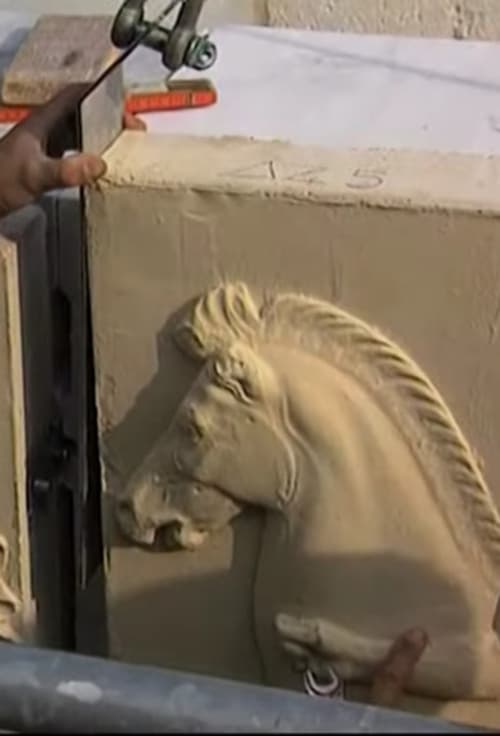
The works on the Athenian Acropolis: People and Monuments directed by S. Mavrommatis. Documentary with footage from 2003-2009 produced by the Acropolis Monuments Maintenance Service.
The film shows the development of the Chinese city while highlighting the Portuguese presence: the official buildings, personalities of the colonial administration. The bust of the great poet Luis de Camões recalls the epic discoveries and the glory of navigators. The director observes the Chinese people, their activities, their hobbies. He seems fascinated and, perhaps in spite of himself, shows us a very dynamic Chinese city where the Portuguese seem to be tourists.
"Monuments" is an attack on the meaning of monuments, here in Düsseldorf / Germany.
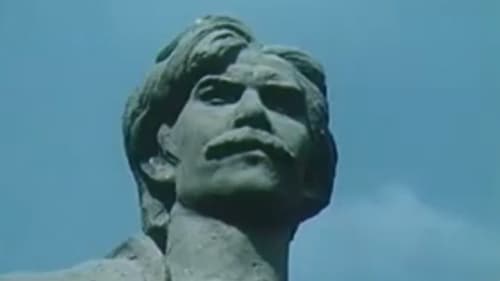
An old gardener tends for the flowers during the war. Nazis ask him for flowers for their dead.
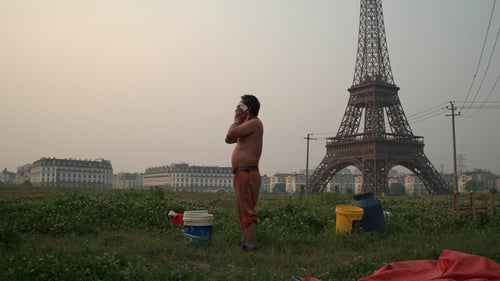
A smaller scale Eiffel Tower and the Champs-Elysées can be found just outside Shanghai; a copy of St. Peter’s in Rome can be found in Yamoussoukro, in the Ivory Coast: a journey over three continents to see the architecture of imitation, the uncanny world of the fake.
The film was shot in an old, decrepit building where dozens of guest-workers' families live. The owner, a local influential politician, has avoided paying for the maintenance of the building under the legal standards by using his connections to proclaim the building a national cultural heritage. However, the rent he has been charging was as if the building were an object that offered standard comfort. The only German tenant takes the crew around and speaks of his battle against the landlord’s manipulation.
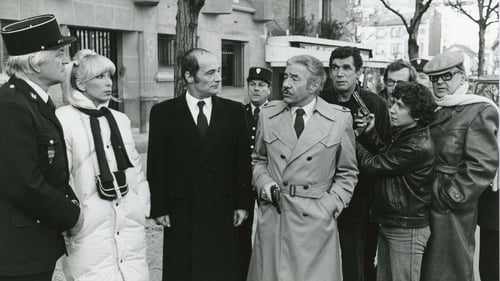
The notorious and mysterious criminal Furax steals France's famous monuments, replacing them with replicas.

A young, cynical French film student comes to London for the weekend to make a film project for his course. Disillusioned by his London experience, he's befriended by a stranger who shows him a side of the city, and himself, that he never would have seen. The story unfolds through his Super 8 film footage, and his voice-over narration gives us an insight into his thoughts and feelings throughout the journey.
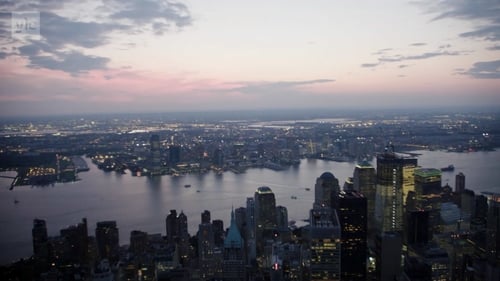
The dramatic inside story of the monumental collision of interests at Ground Zero in the decade after 9/11.
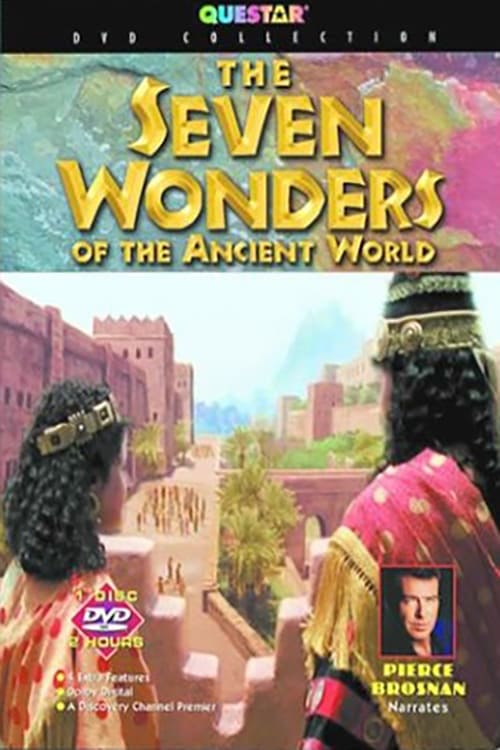
The Romans saw the Seven Wonders of the Ancient World as the crowning achievements of their predecessors. Through stunning on-location and re-created visuals, learn how and why they were built and how they dazzled the ancients.
Filmmakers Laura Mulvey and Mark Lewis use rare archival footage and interviews with artists, art historians, and museum directors to examine the fate of Soviet-era monuments during successive political regimes, from the Russian Revolution through the collapse of communism. Mulvey and Lewis highlight both the social relevance of these relics and the cyclical nature of history. Broadcast on Channel Four as part of the 'Global Image' series (1992-1994).
A documentary that investigates the complexity of a nation, Albania, through the narration of the convoluted history of its monuments. What happens to the statues when they are destroyed, what are they replaced with and where do their marble shreds end up? What happens to their expensive bronze? And again: what do the sculptors who made these statues think of these destructions, what is their opinion. And today? Which statues are being destroyed in Albania today?

The 1966 construction of Alexander Calder's 'La Grande Voile' (The Big Sail), a monumental sculpture installed in McDermott Court at MIT in Cambridge.

In an alternate universe, three super-humans are treated so harshly by humanity, they each go mad in their own way.
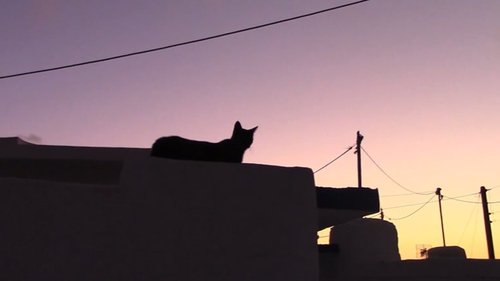
On the island of Amorgos, during summer. Small monuments were erected at the scene of a fatal accident: a photograph, a few words, flowers, religious or pagan objects. The deceased "stayed there": dead in transit, on a road, frozen forever.
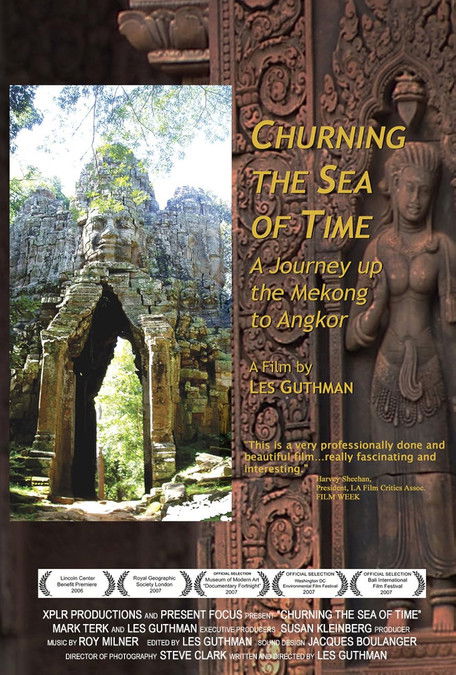
One of the mythic journeys of our time, through the exquisite, complicated, surprising terrain of Vietnam and Cambodia to the great ruins at Angkor - the magnificent Khmer temples being painstakingly restored deep in the Cambodian jungle. It is a high definition odyssey up a river far distanced in time from the corridor into the heart of darkness portrayed in Francis Coppola's "Apocalypse Now." In Angkor, the World Monuments Fund's John Stubbs and John Sanday describe their 15-year restoration of one of the jewels of a city called "the eighth wonder of the world." As we go inside the 12th Century temple complex of Preah Khan, along with the other major sites of Angkor Wat, Bayon and Banteay Srei, we learn that the story of their work in Angkor is not only a story of the rebirth of Angkor after the horrors of the Khmer Rouge Era, but it also is a story of the rebirth of Cambodia.

A listening journey into South Africa's stories and memories of the past, challenges of the present and dream of the future.
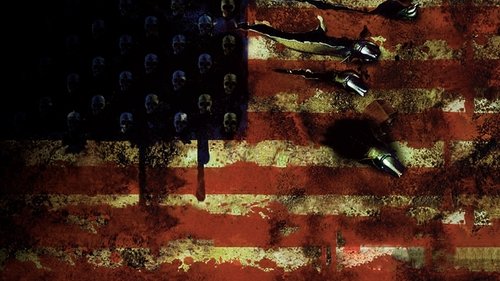
An exploration of the appeal of horror films, with interviews of many legendary directors in the genre.