
Action
Adventure
Animation
Comedy
Crime
Documentary
Drama
Family
Fantasy
History
Horror
Music
Mystery
Romance
Science Fiction
Thriller
War
Western
Found 29 movies, 7 TV shows, and 0 people
Can't find what you're looking for?

A tour of Tunis, Algiers and Rabat in the 1930s.
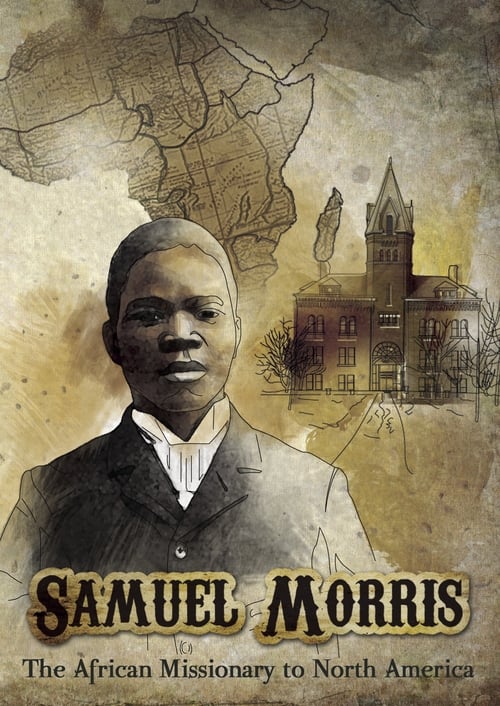
Samuel Morris, African Missionary to North America features interviews with historians, authors and representatives from Taylor University as well as historical photos and new graphic illustrations that bring the story to life. Discover the amazing true story of Samuel Morris in this engaging and comprehensive documentary.
Operation Torch was an Allied invasion of French North Africa during the Second World War.
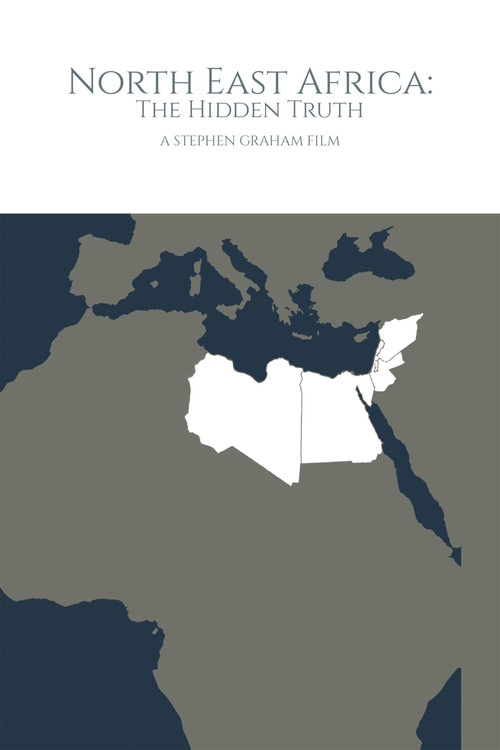
This documentary focuses on the untold history of the Holy Land and surrounding region, more commonly referred to as the Middle East. Shedding light on its geographic connection to the African continent, its indigenous inhabitants and cultural relations.

Andrew Jones travels to North Korea with a group of African Americans called "People to People" in an effort to learn more about the country. Once there, his mission for the tape becomes dispelling negative American myths about North Korea.
Documentary depicting and explaining the Allied campaign against the Germans in North Africa. Preserved by the Academy Film Archive in partnership with the UCLA Film & Television Archive in 2013.

In 1892, 18-year-old Prince Kaboo of Liberia's Kru tribe had been captured by the rival Grebos. When Kaboo's people could not pay his ransom, the young prince was readied for execution. But at the last minute, there was a blinding flash of light and a mysterious voice that said, 'Run Kaboo, run!' Escaping his enemies, Kaboo found his way to an American Missionary outpost where he became a Christian. After learning all he could from the American missionaries, Kaboo (now taking on the name Samuel Morris as a witness to his new life) was determined to set out for America where he could learn more about his Savior. He survived a harrowing over-sea journey and amazed the hard-bitten sailors with his tenacious faith. Arriving in New York, Morris continued to tell his astonishing story to all who would listen.

Dispatches from the Front goes to North Africa to people upon whom Christ has long set His sovereign love. From the martyrs of the early church in Carthage to the bold believers across North Africa today, Gospel advance there has always been marked by fear and faith, joy and risk, life and death. Follow the trail of Christians who are sowing the Word of the Cross and reaping its joyful harvest! From the birthplace of Arab Spring and its all-out assault on Christians to unreached cities on the edge of the Sahara, Day of Battle, goes to the front line, where the Gospel is extending the boundaries of Christ’s Kingdom and faithful men and women are taking up David’s praise in Psalm 140, “O Lord, my Lord, the strength of my salvation, you have covered my head in the day of battle.”

Using innovative 3D graphics, computer animation, reconstructions and location footage, this engrossing video transports viewers to Northern Africa to visit the sites of some remarkable Roman architecture. On the itinerary are the subterranean city of Bulla Regia and El Jem's impressive Colosseum. Foremost scholars, including professor Roger Wilson of Nottingham University and professor David Mattingly of Leicester University, provide insight.
In antique Rome, a simple pepboy for chars becomes involved in a coup against Cesar. Rahatlocum is a North African Roman colony where Julius Caesar came to spend an expensive holiday. The revolt rumbles among the small people who find a leader in the person of Ben-Hur Marcel.
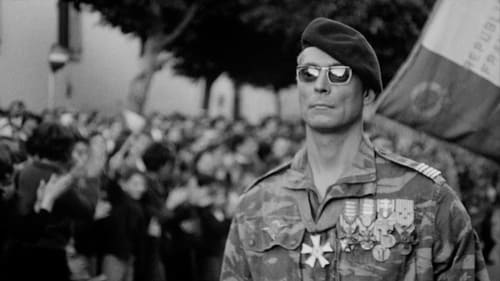
Paratrooper commander Colonel Mathieu, a former French Resistance fighter during World War II, is sent to Algeria to reinforce efforts to squelch the uprisings of the Algerian War. There he faces Ali la Pointe, a former petty criminal who, as the leader of the Algerian Front de Liberation Nationale, directs terror strategies against the colonial French government occupation. As each side resorts to ever-increasing brutality, no violent act is too unthinkable.
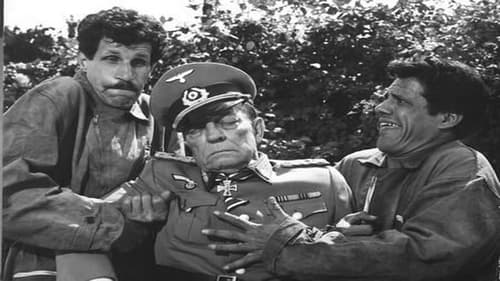
It's May 1943, and two Italian American soldiers, Joe and Frank, are searching the North African desert for a Nazi general called Von Kassler. Von Kassler's aide captures them, and arranges for them to escape with fake war plans. But, things don't go exactly as planned for either side.
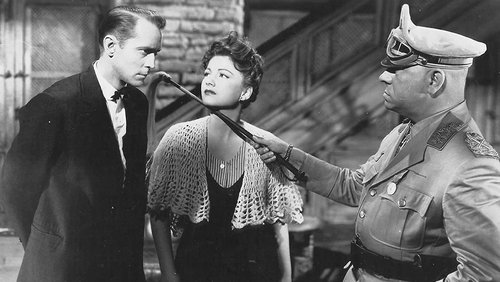
The British Army, retreating ahead of victorious Rommel, leaves a lone survivor on the Egyptian border who finds refuge at a remote desert hotel. He assumes the identity of a recently deceased waiter and is helped by the hotel's owner, despite protest from the French chambermaid, who fears the imminent arrival of Rommel and the Germans.
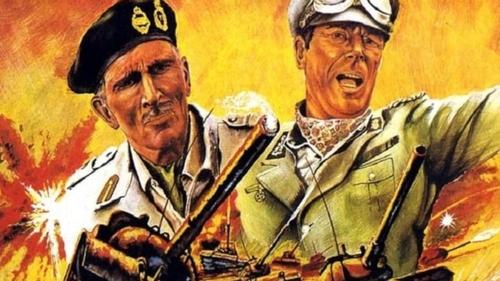
June 1942. As Rommel swept toward the Nile, the fall of Egypt and the capture of the Suez Canal seemed inevitable. Italian and German advance units raced toward Alexandria. Mussolini had given explicit orders: The Italians must arrive first!

This 17-minute documentary is featured on the 3-Disc Criterion Collection DVD of The Battle of Algiers (1966), released in 2004. An in-depth look at the Battle of Algiers through the eyes of five established and accomplished filmmakers; Spike Lee, Steven Soderbergh, Oliver Stone, Julian Schnabel and Mira Nair. They discuss how the shots, cinematography, set design, sound and editing directly influenced their own work and how the film's sequences look incredibly realistic, despite the claim that everything in the film was staged .
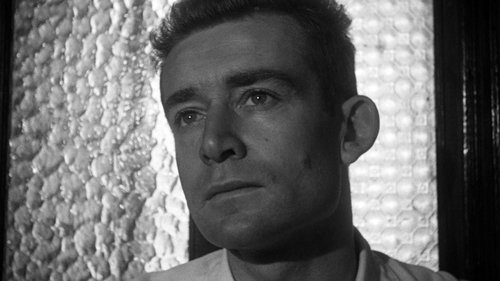
The son of a French colonialist in Algeria returns to Algeria after learning that his father is ill. Memories from childhood return. He also must deal with some problems involving the Algerian fight for independence.
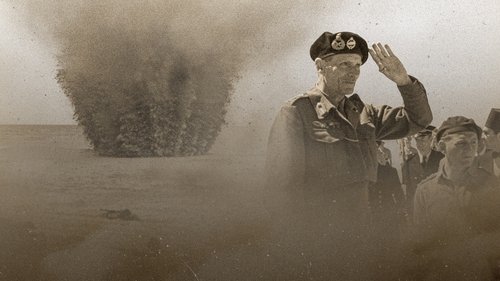
When the British army looks set to defeat Mussolini’s Italian forces, Hitler sends reinforcements; the Afrika Korps led by General Rommel. The Desert Fox is on winning form until Montgomery, the British commander, sets up a plan to crush his opponent. After the American landing in North Africa, the Axis armies have no choice but to surrender and put an end to the Desert War.

A small British army team is sent deep behind enemy lines to destroy a German petrol dump as part of the preparation for a major attack in the North African campaign. Sea of Sand was distributed in the US in a shortened version, Desert Patrol.
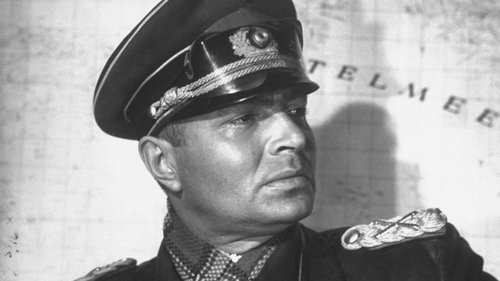
The life and career of Erwin Rommel and his involvement in the plot to assassinate Hitler.

In 1942, an intelligence officer in North Africa encounters a female French Resistance fighter on a deadly mission behind enemy lines. When they reunite in London, their relationship is tested by the pressures of war.
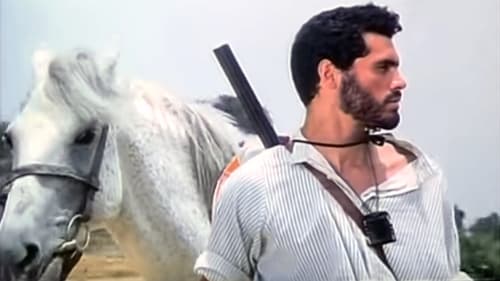
In 1955, what was known as the "Algerian War" gradually escalated into all-out war, and the French army inexorably transformed into a soldiery accustomed to colonial humiliation and massacres. Amar is a young deaf and mute man who wants to join the resistance, but he is rejected because of his disability, despite all the training he received from his father, who was an expert in hunting and horses. The raid on his village, which he watches helplessly, drives him to seek revenge, he who had until then been locked away in "The Gates of Silence."
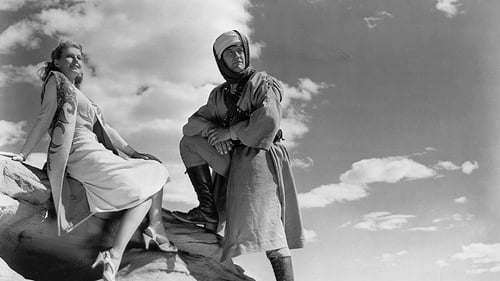
Paul Hudson, leads a group of desert bandits against some Nazis, who want to use them as cheap labor for their railroad.

This first entry in the "Believe It Or Not" series of shorts visits northern Africa. Included are a look at the Tuareg people of the Sahara Desert, a waterfall whose under-surface builds up because of lime deposits, a clock that strikes 13, and the Tree of Abraham, estimated to be 3500 years old. Vitaphone No. 1282.
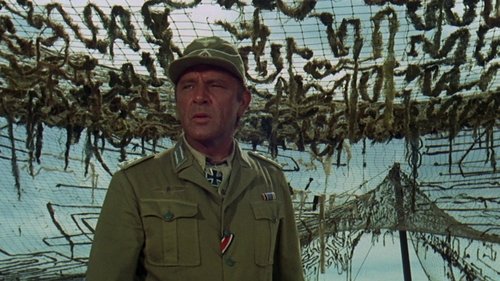
Captain Foster plans on raiding German-occupied Tobruk with hand- picked commandos, but a mixup leaves him with a medical unit led by a Quaker conscientious objector.
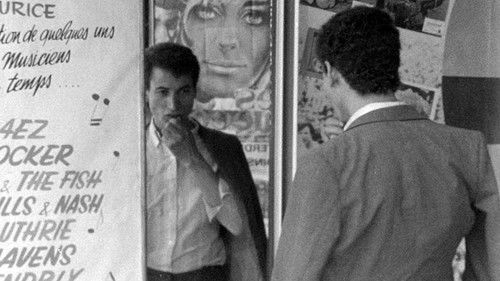
In 1970, Tahar, a young Tunisian, travels to France for the first time to help his older brother, who is wrongly accused of murder and incarcerated in Paris. He first stops in Marseille, where he meets Tunisians very different from those familiar to him; enigmatic French people; and a strange atmosphere that makes him doubt his brother’s innocence, his own innocence and his own mental integrity.
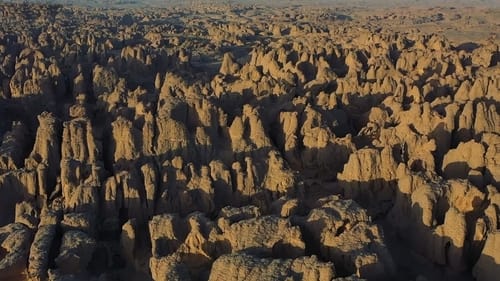
Séfar (in Arabic: سيفار) is an ancient city in the heart of the Tassili n'Ajjer mountain range in Algeria, more than 2,400 km south of Algiers and very close to the Libyan border. Séfar is the largest troglodyte city in the world, with several thousand fossilized houses. Very few travelers go there given its geographical remoteness and especially because of the difficulties of access to the site. The site is full of several paintings, some of which date back more than 12,000 years, mostly depicting animals and scenes of hunting or daily life which testify that this hostile place has not always been an inhabited desert. Local superstition suggests that the site is inhabited by djins, no doubt in connection with the strange paintings found on the site.
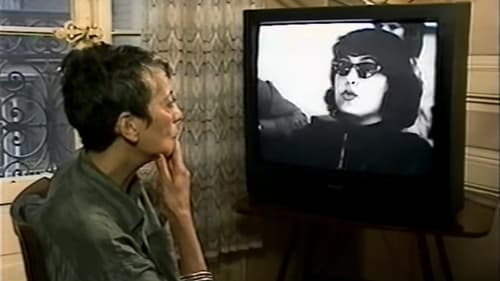
No description available for this movie.
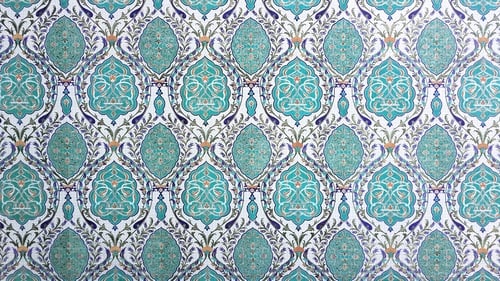
In Algeria, pottery is different from one region to another, the result of the various influences it has undergone throughout history. If the manufacturing steps are substantially the same, the result is far from identical. In Kabylia, for example, the pottery, decorated with patterns, is red in color. In the south of Adrar, there are objects with rather original shapes and black in color. The pottery of the Nementcha Mountains is fashioned in clay with pink tones and decorated with brown designs. Originally, objects were made in families and exchanged between neighbours...
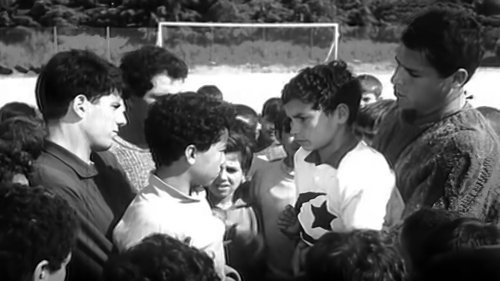
The first fictional feature film produced in Algeria after independence, this film addresses one of the most worrying problems: that of childhood. Children, freedom regained, do not yet know how to play “at peace”, they naturally play “at war”.