
Action
Adventure
Animation
Comedy
Crime
Documentary
Drama
Family
Fantasy
History
Horror
Music
Mystery
Romance
Science Fiction
Thriller
War
Western
Found 16 movies, 0 TV shows, and 0 people
Can't find what you're looking for?
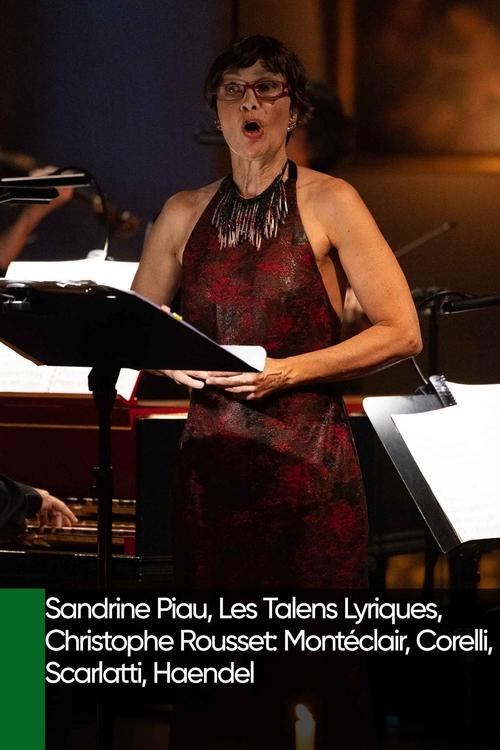
Since the Bayreuth Baroque Opera Festival was founded in 2020, the city of Bayreuth has become a mecca for Baroque music. Sandrine Piau invites us to savour the frivolity of 18th-century Rome through cantatas with enchanting notes.

Celebrated organist Sebastián Durón was unrivalled in his ability to marry Italian Baroque opera with incandescent Iberian folklore, much to the delight of the Spanish Court. Winners of the Opus Klassik prize for their recording of this music, Núria Rial and Fahmi Alqhai present Muera Cupido at the Bayreuth Baroque Opera Festival 2024. Programme : - Francisco Guerau (1649-1722) - Sebastián Durón - Fahmi Alqhai (*1976) - Giovanni Bononcini (1670-1747) - José de Nebra (1702-1768)
In the 18th century, Hamburg Opera broke free from the influence of Italy, giving rise to a new musical culture in Germany. Counter-tenor Max Emanuel Cenčić offers us a glimpse of this vibrant operatic life from the stage of the stunning Margravial Opera House in Bayreuth, accompanied by Christoph Rousset's Les Talens Lyriques. Chapters: - Reinhard Keiser - Georg Friedrich Haendel - Alessandro Scarlatti - Arcangelo Corelli - Johann Mattheson - Georg Philipp Telemann - Nicola Porpora
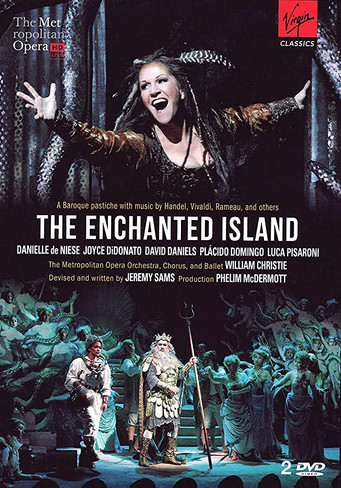
A contemporary take on the 17th-century genre of the pastiche, this delightful Baroque fantasy brings together some of the greatest arias and ensembles by Handel, Vivaldi, Rameau, Purcell, and other composers with a new English libretto by Jeremy Sams, inspired by Shakespeare’s The Tempest and A Midsummer Night’s Dream. The all-star cast is headed by David Daniels as Prospero, Joyce DiDonato as Sycorax, Danielle de Niese as Ariel, Luca Pisaroni as Caliban, and the legendary Plácido Domingo as Neptune. Early music specialist William Christie conducts this dazzling world-premiere production, designed and directed by Phelim McDermott and Julian Crouch.
Countertenor Carlo Vistoli takes us on a musical journey through 17th-century Italy. The nascent opera genre was producing its first masterpieces at the time, with composers such as Monteverdi, Cesti, Cavalli and Stradella. These genius composers laid the foundations for opera and helped establish it as a major art form. The programme includes arias, love laments and scenes of madness.
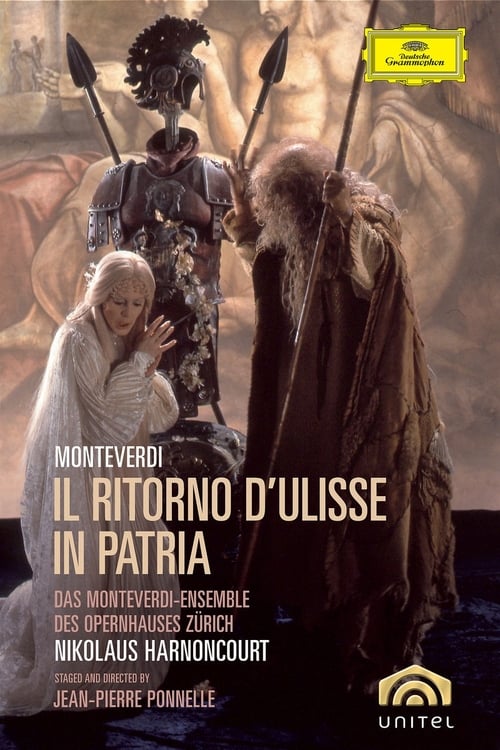
Live performance, part of Monteverdi cycle staged by Oper Zürich with Nikolaus Harnoncourt conducting the Zürich Opera House Monteverdi Ensemble. Staged and directed by Jean-Pierre Ponnelle
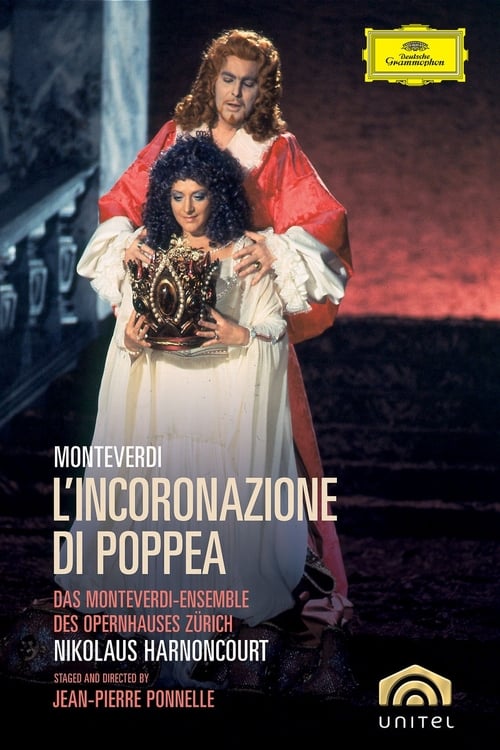
Live performance, part of Monteverdi cycle staged by Oper Zürich with Nikolaus Harnoncourt conducting the Zürich Opera House Monteverdi Ensemble. Staged and directed by Jean-Pierre Ponnelle

LA Opera proudly presents The Anonymous Lover (L'Amant Anonyme), an unjustly neglected 1780 chamber opera by Joseph Bologne, Chevalier de Saint-Georges, a pioneering Black composer who was a contemporary of Mozart. The comic romance tells the story of Léontine, a beautiful young widow who has become disillusioned with love. Much to her surprise, she receives a steady stream of letters and gifts from an unknown man professing his undying passion. This amuses her friend Valcour, who also claims to have no interest in romance. But now, after hiding his true feelings for years, Valcour works up the courage to reveal that he himself is the devoted secret admirer. Will his (inevitably awkward) confession sway a woman sworn to resist all affairs of the heart?
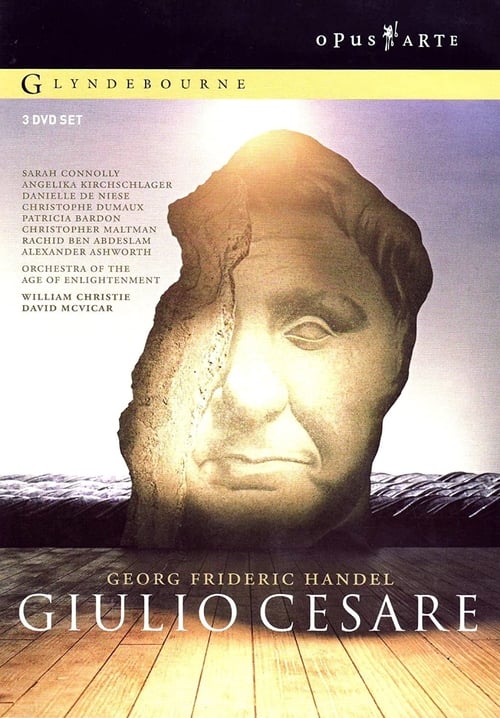
David McVicar’s production of Giulio Cesare manages to combine serious insight with entertainment, bringing Handel's masterpiece to life in a powerful, convincing and highly intelligent way. ln every line of the complex narrative the subtle nuances are apparent, reflecting perfectly the transparent and exquisite nature of Handel's musical expression. Filmed in High Definition and recorded in true surround sound, the outstanding singing of the all-star cast, led superbly by Sarah Connolly, and the vivid playing of the Orchestra of the Age of Enlightenment under the energising baton of William Christie reveal the colour and dramatic character of Handel’s music in a most delightful manner.
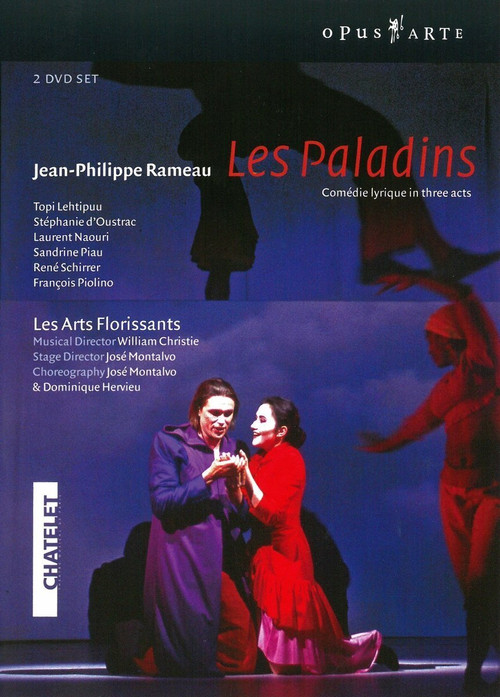
Inspired by a fable by La Fontaine, [composer Jean-Philippe] Rameau produced perhaps his most brilliant music for his penultimate great work, blending reality and the surreal on several levels.
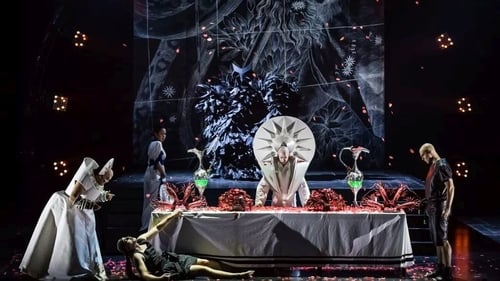
Systematically overturning accepted morals, Elagabalus dresses men as women, and names women to the Senate, favours sinning servants and humiliates generals. Baroque and carnivalesque, Eliogabalo is not, however, an opera that advocates a return to order. Leonardo García Alarcón, a finder of baroque gems, and Thomas Jolly are careful not to transform Eliogabalo into a sublime icon who would abase virtue. On the contrary, the conductor and young director, who are presenting their first production for the Paris Opera, accept the character’s contradictions and ambiguities
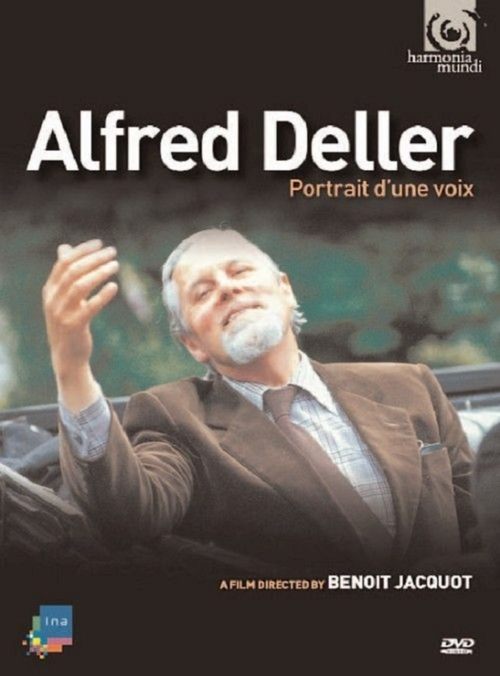
In this unique documentary, French filmmaker Benoit Jacquot interviews Alfred Deller, the internationally celebrated contemporary countertenor who focused his talent on showcasing Renaissance and Baroque music to modern audiences. One of the few films on Deller, it includes footage of him performing selections from Campion, Rosseter, Morley and Purcell. Deller toured the globe with his group, the Deller Consort, from the 1950s through the '70s.
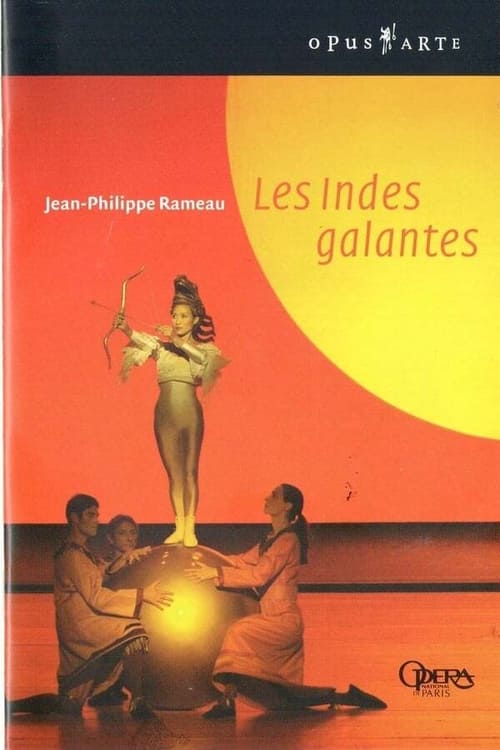
"William Christie and Les Arts Florissants propel this exuberant production of Jean-Philippe Rameau's second opera to great heights. Andrei Serban's extravagant, highly baroque staging presents the four exotic love stories vibrantly. In 'Le Turc généreux' Osman sets free his captive, Emilie, whom he loves, so that she may be reunited with her former lover, Valère; 'Les Incas de Pérou' is all about the rivalry of the Inca Huascar and the Spaniard Don Carlos, both in pursuit of Princess Phani; 'Les Fleurs' offers a Persian love intrigue, as the Sultana Fatime tries to detect whether her husband Tacmas has his eye on the lovely Atalide; and 'Les Sauvages' takes us to North America, where a Spaniard and a Frenchman compete for the love of Zima, daughter of a native chief, who prefers one of her own people." — from the DVD cover
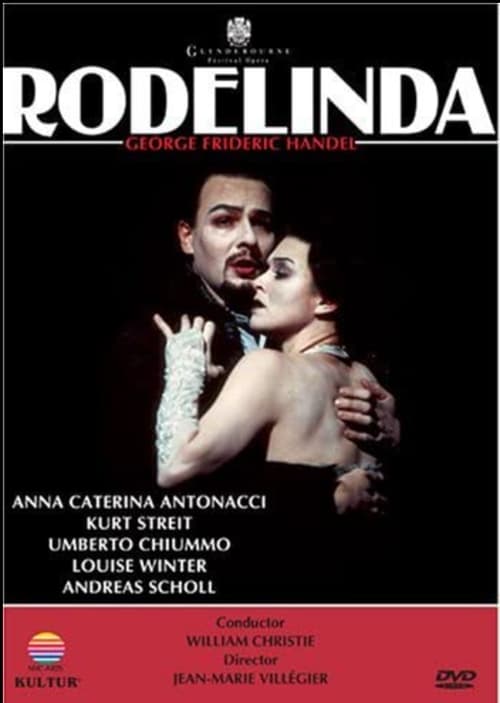
Jean-Marie Villegier's modern interpretation of Handel's "Rodelinda" – filmed live at the world-renowned Glyndebourne Opera House in the United Kingdom, sets the timeless tale of jealousy and treachery in the black-and-white world of the silent-movie era. Soprano Anna Caterina Antonacci sings the title role of Rodelinda, with tenor Kurt Streit and bass Umberto Chiummo performing the parts of Grimoaldo and Garibaldo, respectively.

Live broadcast of the opera performance held on November 10, 2012 at the Opéra national de Lorraine in Nancy, performed by five world-class countertenors.
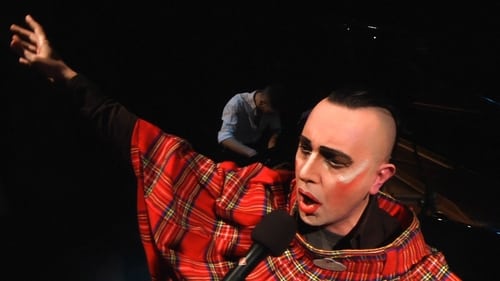
Heavenly Voices tells the story of the castrato phenomenon, and how the most gifted amongst these singers rose to international stardom. Max Emanuel Cencic and Philippe Jaroussky, two of today's singing stars, take us back in time and talk about operatic entertainment in the Baroque Age. This is illustrated by paintings and prints from the time as well as major performances of today. In this film, many countertenors are featured in famous roles and in interviews, amongst them Jochen Kowalski, Andreas Scholl, David Daniels, Daniel Behle and Valer Barna-Sabadus.