
Action
Adventure
Animation
Comedy
Crime
Documentary
Drama
Family
Fantasy
History
Horror
Music
Mystery
Romance
Science Fiction
Thriller
War
Western
Found 35 movies, 7 TV shows, and 1 person
Can't find what you're looking for?
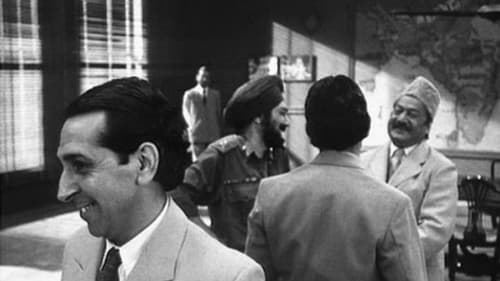
The tumultuous events surrounding the sub-continent's partition in 1947 into India and Pakistan are re-imagined in Ken McMullen's complex and visually striking film. A lunatic asylum in the city of Lahore becomes a mirror image of events in the outside political world, with the same actors playing both inmates and rulers. Adapted by Tariq Ali and McMullen from famous Urdu writer Saadat Hasan Manto's short story 'Toba Tek Singh', Partition speaks for the countless millions that the usual British Raj films sweep out of sight. Released to mark the 60th anniversary of the partition of the Indian sub-continent, this is the film's first-ever release on DVD.
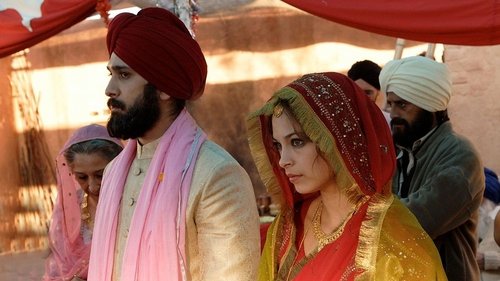
Determined to leave the ravages of war behind, 38 year old Gian Singh resigns from the British Indian Army to a quiet life. His world is soon thrown in turmoil, when he suddenly finds himself responsible for the life of a 17 year old girl, traumatized by the events that separated her from her family.

Using found footage from the colonial archives of British Mandate Palestine (1917 – 1948) and audio recordings of Palestinian refugees in Lebanon, Partition brings forth histories that have long existed at the margins. Co-director of the Nakba Archive, Diana Allan, re-photographs colonial found footage on 16mm to powerfully resituate Palestinian presence through story, voice and song.

Beneath the glitzy and glamorous landscape that characterizes the UAE, this semi-ethnographic documentary explores the hidden reality of partition spaces – apartments with subdivided rooms – and the lives of their resident migrant workers, who comprise nearly 90% of the UAE’s population.

No description available for this movie.
There is no denying that autobiographical intentions and introspection have their pitfalls. But a man's voice off screen sets the tone from the start: "There is no such thing as a private diary. The very expression is nonsensical." No chance then to see outpourings, confessions or explanations.
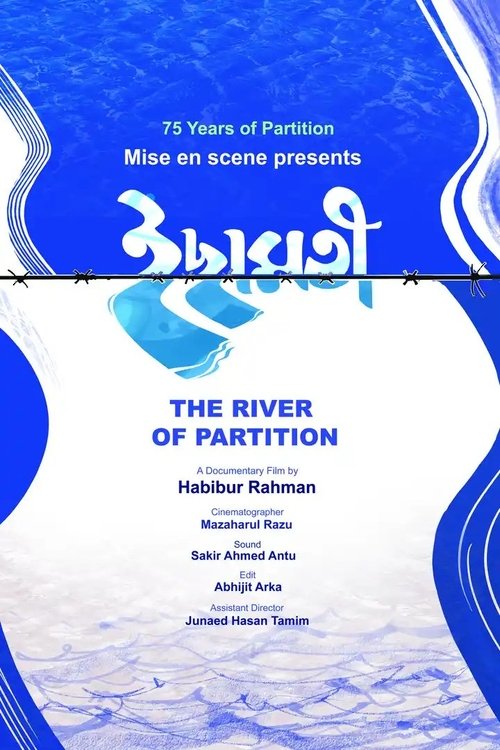
Habibur Rahman’s The River of Partition (Ichamati, 2023) documents this riverine environment, the diverse communities that live around it, and the socio-historical role played by the river in the wake of the partition of India in 1947 and the creation of Bangladesh in 1971.
The story of a man and a woman who dance through walls and partitions in a city made of cells, boxes, rooms, and recesses that are explored from the inside, layer after layer. It is the story of a vision, which at times is unique and coherent, and other times gears down, leaving one eye after another in every room of the city. Still, beyond the explosive transformation of bodies, identities, forms, places, and glances, the sinuous choreography of the human couple remains in the spectator’s mind, one and primeval.
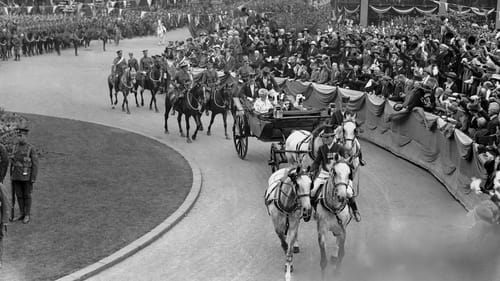
Partition, 1921, tells the story of how Ireland came to be to be partitioned from the perspective of the British and unionist politicians who divided Ireland. Michael Portillo examines how this happened, unravelling a web of intrigue woven by the British ruling classes for whom the essential issue was defending Ulster
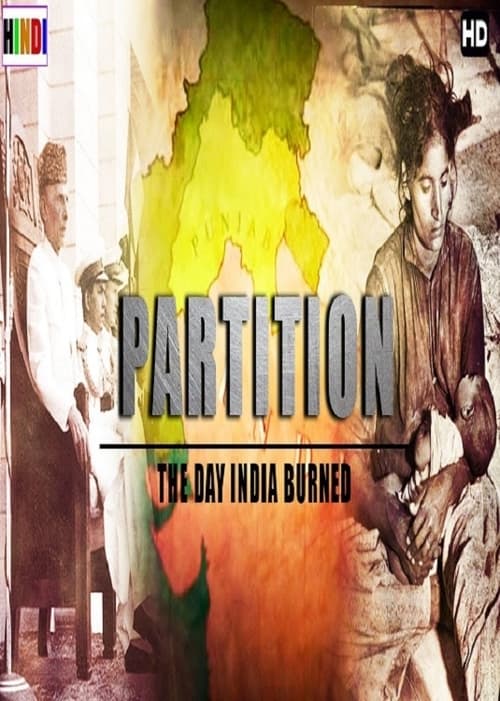
Documentary about the effects of Britain's withdrawal from India in 1947 which triggered one of the biggest migrations in history. 15 million were displaced and more than a million lost their lives. The story is told through the testimony of people who lived together for centuries, but were forced out of their homes as one of the largest and most ethnically diverse nations in the world was divided. Dramatised reconstructions evoke some of the mistrust, violence and upheaval that ensued

In this documentary, British film-maker Gurinder Chadha, director of Bend It Like Beckham and Viceroy's House, travels from Southall to Delhi to find out about the Partition of India - one of the most seismic events of the 20th century. Partition saw India divided into two new nations - independent India and Pakistan. The split led to violence, disruption and death. To find out why and how it happened, Gurinder crosses India, meeting people whose lives were torn apart by Partition and talking to historians who explain the motivations behind the split. Along the way, she discovers that Partition was caused by politicians who were more interested in their own power than in Indian unity, and finds out that the British also played a major role in the Partition.

In a uniquely personal journey to mark the centenary of the partition of Ireland in 1921, award-winning reporter Peter Taylor revisits the films he has made over the past 50 years to reflect on the controversial issue of a united Ireland. With frank and intimate observations, Peter reveals how his own understanding of the issue has evolved: from the early days when he took a Hull bus driver and his wife to Belfast, and a group of Catholic and Protestant children to Wales, to his revelatory interviews with MI6 officers and others involved in the secret talks between the British government and the IRA that eventually led to peace.
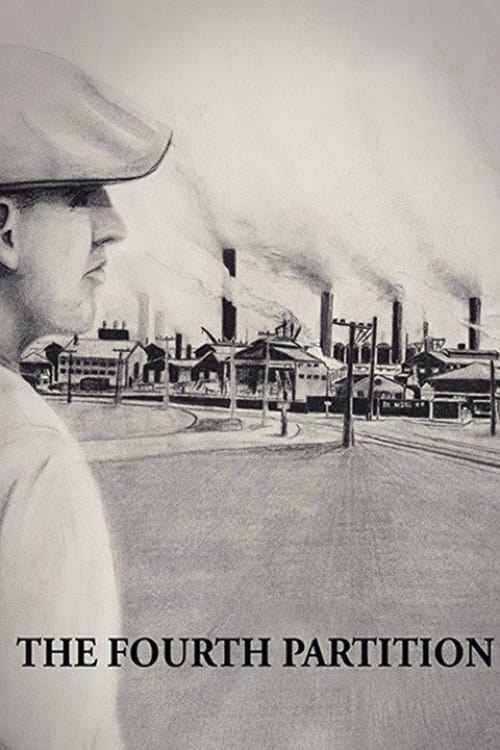
Over 4,000,000 Poles immigrated to the United States between 1870 and 1920 in search of a better life form their partitioned country. In Chicago, they worked in some of the most dangerous factories and mills in the United States, and fought to free their homeland. Their story is known as the Fourth Partition.
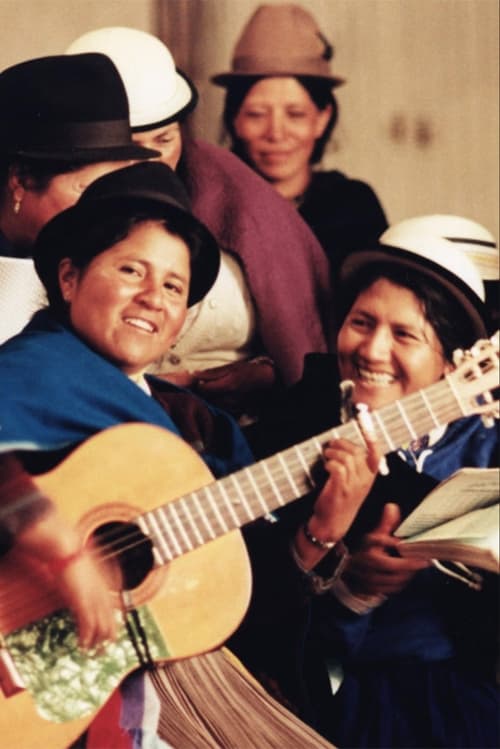
Between March and October 2000, millions of people around the world took to the streets to denounce poverty and violence against women. The historic World March of Women was a bold initiative of the Québec Federation of Women and represented a turning point in global solidarity. Director Sophie Bissonnette invited five filmmakers from around the world to cover the march. She also asked each one to film an innovative project. Set against the backdrop of a song, 'A Score for Women's Voices' ends at the UN, where women deliver 5 million cards signed during the marches. Their goal? To change the world.

Today India and Pakistan are home to one fifth of the world's population. They are rising powers but hostile neighbours. Their enmity can be traced back to the week of their birth, 70 years ago. On 15 August 1947, Britain would give up the Indian Empire, partitioning it in into two independent countries, India and Pakistan. This film tells the story of the seven days that led up to their independence and the last days of the British Raj.
Rob, a grieving father, is revisited by his deceased son Daniel through a mysterious program. When Daniel makes a devastating request, Rob must push himself to do the unthinkable.
From what was to me a gift of friendship day: a book makes some of Rosa Luxemburg's prison letters written by her friends Sonia Liebknecht and Mathilde Wurm between July 1916 and October 1918. And all the jingles who composed this period: songs of birds, plants, colors and sounds passages. Those for events in the events of the being-locked. As for the outside: October, World War Revolution, The emigrant and Chaplin The Adventurer, The affliction flowers and Klee's zoological garden. Appearances / disappearances, present stories, their intertwined. Destinies.
No description available for this movie.
Partitions draws on photographs, state documents, audio recordings and footage of domestic spaces and routines, to tell a story of Sindhi migration following the Partition of India in 1947. Inspired by the life of a woman who was born in Hyderabad, Sindh, grew up in Madras (Chennai) and lived the rest of her life as a Singaporean, the film juxtaposes fragmented recollections of the past with enduring practices of the present.
No description available for this movie.
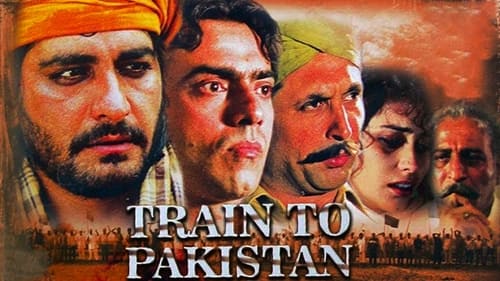
Tensions run high near the border of British India, which is about to be partitioned with a new country called Pakistan. Sikhs living in this border town have heard numerous stories of Muslims killing, raping, and looting other Sikhs, Hindus, and Christians, and many of whom are their friends and relatives. Enraged at the loss of law and order, they plan their own attack on a trainful of Muslims leaving British India. The train is overcrowded with tens and thousands of migrating passengers, who are even perched on the windows and seated on the roof of this train. The plot is to tear the bridge down when the train is on it, and no one will dare stop these men to carry out this horrific task
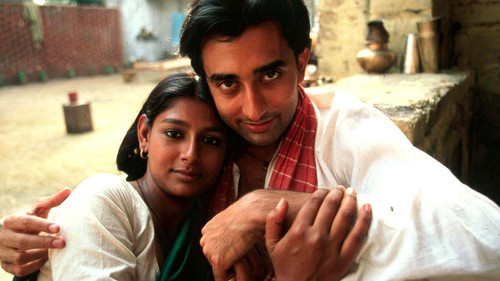
It's 1947 and the borderlines between India and Pakistan are being drawn. A young girl bears witnesses to tragedy as her ayah is caught between the love of two men and the rising tide of political and religious violence.
An in-depth look at the lives and struggles of a fishing community living by the River Titas in Bangladesh after the Partition of India in 1947.
In post-Partition India, a Muslim businessman and his family struggle for their rights in a country which was once their own.
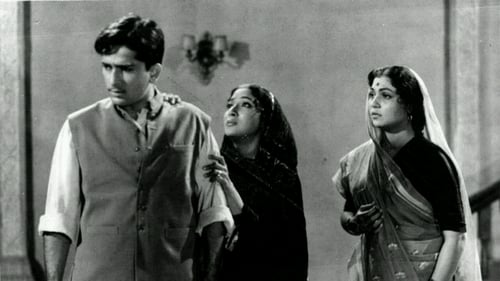
The story of two families — one Muslim and one Hindu — living together in India under British rule.
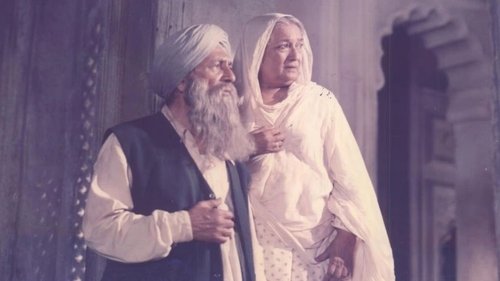
Set in the backdrop of riot-stricken Pakistan at the time of the partition of India in 1947, the film deals with the plight of emigrant Sikh and Hindu families to India as a consequence of the partition.
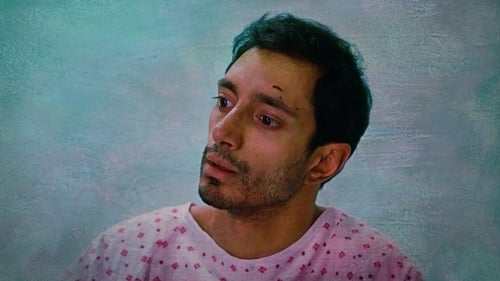
Zed, a young British rapper, is about to start his first world tour, when a crippling illness strikes him down, forcing him to move back in with his family. He tries to find himself between an international music career and Pakistani family traditions.

In the days leading up to Partition, a Hindu woman is abducted by a Muslim man. Soon, she finds herself not only forced into marriage, but living in a new country as the borders between India and Pakistan are drawn
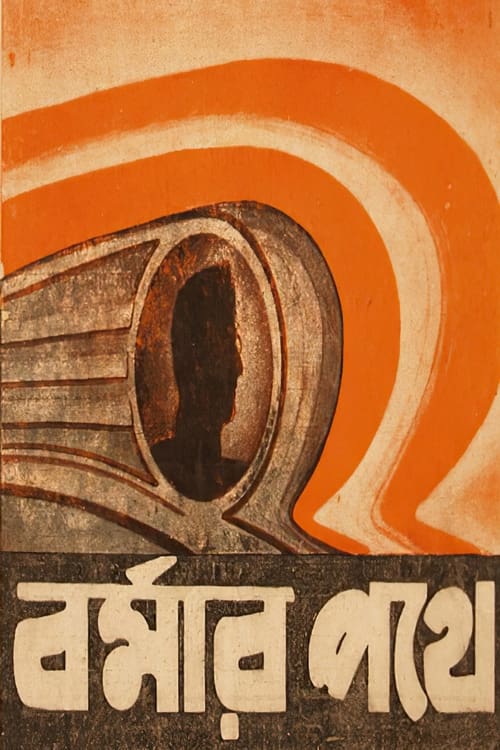
The rustic girl left this world and went to heaven. Her Painful memories are what remains behind. The injustice exploitation is suffocating. These conflicts within the unfortunate soil of India have taken many lives. There’s cruelty amongst mankind. There’s injustice and exploitation everywhere. People struggle for their rights. There’s a storm raging in every heart and soul. The earth shivers and wreaks havoc. The raging waves clash on the shores. This enlightens the soul. We can hear the song of a great soul at a distance. It calls out. It calls out to us, to break free from the shackles. We can hear his call. Come Forward. Break free from the shackles. Fight back for freedom. Set yourself free. We’ve sacrificed our lives for the freedom of new India.

Egaro celebrates the centenary of the historical football match between Mohun Bagan and East Yorkshire Regiment for the IFA Shield where Bagan snatched the shield on 29 July 1911 during a time when India was under British rule.
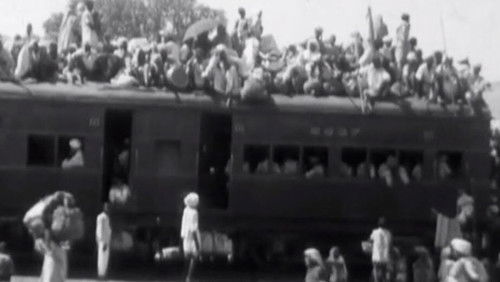
Millions of Muslims flee to Lahore in the newly created state of Pakistan, prompted by the partition of British India.

Against the backdrop of Partition, independent India’s first hockey team defeats England, their erstwhile coloniser, to win the Gold at the 1948 London Olympics. Six decades later, when Nandy Singh, a member of this iconic team suffers a stroke, his tenacious struggle to recover, inspires his daughter to retrace his journey. Using archival footage and interviews with teammates, she reveals lives shaped by the Gold, and by Partition that made them refugees. Revealed also is a friend in Pakistan never spoken of before. Her journey in search of him morphs into a quest for the lost ‘watan’ (homeland).

"Razakar" is a period drama set in pre-Bangladesh-separation Pakistan, exploring the political tensions of the time. The story follows Jamal, an aspiring Bengali actor, as he grapples with the challenges posed by his uncompromising director, mirroring the larger socio-political conflicts unfolding around them. Through personal struggles and political subtext, the film raises poignant questions about identity and division.
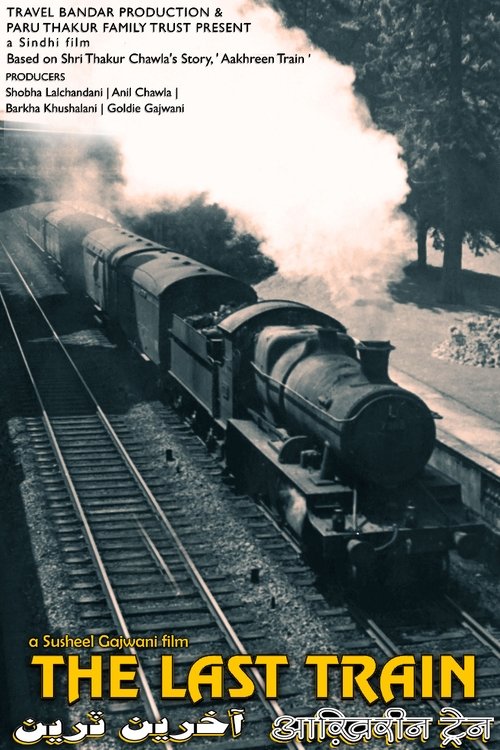
Aakhreen Train -The Last Train', a Sindhi feature film, is about the Partition of India and its painful consequences. The film is based on a platonic love story by the legendary Sindhi Writer Shri Thakur Chawla.

Set in between two high schools, the students and teachers always fight and compete. They couldn't build the friendship among each other, so the teachers gather the students to play music. It's like a miracle when music can heal the conflict of the two high schools, and they finally endorse the friendship.